
Nutrition & pH13 min
pH and EC for Beginners: The Two Meters You Cannot Skip
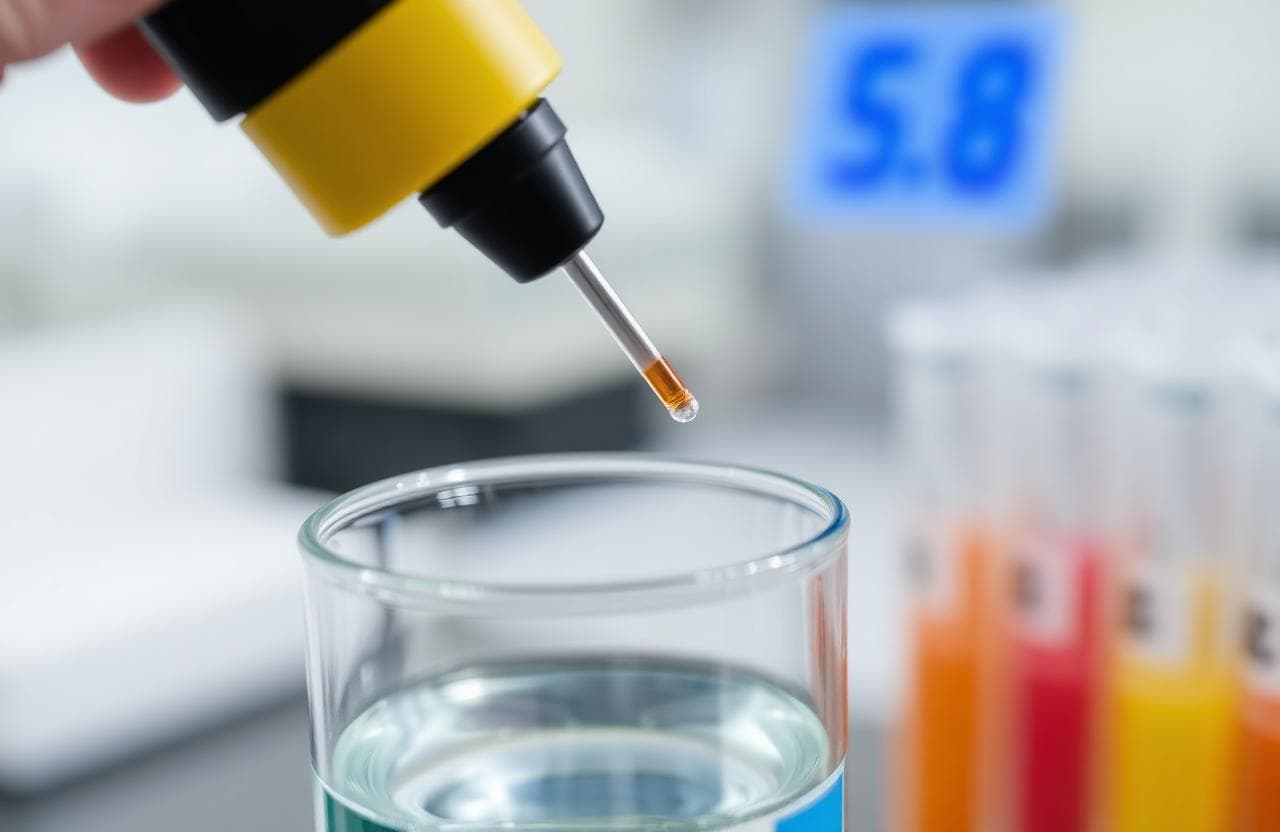
What pH and electroconductivity actually measure, the targets per crop, and how to calibrate the cheap meters that everyone owns.
25 abr 2026 · Dr. Julian Reed
Bench 03 · 17 articles
Mix nutrients with confidence, dial in pH and EC, decode deficiency charts, and choose between tap, RO, and rainwater.
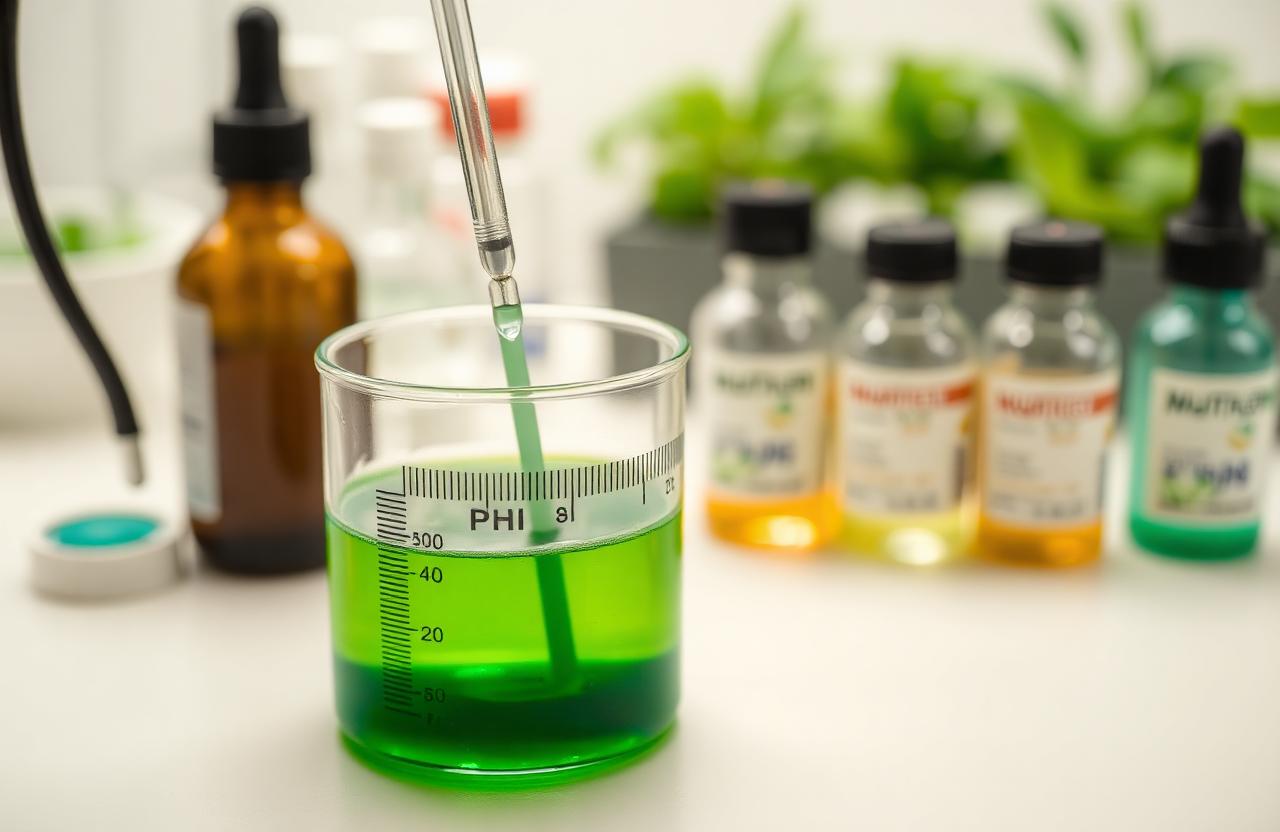
What pH and electroconductivity actually measure, the targets per crop, and how to calibrate the cheap meters that everyone owns.
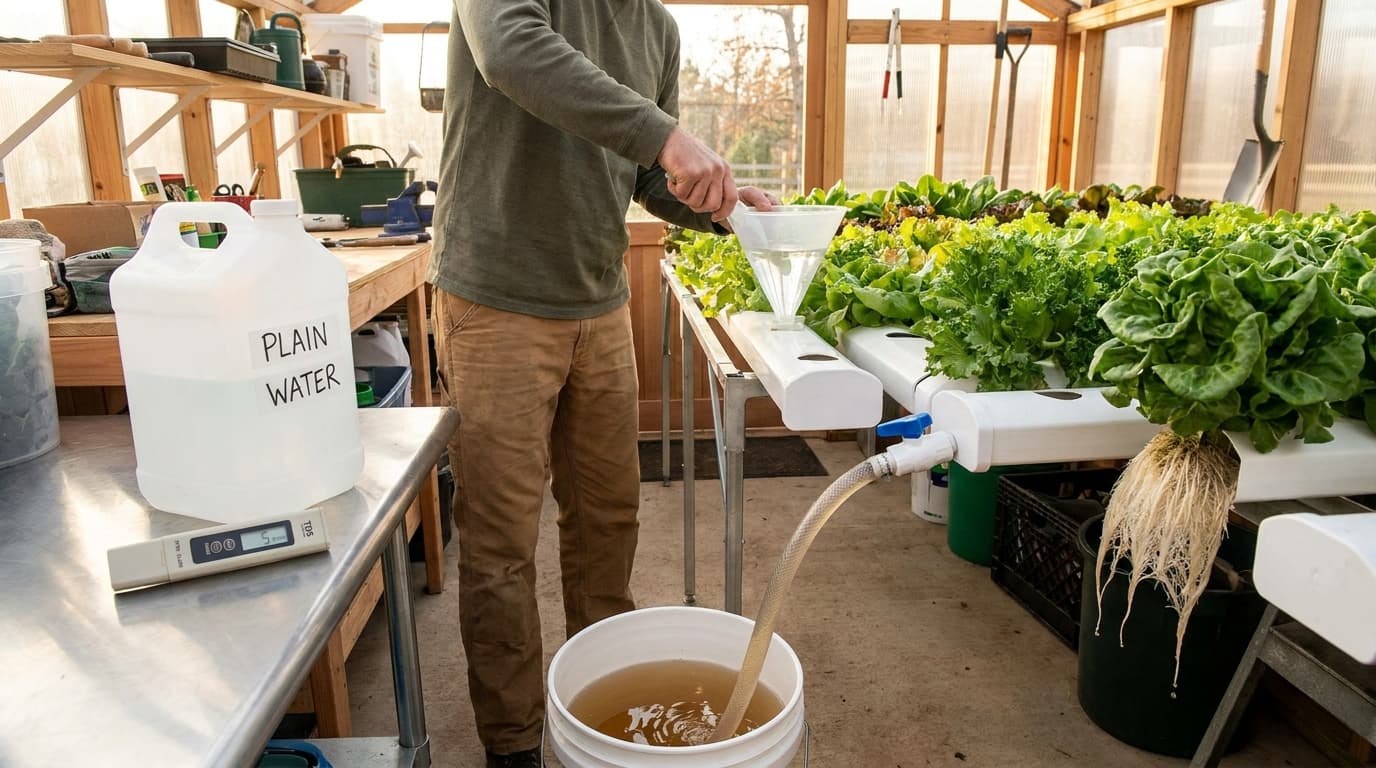
Explore our comprehensive guide on How to Flush Your Hydroponic System Before Harvest. Part of our technical series on nutrient science and water chemistry, this report covers everything you need to optimize your yield and maintain a healthy grow environment.
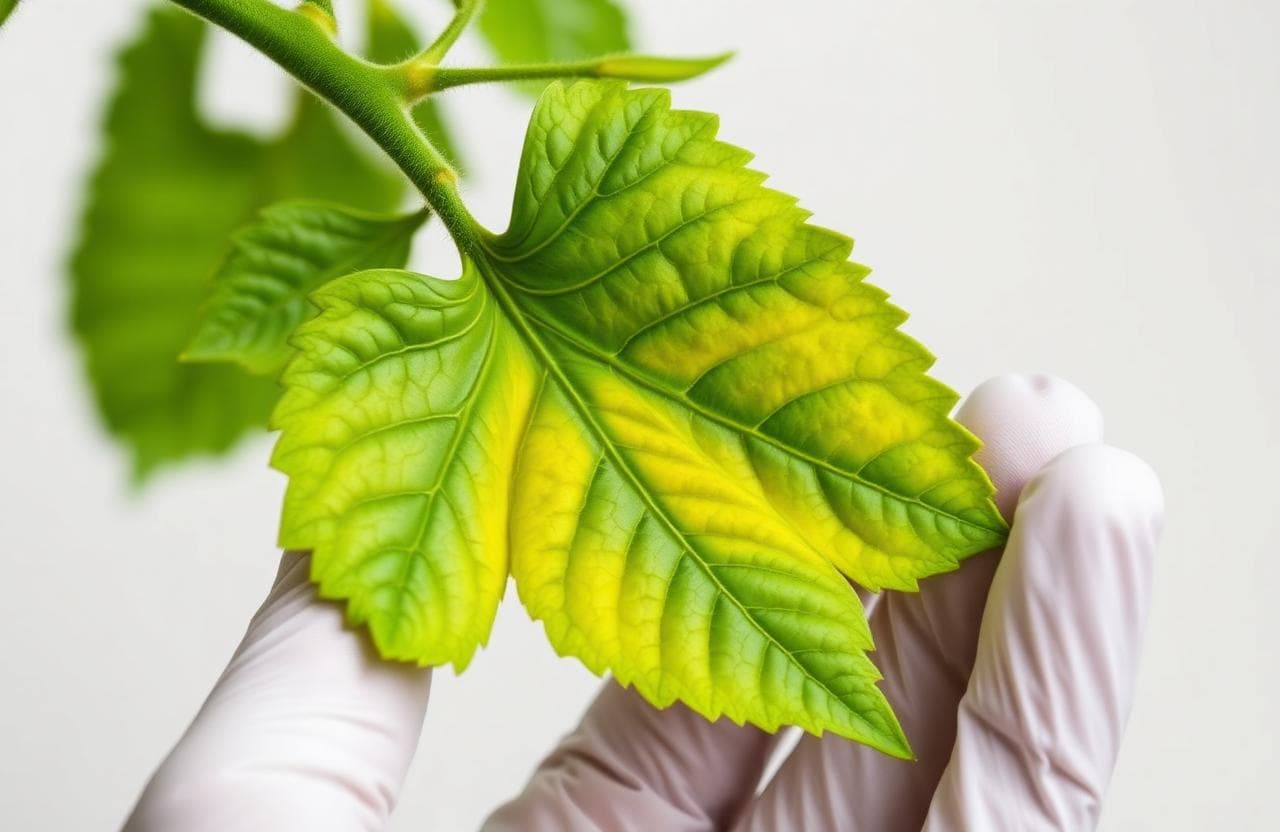
Yellow leaves, purple stems, twisted tips — a structured way to diagnose the 12 most common deficiencies.
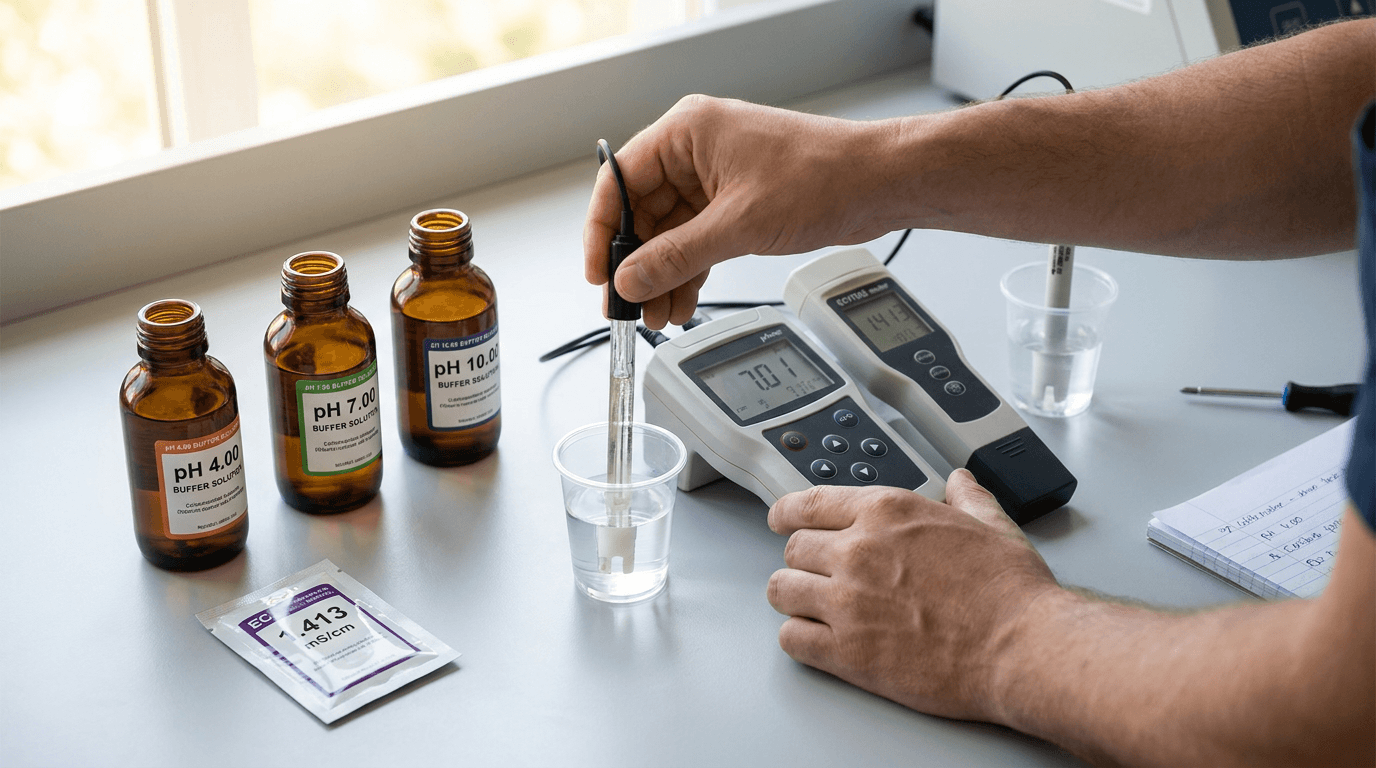
Explore our comprehensive guide on How to Calibrate Your pH and EC Meters Properly. Part of our technical series on nutrient science and water chemistry, this report covers everything you need to optimize your yield and maintain a healthy grow environment.
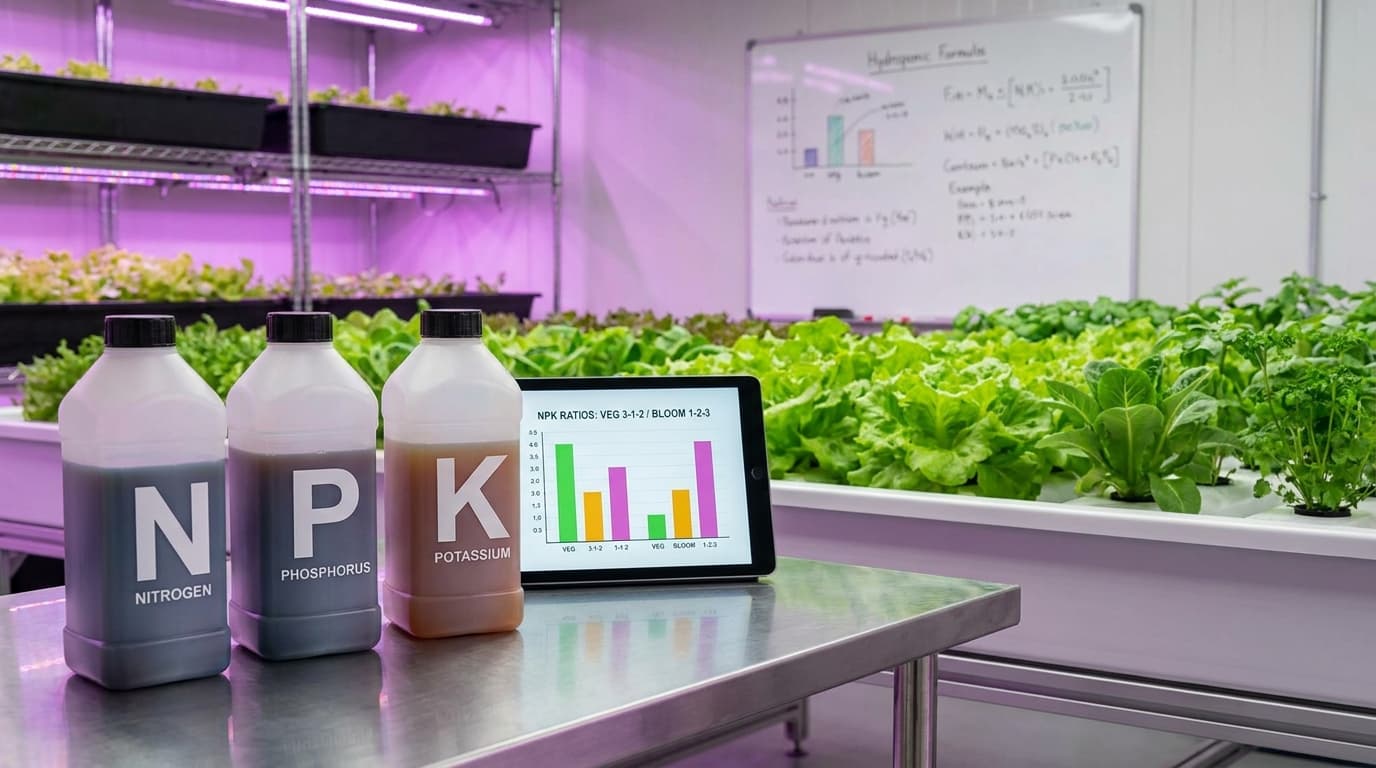
Explore our comprehensive guide on Mastering Hydroponic Nutrients: N-P-K Ratios Explained. Part of our technical series on nutrient science and water chemistry, this report covers everything you need to optimize your yield and maintain a healthy grow environment.
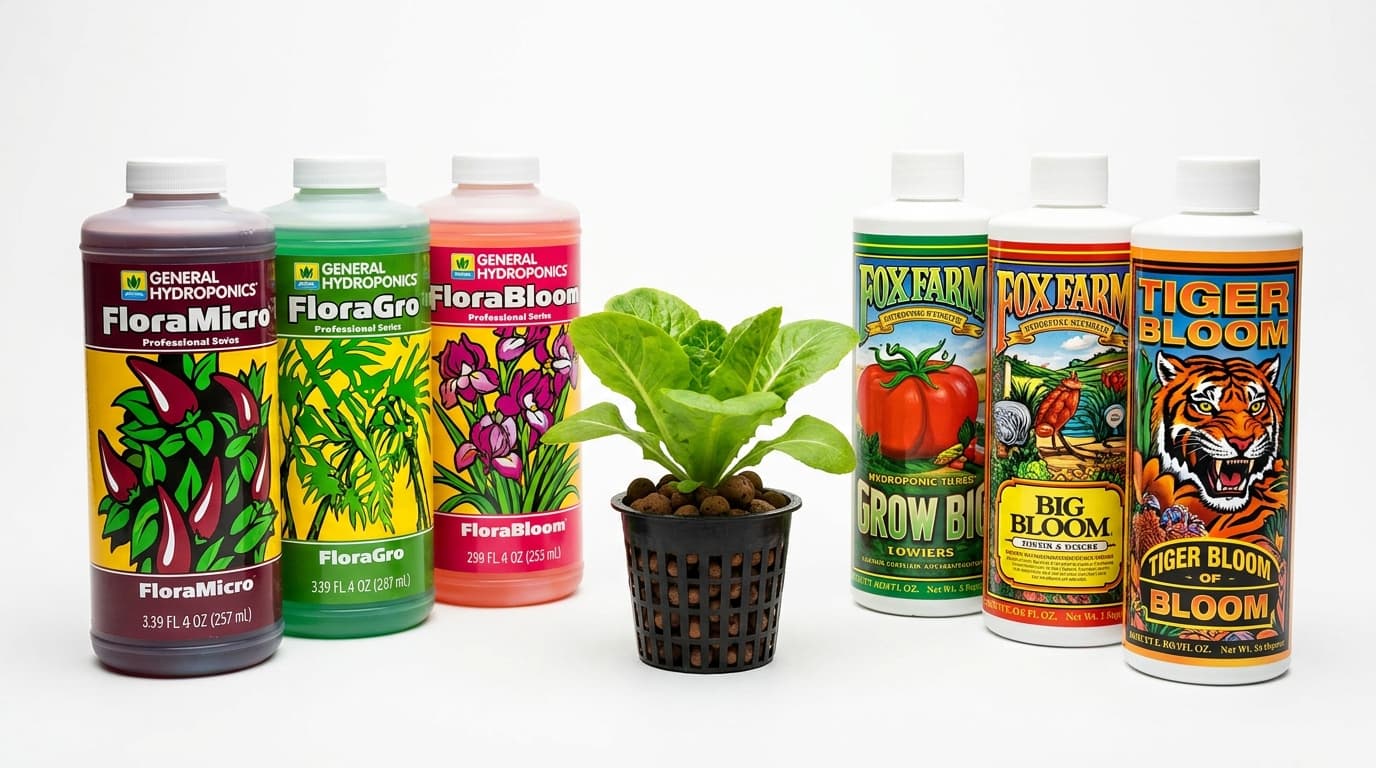
General Hydroponics Flora Series and Fox Farm Trio are the two most popular beginner nutrient lines. This head-to-head comparison covers price per gallon, pH buffering, mixing complexity, crop suitability, and feeding schedules to help you choose the right one for your first hydroponic grow.
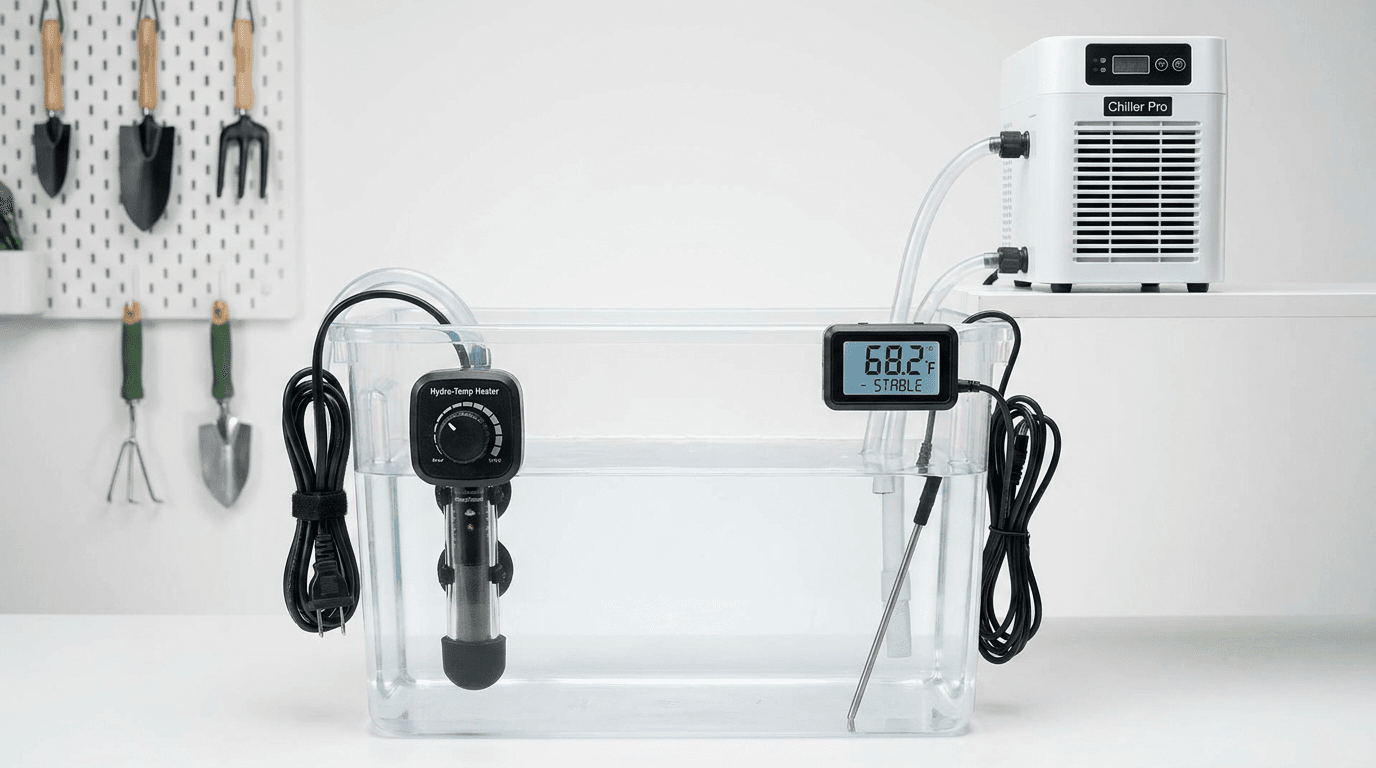
Stable water temperature between 18 and 22 degrees Celsius is critical for hydroponic root health. This guide covers ideal temperature ranges, dissolved oxygen dynamics, brand comparisons of Active Aqua and Hydrofarm chillers, the Inkbird aquarium heater hack, and DIY cooling methods.
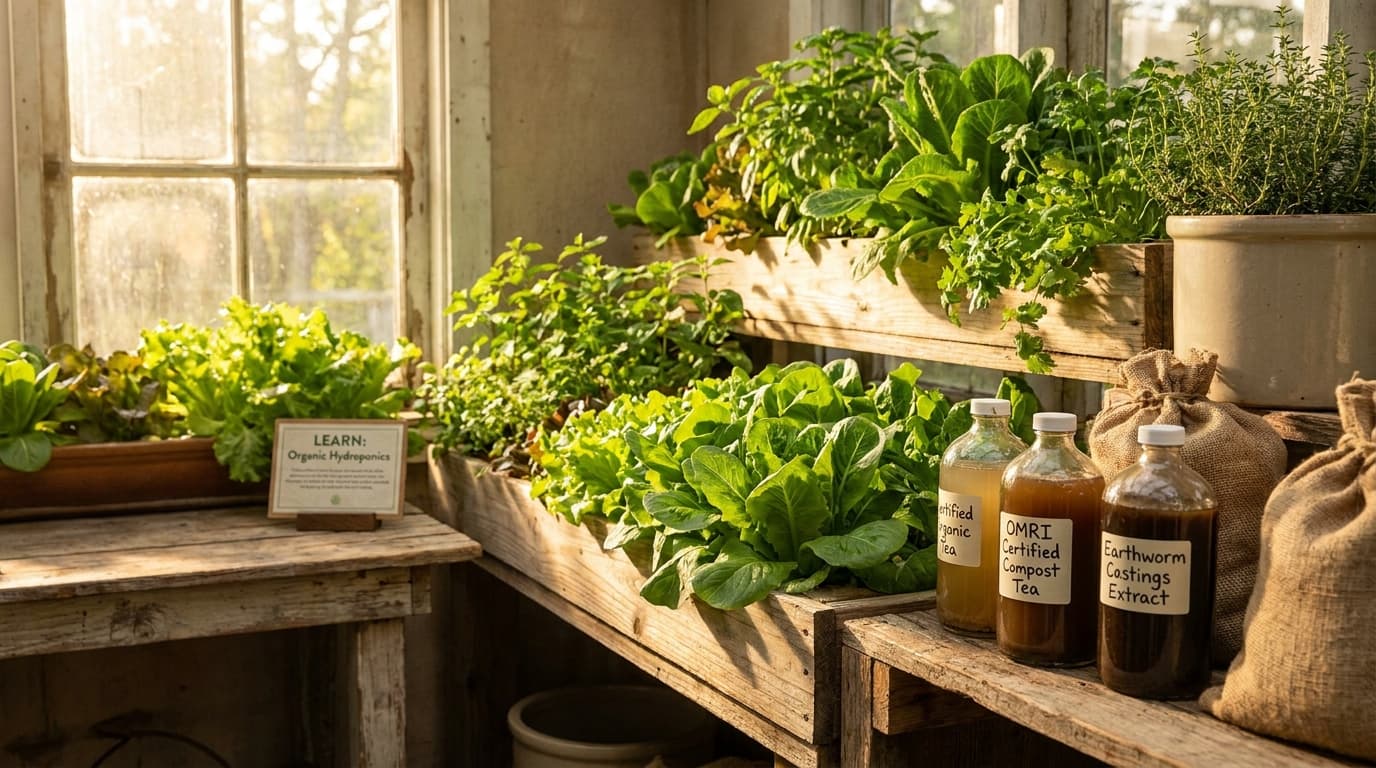
Can hydroponics truly be organic? We break down the chemistry of organic nutrients in soilless systems, compare sterile vs. living reservoirs, and reveal which products actually work without clogging your pumps or breeding root rot.

Save money on pH adjusters with a complete guide to natural alternatives including lemon juice, vinegar, citric acid, and baking soda. Learn the pros and cons of each, calculate precise dosages, and understand when natural adjusters are acceptable versus when commercial products are worth the cost.
RO filters are sold as essential. They aren't — unless your tap water has these specific problems.
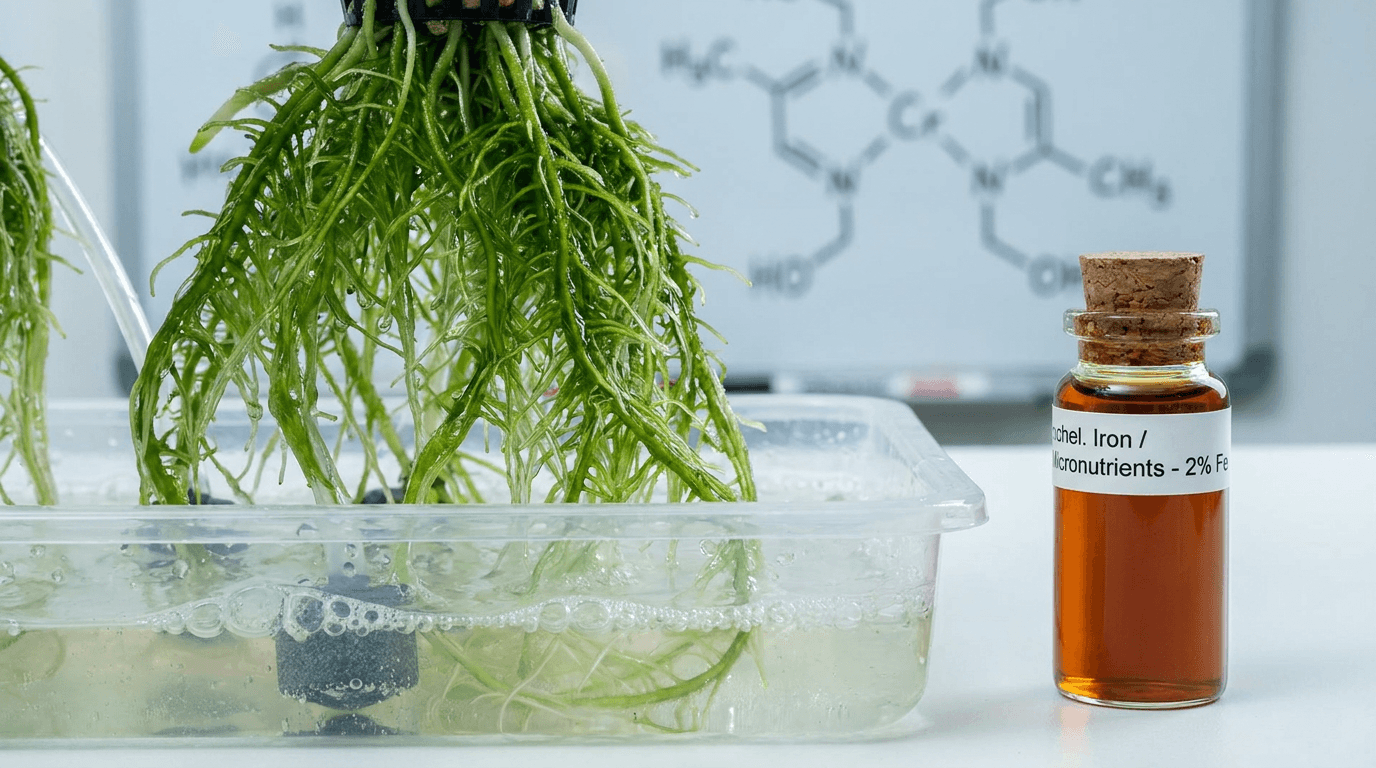
What chelation means, the four main chelate types and their pH ranges, how to fix iron deficiency, and when you are wasting money on chelated versus non-chelated fertilizers. A complete guide for hydroponic growers.
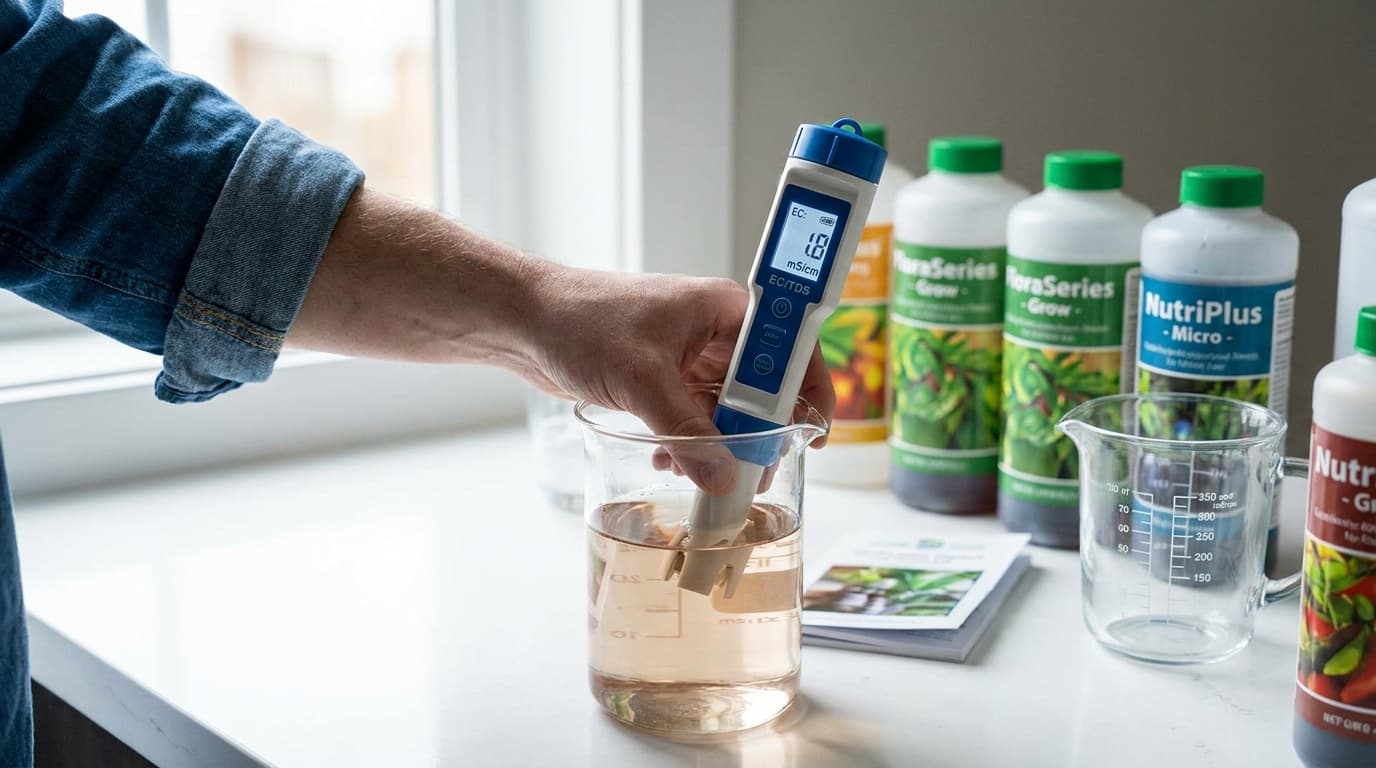
Explore our comprehensive guide on Understanding EC and PPM: Monitoring Your Nutrient Strength. Part of our technical series on nutrient science and water chemistry, this report covers everything you need to optimize your yield and maintain a healthy grow environment.
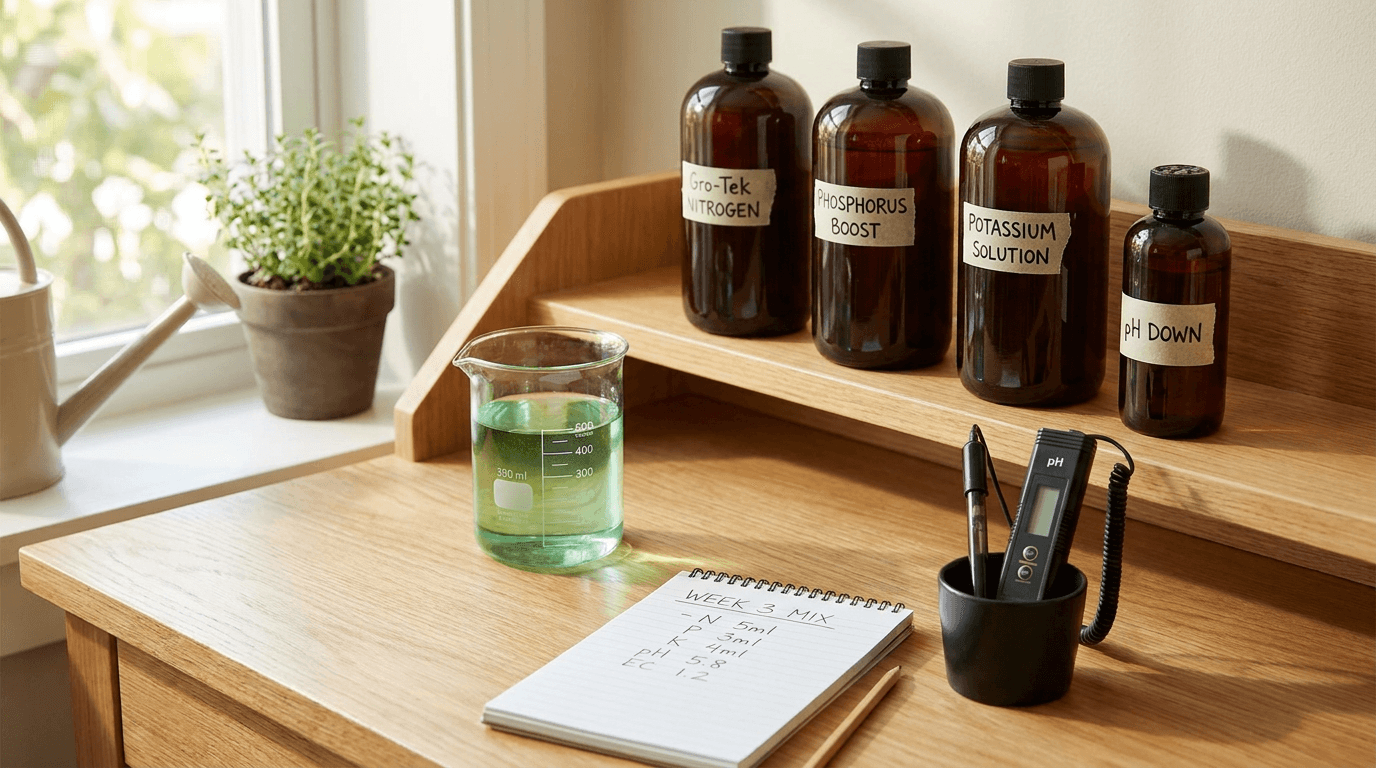
A complete technical guide to formulating your own hydroponic nutrient solution from raw salts. Covers calcium nitrate, magnesium sulfate, potassium nitrate, MKP, mixing order, EC calculation, cost comparison vs pre-mixed, hard water compatibility, and safety precautions.
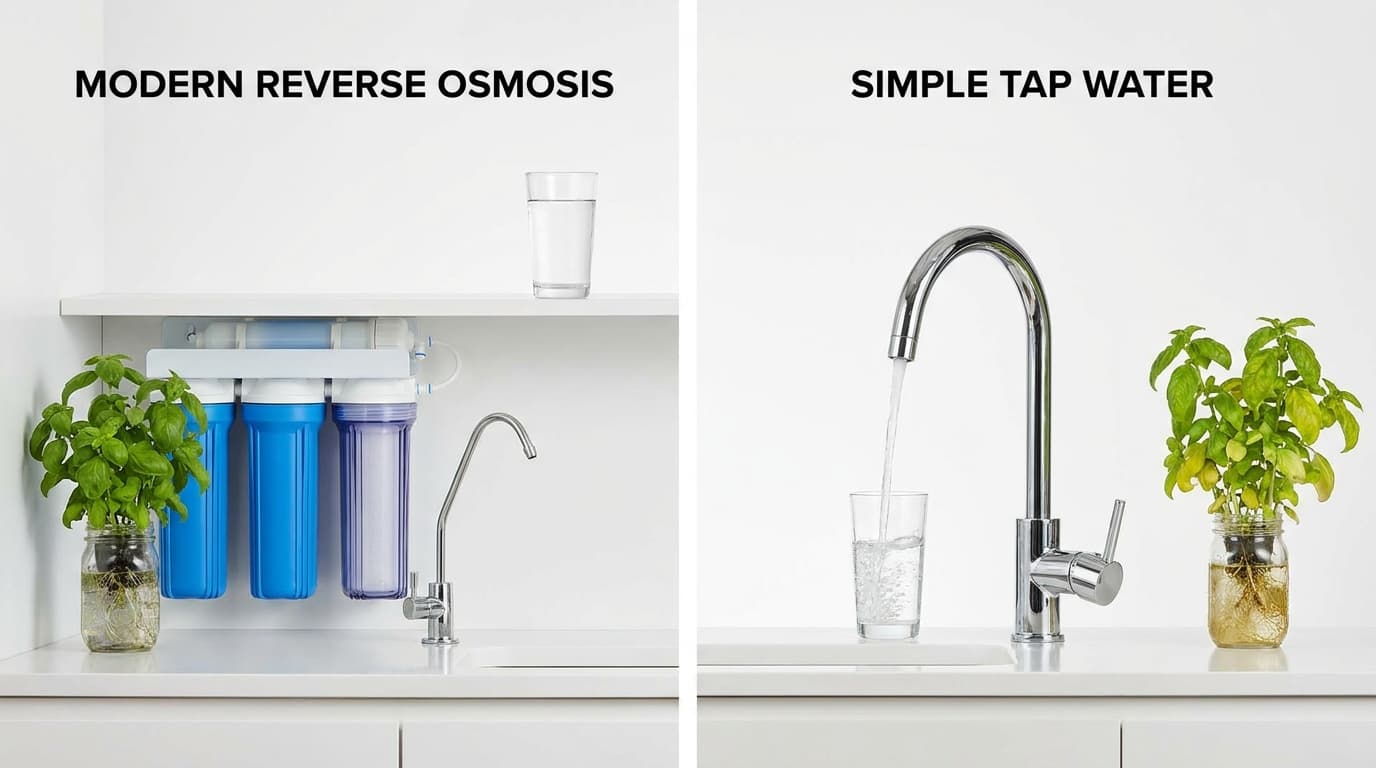
Should you invest in a reverse osmosis system for your hydroponic garden, or is tap water good enough? In this comprehensive guide, Dr. Julian Reed breaks down the chemistry of municipal water, the true cost of RO filtration, and exactly when purified water is essential versus overkill for your specific grow setup. Learn to interpret water quality reports, remineralize RO water, and set your baseline PPM and EC for consistent, repeatable nutrient management.
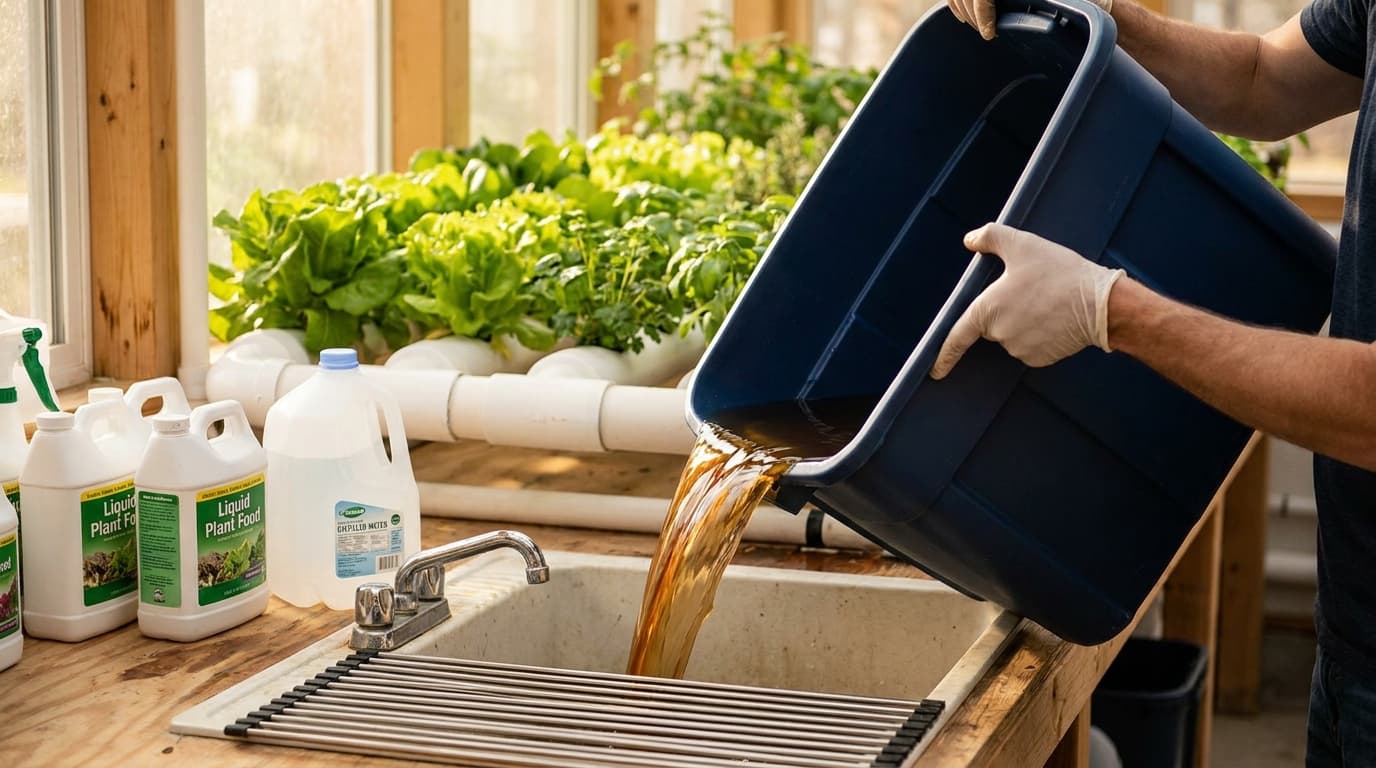
How often should you actually change your hydroponic reservoir? The answer depends on your system type, plant count, growth stage, and whether you use enzymes. Dr. Julian Reed covers DWC, NFT, aeroponics, and ebb and flow schedules, plus step-by-step change protocols, top-off vs. full change strategies, seasonal adjustments, and warning signs that your solution needs immediate replacement.
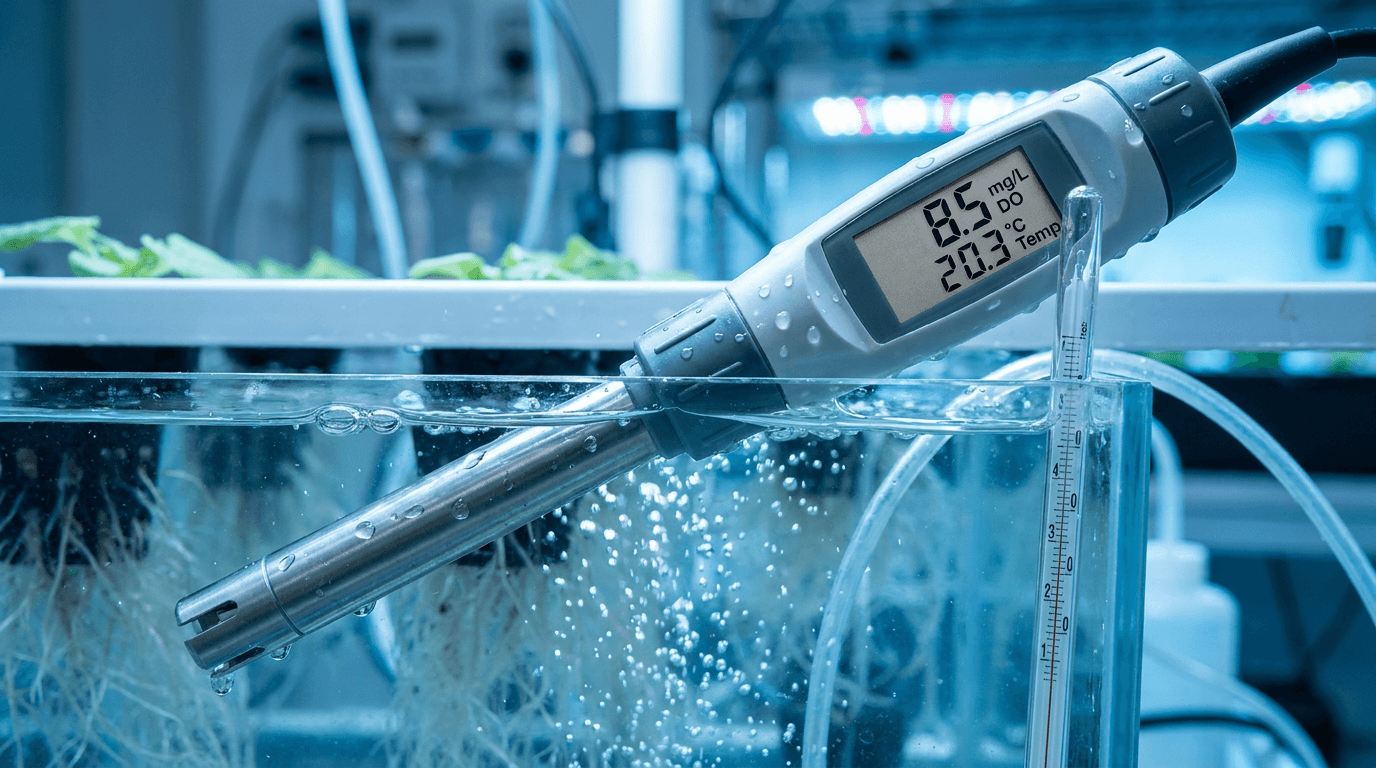
Water temperature is the single most critical environmental factor controlling dissolved oxygen in hydroponic systems. Learn the precise temperature-DO relationship, ideal ranges for every major crop, and proven strategies for reservoir cooling and heating.
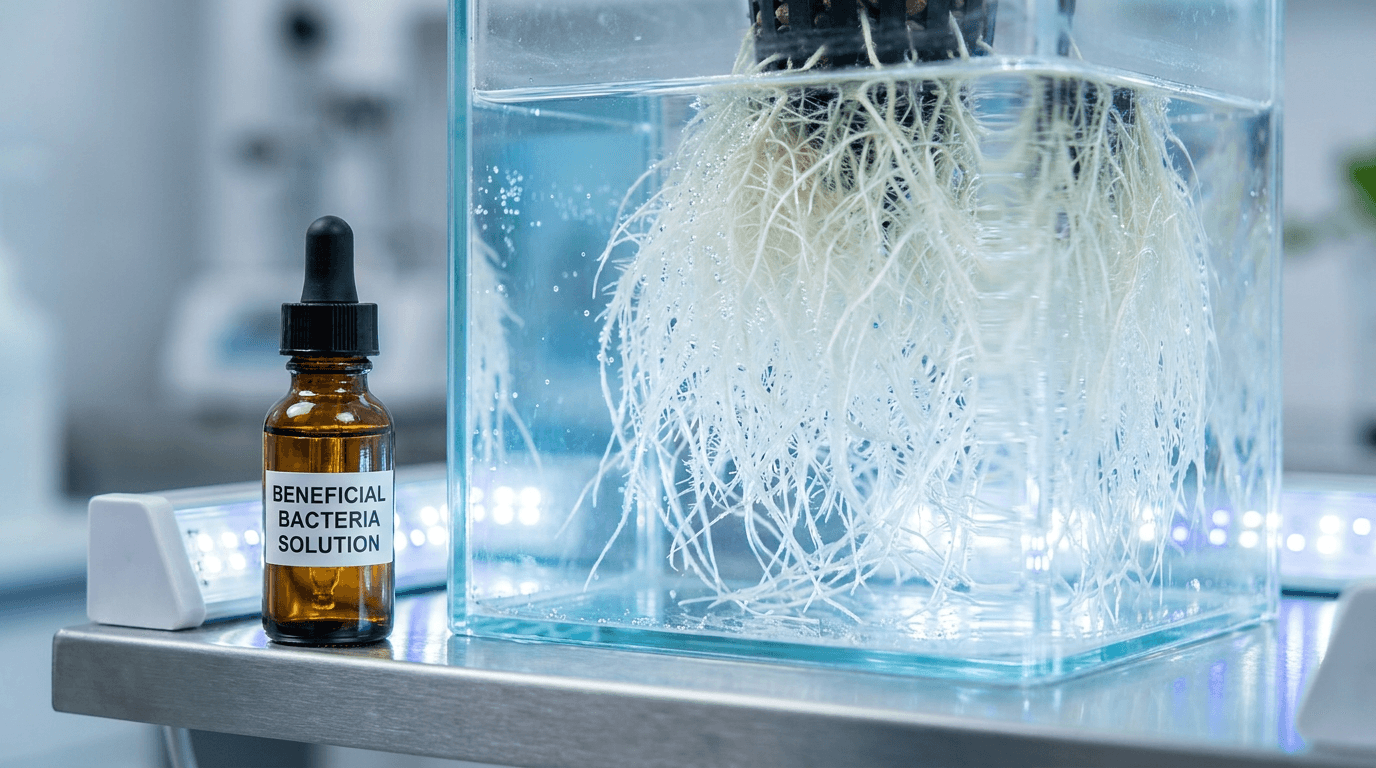
A science-backed guide to beneficial bacteria in hydroponic systems. Compare Hydroguard, Great White, and Orca, learn how Bacillus species prevent Pythium root rot, and discover when to use sterile reservoirs instead.