
Reading a Nutrient Deficiency Chart Like a Plant Doctor
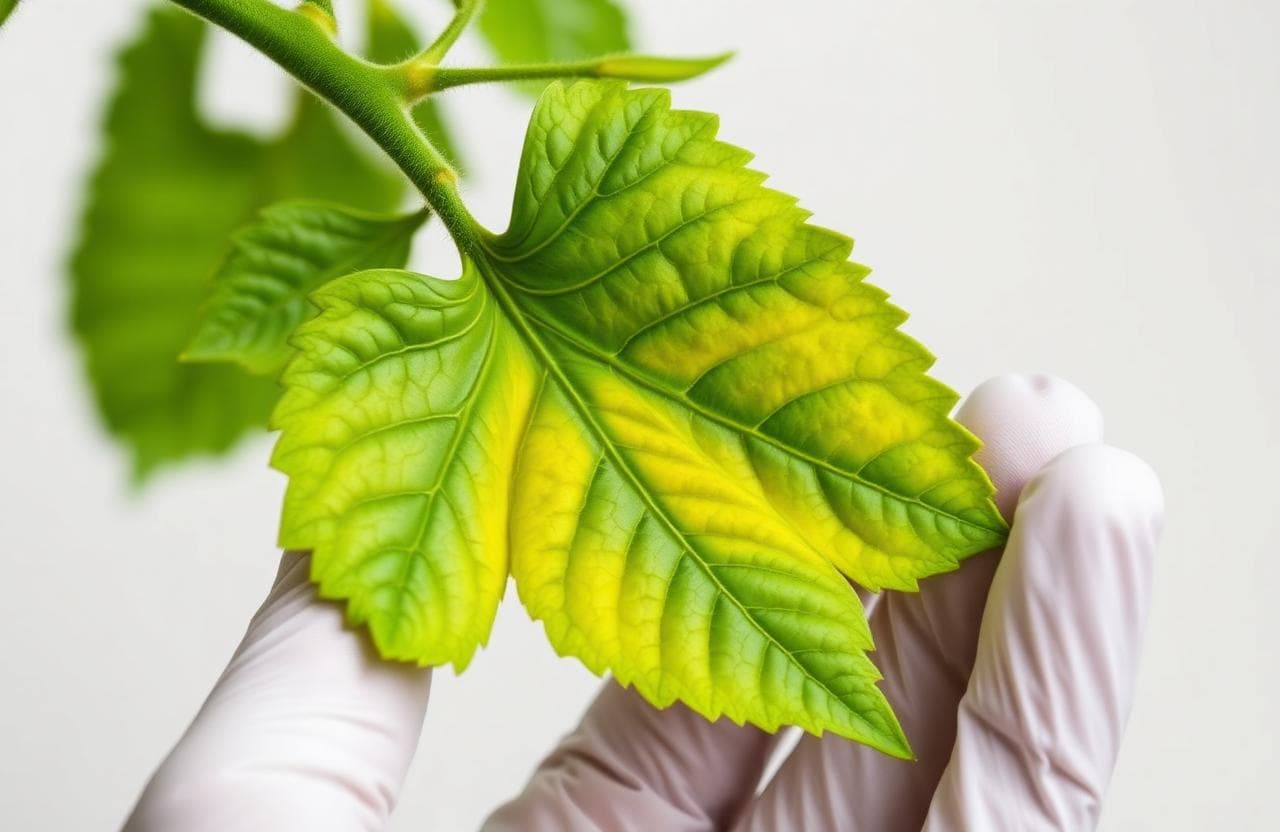
Every hydroponic grower eventually faces the same alarming moment: a plant that looked healthy yesterday is showing yellow leaves, purple stems, or twisted new growth. The instinct is to reach for a bottle of fertilizer and dose heavily. In most cases, this instinct is wrong. The majority of apparent deficiencies are not caused by a lack of nutrients but by pH lockout, where nutrients are present in the solution but chemically unavailable to the plant.
Learning to read a nutrient deficiency chart is a skill that separates experienced growers from beginners. The pattern of discoloration, its location on the plant, and the accompanying symptoms form a diagnostic fingerprint that points to a specific deficiency. This guide provides a structured diagnostic flowchart and a reference for the twelve most common deficiencies encountered in hydroponic systems.
The Lab's Verdict
Before treating any suspected deficiency, always check and correct your pH first. Eighty percent of deficiency symptoms resolve within forty-eight hours of adjusting pH to the correct range. If symptoms persist after pH correction, then and only then should you consider adding supplemental nutrients. This simple rule will save you from countless misdiagnoses and overdosing incidents.
Mobile vs Immobile Nutrients
The most important diagnostic clue is symptom location. Nutrients are classified as mobile or immobile based on whether the plant can relocate them from older leaves to new growth. Mobile nutrients, such as nitrogen, phosphorus, potassium, and magnesium, travel freely within the plant. When deficient, the plant cannibalizes its older leaves to supply new growth, so symptoms appear on lower, older leaves first.
Immobile nutrients, including calcium, iron, sulfur, and boron, cannot be moved once deposited. When these are deficient, new growth suffers because the plant cannot pull reserves from older leaves. Symptoms of immobile nutrient deficiencies always appear first on new leaves, growing tips, and meristems. This single observation narrows your diagnostic possibilities by half. For example, if you see yellowing between the veins on an older lower leaf, you immediately know it is a mobile nutrient deficiency magnesium is the most likely candidate. If the same pattern appears on a newly emerging leaf at the top of the plant, it is an immobile deficiency and iron is the prime suspect. The location of the symptom is more diagnostic than any other single piece of information, which is why experienced growers glance at the whole plant before reaching for a magnifying glass or test kit.
Mobile Deficiencies (Old Leaves)
- Nitrogen: Uniform yellowing of lower leaves
- Phosphorus: Purple stems and petioles
- Potassium: Yellow/brown leaf edges and tips
- Magnesium: Interveinal chlorosis of lower leaves
Immobile Deficiencies (New Leaves)
- Calcium: Distorted new growth, blossom end rot
- Iron: Interveinal chlorosis of new leaves
- Sulfur: Uniform yellowing of new leaves
- Boron: Brittle stems, terminal bud death
The Diagnostic Flowchart
When you notice a problem, follow these three questions in order. Each answer eliminates possibilities and narrows the diagnosis. Within sixty seconds you will have identified the likely deficiency or identified that the problem is not nutritional. The flowchart works because it eliminates entire categories of possibilities with each answer, similar to a binary search algorithm. By the time you reach the third question, you have narrowed twelve possible deficiencies down to two or three specific candidates that share the same symptom pattern.
- 1Where is the symptom? Old growth or new growth? If old, it is a mobile nutrient deficiency. If new, it is immobile or a pH issue.
- 2What is the yellowing pattern? Uniform yellowing across the whole leaf suggests nitrogen or sulfur. Yellow between the veins with green veins suggests iron or magnesium.
- 3Any stem or petiole color change? Purple or red stems strongly suggest phosphorus deficiency. Brown or black spots suggest potassium or calcium issues.
Complete Deficiency Reference Table
The table below covers the twelve most common nutrient deficiencies in hydroponic systems. Use it as your primary reference when the diagnostic flowchart has narrowed the possibilities. Each entry includes the visual symptoms, the typical cause, and the specific corrective action.
| Nutrient | Mobility | Key Symptoms | Common Cause | Correction |
|---|---|---|---|---|
| Nitrogen (N) | Mobile | Uniform pale green to yellow on lower leaves; slow growth; thin stems | Underfeeding or pH above 6.5 | Increase EC by 0.2; check pH |
| Phosphorus (P) | Mobile | Purple or red stems and petioles; dark green leaves; reduced flowering | Cold reservoir temperature below 18 C | Warm solution to 20-22 C; add PK booster |
| Potassium (K) | Mobile | Yellow/brown scorching on leaf edges and tips; weak stems | High EC locking out K; insufficient K in bloom | Flush with low-EC solution; add K supplement |
| Calcium (Ca) | Immobile | Distorted new leaves; blossom end rot in fruit; stunted root tips | Low transpiration (low VPD); Ca deficiency | Increase VPD to 1.2-1.6 kPa; add CalMag |
| Magnesium (Mg) | Mobile | Interveinal chlorosis on lower leaves; leaf edges curl upward | Mg naturally precipitates in concentrated stock solutions | Add Epsom salt (1g per gallon); use fresh nutrients |
| Sulfur (S) | Immobile | Uniform yellowing of new leaves (similar to N but on new growth) | Rare in hydroponics; occurs with RO water and low-S fertilizers | Switch to nutrient formula with sulfate-based micronutrients |
| Iron (Fe) | Immobile | Interveinal chlorosis on new leaves; leaves may appear almost white | pH above 6.5; old or oxidized iron chelate | Lower pH to 5.8; apply iron chelate (DPTA or EDDHA) |
| Manganese (Mn) | Immobile | Interveinal chlorosis on new leaves with small necrotic spots | pH above 6.5; high iron levels antagonizing Mn | Lower pH; check Fe/Mn ratio in your formula |
| Boron (B) | Immobile | Brittle stems; terminal bud death; hollow fruit; thick/cracked petioles | Underfeeding; pH above 6.5 | Add boric acid (0.1g per 10 gallons); check pH |
| Zinc (Zn) | Immobile | Stunted new leaves with interveinal chlorosis; shortened internodes | pH above 6.5; high phosphorus antagonizing Zn | Lower pH; reduce P if excessive; add Zn chelate |
| Copper (Cu) | Immobile | Dark green twisted new leaves; wilting; reduced stem firmness | Very rare; usually from high pH or excessive Zn/Fe | Add copper chelate (0.05g per 10 gallons) |
| Molybdenum (Mo) | Immobile | Pale twisted new leaves; whiptail in cauliflower family | pH below 5.5; very rare in most hydroponic formulas | Raise pH to 5.8; add Mo if confirmed by lab test |
Treatment Protocol
When you have identified a suspected deficiency, follow this treatment sequence. Rushing to add supplements without following this order is the most common reason that deficiency treatments fail.
Step 1: Verify Your pH
Measure pH with a freshly calibrated meter. If pH is outside 5.5 to 6.5, adjust to 5.8 and wait twenty-four to forty-eight hours before taking any further action. Document the symptom and the pH reading. In our lab, this single step resolves approximately eighty percent of suspected deficiency cases.
Step 2: Check Your EC
If pH is correct but symptoms persist, measure EC. If EC is below the target range for your crop, the solution is too dilute. Top up with full-strength nutrient solution to bring EC into range. If EC is above target, the solution is too concentrated and may be causing osmotic stress that mimics deficiency symptoms. Dilute with pH-adjusted water.
Step 3: Check Environmental Conditions
Low VPD below 0.8 kPa reduces transpiration and causes calcium and magnesium deficiency symptoms regardless of nutrient levels. High temperatures above 30 degrees Celsius can cause nutrient burn symptoms even at normal EC levels. Measure temperature, humidity, and calculated VPD before adding any supplements. In our experience, fifteen percent of apparent deficiencies are actually environmental stress.
Step 4: Apply Targeted Supplement
Only after steps one through three have been exhausted should you add a specific nutrient supplement. Apply at half the manufacturer's recommended dose and wait forty-eight hours before assessing results. Deficiency symptoms rarely reverse completely in less than three to five days. New growth showing correct color is the best indicator that the treatment is working. Old damaged leaves will not recover, but they should not spread to additional leaves. Keep a written log of each deficiency event: the date, the symptoms observed, the pH and EC readings, the treatment applied, and the recovery time. This log becomes invaluable reference material when similar symptoms appear in future crops.
Frequently Asked Questions
Can a plant have multiple deficiencies at the same time?
Yes, multiple deficiencies can occur simultaneously, but they usually share a single root cause. The most common scenario is pH lockout, where high pH above 6.5 simultaneously locks out iron, manganese, boron, and zinc. Correcting the pH resolves all four deficiencies at once. The most common combination deficiency is iron and zinc appearing together because both are locked out at pH above 6.5. This presents as interveinal chlorosis on new leaves combined with stunted new growth and shortened internodes. Correcting the pH to 5.8 resolves both simultaneously. The most common combination deficiency is iron and zinc appearing together because both are locked out at pH above 6.5. This presents as interveinal chlorosis on new leaves combined with stunted new growth and shortened internodes. Correcting the pH to 5.8 resolves both simultaneously. True simultaneous independent deficiencies are rare in properly maintained hydroponic systems because complete nutrient formulas contain all essential elements in balanced ratios.
How long does it take for a plant to recover from a deficiency?
Once the underlying cause is corrected, new growth should show improvement within two to five days. Existing damaged leaves will never fully recover. The severity and duration of the deficiency determine the recovery time. A mild nitrogen deficiency corrected promptly will show greener new growth within three days. A severe calcium deficiency that has caused tip burn on multiple leaves may require one to two weeks before all new growth appears normal. Focus on the new growth as the indicator of recovery.
What is the difference between a deficiency and a toxicity?
Deficiency symptoms appear when a nutrient is absent or unavailable. Toxicity symptoms appear when a nutrient is present in excess. Surprisingly, many nutrient toxicities look nearly identical to deficiencies of other nutrients. For example, nitrogen toxicity causes dark green leaves and weak stems, which could be mistaken for phosphorus deficiency. Iron toxicity causes brown spotting on leaves that looks similar to potassium deficiency. This is why measuring EC and following a balanced nutrient schedule is more reliable than guessing based on visual symptoms alone.
Do LED grow lights affect how I should read deficiency symptoms?
LED grow lights, especially blurple fixtures, can make it extremely difficult to read deficiency symptoms accurately because the colored light masks the natural leaf colors. Full-spectrum white LEDs allow normal color perception. If you are using blurple lights, remove the plant from the grow area and inspect it under natural daylight or a neutral white light source. Purple stems, which indicate phosphorus deficiency, are particularly hard to distinguish under blurple lighting because everything has a purple tint.
Can I fix a deficiency by foliar feeding instead of adjusting the reservoir?
Foliar feeding can provide rapid short-term relief for certain deficiencies, particularly magnesium and iron, because the nutrients are absorbed directly through the leaf surface within hours. However, foliar feeding treats the symptom, not the cause. If the deficiency is caused by pH lockout in the root zone, foliar feeding will provide temporary improvement while the root-zone problem continues. Use foliar sprays as a first-aid measure while you correct the underlying issue in the reservoir. Apply at lights-off to prevent leaf burn.
How do I distinguish between a nutrient deficiency and a disease?
Diseases typically have irregular patterns of damage that do not follow leaf vein structure, while nutrient deficiencies follow predictable patterns based on nutrient mobility and leaf position. Powdery mildew appears as a white powder on leaf surfaces, not as interveinal chlorosis. Root rot causes wilting and general decline that looks like multiple deficiencies at once. If the symptom pattern does not match any known deficiency, check the roots first. If roots are brown and slimy, treat for Pythium before adding any nutrients.
Can overwatering cause nutrient deficiency symptoms?
In hydroponic systems, overwatering refers to roots being submerged too deeply or for too long, not to excessive watering frequency as in soil. When roots are constantly submerged without adequate oxygen, they cannot perform active nutrient uptake regardless of what is in the solution. This creates deficiency symptoms that look identical to true nutrient deficiencies, typically starting with yellowing of lower leaves that resembles nitrogen deficiency. In NFT systems, the most common cause is inadequate slope causing pooling. In DWC systems, it is an undersized air pump or clogged air stone. Always check root oxygen availability before adding nutrients.
Can overwatering cause nutrient deficiency symptoms?
In hydroponic systems, overwatering refers to roots being submerged too deeply or for too long, not to excessive watering frequency as in soil. When roots are constantly submerged without adequate oxygen, they cannot perform active nutrient uptake regardless of what is in the solution. This creates deficiency symptoms that look identical to true nutrient deficiencies, typically starting with yellowing of lower leaves that resembles nitrogen deficiency. In NFT systems, the most common cause is inadequate slope causing pooling. In DWC systems, it is an undersized air pump or clogged air stone. Always check root oxygen availability before adding nutrients.
Should I remove leaves that show deficiency symptoms?
Do not remove leaves showing deficiency symptoms until new growth confirms the problem is resolved and the damaged leaves are more than fifty percent necrotic. When a plant is recovering from a deficiency, it re-mobilizes nutrients from the damaged older leaves to support new growth. Removing those leaves removes a valuable nutrient source. Once the new growth is fully healthy and the old leaves are mostly dead and brown, they can be pruned for aesthetic purposes and to reduce disease pressure.
Which Deficiency Detective Are You?
Find your diagnostic style and build your plant health toolkit accordingly.
The Quick Responder
You want a laminated flowchart taped to your reservoir wall. Symptoms appear, you scan the chart, check pH, and act within minutes. Speed is your advantage.
The Data-Driven Detective
You log every symptom, EC measurement, and pH reading in a spreadsheet. You look for patterns over time rather than reacting to single observations.
The Preventive Maintainer
You change nutrients on schedule, calibrate meters religiously, and monitor environmental conditions daily. You have not seen a deficiency in months because you prevent them.
The Lab's Final Analysis
Nutrient deficiency diagnosis is a skill that improves with practice. The first time you see a magnesium deficiency, you will never forget the distinctive interveinal yellowing pattern on lower leaves. The key is to approach each symptom systematically, using location and pattern as your primary diagnostic tools rather than guessing and hoping.
Remember the golden rule: pH first, nutrients second. An EC meter and pH meter will resolve eighty percent of deficiency mysteries before you add a single drop of supplement. Keep a log of symptoms and your responses. Over time, you will develop an intuitive understanding of your system that makes diagnosis nearly instant. Follow the four-step treatment protocol and you will never waste money on unnecessary supplements again.
Print the diagnostic flowchart and tape it to your reservoir. The next time a plant looks sick, you will know exactly where to start looking for answers.
More from Nutrition & pH
Keep reading
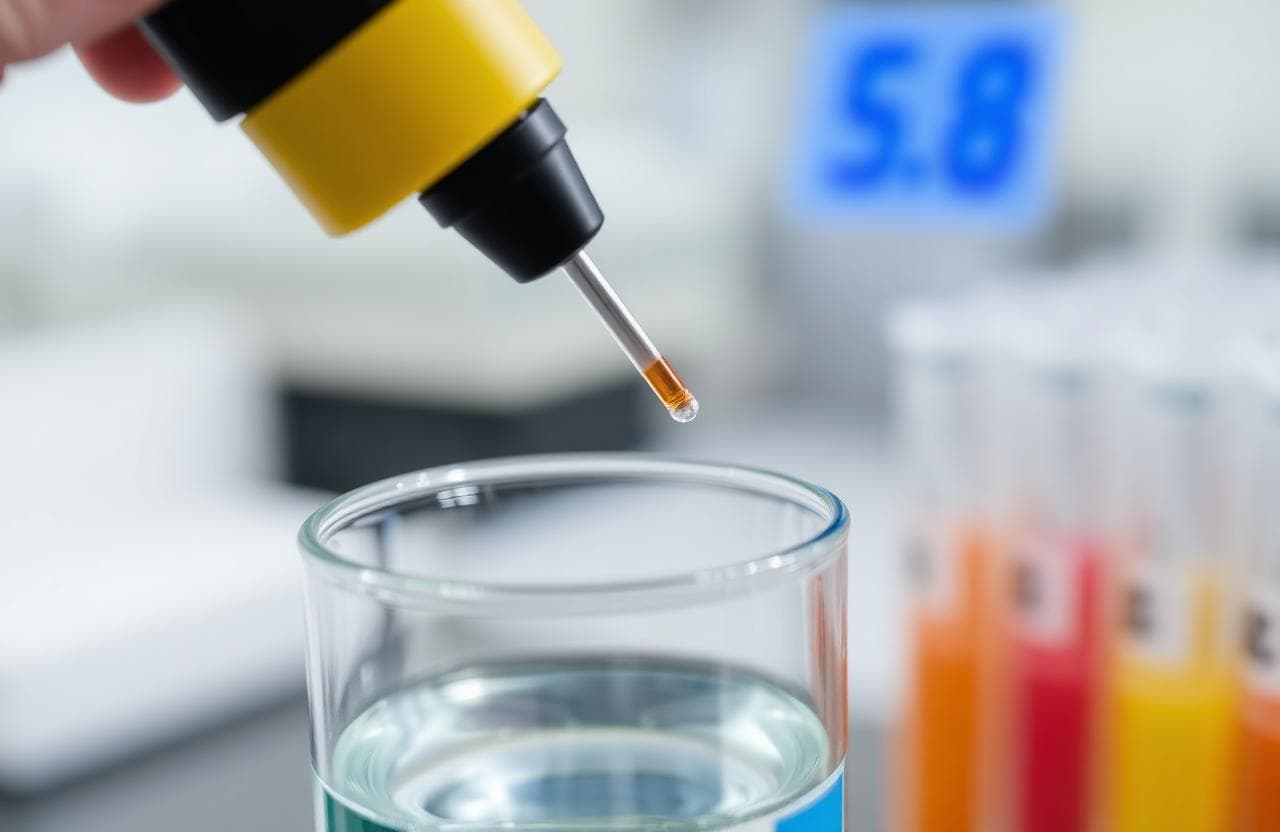
pH and EC for Beginners: The Two Meters You Cannot Skip
What pH and electroconductivity actually measure, the targets per crop, and how to calibrate the cheap meters that everyone owns.
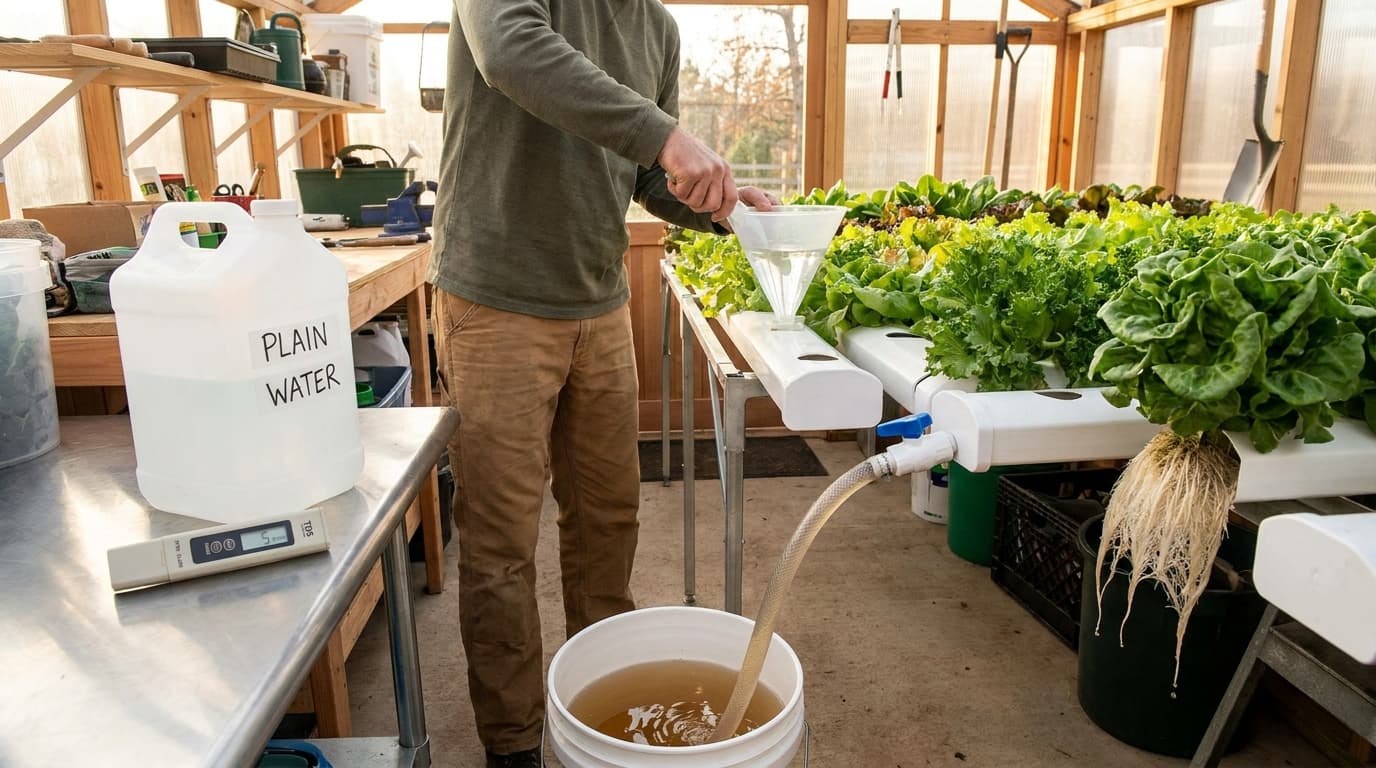
How to Flush Your Hydroponic System Before Harvest
Explore our comprehensive guide on How to Flush Your Hydroponic System Before Harvest. Part of our technical series on nutrient science and water chemistry, this report covers everything you need to optimize your yield and maintain a healthy grow environment.
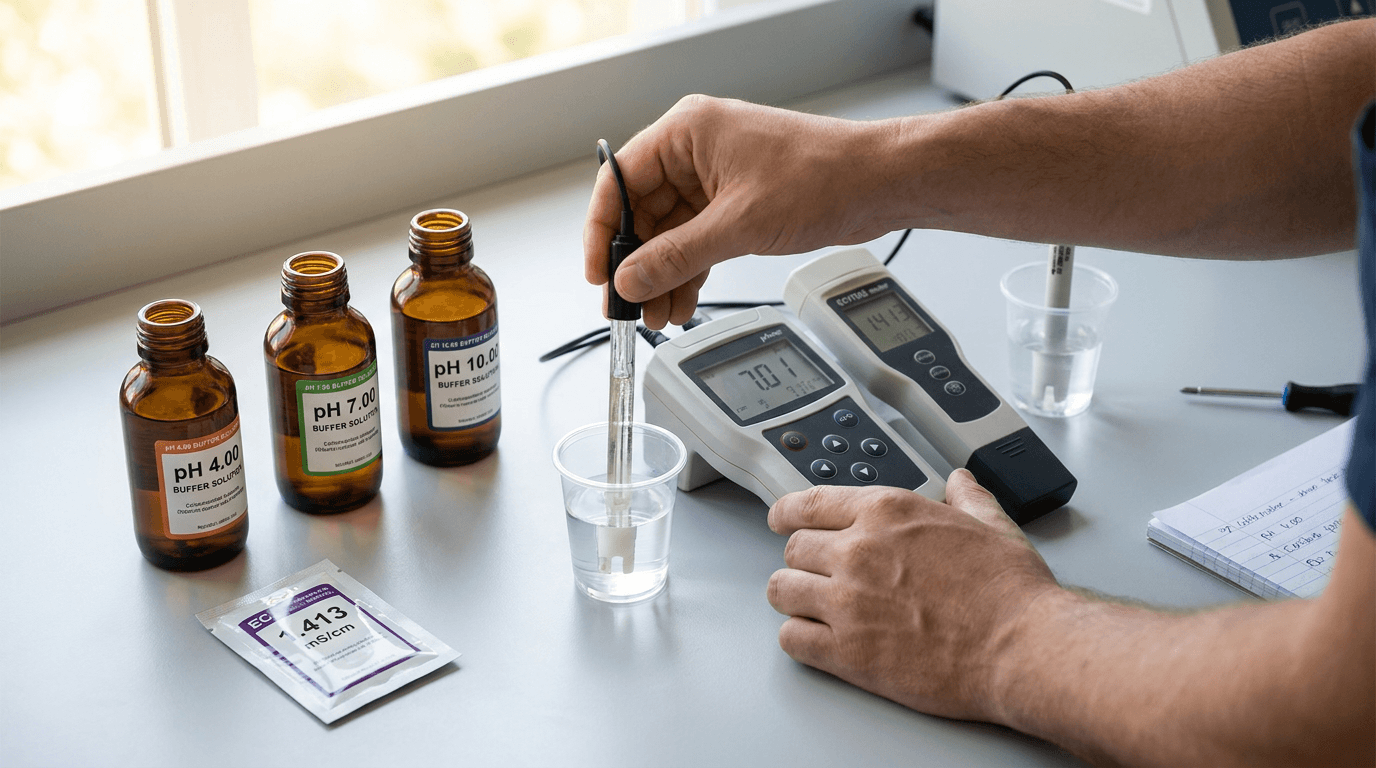
How to Calibrate Your pH and EC Meters Properly
Explore our comprehensive guide on How to Calibrate Your pH and EC Meters Properly. Part of our technical series on nutrient science and water chemistry, this report covers everything you need to optimize your yield and maintain a healthy grow environment.