
Tap vs RO Water: When You Actually Need a Reverse Osmosis Filter
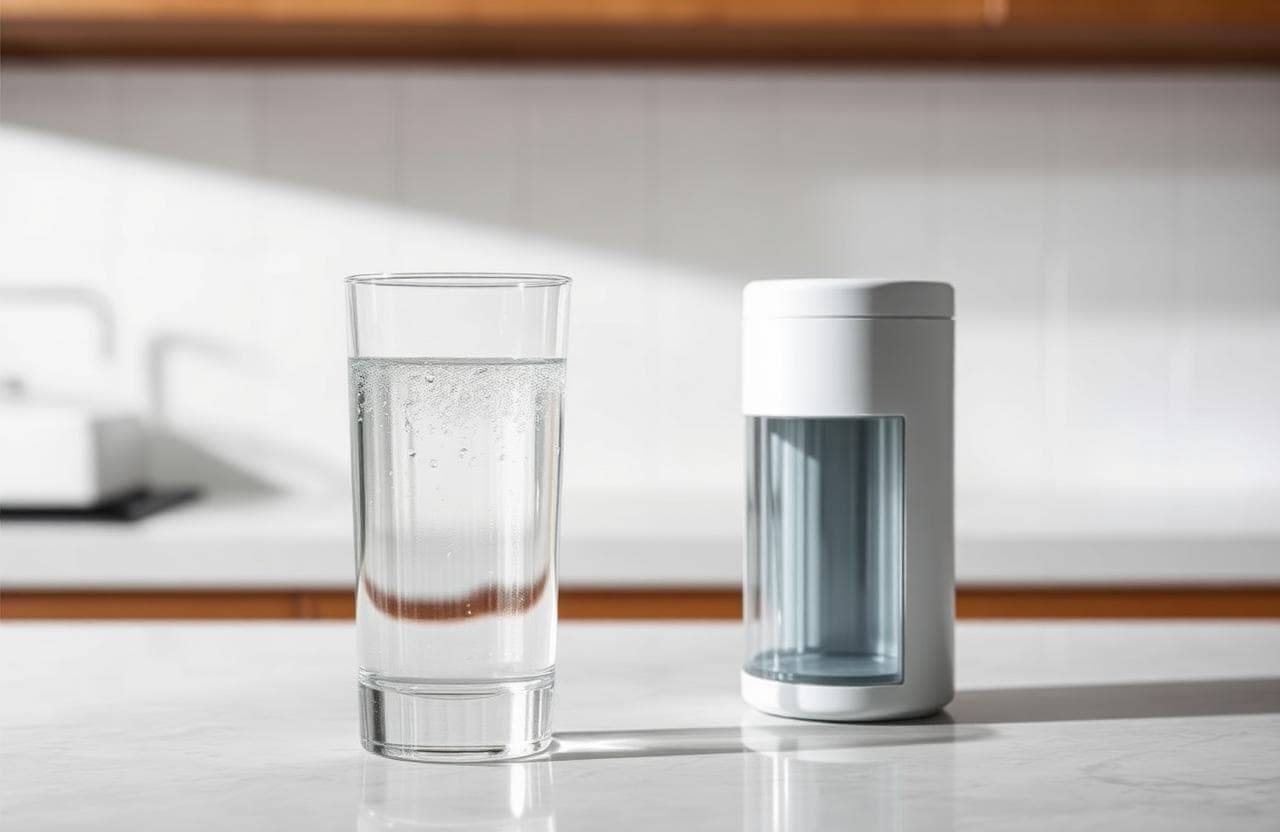
Every hydroponic grower faces the same question sooner or later: can I trust my tap water, or do I need to invest in a reverse osmosis (RO) filter? Walk into any hydroponic forum and you will find passionate arguments on both sides. Some growers swear by RO water and claim it is the only way to achieve consistent, high-yield crops. Others have been running thriving systems on straight tap water for years.
The truth is more nuanced than either camp admits. RO filters are expensive, wasteful, and unnecessary for the majority of home growers. But for a specific subset of water profiles, an RO system is not a luxury, it is the single most important investment you can make for your indoor garden. This guide will teach you how to diagnose your water, interpret your municipal water report, and make an informed decision based on science rather than marketing.
At The Hydro Lab, we have tested over forty different municipal water sources across Spain, the UK, and the United States. We have grown identical crops side by side using tap water, RO water, and blended water. The results were surprising: in most cases, tap water outperformed RO water when managed correctly. But in the cases where RO was necessary, the difference was not incremental, it was the difference between a harvest and no harvest at all.
The Lab's Verdict
Do not buy an RO filter until you have tested your tap water with an EC meter and obtained your municipal water quality report. If your baseline EC is below 0.4 mS/cm and your water contains no chloramine, tap water is not only sufficient, it is actually preferable because it contains beneficial trace minerals that RO water lacks. Reserve RO for water sources above 0.6 mS/cm, water that contains chloramine, or growers who need absolute precision for sensitive crops like lettuce and strawberries.
What Is Actually in Your Tap Water?
Municipal tap water is a complex chemical cocktail. Depending on your location, your water may contain calcium, magnesium, sodium, bicarbonates, chlorides, sulfates, fluorides, chlorine, chloramine, and trace amounts of heavy metals. Some of these are beneficial for plants. Others are neutral. A few are actively harmful in hydroponic systems.
The two most important metrics for hydroponic growers are total dissolved solids (TDS), measured in parts per million (ppm) or microsiemens per centimeter (mS/cm), and alkalinity, measured in ppm of calcium carbonate (CaCO₃). TDS tells you how much stuff is in your water. Alkalinity tells you how resistant your water is to pH changes, which directly affects your ability to maintain a stable nutrient solution.
Water that tastes good to humans can be terrible for plants, and water that tastes slightly mineral-rich can be ideal for hydroponics. Your taste buds are not a reliable measuring instrument. Only an EC meter and a water report can tell you what you need to know.
Key Contaminants to Watch
- Chloramine: Does not evaporate. Kills beneficial bacteria instantly. Requires carbon filtration or chemical neutralization.
- Sodium > 50 ppm: Accumulates in recirculating systems. Toxic to most plants at high concentrations.
- Calcium > 100 ppm: Hard water. Causes EC drift and nutrient lockout. Requires blending or RO.
- Iron > 0.3 ppm: Stains equipment and can catalyze nutrient precipitation.
How to Test Your Water with a $20 EC Meter
An electrical conductivity (EC) meter costs between fifteen and forty dollars on any online marketplace. It is the single most valuable diagnostic tool you can own as a hydroponic grower, and it will immediately tell you whether your tap water is suitable for hydroponics. No guesswork, no opinions, just a number.
The Quick Decision Chart
Fill a clean glass with cold tap water. Let it sit for five minutes to reach room temperature. Insert your calibrated EC meter and record the reading.
- < 0.3 mS/cm: Excellent. Tap is fine.
- 0.3 - 0.6 mS/cm: Workable, dose conservatively.
- > 0.6 mS/cm: Get an RO filter or use rainwater.
The Hidden Danger
EC meters measure total dissolved solids. They cannot distinguish between beneficial minerals (calcium, magnesium, potassium) and harmful ones (sodium, chloride, heavy metals). A low EC reading is generally good news, but a high EC reading requires further investigation.
If your EC is above 0.6 mS/cm, request a full water quality report from your municipal supplier before purchasing any equipment.
Tap Water vs RO vs Rainwater: Side by Side
| Metric | Tap Water | RO Water | Rainwater |
|---|---|---|---|
| Baseline EC | 0.1 - 0.8 mS/cm | < 0.01 mS/cm | < 0.05 mS/cm |
| Initial Cost | Free (from tap) | $80 - $400 | $50 - $200 (barrel) |
| Monthly Cost | Included in bill | $5 - $15 (filters) | Free |
| Water Waste | None | 3:1 to 4:1 (waste:product) | None |
| Trace Minerals | Natural, variable | None (must add back) | None (must add back) |
| pH Stability | Buffered (stable) | Unbuffered (drifts easily) | Slightly acidic, stable |
| Consistency | Varies by season | Identical every batch | Varies by season |
| Best For | Most home growers | Sensitive crops, high-EC tap | Supplemental, low-EC areas |
Chlorine vs Chloramine: The Critical Difference
Most municipal water supplies are disinfected with either chlorine or chloramine. These two chemicals behave very differently in hydroponic systems, and confusing them is one of the most expensive mistakes a new grower can make.
Chlorine (Free)
- - Evaporates naturally within 12-24 hours if water is left open.
- - Easily removed by aerating water with an air stone for 4-6 hours.
- - Harmless to plants at typical municipal concentrations (0.5-2 ppm).
- - No filtration required. Simply let water sit in an open container.
Chloramine (Bound)
- - Does NOT evaporate. Sitting water for a week changes nothing.
- - Kills beneficial bacteria in your root zone and reservoir.
- - Requires carbon block filtration (1 micron or smaller).
- - Alternatively, neutralize with ascorbic acid (vitamin C).
How to check: Call your municipal water supplier or visit their website. Most publish annual water quality reports that explicitly state whether they use chlorine or chloramine. Alternatively, pool supply stores sell inexpensive test kits that detect chloramine specifically.
When You Actually Need an RO Filter
EC Above 0.6 mS/cm
Your nutrient solution already has a target EC. If your baseline water contributes more than 0.6 mS/cm, you lose control over your nutrient formulation. You are guessing, not dosing.
Chloramine Present
Even low chloramine levels will harm your microbiome. Carbon block filtration is the only reliable removal method for home growers.
Sensitive Crops
Lettuce, strawberries, and microgreens are exceptionally sensitive to water quality. If you grow these commercially, RO water removes variables.
The $80 RO Setup from the Aquarium Hobby
You do not need a $400 "hydroponic-grade" RO system. The exact same membrane technology is used in the aquarium industry, where hobbyists have been producing pure water for sensitive fish tanks for decades. A four-stage aquarium RO system costs between sixty and one hundred dollars and works identically to systems marketed to hydroponic growers at three times the price.
What to Buy
- 1. 4-stage RO unit with sediment filter, carbon block, RO membrane, and DI resin.
- 2. Garden hose adapter (most units come with standard faucet adapters).
- 3. TDS meter to verify output quality.
- 4. Storage container, blue food-grade 20-gallon drum or similar.
Pro Tips from Our Lab
- Water pressure: RO membranes need at least 40 PSI. Below that, output drops significantly. Add a booster pump if your pressure is low.
- Water temperature: RO production slows in cold water. Keep your input water above 18°C for reasonable flow rates.
- Waste NOT: The reject water (3:1 ratio) is perfectly fine for houseplants, gardening, or washing. Do not dump it down the drain.
Blending: The Secret Weapon of Advanced Growers
Here is the technique that most RO evangelists never mention: you do not have to choose between all-tap or all-RO. The most successful growers we work with use a blended approach. By mixing RO water with tap water in precise ratios, you can achieve the perfect baseline EC for any crop while maintaining the beneficial mineral profile that plants evolved to thrive on.
The Blending Formula
If your tap water has an EC of 0.8 mS/cm and you want a baseline of 0.3 mS/cm, mix 1 part tap water with 1.7 parts RO water. The formula is simple: target EC divided by source EC gives you the dilution factor. Measure with your EC meter until you hit the target.
Why It Works
Pure RO water has no buffering capacity. pH swings wildly with every nutrient addition. By retaining 20-30% tap water, you reintroduce enough carbonate buffering to keep your pH stable for days instead of hours, reducing your adjustment frequency by up to 70%.
The Water Quality Checklist
Step-by-Step Diagnostic Protocol
- Step 1: Buy an EC meter (under $25). Calibrate it with the included standard solution.
- Step 2: Measure your cold tap water after letting it run for 30 seconds. Record the EC in mS/cm.
- Step 3: Request your municipal water quality report or look it up online. Check for chloramine, sodium, and hardness.
- Step 4: If EC < 0.4 and no chloramine: use tap water directly. Aerate for 12 hours before mixing nutrients.
- Step 5: If EC 0.4-0.6: dose nutrients at 70% of recommended strength and monitor EC drift over 48 hours.
- Step 6: If EC > 0.6 or chloramine present: purchase a 4-stage aquarium RO system and blend as needed.
Which Water Path Is Right for You?
Match your situation to the right strategy and stop guessing.
The Hobbyist
Low-EC tap water, growing leafy greens, one or two reservoirs.
The Urban Farmer
Medium-EC tap or variable supply, multiple systems, wants consistency.
The Precision Grower
High-EC tap, chloramine, sensitive crops, or commercial production.
The Lab's Final Analysis
After two years of parallel testing across multiple water profiles, The Hydro Lab has reached a clear conclusion: reverse osmosis is a solution in search of a problem for most home growers. The majority of urban tap water supplies in developed countries are perfectly suitable for hydroponics with minimal treatment. An EC meter, a water report, and a basic understanding of your local water chemistry will save you hundreds of dollars and thousands of liters of wasted water.
However, when your water is genuinely problematic, an RO filter is not optional. High sodium, excessive hardness, or the presence of chloramine will limit your yields and frustrate your efforts until you address the root cause. The good news is that an aquarium-grade RO system costs less than a single failed crop, and the knowledge you gain from managing your water chemistry will make you a better grower in every other aspect of hydroponics.
Test your water today. Not next week, not when you have time. Fill a glass, dip your EC meter, and know exactly where you stand. Your plants will thank you with every healthy root tip and every full-weight harvest.
More from Nutrition & pH
Keep reading
pH and EC for Beginners: The Two Meters You Cannot Skip
What pH and electroconductivity actually measure, the targets per crop, and how to calibrate the cheap meters that everyone owns.
How to Flush Your Hydroponic System Before Harvest
Explore our comprehensive guide on How to Flush Your Hydroponic System Before Harvest. Part of our technical series on nutrient science and water chemistry, this report covers everything you need to optimize your yield and maintain a healthy grow environment.
Reading a Nutrient Deficiency Chart Like a Plant Doctor
Yellow leaves, purple stems, twisted tips — a structured way to diagnose the 12 most common deficiencies.