
How Often Should You Change Your Hydroponic Reservoir?

Reservoir maintenance is the most frequently debated topic among hydroponic growers, and for good reason. Changing your nutrient solution at the right interval balances two competing priorities: providing your plants with a fresh, balanced supply of nutrients while minimizing labor, water consumption, and nutrient waste. Change too frequently and you waste nutrients and time. Change too rarely and your plants suffer from nutrient imbalances, pH instability, and the buildup of organic waste products that can stunt growth and invite root disease.
The nutrient solution in a hydroponic reservoir is a living, evolving chemical environment. Plants extract water and nutrients at different rates, selectively absorbing some elements faster than others. This selective uptake causes the ratios of nutrients in the remaining solution to shift over time. Calcium and magnesium often accumulate while nitrogen and potassium are depleted, creating a solution that becomes increasingly unbalanced. At the same time, plants release organic compounds through their roots, including exudates, dead root cells, and metabolic byproducts that accumulate and can become toxic at high concentrations.
There is no single answer to the question of reservoir change frequency that applies to every grower, every system, and every crop. The optimal schedule depends on system type, plant size and number, growth stage, environmental conditions, and whether you use supplemental enzymes or beneficial microbes. This guide from The Hydro Lab provides a comprehensive framework for determining the right reservoir change schedule for your specific setup, along with the warning signs that indicate a change is overdue regardless of the calendar.
The Lab's Verdict
The universal recommendation from The Hydro Lab is a full reservoir change every seven to fourteen days for most active hydroponic systems, with the exact interval determined by system type, plant load, and growth stage. Deep Water Culture systems require the most frequent changes at seven to ten days due to their small water volume per plant, while larger recirculating systems with supplemental enzymes can safely extend to fourteen to twenty-one days. The single most important rule is this: when in doubt, change it out. A fresh reservoir is always better than an overdue one, and the cost of nutrients wasted by early changes is far less than the cost of lost growth from a degraded solution.
Reservoir Change Frequency by System Type
Different hydroponic systems impose different demands on the nutrient solution, and the optimal change frequency varies significantly based on system design, water volume, and how the solution contacts the roots. Understanding these differences is the first step toward establishing a maintenance schedule that keeps your plants healthy without excessive labor.
Deep Water Culture Systems
Deep Water Culture systems typically use relatively small reservoirs relative to the number of plants, often five to ten gallons per plant. The high plant density relative to solution volume means nutrients are depleted rapidly and organic waste products accumulate quickly. For DWC systems, a full reservoir change every seven to ten days is the standard recommendation. Some experienced growers push to fourteen days with mature plants in larger reservoirs, but this requires careful monitoring of electrical conductivity and pH trends. The risk of root rot in DWC increases significantly when a reservoir change is overdue because the warm, stagnant conditions combined with organic buildup create an ideal environment for Pythium and other root pathogens. If you notice the pH dropping faster than usual or the electrical conductivity rising despite stable water levels, these are indicators that the solution is degrading and a change is needed immediately, regardless of the calendar date.
Nutrient Film Technique Systems
NFT systems generally have larger reservoirs relative to plant count compared to DWC, and the continuous recirculation provides better oxygenation and more consistent nutrient delivery. For NFT systems, a full reservoir change every ten to fourteen days is standard. The larger water volume provides more buffer against nutrient depletion and waste accumulation, and the constant flow prevents the stagnant conditions that promote root disease. However, NFT systems are more sensitive to nutrient imbalances because the thin film of solution provides limited contact time for nutrient absorption. If nutrient ratios drift too far from optimal, plants can show deficiency symptoms rapidly. Monitoring the electrical conductivity trend is particularly important in NFT: a rising electrical conductivity with stable water level indicates that plants are drinking more water than they are absorbing nutrients, concentrating the solution and potentially leading to salt toxicity.
Aeroponics and Ebb and Flow Systems
Aeroponic systems, which mist the roots intermittently, typically require reservoir changes every seven to fourteen days depending on reservoir size and plant load. The frequent exposure of the solution to air in aeroponic misters can cause faster evaporation and concentration of nutrients, requiring more frequent monitoring. Ebb and flow systems, which flood and drain the grow tray on a timer, have some of the longest intervals between changes at fourteen to twenty-one days, provided the system is not heavily loaded with large plants. The drain cycle in ebb and flow systems helps oxygenate the solution and prevent the buildup of anaerobic bacteria. However, ebb and flow systems can accumulate mineral deposits in the grow media over time, and periodic flushing with plain water between nutrient changes is recommended to prevent salt buildup in the clay pebbles or other media.
Drip Systems and Top-Feed Recirculating
Recirculating drip systems, commonly used in larger grow operations with multiple pots or trays, typically have the most flexible change schedules. With large central reservoirs and the buffering effect of grow media, these systems can often go fourteen to twenty-one days between full changes. The key variable is the ratio of total system water volume to total plant mass. A system with twenty gallons of solution feeding four mature tomato plants will need changes more frequently than a system with fifty gallons feeding the same number of plants. For non-recirculating drip systems, where runoff is discarded rather than returned to the reservoir, the solution in the reservoir remains much more stable because waste products and unbalanced nutrients are flushed away rather than accumulating. These systems can often go three to four weeks between changes.
Top-Off vs. Full Change: Knowing the Difference
One of the most common mistakes new growers make is confusing topping off with changing the reservoir. Topping off, adding fresh water to replace what has been consumed by plants and lost to evaporation, is a maintenance task that should be performed regularly between full changes. It is not a substitute for a full reservoir change. Understanding when to top off and when to perform a complete change is essential for maintaining healthy nutrient balance.
Topping Off Done Right
When plants transpire water and absorb nutrients, they consume water faster than they consume some nutrients, causing the total dissolved solids concentration to rise over time. This is why a rising electrical conductivity trend is normal between changes. Topping off with plain, pH-adjusted water brings the concentration back toward target levels and prevents salt buildup. Always top off with water that matches your source water quality and has been pH-adjusted to the same target as your reservoir. Do not add full-strength nutrient solution when topping off unless your electrical conductivity reading indicates that nutrient levels have dropped significantly, which can happen during periods of rapid vegetative growth when nutrient demand is highest. A good rule of thumb is to check the reservoir every day and top off with plain water whenever the water level drops by more than 10 percent.
When a Full Change Is Required
A full change means completely emptying the reservoir, cleaning it, and refilling with fresh nutrient solution from scratch. This is necessary when the cumulative effects of selective nutrient uptake and organic waste accumulation have degraded the solution quality beyond what topping off can correct. Specific indicators that a full change is needed include an electrical conductivity reading that continues to rise even after topping off with plain water, a pH that drifts rapidly in either direction despite adjustment, a visible cloudiness or discoloration of the solution, a foul or musty smell coming from the reservoir, or the presence of visible biofilm or slime on the reservoir walls or air stones. In general, even if none of these warning signs are present, a full change should be performed at least every fourteen days for active systems to reset the nutrient ratios and remove accumulated organic waste products.
The Half-Change Compromise
Some experienced growers use a half-change strategy, particularly in large recirculating systems where a full change would require dozens of gallons of fresh nutrient solution. In this approach, half of the reservoir volume is drained and replaced with fresh solution, effectively diluting the accumulated waste products and resetting nutrient ratios by approximately 50 percent. While this is better than no change at all, it is not a complete solution because the remaining half of the old solution still contains the same selective imbalances and organic waste, just at lower concentrations. The half-change can extend the interval between full changes in large systems but should not be used as a permanent replacement for complete reservoir changes. If you use this strategy, perform a full change on every third maintenance cycle to fully reset the system.
Seasonal Adjustments, Plant Count, and Growth Stage
The one-size-fits-all approach to reservoir maintenance ignores three critical variables that dramatically affect how quickly your nutrient solution degrades: the season, the number of plants, and their growth stage. Adjusting your change schedule to account for these factors is the difference between mediocre and exceptional results.
Seasonal and Temperature Effects
Temperature is the single most important environmental factor affecting reservoir stability. In summer months or in grow tents where water temperatures rise above 72 degrees Fahrenheit, bacterial and algal growth accelerates dramatically. Warm water holds less dissolved oxygen, creating conditions that favor anaerobic bacteria and root pathogens. During warm periods, you should reduce your change interval by two to three days compared to your standard schedule. Conversely, during winter months when reservoir temperatures stay below 65 degrees Fahrenheit, microbial activity slows and nutrient solution remains stable longer, allowing you to extend changes by a few days. If you use a water chiller to maintain consistent reservoir temperatures between 64 and 68 degrees Fahrenheit, you can maintain a consistent change schedule year-round with fewer seasonal adjustments. Light exposure also matters: reservoirs that are not light-proof will develop algae growth that consumes nutrients and produces organic compounds that degrade solution quality. Always use opaque reservoirs or light-proof covers, and consider that more light leakage means more frequent changes are needed.
Plant Count and System Density
The number of plants relative to your reservoir volume is the most direct predictor of how quickly your nutrient solution will degrade. A general guideline is to maintain at least two to three gallons of nutrient solution per mature plant for leafy greens and herbs, and at least three to five gallons per plant for fruiting crops like tomatoes and peppers. If you push beyond these densities, which is common in small-space setups, you must reduce your change interval proportionally. A system with four plants in a ten-gallon reservoir will need changes approximately twice as often as the same system with two plants. The plant-to-water ratio is so important that it should be your primary consideration when establishing a change schedule, with system type and growth stage being secondary adjustments. Monitor the electrical conductivity trend closely in high-density setups: if electrical conductivity rises by more than 20 percent between daily checks despite topping off with plain water, your plant-to-water ratio is too high for your current change interval.
Growth Stage Adjustments
Plant nutrient demand changes dramatically throughout the growth cycle, and your reservoir change schedule should change accordingly. During the seedling and early vegetative stages, plants consume relatively little water and nutrients. A standard fourteen-day schedule is usually fine, and the solution remains stable because the plants are not yet heavily drawing from it. As plants enter the rapid vegetative growth phase, typically two to four weeks after germination for most crops, water and nutrient consumption increases dramatically. This is when you may need to tighten your change interval by a few days. The flowering and fruiting stage presents unique challenges: plants shift their nutrient demand toward phosphorus and potassium while reducing nitrogen uptake, causing the remaining solution to become nitrogen-heavy relative to the other macronutrients. This imbalance can lead to excessive vegetative growth at the expense of fruit development. During the flowering stage, consider reducing your change interval by two to three days to maintain optimal nutrient ratios. In the final two weeks before harvest, some growers switch to plain water for a flush period, which effectively eliminates the need for a nutrient change schedule during that time.
Step-by-Step Water Change Protocol and Using Enzymes
A proper reservoir change is more than just dumping out old solution and adding new. Following a consistent, thorough protocol minimizes plant stress, prevents pathogen introduction, and ensures your fresh solution provides the best possible start for the next maintenance cycle.
The Complete Water Change Protocol
Begin by preparing your fresh nutrient solution in a clean container at least thirty minutes before you plan to change the reservoir. This allows the nutrients to fully dissolve and the pH to stabilize. Use water at the same temperature as your current reservoir to avoid shocking the roots. A temperature difference of more than five degrees Fahrenheit can cause root stress and temporary growth slowdown. When you are ready to perform the change, unplug the pump and any air stones. Drain the reservoir completely using a pump or siphon, being careful not to disturb the root system more than necessary. For DWC systems where roots extend into the reservoir, gently lift the net pot lid and set it aside while you drain and clean. Once drained, scrub the reservoir walls and any visible surfaces with a soft brush and a solution of hydrogen peroxide or a mild citric acid cleaner. Avoid using soap or bleach, which can leave residues that harm plants. Rinse thoroughly with clean water. Clean the air stones by soaking them in a hydrogen peroxide solution for thirty minutes, then rinse. Inspect the pump intake and clean any debris. Refill with your prepared fresh nutrient solution, add any supplements or enzymes, adjust pH to your target range, and restart the pump and aeration. Monitor the pH and electrical conductivity for the first few hours after the change, as fresh solution can drift initially before stabilizing.
Using Enzymes to Extend Change Intervals
Enzyme supplements are one of the most effective tools for extending the time between reservoir changes. These products contain beneficial enzymes that break down organic waste products, dead root matter, and other accumulated compounds that would otherwise degrade solution quality. By digesting these organic materials, enzymes prevent them from building up to toxic levels and reduce the food source for harmful bacteria and fungi. The most common enzyme products for hydroponics contain a blend of cellulase, which breaks down dead root cell walls, amylase, which breaks down starches, and lipase, which breaks down fats and oils. Some products also include beneficial bacteria that work alongside the enzymes to maintain a healthy rhizosphere. When using enzymes, you can typically extend your change interval by three to seven days, depending on the product concentration and your system's plant load. Enzymes are added to the reservoir at each top-off and after each full change at the manufacturer's recommended rate.
Beneficial Bacteria and Hydroton Inoculation
In addition to enzymes, beneficial bacteria products containing strains like Bacillus subtilis, Bacillus amyloliquefaciens, and Pseudomonas fluorescens can significantly improve reservoir stability. These bacteria colonize the root zone and compete with harmful pathogens for resources, naturally suppressing disease while also breaking down organic waste. When establishing a beneficial bacteria colony, it is important to inoculate the system after a full reservoir change and then maintain consistent conditions to support the bacterial population. Avoid using hydrogen peroxide or other sterilizing agents while beneficial bacteria are active, as these will kill both the good and bad microbes indiscriminately. If you need to sanitize between crops, do a complete system clean with hydrogen peroxide, then re-inoculate with beneficial bacteria after refilling. The combination of enzymes and beneficial bacteria can extend reservoir change intervals by up to 50 percent in well-managed systems, making them a cost-effective addition for growers with multiple systems or limited maintenance time.
Reservoir Change Frequency by System Type
| System Type | Standard Interval | With Enzymes | Heavy Plant Load | Key Consideration |
|---|---|---|---|---|
| Deep Water Culture | 7-10 days | 10-14 days | 5-7 days | High root rot risk; change promptly at first sign of pH instability |
| Nutrient Film Technique | 10-14 days | 14-18 days | 7-10 days | Monitor EC trend; rising EC indicates salt concentration |
| Aeroponics | 7-14 days | 10-17 days | 5-10 days | Evaporation concentrates nutrients faster; check EC twice daily |
| Ebb and Flow | 14-21 days | 18-28 days | 10-14 days | Media flushing between changes prevents salt buildup |
| Recirculating Drip | 14-21 days | 18-28 days | 10-14 days | Largest buffer; extend interval with larger reservoirs |
| Non-Recirculating Drip | 21-28 days | 28-35 days | 14-21 days | No waste accumulation; solution stays stable longest |
| Kratky (Non-Circulating) | N/A (single fill) | N/A | N/A | Top off only; full change only if contamination occurs |
Signs Your Reservoir Needs a Change Now
- pH Drift: pH changes by more than 0.5 points within 24 hours of adjustment
- Rising EC: Electrical conductivity continues climbing despite plain water top-offs
- Cloudy Solution: Visible cloudiness, discoloration, or particulate matter in the reservoir
- Foul Odor: Musty, sulfur, or rotten smell coming from the reservoir
- Biofilm: Slimy coating on reservoir walls, air stones, or pump components
- Root Discoloration: Roots turning brown, translucent, or developing slime despite healthy appearance
- Leaf Symptoms: New growth showing deficiency patterns despite proper nutrient dosing
- 14-Day Max: Even without warning signs, change at least every 14 days for active systems
Pro Tip: Keep a log book with dates of reservoir changes, starting EC and pH, and any observations. This data reveals patterns specific to your system and helps you predict when changes are needed before problems develop. The most successful growers at The Hydro Lab maintain detailed logs for every system and every crop cycle.
Frequently Asked Questions
How do I know if my reservoir needs changing before the scheduled date?
Trust your meters. If pH drifts by more than 0.5 points within 24 hours of adjustment, that is a strong indicator of solution degradation. A rising electrical conductivity trend that does not respond to plain water top-offs is another reliable sign. Visual cues include cloudy solution, visible biofilm on reservoir surfaces, and a musty or sulfur smell. In DWC systems especially, any discoloration or sliminess on roots is an urgent signal to change the reservoir immediately, as root rot can become irreversible within 48 hours in warm conditions.
Can I reuse old nutrient solution?
Reusing old nutrient solution is generally not recommended because the nutrient ratios have been selectively depleted and organic waste products accumulate. However, in large commercial operations with significant water costs, some growers filter and recondition old solution by testing individual nutrient levels and adjusting them back to target. This requires a laboratory-grade nutrient test kit and a solid understanding of plant nutrition. For the vast majority of home and small commercial growers, the cost of fresh nutrients is far less than the risk of reduced yield from reusing imbalanced solution. If you must reuse, filter through a 1-micron sediment filter, test and adjust individual nutrients, and do not reuse solution that has been in the system for more than seven days.
Does adding hydrogen peroxide to the reservoir reduce the need for changes?
Hydrogen peroxide is an oxidizer that kills bacteria, fungi, and breaks down some organic compounds, but it does not fix nutrient imbalances. While it can help keep a reservoir cleaner between changes by suppressing pathogens, it does not restore depleted nutrients or correct ratio imbalances. If you use hydrogen peroxide, you still need to follow your regular change schedule. Additionally, hydrogen peroxide is indiscriminate: it kills beneficial microbes as well as harmful ones, so it should not be used if you are running enzymes or beneficial bacteria. Use hydrogen peroxide as a supplement for cleanliness, not as a substitute for reservoir changes.
What is the best way to clean a reservoir between changes?
The safest and most effective cleaner for hydroponic reservoirs is food-grade hydrogen peroxide diluted to a 3 percent solution. Spray or wipe down all interior surfaces, let it sit for fifteen minutes, then rinse thoroughly with clean water. For heavy mineral deposits, a dilute citric acid solution at one tablespoon per gallon of water is effective and safe. Avoid bleach, chlorine-based cleaners, or any product containing quaternary ammonium compounds, as these can leave residues that persist even after rinsing and may damage plant roots. For air stones, soak them in a 3 percent hydrogen peroxide solution for thirty minutes, then rinse. For pumps, disassemble the intake screen and impeller housing to remove any debris or biofilm buildup.
How does reservoir size affect change frequency?
Larger reservoirs provide more stability because the ratio of solution volume to plant mass is higher. A fifty-gallon reservoir feeding ten plants will require changes less frequently than a ten-gallon reservoir feeding the same ten plants. The buffering capacity of a larger volume means that selective nutrient uptake has a smaller proportional effect on the overall solution composition. As a general rule, doubling your reservoir volume allows you to extend your change interval by approximately 30 to 50 percent, assuming the same number and size of plants. This is why many experienced growers use oversized reservoirs relative to their immediate needs: the extra volume provides a safety margin against rapid degradation and allows for more flexible scheduling of maintenance.
Is it normal for pH to rise after a fresh reservoir change?
Yes, a slight upward drift in pH during the first 24 to 48 hours after a fresh reservoir change is normal and expected. Fresh nutrient solutions contain pH buffers that need time to stabilize. Additionally, the act of aerating the water can cause dissolved carbon dioxide to off-gas, which naturally raises pH. This initial drift is not a sign of a problem and should not prompt immediate pH adjustment. Allow the solution to stabilize for at least two hours after mixing, then adjust pH to your target. After a fresh change, you may need to check and adjust pH more frequently for the first 24 hours, but it should stabilize within a day. If pH continues to drift rapidly after 48 hours, check for underlying issues such as incorrect nutrient concentration or water quality problems.
Should I change my reservoir differently for different crops?
Yes, crop type significantly affects the optimal change schedule. Fast-growing, heavy-feeding crops like tomatoes, peppers, and cucumbers deplete nutrients quickly and benefit from a tighter change schedule at the shorter end of the recommended range. Slow-growing crops like lettuce, herbs, and microgreens have lower nutrient demands and can comfortably stay on the longer end of the range. Fruiting crops benefit from more frequent changes during the flowering and fruiting stages when nutrient demand is highest and the calcium-to-potassium ratio is most critical. Leafy greens grown in NFT or DWC can often go twelve to fourteen days between changes, while mature tomato plants in the same system may need changes every seven to ten days. Adjust your schedule based on your specific crop's growth rate and nutrient demands.
Find Your Reservoir Change Strategy
Your ideal change schedule depends on your setup and goals. Identify your grower profile and follow the recommended approach for your system.
The Low-Maintenance Grower
Small ebb and flow or drip system with 1-3 plants, larger reservoir. You want to minimize hands-on time. Use enzymes and beneficial bacteria to extend intervals to 14-21 days. Top off with plain water every 2-3 days. Set calendar reminders for changes.
The Yield Maximizer
DWC or NFT system with fruiting crops like tomatoes or strawberries. You push plants hard with high EC and intense lighting. Tighten changes to 5-7 days during peak fruiting. Monitor EC and pH daily. Keep detailed logs to spot trends.
The Commercial Operator
Multiple recirculating systems, dozens of plants. Consistency at scale is critical. Use central reservoir with automated monitoring and top-off. Schedule changes by system zone. Implement enzyme dosing pumps for consistent application across all systems.
Final Analysis
Reservoir change frequency is not a set-it-and-forget-it decision. It is a dynamic variable that requires ongoing attention and adjustment based on your specific system, plants, and environmental conditions. The guidelines in this article provide a reliable starting point, but the most successful growers develop an intuitive sense for when their reservoir needs attention based on the trends they observe in their daily measurements.
The single most important practice you can adopt is consistent daily monitoring. Spending two minutes each day checking the water level, electrical conductivity, pH, and reservoir temperature will give you the data you need to make informed decisions about when to change your reservoir. A log book or digital spreadsheet tracking these values over time will reveal patterns specific to your system and allow you to optimize your change schedule with precision. Over time, you will learn exactly how many days your particular setup can go between changes before solution quality degrades to the point of affecting plant health.
Remember the hierarchy of priorities: solution freshness trumps nutrient cost, and plant health trumps schedule convenience. When in doubt, change the reservoir. The nutrients you discard are an investment in growing conditions, not a waste. A single week of suboptimal nutrient conditions during a critical growth phase can set back your harvest by two weeks or more, far outweighing the cost of an extra reservoir change. At The Hydro Lab, we have seen too many growers lose entire crops to the false economy of stretching reservoir change intervals too far.
Whether you change every five days or every twenty-one, the key is to do it deliberately, with a clean system, and with fresh, properly formulated nutrient solution. Your plants do not care about the exact number of days on the calendar. They care about the quality of the solution they are growing in. Give them fresh, balanced nutrition consistently, and they will reward you with vigorous growth, abundant harvests, and far fewer problems along the way.
More from Nutrition & pH
Keep reading

pH and EC for Beginners: The Two Meters You Cannot Skip
What pH and electroconductivity actually measure, the targets per crop, and how to calibrate the cheap meters that everyone owns.
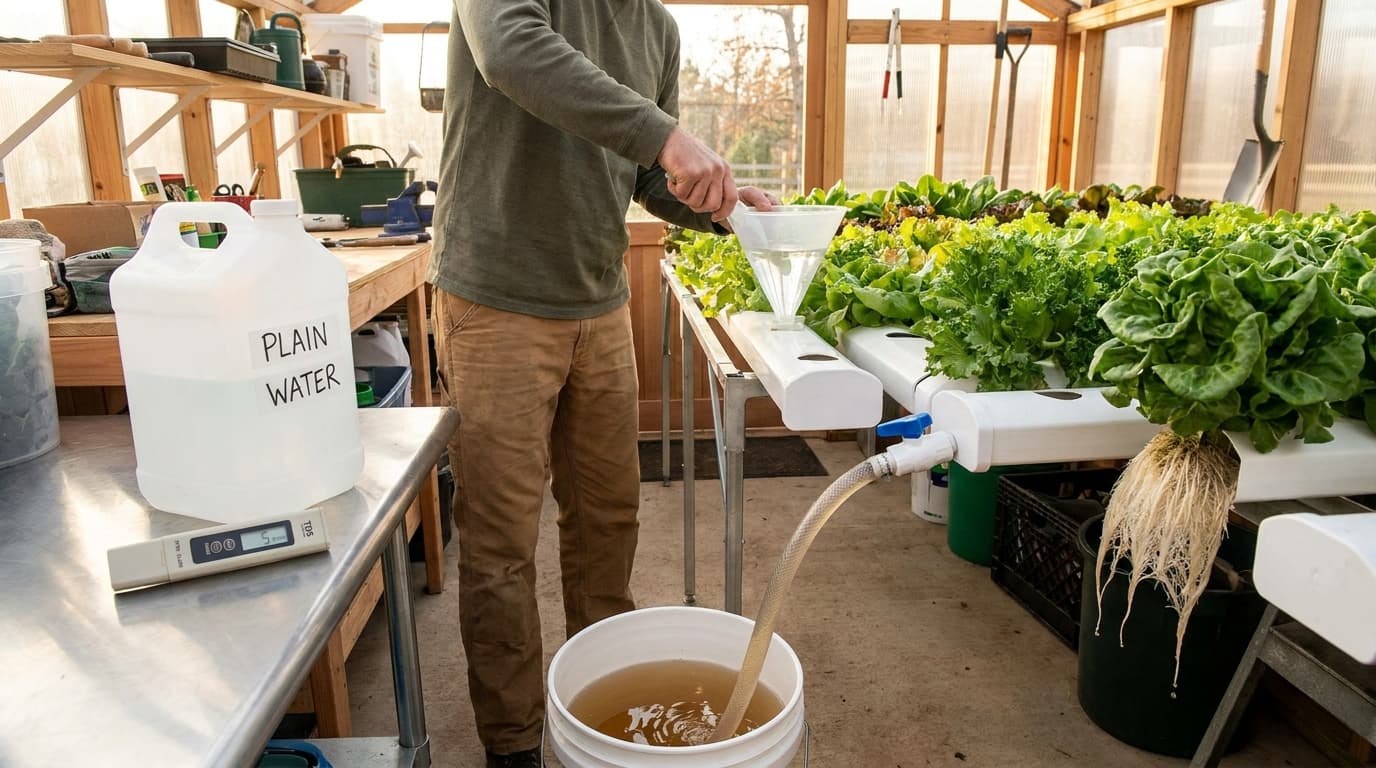
How to Flush Your Hydroponic System Before Harvest
Explore our comprehensive guide on How to Flush Your Hydroponic System Before Harvest. Part of our technical series on nutrient science and water chemistry, this report covers everything you need to optimize your yield and maintain a healthy grow environment.
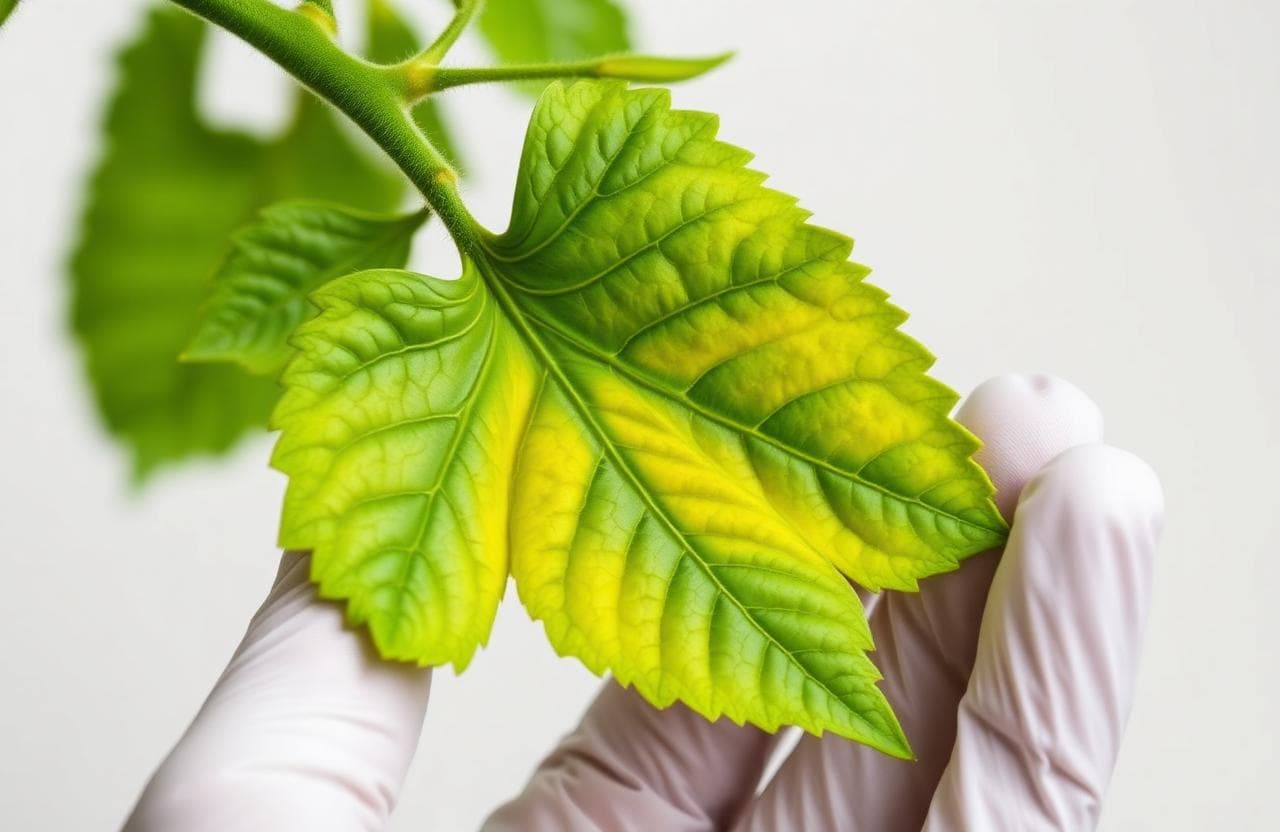
Reading a Nutrient Deficiency Chart Like a Plant Doctor
Yellow leaves, purple stems, twisted tips — a structured way to diagnose the 12 most common deficiencies.