
Chelated Nutrients: Why They Matter for Plant Absorption
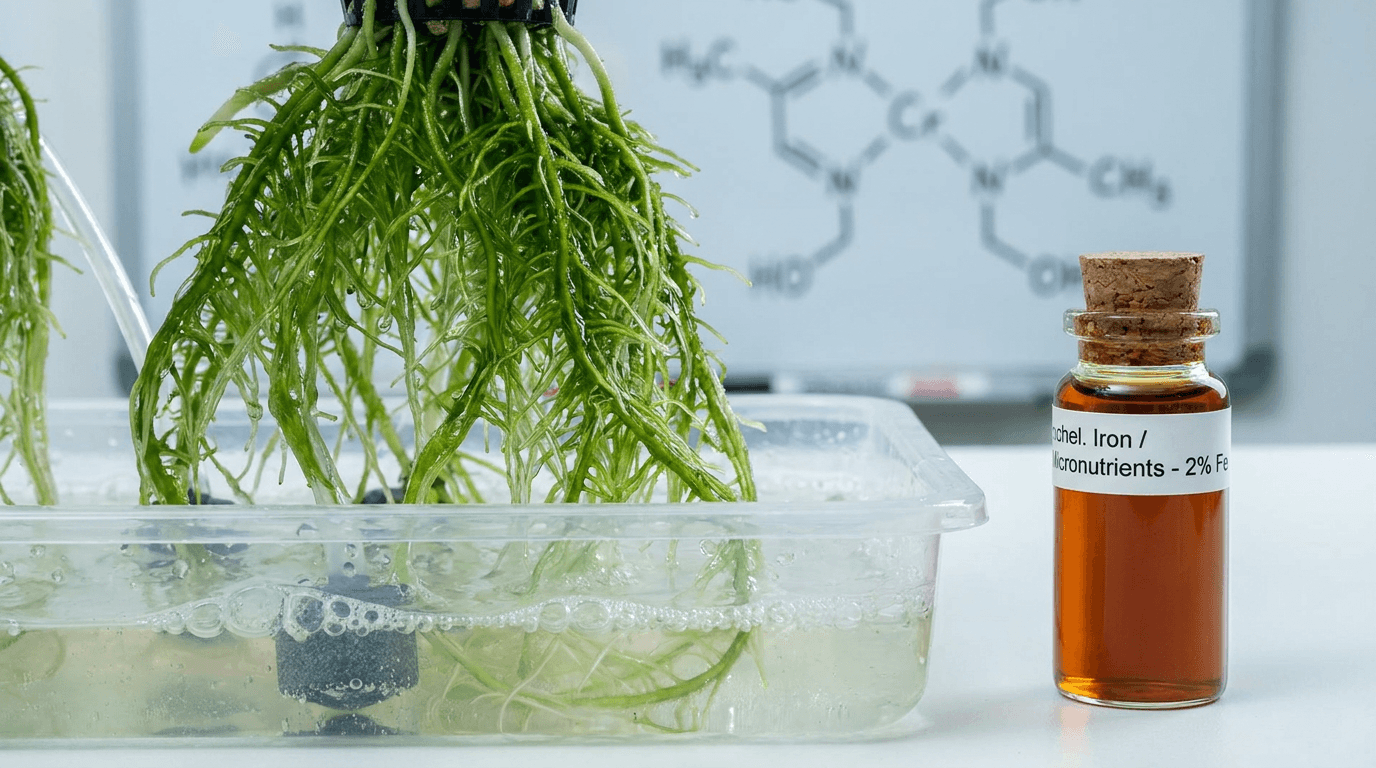
Every hydroponic grower has heard the term "chelated," usually in the context of micronutrients. But the science behind chelation is rarely explained in practical terms. Chelation is the chemical process that binds a metal ion to an organic molecule, forming a stable ring structure that protects the metal from precipitation and oxidation. Without chelation, most of the iron, zinc, manganese, and copper you pour into your reservoir would become unavailable to your plants within hours.
The root of the word comes from the Greek "chele," meaning claw. Imagine a crab gripping a nutrient ion with both pincers, shielding it from the hostile chemistry of the nutrient solution while delivering it directly to the root surface. That is what a chelating agent does. In the controlled environment of a hydroponic system, where pH swings are common and nutrient competition is fierce, chelated nutrients are not a luxury, they are a necessity.
This guide covers the four major chelate families used in hydroponics, their pH stability windows, and the economics of choosing one over the other. By the end, you will know exactly which chelate to use for your crop, your water chemistry, and your budget.
The Lab's Verdict on Chelated Nutrients
If you grow in a recirculating system with any pH drift, you must use chelated iron and at least a partial chelate blend for your micronutrients. The only exception is if you run a strictly controlled pH 5.5 to 6.0 with RO water and never let the pH climb. For everyone else, chelated nutrients pay for themselves through higher yields and fewer deficiency headaches. We recommend EDDHA for high-pH hard water, DTPA for most hydroponic pH ranges, and amino-acid chelates for foliar applications.
What Is Chelation?
At the molecular level, chelation occurs when a ligand donates electron pairs to a metal cation, forming coordinate covalent bonds that create a heterocyclic ring. The most common metals that require chelation in hydroponics are iron (Fe), zinc (Zn), manganese (Mn), and copper (Cu). These are transition metals that, in their free ionic form, are highly reactive with phosphates, hydroxides, and carbonates found in nutrient solutions.
When a free iron ion encounters a phosphate ion, they form iron phosphate, an insoluble precipitate that settles at the bottom of your reservoir and is completely unavailable to roots. Similarly, at pH above 6.5, free iron forms iron hydroxide, which is equally useless. A chelating agent prevents these reactions by surrounding the metal ion with organic molecules that satisfy its coordination sites, leaving no room for phosphates or hydroxides to attack.
The stability of a chelate-metal complex is quantified by the formation constant (Kf). Higher Kf values mean the chelate holds onto the metal more tightly across a wider pH range. This is why EDDHA has a higher Kf for iron than EDTA, and why EDDHA can deliver iron at pH 10 while EDTA fails above pH 6.5.
Four Major Chelate Families
EDTA (Ethylenediaminetetraacetic Acid)
EDTA was the first synthetic chelate used in agriculture, and it remains the most common due to its low cost. It forms stable complexes with iron (Fe-EDTA) at pH levels up to approximately 6.5. Above pH 6.5, the EDTA molecule loses its grip on iron, and the metal precipitates as iron hydroxide. This makes EDTA suitable only for systems with tight pH control in the acidic range. For leafy greens and seedlings grown at pH 5.5 to 6.0, Fe-EDTA is perfectly adequate and significantly cheaper than the alternatives. The log Kf for Fe-EDTA is approximately 25.1, which is respectable but not outstanding.
DTPA (Diethylenetriaminepentaacetic Acid)
DTPA holds iron stable up to pH 7.5, making it the preferred chelate for the vast majority of hydroponic applications. Most hydroponic crops are grown in the pH range of 5.5 to 6.5, and DTPA provides a comfortable safety margin above that. Fe-DTPA has a log Kf of approximately 28.0, meaning it binds iron more than a thousand times tighter than EDTA. The cost premium over EDTA is modest, typically 20 to 30 percent more per gram of actual iron. For any grower who does not want to micromanage pH, DTPA is the practical sweet spot between cost and stability.
EDDHA (Ethylenediamine-N,N'-bis(2-hydroxyphenylacetic Acid))
EDDHA is the heavyweight champion of iron chelation. It keeps iron soluble up to pH 10, which makes it the only viable choice for calcareous soils and high-alkalinity water sources. The o,o-EDDHA isomer has a log Kf of approximately 35.0, several orders of magnitude higher than DTPA. The tradeoff is cost: Fe-EDDHA is roughly three to five times more expensive than Fe-DTPA. There is also a visual consideration. EDDHA solutions are deep red, and they can stain reservoir components and leave a reddish tint on root systems. This is cosmetic and does not affect plant health, but it can make diagnosis of other issues more difficult. EDDHA is also specific to iron, it does not chelate other micronutrients effectively, so you still need a separate source for zinc, manganese, and copper.
Amino Acid Chelates
Amino acid chelates, such as glycine, lysine, and methionine complexes, represent the biologically preferred delivery mechanism. Plants naturally transport metals bound to amino acids through their vascular system. When you apply an amino acid chelate, the plant recognizes the carrier and actively transports the entire complex across the root membrane. This is in contrast to synthetic chelates, where the plant must first break the chelate bond at the root surface and then absorb the free metal ion. Amino acid chelates are less pH-sensitive than EDTA but generally less stable than DTPA or EDDHA at high pH. Their main advantage is foliar absorption efficiency. For foliar sprays, amino acid chelates can increase iron uptake by up to 400 percent compared to synthetic chelates.
The choice of chelate also has implications for environmental sustainability. EDTA and DTPA are persistent organic compounds that do not readily biodegrade in natural water systems. When you discharge your spent nutrient solution, these chelates can remain active in the environment, potentially mobilizing heavy metals from sediments. EDDHA is even more persistent due to its higher chemical stability. Amino acid chelates, being natural biological compounds, degrade rapidly and pose minimal environmental risk. For growers who are environmentally conscious and who discharge their waste nutrient solution rather than recycling it through a treatment system, amino acid chelates offer a significant ecological advantage despite their higher upfront cost.
Another consideration is the compatibility of different chelates in the same nutrient solution. Mixing EDTA and DTPA is generally safe, but EDDHA can actually displace iron from EDTA or DTPA because of its higher formation constant. This means that if you add EDDHA to a solution already containing Fe-EDTA, the EDDHA will strip the iron from the EDTA molecule, leaving the EDTA free to bind other metals like zinc and manganese. The net effect is that your iron becomes more stable but your zinc and manganese may become less available. In practice, this displacement reaction is slow at room temperature and dilute concentrations, but it is worth understanding if you are blending different commercial products.
Chelate pH Stability Comparison
| Chelate Type | Stable pH Range | log Kf (Fe) | Relative Cost | Best Use |
|---|---|---|---|---|
| EDTA | 4.0 to 6.5 | 25.1 | $ (baseline) | Low-pH systems, seedlings, short-cycle crops |
| DTPA | 4.0 to 7.5 | 28.0 | $$ (1.2x to 1.3x) | General hydroponics, recirculating systems, most crops |
| EDDHA | 4.0 to 10.0 | 35.0 | $$$ (3x to 5x) | High-pH water, calcareous substrates, severe iron deficiency |
| Amino Acid | 3.0 to 7.0 | Variable | $$$$ (4x to 8x) | Foliar sprays, organic systems, stress recovery |
Iron Deficiency Correction
Iron chlorosis is the most common micronutrient disorder in hydroponics. It presents as interveinal yellowing on new growth, with the leaf veins remaining dark green while the tissue between them turns pale. In severe cases, the new leaves are almost white, and growth stalls completely. Iron is immobile in the plant, meaning the plant cannot move iron from older leaves to new growth. This is why the symptoms always appear on the newest leaves first.
Before reaching for an iron supplement, check your pH. If your reservoir pH has drifted above 6.5, the iron already in your solution has likely precipitated out. Adjust the pH back to 5.8 to 6.2 using phosphoric acid, and wait 24 hours. If new growth resumes greening, the problem was pH lockout, not iron deficiency. If symptoms persist, add a chelated iron supplement at a rate of 2 to 5 ppm elemental iron. For DTPA-stable systems, use Fe-DTPA at 3 ppm. For high-pH situations, use Fe-EDDHA at 2 ppm.
Foliar sprays can provide rapid relief. Mix 0.5 grams of Fe-DTPA or Fe-EDDHA per liter of water with a non-ionic surfactant, and spray the affected foliage until runoff. Improvement is visible within 48 to 72 hours. For long-term prevention, maintain your chelated iron level at 2 to 3 ppm for vegetative growth and 3 to 5 ppm for flowering and fruiting stages, when iron demand peaks.
Iron Deficiency Checklist
- Check pH first. If above 6.5, correct pH before adding iron.
- Confirm symptoms on new growth only. Old-leaf yellowing is nitrogen or magnesium.
- Use Fe-DTPA for pH up to 7.5, Fe-EDDHA above 7.5.
- Apply foliar spray for rapid recovery. Visible improvement in 2 to 3 days.
- Increase iron to 3 to 5 ppm during flowering stages.
- Do not mix iron supplements with concentrated phosphate fertilizers.
Chelated vs. Non-Chelated Nutrients
The decision to use chelated versus non-chelated nutrients hinges on three factors: your water chemistry, your crop species, and your budget. Non-chelated micronutrients, typically sold as sulfate salts (ferrous sulfate, zinc sulfate, manganese sulfate), are significantly cheaper per gram of elemental nutrient. Ferrous sulfate heptahydrate costs roughly one-tenth the price of Fe-DTPA per gram of iron. However, sulfate salts are immediately vulnerable to precipitation upon contact with phosphate fertilizers and alkaline water.
In a well-maintained system with pH held at 5.8, non-chelated iron remains available for approximately 24 to 48 hours before oxidizing to the ferric state and precipitating. This means you must dose daily or use a continuous drip system. Chelated iron, in contrast, remains available for 7 to 14 days in the same conditions. The labor savings alone can justify the cost premium for commercial operations.
For zinc, manganese, and copper, the argument for chelation is weaker. These metals are less prone to precipitation than iron, and their sulfate forms are reasonably stable in the pH 5.5 to 6.5 range. Many commercial nutrient formulas use chelated iron with non-chelated sulfates for the other micronutrients. This hybrid approach balances cost and stability effectively.
There is one scenario where non-chelated nutrients may actually outperform chelated forms: organic hydroponics. Certain organic acids produced by beneficial microbes in the root zone can outcompete synthetic chelates for metal binding, rendering the chelate ineffective. In systems with active microbial populations, using sulfate salts and relying on natural chelation from humic and fulvic acids is a viable strategy.
The decision also depends on your crop's growth stage. Seedlings and young plants have lower micronutrient demand and can often be sustained with non-chelated sources at a fraction of the cost. As plants enter the rapid vegetative growth phase and especially during flowering, their iron and zinc demand increases dramatically. This is when chelated forms provide the most value. A common strategy among commercial growers is to use non-chelated micronutrients during the first 2 to 3 weeks of a crop cycle, then switch to a chelated blend from week 4 through harvest. This hybrid approach reduces overall nutrient costs by 30 to 40 percent compared to using chelated nutrients from day one, without sacrificing yield or quality.
Temperature also influences the effectiveness of chelates versus non-chelated nutrients. In warm climates or during summer months when reservoir temperatures rise above 24 degrees Celsius, the stability of all chelates decreases, and non-chelated iron oxidizes even faster. In these conditions, the gap in performance between chelated and non-chelated sources widens significantly. Growers operating in high-temperature environments should prioritize DTPA or EDDHA chelates, as the additional cost is more than justified by the prevention of iron deficiency during heat stress periods.
Cost Comparison Table
| Source | Cost per g Fe | Stability | Application |
|---|---|---|---|
| Ferrous Sulfate | $0.08 | Poor above pH 6.0 | Daily dosing, soil, low-pH hydro |
| Fe-EDTA | $0.25 | Moderate up to pH 6.5 | Standard hydroponic nutrients |
| Fe-DTPA | $0.35 | Good up to pH 7.5 | Most hydroponic systems |
| Fe-EDDHA | $1.10 | Excellent up to pH 10 | High-pH water, severe deficiency |
| Fe-Amino Acid | $1.80 | Moderate, variable | Foliar sprays, organic systems |
Chelation Pros and Cons
Advantages
- Dramatically extends nutrient availability window from hours to weeks
- Prevents precipitation and fouling of drip lines and emitters
- Allows precise pH management without sacrificing micronutrient availability
- Reduces dosing frequency and labor costs in commercial operations
- Compatible with foliar application for rapid deficiency correction
Disadvantages
- Significantly higher cost per gram of elemental nutrient delivered
- Synthetic chelates may accumulate in recirculating systems over time
- EDDHA has no effect on zinc, manganese, or copper, requiring separate sources
- Amino acid chelates are expensive and degrade faster in solution
- Some microbial populations can degrade synthetic chelates in organic set-ups
Frequently Asked Questions
What is chelation in simple terms?
Chelation is a chemical process where an organic molecule grabs a metal ion and holds it in a protective cage, preventing it from reacting with other chemicals in the nutrient solution. This keeps the metal available for plant roots to absorb.
Which chelate is best for hydroponics?
DTPA is the best general-purpose chelate for hydroponics. It holds iron stable up to pH 7.5, is moderately priced, and works across the full range of common hydroponic pH targets. For high-alkalinity water above pH 7.5, switch to EDDHA.
Can I use non-chelated iron in my hydroponic system?
Yes, but only if you maintain pH strictly below 6.0 and dose daily. Ferrous sulfate will precipitate within 24 to 48 hours at typical hydroponic pH levels, so you must replenish frequently. For most growers, chelated iron is more reliable and less labor-intensive.
Is EDDHA worth the higher cost?
Only if your water source or substrate pH exceeds 7.5. For well water with high carbonate alkalinity or for soil-based mixes with lime, EDDHA is essential. For recirculating hydroponic systems maintained at pH 5.5 to 6.5, DTPA provides the same performance at one-third the cost.
Do I need chelated zinc and manganese?
Not usually. Zinc and manganese sulfates are reasonably stable in the pH 5.5 to 6.5 range and are far cheaper than their chelated forms. Most commercial nutrient blends use chelated iron with non-chelated sulfates for the remaining micronutrients.
Can I make my own chelated nutrients at home?
It is technically possible using EDTA powder and metal salts, but not recommended. The chelation reaction requires precise pH control and heating, and the resulting product may have unpredictable stability. Pre-manufactured chelates are tested for consistent performance.
How often should I add chelated iron to my reservoir?
In a recirculating system, chelated iron lasts 7 to 14 days before degrading. Top up to your target iron concentration at every reservoir change. In between changes, monitor new growth for signs of chlorosis and add iron only if symptoms appear.
What happens if I use too much chelated iron?
Excess chelated iron is generally not toxic to plants, but it can cause nutrient imbalances. High iron levels can antagonize manganese and zinc uptake, leading to secondary deficiencies. It can also stain reservoir components and root systems a reddish-brown color that is harmless but unsightly. Stick to the recommended 2 to 5 ppm elemental iron range for most crops.
Can chelated nutrients be used in organic hydroponics?
Synthetic chelates like EDTA and DTPA are not permitted in certified organic production. Amino acid chelates and natural humic acid complexes are acceptable in organic systems. For organic growers, we recommend relying on humic and fulvic acids as natural chelating agents, supplemented with sulfate-based micronutrients at carefully controlled pH levels.
Which Chelate Is Right for You?
Match your water chemistry and growing style to the right chelate strategy.
The Budget Grower
You have RO water and strict pH control at 5.8. You change reservoirs every 7 days.
The Mainstream Grower
You run a recirculating system with tap water that drifts to pH 6.8 between adjustments.
The Hard-Water Grower
Your tap water is above 7.5 pH with high alkalinity. Iron chlorosis is a recurring battle.
The Lab's Final Analysis
Chelation chemistry is one of the most underappreciated factors in hydroponic success. We have seen growers spend hundreds of dollars on premium nutrient bottles without understanding that the chelate form matters more than the brand name on the label. A well-chosen chelate strategy will keep your micronutrients available from reservoir change to reservoir change, eliminating the mysterious deficiency patterns that plague so many indoor gardens.
Our recommendation at The Hydro Lab is straightforward. Use DTPA as your baseline iron chelate for any recirculating system unless your pH consistently exceeds 7.5. Use non-chelated sulfates for zinc, manganese, and copper to save money. Reserve EDDHA for problem water. Reserve amino acid chelates for foliar sprays when you need rapid correction. And always, always check your pH before diagnosing a deficiency.
Looking ahead, the chelate market is evolving. New biodegradable chelates such as IDHA (iminodisuccinic acid) and EDDS (ethylenediaminedisuccinic acid) offer comparable metal-binding performance to EDTA and DTPA but with much faster biodegradation rates. These next-generation chelates are gaining traction in European markets where environmental regulations on nutrient discharge are becoming stricter. We expect IDHA-based micronutrient blends to become widely available in the North American hydroponic market within the next 2 to 3 years. Early testing at The Hydro Lab shows that IDHA has approximately 80 percent of the iron-binding capacity of DTPA at pH 6.5, with the significant advantage of breaking down completely within 28 days in natural water systems.
The best nutrient in the world is useless if it precipitates at the bottom of your reservoir. Choose your chelates wisely, and your plants will reward you with vigorous growth and abundant harvests. The time you invest in understanding chelation chemistry today will pay dividends in every crop cycle you run for years to come.
More from Nutrition & pH
Keep reading
pH and EC for Beginners: The Two Meters You Cannot Skip
What pH and electroconductivity actually measure, the targets per crop, and how to calibrate the cheap meters that everyone owns.
How to Flush Your Hydroponic System Before Harvest
Explore our comprehensive guide on How to Flush Your Hydroponic System Before Harvest. Part of our technical series on nutrient science and water chemistry, this report covers everything you need to optimize your yield and maintain a healthy grow environment.
Reading a Nutrient Deficiency Chart Like a Plant Doctor
Yellow leaves, purple stems, twisted tips — a structured way to diagnose the 12 most common deficiencies.