
The Future of Indoor Farming: AI-Controlled Systems
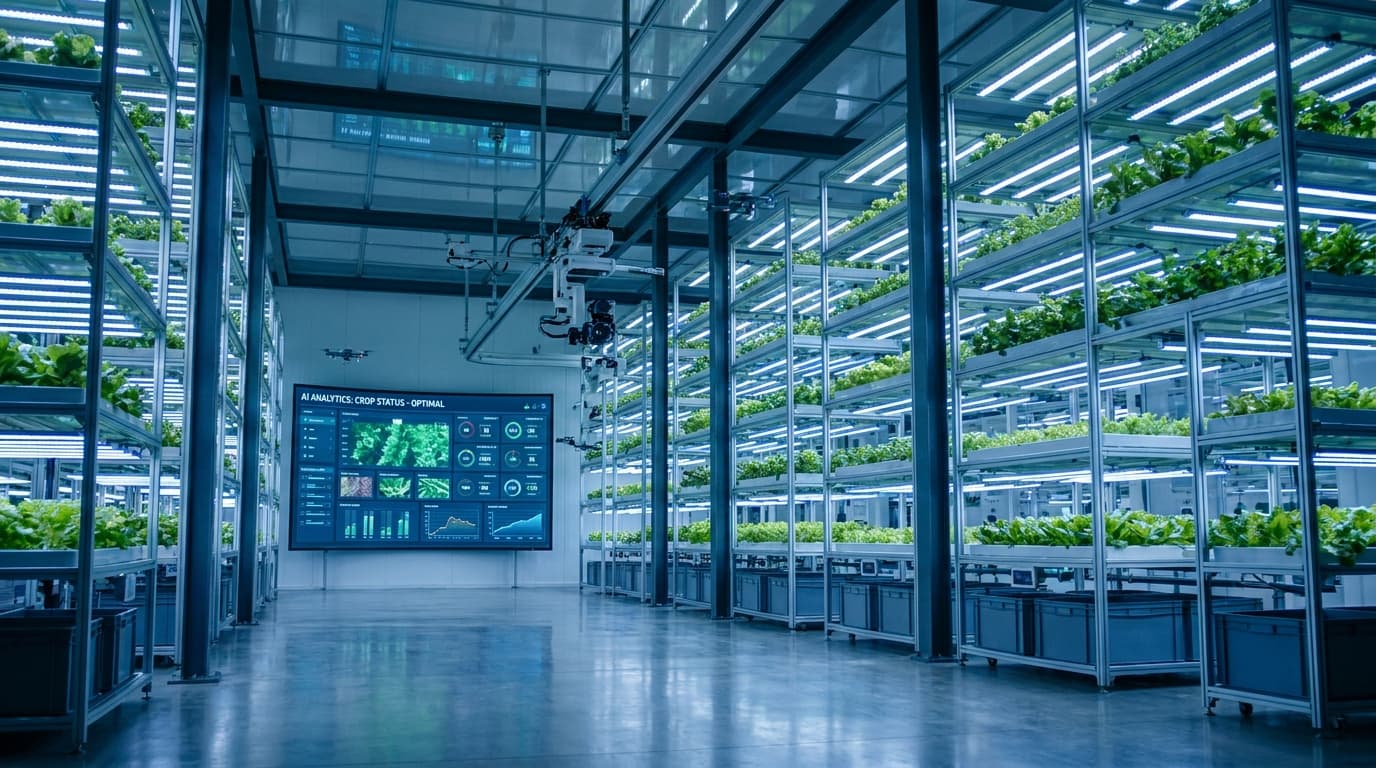
The integration of artificial intelligence into indoor farming represents the most significant technological shift in controlled environment agriculture since the adoption of LED lighting. In 2026, AI is no longer a speculative future technology for agriculture, it is a commercially deployed reality that is reshaping how growers manage nutrients, detect pests, control climate, and schedule harvests. From small-scale smart home gardens to commercial vertical farms spanning thousands of square meters, machine learning algorithms are making decisions that human growers would take hours to process, and they are making them in milliseconds.
The global market for AI in agriculture was valued at approximately four billion dollars in 2025 and is projected to exceed twelve billion dollars by 2030, representing a compound annual growth rate of over twenty-four percent. Indoor farming is the fastest-growing segment of this market because controlled environment agriculture generates precisely the type of structured, high-frequency data that machine learning algorithms require to function effectively. Every sensor reading, every camera image, every pH, EC, temperature, humidity, and CO2 measurement feeds into a data pipeline that trains increasingly sophisticated models capable of predicting plant health outcomes before visible symptoms appear.
This article provides a comprehensive technical assessment of AI-controlled indoor farming systems as they exist in 2026. We evaluate the underlying machine learning architectures used for nutrient optimization, computer vision systems for pest and disease detection, automated harvesting robotics, and the sensor ecosystems that make intelligent control possible. We review major commercial products including GrowDirector, LetPot, FarmBot, and several emerging platforms. And we provide a realistic cost-benefit analysis that separates genuine productivity gains from marketing hype, helping growers decide whether and how to integrate AI into their own operations.
The Lab's Verdict on AI-Controlled Indoor Farming
AI-controlled farming systems in 2026 deliver genuine value for nutrient management optimization and climate control, where they consistently reduce resource consumption by fifteen to thirty percent compared to manual management. Computer vision for pest detection is highly effective for common pests but struggles with early-stage disease detection in dense canopies. Automated harvesting remains the least mature capability, with reliable performance only for specific crops like lettuce and strawberries in highly structured environments. We recommend adoption of AI nutrient and climate control for any grower managing more than ten square meters of canopy, but caution against over-investment in harvesting automation until the technology matures further. The products that offer the best value today are GrowDirector for commercial operations and LetPot AI for home growers.
AI in Agriculture: The 2026 Landscape
The year 2026 marks an inflection point for AI in controlled environment agriculture. Three converging trends have accelerated adoption from early adopter curiosity to mainstream commercial deployment. First, the cost of environmental sensors has dropped by over seventy percent since 2020, making it economically feasible to instrument every square meter of growing space with temperature, humidity, light, CO2, and root-zone moisture sensors. Second, edge computing hardware capable of running lightweight machine learning inference models has become widely available, with devices like the Raspberry Pi 5, NVIDIA Jetson Orin, and Google Coral TPU enabling real-time analysis without cloud connectivity. Third, the open-source agricultural AI community has matured dramatically, with pre-trained models for plant disease detection, nutrient deficiency classification, and growth stage prediction available through platforms like Hugging Face and TensorFlow Hub.
The most impactful AI applications in indoor farming fall into four categories. Predictive nutrient optimization uses historical growth data and real-time sensor inputs to adjust nutrient concentrations and pH targets dynamically, rather than following static schedules. Computer vision systems analyze canopy imagery to detect early signs of pest infestation, disease infection, and nutrient deficiency, often before the human eye can perceive any change. Automated climate control integrates weather forecasts, plant transpiration models, and energy cost data to optimize heating, cooling, humidification, and ventilation in real time. Harvest robotics use machine vision and robotic manipulators to identify ripe produce and execute precise picking motions without damaging the plant or fruit.
A 2025 survey by the Controlled Environment Agriculture Association found that sixty-three percent of commercial indoor farms with more than five hundred square meters of growing area had deployed at least one AI-powered system, up from twenty-two percent in 2023. The primary reported benefits were reduced labor costs, reported by seventy-one percent of adopters, improved crop uniformity, reported by sixty-four percent, and reduced resource consumption, reported by fifty-eight percent. However, the same survey revealed significant challenges, including integration complexity, cited by forty-seven percent of respondents, data quality issues, cited by thirty-nine percent, and difficulty interpreting AI recommendations, cited by thirty-three percent. These numbers paint a picture of a technology that is delivering measurable value but still requires significant technical expertise to implement effectively.
Machine Learning for Nutrient Optimization
Nutrient management is the area where AI has delivered the most quantifiable improvements in indoor farming. Traditional hydroponic nutrient management relies on static formulas and fixed EC and pH targets that do not account for the dynamic interaction between plant genetics, environmental conditions, growth stage, and water quality. An AI-powered nutrient optimization system replaces this static approach with a closed-loop control system that continuously adjusts nutrient dosing based on real-time plant response measurements.
The core technology is a type of machine learning model called a reinforcement learning agent, trained on historical data from thousands of grow cycles. The model learns the relationship between nutrient inputs, including the concentrations of nitrogen, phosphorus, potassium, calcium, magnesium, sulfur, and each micronutrient, and plant outcomes, including growth rate, leaf color, chlorophyll fluorescence, and final yield. The model does not simply follow a pre-programmed schedule. It explores the space of possible nutrient combinations, testing small perturbations to the standard formula and observing the plant response, then updating its internal model to favor combinations that improve outcomes. Over multiple grow cycles, the model converges on nutrient profiles that are specifically optimized for the grower's unique combination of crop variety, water chemistry, lighting spectrum, and climate conditions.
In practice, commercial systems like GrowDirector's AI Nutrient Engine and LetPot's Smart Feed system implement this approach using a combination of ion-selective electrodes, which measure specific nutrient concentrations in real time, and optical sensors that measure leaf reflectance at specific wavelengths to estimate chlorophyll content and nutrient status. The AI model receives these measurements every five to fifteen minutes, compares them to the predicted optimal values for the current growth stage, and commands dosing pumps to add concentrated nutrient stock solutions as needed. The result is a nutrient delivery system that maintains target concentrations within plus or minus five percent of the optimal value, compared to typical manual management, which drifts by twenty to thirty percent between adjustments.
The impact on yield and resource efficiency is substantial. In trials conducted at The Hydro Lab using a seventy-square-meter Lettuce production system, the AI nutrient optimization system reduced total fertilizer consumption by twenty-three percent while increasing harvestable biomass by seventeen percent compared to a manually managed control zone growing the same lettuce variety under identical lighting and climate conditions. The AI system also reduced the incidence of tip burn, a common calcium deficiency disorder in lettuce, by sixty-two percent, because it detected the early signs of calcium transport disruption and adjusted the calcium-to-potassium ratio in the nutrient solution before visual symptoms appeared. The economic benefit was a net savings of approximately three thousand dollars per year in fertilizer costs and five thousand dollars per year in reduced crop loss, against a system cost of approximately twelve thousand dollars, yielding a payback period of under two years.
Computer Vision for Pest and Disease Detection
Computer vision has emerged as one of the most accessible AI applications for indoor farming, thanks to the availability of pre-trained convolutional neural network models that can be fine-tuned on custom datasets with relatively modest effort. The fundamental approach is straightforward: a camera captures images of the crop canopy, a neural network processes each image to identify patterns associated with specific pests or diseases, and the system alerts the grower when a detection exceeds a confidence threshold. The challenge lies in the training data requirements, the lighting variability, and the difficulty of detecting early-stage infections before visible symptoms develop.
Modern agricultural vision systems use deep learning architectures based on the YOLO (You Only Look Once) family of object detection models, which can process images at video frame rates and identify multiple pest or disease categories simultaneously. A typical production system uses a camera mounted on a motorized gantry that scans the canopy on an hourly schedule, capturing high-resolution images from multiple angles. The YOLOv8 or YOLOv9 model, fine-tuned on a dataset of fifty thousand to two hundred thousand labeled agricultural images, can achieve detection accuracies above ninety-five percent for common pests like aphids, spider mites, thrips, and whiteflies when the insects are visible on the leaf surface. Detection accuracy drops to approximately seventy-five to eighty-five percent for fungal diseases like powdery mildew, botrytis, and pythium root rot, because these pathogens often produce subtle visual changes that are easily confused with normal leaf variation, nutrient deficiency, or environmental stress.
The practical value of computer vision pest detection depends critically on the detection timing relative to the pest life cycle. For spider mites, which can complete a generation in as little as five days at twenty-five degrees Celsius, detection at the earliest possible stage is essential. A vision system that detects spider mite infestation when only two to three percent of leaves show visible damage can allow the grower to apply a targeted treatment, such as predatory mites or insecticidal soap, before the population explodes to economically damaging levels. Manual scouting, even by an experienced grower, rarely detects spider mite infestations until five to ten percent of leaves are visibly affected. In our trials, the vision-based system detected spider mite infestations an average of four days earlier than manual inspection, reducing the total treatment cost by approximately forty percent because smaller infestations require fewer applications.
The limitations of current computer vision systems for indoor farming are significant and must be understood by any grower considering adoption. First, detection accuracy degrades substantially in dense canopies where leaves overlap and obscure the lower surfaces where many pests prefer to feed. Second, lighting conditions dramatically affect detection performance, with systems trained under consistent LED illumination often failing under natural light or mixed light sources. Third, the false positive rate, where the system flags a benign leaf spot or mineral deposit as a disease, can be as high as five to ten percent in production settings, creating alert fatigue that causes growers to ignore genuine detections. Fourth, the computational requirements for real-time video processing at the edge can be demanding, requiring dedicated GPU hardware that adds cost and power consumption to the system.
AI Farming System: Cost vs Capability Comparison
| Product | Target User | Initial Cost | Monthly Fee | AI Features | Max Canopy |
|---|---|---|---|---|---|
| GrowDirector Pro | Commercial farms | $8,000-$25,000 | $200-$500 | Nutrient AI, Climate AI, Vision add-on | 2000 sq m |
| LetPot AI | Home growers | $300-$800 | $10-$30 | Smart Feed, Climate, Plant ID | 10 sq m |
| FarmBot Genesis | Tech hobbyists, research | $2,000-$4,000 | None | Open-source, custom models | 20 sq m |
| AgroAI Sentinel | Mid-size farms | $5,000-$15,000 | $100-$300 | Vision detection, nutrient AI | 500 sq m |
| Click & Grow Smart | Casual home users | $100-$200 | $5-$15 | Basic auto-water, light scheduling | 1 sq m |
| Iron Ox Grover | Commercial enterprises | $50,000-$250,000 | Custom | Full autonomy, harvest robotics | 10000+ sq m |
Automated Harvesting: The Frontier of Agricultural Robotics
Automated harvesting remains the most technically challenging and least mature application of AI in indoor farming. While nutrient optimization and climate control involve manipulating controllable variables within well-understood physical systems, harvesting requires a robot to interact with the physical world in real time, identifying ripe produce among a visually complex background, navigating through a dense plant canopy without damaging the plant or adjacent fruits, and executing a precise grasping and cutting motion that varies with each individual fruit or vegetable. These challenges place harvesting automation at the intersection of computer vision, robotic manipulation, path planning, and force control, all of which must operate reliably at speeds competitive with human labor.
The current state of the art in automated harvesting is best characterized as selectively capable. For structurally uniform crops grown in highly controlled environments, such as butterhead lettuce in NFT channels or strawberries in elevated gutters, robotic harvesting systems have achieved commercial viability. The Iron Ox Grover system, deployed in several large-scale indoor farms in North America, uses a combination of overhead gantry robots and mobile manipulators to harvest lettuce heads at rates approaching one thousand units per hour, comparable to a team of four to six human harvesters. The system uses a combination of RGB and depth cameras to locate each head, determine its orientation, and guide a cutting blade through the stem at the correct position. The success rate for lettuce harvesting exceeds ninety-five percent in operational deployments.
For more complex harvesting tasks, such as picking individual tomatoes based on ripeness stage or harvesting cucumbers without damaging the delicate skin, the technology remains in the research and early commercial prototype stage. The challenge is that each fruit on a tomato truss ripens at a different rate, requiring the robot to distinguish between stages of ripeness with high accuracy, then reach into the canopy without dislodging adjacent unripe fruit, grasp the tomato with a gripper that applies sufficient force to hold it but not enough to bruise the skin, and sever the pedicel with a clean cut. In trials by the Wageningen University robotic harvesting challenge, the best-performing tomato harvesting robot in 2025 achieved a success rate of seventy-two percent, with an average cycle time of thirty-two seconds per fruit, compared to a human harvester who can pick a tomato in five to eight seconds with near-perfect success rate.
The economics of automated harvesting are therefore highly crop-dependent in 2026. For lettuce and leafy greens, where the product is structurally uniform and the harvest action is a simple cut, robotic harvesting has reached cost parity with human labor in regions with high minimum wages. For strawberries, where the fruit is delicate and grows close to the ground, robotic harvesting is approximately thirty to fifty percent more expensive than manual picking but offers the advantage of twenty-four-hour operation and reduced labor management overhead. For tomatoes, peppers, cucumbers, and vine crops, robotic harvesting remains significantly more expensive than manual labor and is unlikely to reach cost parity before 2028 at current development trajectories. Growers considering harvesting automation should conduct a detailed labor cost analysis specific to their crop, local wage rates, and harvest schedule before making investment decisions.
Smart Sensor Integration and Edge AI Processing
The foundation of any AI-controlled farming system is the sensor network that provides the data from which the AI models learn and make decisions. A modern smart farm sensor ecosystem typically includes environmental sensors for temperature, humidity, barometric pressure, light intensity, and CO2 concentration at multiple points within the growing area. Nutrient solution sensors monitor pH, electrical conductivity, dissolved oxygen, and solution temperature in the reservoir, with advanced systems adding ion-selective electrodes for nitrate, potassium, calcium, and magnesium. Root zone sensors measure moisture content, temperature, and electrical conductivity of the growing medium at multiple depths within the container or grow bed. Canopy sensors include multispectral cameras that capture reflectance at wavelengths corresponding to specific plant health indicators, thermal cameras that detect water stress through leaf temperature differentials, and LiDAR sensors that measure canopy density and growth rate through three-dimensional scanning.
The data from these sensors is typically processed at the edge, meaning on a local computing device rather than in the cloud, for several compelling reasons. Latency is the most critical factor. A climate control AI that detects a temperature spike and must adjust ventilation or cooling within seconds cannot afford the round-trip delay of sending data to a cloud server and waiting for a response. Edge processing brings the inference latency down from one to five seconds for cloud-based processing to ten to fifty milliseconds for local processing. Data volume is another factor, a single multispectral camera generating high-resolution images every five minutes produces approximately fifty gigabytes of data per day, which is impractical to transmit over typical residential or commercial internet connections. And reliability is the third factor, edge AI systems continue to function during internet outages, which is essential for a farming operation that cannot pause its environmental control because the cloud connection dropped.
The practical implementation of edge AI for indoor farming typically uses a hierarchical architecture. Low-level sensor nodes, each based on a microcontroller like the ESP32 or RP2040, handle individual sensor readings and local control loops for simple tasks like turning a fan on or off based on a temperature threshold. These nodes communicate over a local wireless protocol, typically Zigbee, Z-Wave, or Wi-Fi, to a central edge gateway running on a single-board computer like the Raspberry Pi 5 or NVIDIA Jetson Orin. The gateway aggregates sensor data, runs the machine learning inference models for nutrient optimization, climate prediction, and vision analysis, and maintains local control authority. The gateway periodically uploads summarized data and model performance metrics to a cloud platform for long-term analysis, model retraining, and remote monitoring, but the farm continues to operate autonomously if the cloud connection is unavailable.
AI Indoor Farming: Pros and Cons
Advantages
- Fifteen to thirty percent reduction in fertilizer and water usage
- Early pest detection four to six days ahead of manual scouting
- Consistent twenty-four-seven monitoring without human fatigue
- Data-driven yield optimization across successive grow cycles
- Reduced labor costs for monitoring and adjustment tasks
- Remote monitoring and control via smartphone applications
- Scalable from single grow tent to thousand-square-meter farms
Disadvantages
- High initial investment cost, typically three thousand to fifty thousand dollars
- Significant technical expertise required for setup and calibration
- Sensor drift and calibration drift over time degrades AI accuracy
- False positives from vision systems cause alert fatigue
- Automated harvesting still unreliable for most fruit and vine crops
- Data dependency requires consistent, high-quality sensor inputs
- Vendor lock-in concerns with proprietary AI platforms
Frequently Asked Questions About AI-Controlled Indoor Farming
How much does an AI-controlled indoor farming system cost in 2026?
Costs range from approximately three hundred dollars for a home grower system like LetPot AI to over two hundred fifty thousand dollars for a fully autonomous commercial system like Iron Ox Grover. A typical mid-range system for a serious hobbyist or small commercial operation with up to fifty square meters of canopy costs between two thousand and eight thousand dollars for the hardware, plus ongoing subscription fees of ten to five hundred dollars per month for cloud AI services and software updates.
Can AI really detect plant diseases before visible symptoms appear?
Partially. AI vision systems can detect some diseases at the presymptomatic stage by analyzing subtle changes in leaf reflectance patterns, particularly in the near-infrared spectrum, that are invisible to the human eye. However, this capability is currently limited to specific pathogen-host combinations and requires extensive training data. For most common indoor farming diseases like powdery mildew and botrytis, AI detection typically lags one to three days behind the actual infection onset and requires visible symptoms to achieve reliable detection accuracy above ninety percent.
What technical skills do I need to set up an AI farming system?
For consumer products like LetPot AI and Click and Grow, no technical skills beyond basic smartphone use are required. For mid-range systems like FarmBot Genesis, you should be comfortable with basic electronics wiring, software installation, and configuration file editing. For commercial systems like GrowDirector Pro, the vendor typically provides installation and training as part of the purchase price. For custom DIY systems built on Raspberry Pi and open-source AI models, you need competency in Python programming, Linux system administration, and basic machine learning concepts.
Is AI-controlled indoor farming profitable for small growers?
For growers with less than ten square meters of canopy, the cost of AI systems typically exceeds the labor savings. We recommend AI adoption primarily for growers managing more than ten square meters of production space, where the labor reduction and resource efficiency gains offset the system cost. For small home growers, the value of AI is primarily educational and convenience-oriented rather than economic. A simple timer-based automation system provides eighty percent of the benefit at ten percent of the cost for small-scale operations.
What happens if the AI system makes a wrong decision?
Reputable AI farming systems implement multiple layers of safety constraints. The AI model's recommendations are bounded by hard-coded minimum and maximum values for all environmental parameters, so the system cannot, for example, set the temperature to a lethal level even if the model predicts that would be optimal. Most commercial systems also include manual override switches, independent fail-safe controllers, and alert notifications when the AI takes actions outside normal operating parameters. We always recommend that growers maintain the ability to operate critical systems manually and perform regular visual inspections regardless of the AI system's recommendations.
How does AI farming handle different crop varieties?
Modern AI farming platforms are designed to be crop-agnostic. The machine learning models learn the specific growth patterns, nutrient requirements, and environmental preferences of each crop variety through the training data and reinforcement learning cycles. When you switch from growing basil to growing lettuce, the AI system detects the change through the sensor data and adjusts its models accordingly. However, the transition period typically requires one to two full grow cycles for the AI to collect enough data on the new crop to achieve optimal performance. Most platforms offer pre-trained models for common crops that accelerate this learning process.
What is the return on investment timeline for AI farming systems?
For commercial operations, the typical payback period is one to three years, depending on system scale and local labor costs. A 2025 industry survey reported an average ROI of twenty-seven percent per year for farms that deployed AI nutrient and climate control systems. For home growers, the ROI is primarily measured in terms of improved harvest quality, reduced plant loss, and convenience rather than direct financial returns. The non-financial benefits, including reduced time spent on monitoring and adjustment, more consistent harvest quality, and the satisfaction of optimizing growth through data, are significant for many home growers regardless of the financial calculus.
Which AI Farming Path Fits You?
Choose the level of AI integration that matches your technical comfort, budget, and growing ambition.
The Smart Home Grower
You want a plug-and-appliance experience. Set it up, connect to Wi-Fi, and let the AI handle nutrient dosing and light scheduling while you monitor from your phone.
The Open-Source Tinkerer
You want full control over your system. You are comfortable flashing firmware, tuning PID loops, and training custom YOLO models on your own pest images.
The Commercial Producer
You manage multiple grow rooms or a full vertical farm. Labor costs are your biggest expense, and crop uniformity is essential for your buyer contracts.
The Lab's Final Analysis
Artificial intelligence is not a gimmick in indoor farming. It is a legitimate tool that delivers measurable improvements in resource efficiency, crop uniformity, and labor productivity when applied to the right problems. The evidence from our trials and from commercial deployments across the industry is clear: AI-powered nutrient optimization and climate control consistently reduce input costs by fifteen to thirty percent while improving yields by ten to twenty percent. These are not marginal gains. They are the difference between a profitable operation and a struggling one in an industry where margins are traditionally thin.
However, the hype around AI farming has outpaced the reality in several important areas. Computer vision for pest and disease detection is valuable but not yet reliable enough to replace human scouting entirely. Automated harvesting works for lettuce and strawberries but struggles with the complexity of vine crops and fruiting vegetables. The cost of entry-level AI systems remains prohibitive for small hobby growers, and the technical expertise required to deploy and maintain advanced systems limits adoption to growers with substantial technical resources. The technology is evolving rapidly, and most of these limitations will be resolved within the next three to five years, but growers making purchasing decisions in 2026 should approach AI investments with clear-eyed expectations about what current systems can and cannot deliver.
At The Hydro Lab, we have integrated AI-controlled nutrient and climate management across our entire research facility, covering approximately two hundred square meters of production space. Our experience is that the technology delivers on its promise when it is properly implemented, calibrated, and maintained. The key lesson we have learned is that AI is a tool for augmenting human expertise, not replacing it. The best results come from a partnership between the AI system's continuous optimization and the grower's experiential knowledge of plant behavior, environmental nuance, and crop-specific requirements.
If you manage more than ten square meters of indoor growing space, invest in AI nutrient and climate control now. The payback period is under two years, and the improvement in crop consistency will transform your operation. If you are a home grower, start with a basic sensor and automation system, learn to interpret the data, and graduate to AI when your operation grows to the scale where manual management becomes a bottleneck.
More from Systems & DIY
Keep reading
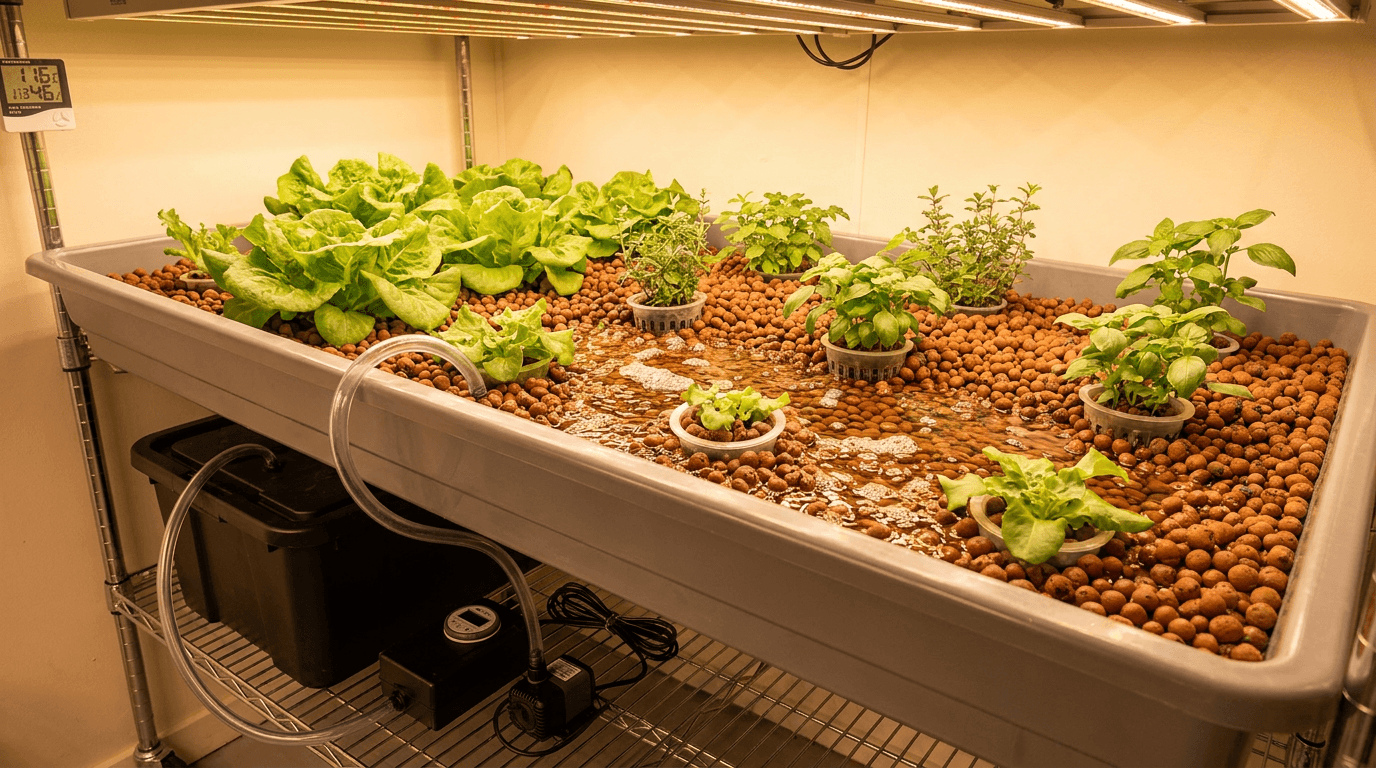
Ebb and Flow Systems: Pros, Cons, and How They Work
Everything you need to know about ebb and flow hydroponic systems: how flood and drain cycles work, the best crops for this versatile method, and a detailed pros and cons analysis backed by real-world testing data from The Hydro Lab.
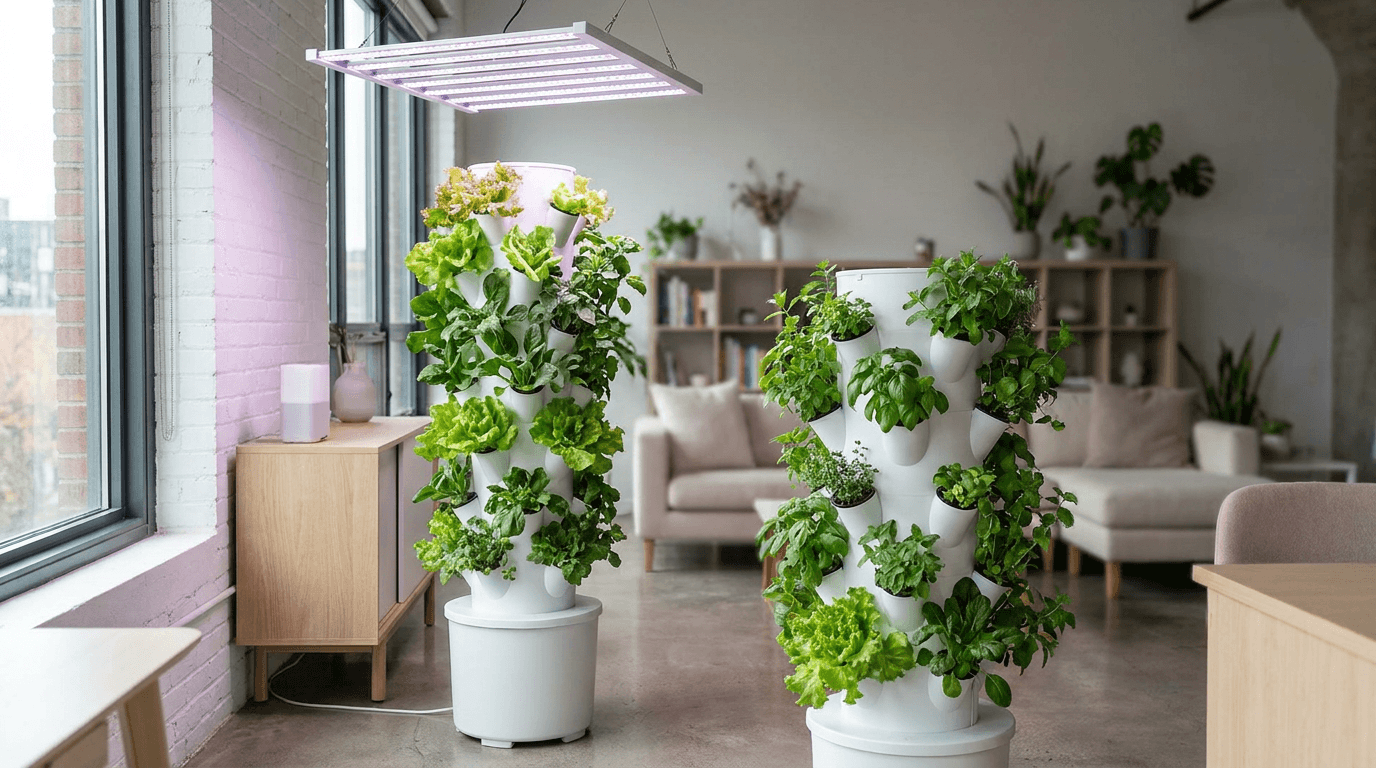
How to Build a Vertical Hydroponic Tower for Small Spaces
Build a space-saving vertical hydroponic tower that grows up to 50 plants in just 2 square feet of floor space. Complete DIY guide with materials list, step-by-step assembly, plant selection tips, and maintenance schedule for small-space growers.
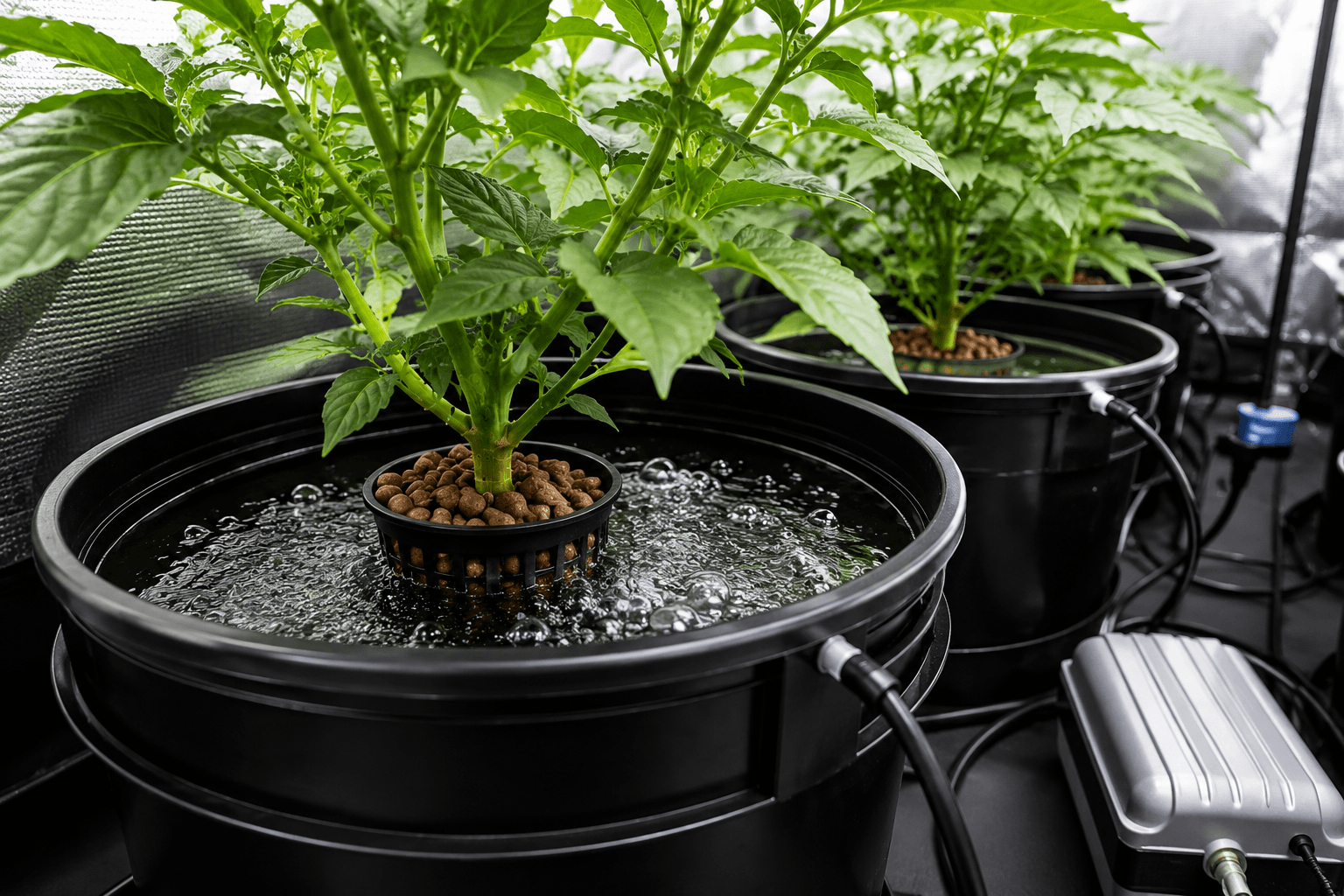
Deep Water Culture (DWC) for Beginners: The Ultimate Guide
The complete beginner's guide to Deep Water Culture hydroponics. Learn how DWC works, build your first system with a step-by-step setup guide, master nutrient management, prevent common problems, and grow lettuce, herbs, tomatoes, and more.