
How to Sanitize Your Hydroponic System Between Grow Cycles
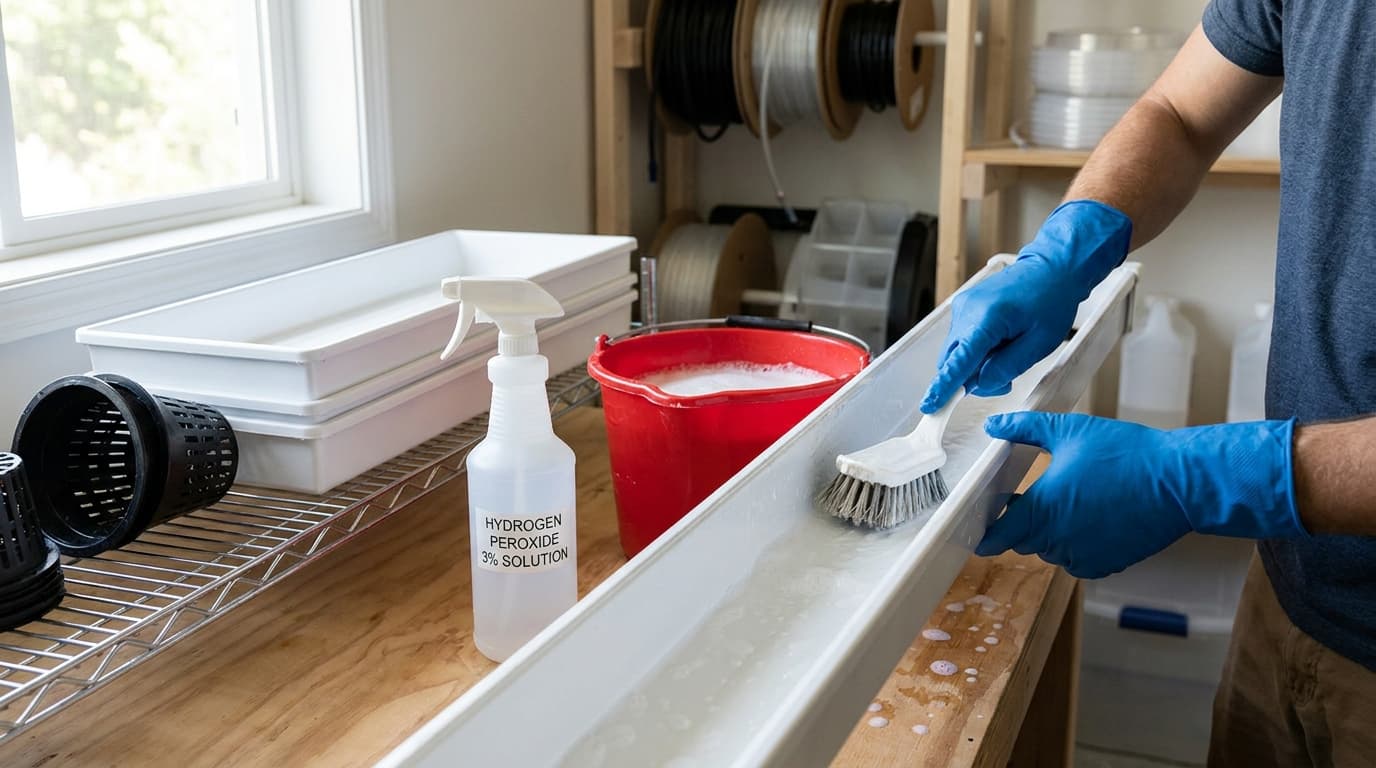
Every hydroponic system accumulates biological material over the course of a grow cycle. Dead root matter, nutrient salt deposits, biofilm, algae spores, and microbial populations build up on every surface that contacts the nutrient solution. If the system is not thoroughly sanitized between cycles, these residues become the foundation for pathogen outbreaks in the next grow. Pythium root rot, Fusarium wilt, and bacterial soft rot are all diseases that persist in system surfaces and infect the next crop when conditions favor them.
A proper sanitization protocol is the difference between a clean start with healthy plants and a recurring cycle of root problems that get blamed on nutrients, lighting, or genetics. The protocol must remove organic debris, dissolve mineral scale, and kill pathogens without leaving toxic residues that harm the next crop. Different sanitizing agents achieve these goals with varying effectiveness, safety profiles, and equipment compatibility.
This guide covers the step-by-step sanitization protocol for DWC, NFT, and flood-and-drain systems, the pros and cons of hydrogen peroxide, bleach, citric acid, and peracetic acid sanitizers, how to clean specific components including pumps, tubing, net pots, and reservoirs, and how to verify that your sanitization was effective before introducing new plants.
The Lab's Verdict
Hydrogen peroxide at three percent concentration is the safest and most effective sanitizer for home hydroponic systems. It kills bacteria, fungi, and viruses on contact, breaks down into water and oxygen within 24 hours, leaves no toxic residue, and does not damage pumps, tubing, or seals when used at the correct concentration. Bleach is more effective against certain spores but requires thorough rinsing and can damage system components with repeated exposure. For most home growers, a three-step protocol of rinse, hydrogen peroxide soak, and final rinse produces a system that is biologically clean without the risk of chemical residue damage to the next crop.
Why Sanitization Matters Between Cycles
The nutrient solution in a hydroponic system is an ideal growth medium for microorganisms. It contains water, sugars exuded by roots, mineral nutrients, and organic compounds from decomposing root matter. Over the course of a grow cycle, microbial populations in the rhizosphere reach a dynamic equilibrium where beneficial and potentially harmful organisms coexist. When the crop is harvested and the system is drained, this microbial community collapses, leaving behind dead organic matter and dormant pathogen spores.
If the system is refilled with fresh nutrient solution without sanitization, the dormant spores germinate into the first available food source, which is the organic debris left from the previous cycle. The new plants are introduced into an environment that already contains pathogen populations. Pythium, in particular, is a water mold that produces resilient oospores that can survive for years in dry conditions. These spores are invisible to the naked eye and remain in cracks, joints, and pump impellers where water flow does not reach during normal operation.
The economic argument for thorough sanitization is clear. The cost of a bottle of hydrogen peroxide and thirty minutes of labor is approximately five dollars. The cost of losing a crop to root rot in the third week of flower is the entire investment in seeds, nutrients, electricity, and time for that cycle. Every experienced hydroponic grower has a story about the one time they skipped the sanitization step and paid for it with a diseased harvest.
Beyond pathogen control, sanitization removes mineral scale and salt deposits that accumulate on reservoir walls, pumps, and tubing. These deposits create rough surfaces where biofilms adhere more strongly and where pH and EC measurements can drift as deposits dissolve back into the fresh nutrient solution. A visually clean system produces more stable and predictable water chemistry.
Sanitizer Comparison
| Sanitizer | Concentration | Contact Time | Rinse Required | Equipment Safe | Best For |
|---|---|---|---|---|---|
| Hydrogen peroxide 3% | Undiluted soak | 15-30 minutes | Light rinse | Yes | General sanitization, biofilm removal |
| Sodium hypochlorite (bleach) | 5-10% solution | 10-15 minutes | Thorough rinse | Moderate — can damage seals | Known pathogen outbreaks |
| Citric acid | 2-5% solution | 30-60 minutes | Thorough rinse | Yes | Scale removal, mild sanitization |
| Peracetic acid | 0.2-0.5% solution | 10-15 minutes | Thorough rinse | Yes at low concentration | Commercial sanitation, heavy biofilm |
| White vinegar (acetic acid) | Undiluted or 50% | 30-60 minutes | Thorough rinse | Yes | Scale removal, mild sanitization |
The Three-Step Sanitization Protocol
The following protocol applies to all hydroponic system types with minor adjustments noted for each. The protocol consists of three steps: dry removal and rinse, chemical sanitization, and final rinse and inspection. Completing all three steps in sequence ensures that organic debris, microbial pathogens, and chemical residues are all addressed.
Step one: dry removal and rinse. Disconnect all electrical components including pumps, air stones, and water chillers. Remove net pots, grow media, and any remaining plant material. Dispose of used grow media. Scrape visible salt deposits and organic residue from reservoir walls and lids using a plastic scraper or stiff nylon brush. Do not use metal brushes or steel wool, which scratch surfaces and create hiding places for pathogens. Rinse all components with plain water to remove loose debris. Pay special attention to pump impellers, tubing bends, and drain fittings where organic matter accumulates.
Step two: chemical sanitization. Fill the reservoir with a three percent hydrogen peroxide solution, or prepare a five percent bleach solution if you are dealing with a known pathogen outbreak. Run the pump and air stones for fifteen minutes to circulate the sanitizer through all tubing and components. Let the solution sit in the system for an additional fifteen to thirty minutes for a total contact time of thirty to forty-five minutes. For NFT channels, tilt the channels to ensure the sanitizer reaches the full length. For flood-and-drain systems, run a full flood cycle with the sanitizer to treat the grow tray and all plumbing.
Step three: final rinse and inspection. Drain the sanitizer solution completely. Fill the reservoir with plain water and run the pump for ten minutes to flush all components. Drain and repeat the fresh water flush a second time. Inspect all surfaces for residual scale or debris. If white or brown deposits remain, repeat the sanitization step with a focus on the affected areas. After the final rinse, allow the system to air dry completely with all lids and covers removed. Drying for 24 to 48 hours ensures that any remaining moisture evaporates and that any residual hydrogen peroxide decomposes fully.
After air drying, inspect and replace any components that show signs of degradation. Check pump impellers for wear, air stones for clogging, and tubing for stiffness or cracking. Reassemble the system with fresh grow media and clean net pots. The system is now ready for the next cycle.
System-Specific Protocols
Each hydroponic system type has unique components and configurations that require specific attention during sanitization.
DWC systems require special attention to the reservoir interior, air stones, and pump components. The reservoir is the primary habitat for pathogens in DWC because it holds the entire volume of nutrient solution in constant contact with the root zone. Remove the air stones and inspect them for algae and biofilm growth. Air stones are porous and difficult to sanitize fully; replacing them every three to four cycles is recommended. Clean the pump impeller housing by disassembling the pump and wiping the impeller chamber with a hydrogen peroxide-soaked cloth. The reservoir lid and net pot inserts should be scrubbed separately, paying attention to the rim and sealing surfaces where biofilm accumulates.
NFT systems require thorough cleaning of the channel interiors, which are the most difficult component to access. The narrow channels and tight corners create dead zones where debris accumulates. Use a channel cleaning brush or a bottle brush with an extended handle to scrub the full length of each channel. Pay special attention to the inlet and outlet ends where nutrient solution enters and exits the channel. If the channels are made of opaque material, inspect them with a bright flashlight to identify residues that are not visible in ambient light. The drip emitters or spray nozzles at the channel inlets should be removed and soaked separately in hydrogen peroxide for 30 minutes.
Flood-and-drain systems have the most complex plumbing of the three common system types, with multiple drain lines, fittings, and the flood tray itself. The flood tray should be cleaned with a stiff nylon brush and hydrogen peroxide solution, with particular attention to the corners and the drain fitting area where water pools after draining. The bell siphon, if used, must be disassembled completely and each component cleaned individually because the siphon mechanism traps organic matter in its internal chambers. The fill and drain lines should be flushed with the sanitizer solution at high flow rate to dislodge biofilm from the tubing walls.
Aeroponic systems require the most meticulous sanitization because the spray nozzles and high-pressure lines are prone to clogging from mineral deposits and biofilm. Disassemble each spray nozzle and soak the components in a citric acid solution to dissolve mineral scale, followed by a hydrogen peroxide soak for sanitization. Run the sanitizer through the high-pressure pump and lines for the full contact time. Aeroponic systems benefit from an additional sanitization step using a peracetic acid solution every third cycle to address biofilm that forms inside the high-pressure tubing.
Handling Specific Contaminants
Different types of contamination require different sanitization approaches. Identifying the type of contamination you are dealing with helps you select the most effective cleaning agent and protocol.
Mineral scale appears as white or light-gray crusty deposits on reservoir walls, pumps, and tubing. It is caused by hard water minerals, primarily calcium carbonate and magnesium carbonate, precipitating out of solution as water evaporates or pH fluctuates. Mineral scale is not a biological hazard, but it creates rough surfaces that harbor pathogens and interfere with accurate EC measurements. Citric acid at two to five percent concentration dissolves mineral scale effectively. Apply the citric acid solution to affected surfaces, let it sit for 30 minutes, and scrub with a nylon brush. Rinse thoroughly afterward because citric acid residue can lower the pH of fresh nutrient solution.
Biofilm appears as a slick, slimy layer on reservoir surfaces, tubing interiors, and pump components. It is a community of bacteria encased in a protective polysaccharide matrix that adheres strongly to surfaces. Biofilm is resistant to simple rinsing and requires chemical treatment to break down the matrix. Hydrogen peroxide at three percent concentration is effective against biofilm because the oxygen bubbles physically disrupt the matrix. Peracetic acid is more effective than hydrogen peroxide alone for established biofilms. Mechanical scrubbing with a bottle brush is essential to remove biofilm from tubing and channels after the chemical treatment has weakened it.
Algae appears as green, brown, or blue-green slime on reservoir lids, tubing, and any surface exposed to light. Algae growth indicates that light is reaching the nutrient solution, which should be corrected after sanitization by sealing light leaks. Algae is relatively easy to kill with hydrogen peroxide or bleach, but the dead organic matter must be physically removed because it decomposes and releases compounds that feed pathogenic bacteria. Scrub all algae-affected surfaces after the sanitizer soak.
Pythium and Fusarium are the most serious biological contaminants in hydroponic systems. Pythium produces resilient oospores, and Fusarium produces thick-walled chlamydospores that resist many sanitizers. A confirmed Pythium or Fusarium outbreak requires a bleach sanitization protocol at ten percent concentration with a 30-minute contact time, followed by three thorough fresh-water rinses and a 48-hour air-drying period. After bleach sanitization of a known pathogen outbreak, run a hydrogen peroxide flush cycle before introducing new plants to neutralize any residual chlorine.
Sanitization Quick Reference
- Before sanitizing: Disconnect all electrical components. Remove and dispose of old grow media. Scrape visible debris.
- Routine sanitization: 3% hydrogen peroxide, 30-minute contact time, light rinse, 24-hour air dry.
- Pathogen outbreak: 10% bleach, 30-minute contact, triple rinse, hydrogen peroxide neutralization, 48-hour dry.
- Scale removal: 2-5% citric acid, 30-minute contact, scrub with nylon brush, thorough rinse.
- Replace every 3-4 cycles: Air stones, net pots, porous grow media. Inspect tubing and pump seals.
Preventive Practices Between Full Sanitizations
Full system sanitization between cycles is the gold standard, but preventive maintenance during a grow cycle reduces the pathogen load and makes end-of-cycle cleaning easier.
Beneficial bacteria and fungi products containing bacillus, streptomyces, or trichoderma species colonize the root zone and compete with pathogens for space and nutrients. These products do not eliminate the need for end-of-cycle sanitization because the beneficial organisms die when the system is drained. During the grow cycle, they suppress pathogen populations and reduce biofilm formation on system surfaces. We recommend applying a beneficial microbes product weekly during the vegetative phase and every other week during flower.
Enzyme products containing cellulase, hemicellulase, and pectinase break down dead root matter and organic debris into simple compounds that are consumed by the beneficial microbial population. Enzymes do not kill pathogens directly, but they remove the organic substrate that pathogens feed on. Adding enzymes to the reservoir weekly during the second half of the grow cycle, when root dieback naturally increases, significantly reduces the organic debris that must be cleaned between cycles.
Reservoir temperature management is the most effective non-chemical preventive measure. Pythium and Fusarium are thermophilic pathogens that become active above 72 degrees Fahrenheit. Maintaining nutrient solution temperature below 68 degrees Fahrenheit suppresses these pathogens without any chemical intervention. A water chiller or frozen water bottles in the reservoir during hot weather reduces the pathogen pressure enough that many growers can extend their sanitization interval to every third cycle.
Light-proofing the reservoir and all tubing prevents algae growth, which reduces the organic load in the system. Algae die-off releases compounds that feed pathogenic bacteria, and the dead algae cells themselves become organic debris that must be cleaned. Cover all reservoir surfaces, use opaque tubing, and seal any light leaks around net pot openings. Black or dark-colored tubing absorbs less light energy and stays cooler than clear tubing.
Frequently Asked Questions
How often should I fully sanitize my hydroponic system?
Full sanitization between every grow cycle is the standard recommendation. If you are running continuous crops with no break between cycles, sanitize at minimum every 90 days or when switching between crop families. Never skip sanitization when switching from a fruiting crop to a leafy green crop or vice versa.
Can I use dish soap to clean my hydroponic system?
No. Dish soaps and detergents leave residues that are difficult to rinse completely. These residues can damage plant roots, alter the surface tension of the nutrient solution, and interfere with oxygen transfer at the root zone. Use hydrogen peroxide, citric acid, or a purpose-formulated hydroponic system cleaner instead.
How do I clean tubing that has visible biofilm inside?
Replace clear or semi-transparent tubing that shows visible biofilm because the biofilm has penetrated the tube surface. For opaque tubing, run a hydrogen peroxide solution through the tubing at full pump speed for 30 minutes, then use a tubing brush to scrub the interior. If biofilm remains after scrubbing, replace the tubing.
Is it safe to use bleach in my hydroponic system?
Bleach is safe when used correctly and rinsed thoroughly. Use unscented household bleach without thickeners or splash-less additives. Dilute to five to ten percent concentration. Do not exceed 30 minutes of contact time. Rinse three times with fresh water. Run a hydrogen peroxide flush cycle before introducing plants to neutralize residual chlorine.
Can I reuse clay pebbles after a pathogen outbreak?
Yes, but they require aggressive sanitization. Boil the pebbles for 15 minutes, or soak in a ten percent bleach solution for one hour followed by thorough rinsing, then soak in three percent hydrogen peroxide for 30 minutes to neutralize residual bleach. Air dry completely for 48 hours before reuse. Discard pebbles that have visible root matter embedded in their pores.
How do I know if my sanitization was effective?
Visual inspection is the primary method. The system should be free of visible scale, biofilm, and organic debris. A biological verification method is to fill the sanitized system with plain water, run it for 24 hours, and test the water for dissolved organic carbon using a TDS meter. If the TDS reading increases by more than 20 ppm over 24 hours, residual organic material is still present and the sanitization should be repeated.
Do I need to sanitize my reservoir during a grow cycle?
Complete reservoir drain and clean during a grow cycle is not recommended because it stresses the plants. Instead, use beneficial microbes and enzymes to maintain biological balance during the cycle. If you suspect a pathogen outbreak during the cycle, treat with hydrogen peroxide at 3mL per liter of reservoir volume, which provides sanitization without requiring a full system drain.
Build Your Sanitization Routine
Choose the approach that fits your system and experience level.
The Beginner
Single DWC or small NFT. Use the three-step hydrogen peroxide protocol between every cycle. Replace air stones and net pots every third cycle.
The Intermediate
Multiple systems or continuous cropping. Use preventive enzymes and beneficial microbes during the cycle. Rotate between H2O2 and citric acid for end-of-cycle sanitization.
The Advanced
Commercial or high-value crops. Use peracetic acid for heavy biofilm. Implement biological verification testing after each sanitization. Keep pathogen-specific protocols for outbreaks.
The Lab's Final Analysis
System sanitization is the least glamorous but most important maintenance task in hydroponic growing. It does not produce visible results the way a new light fixture or a nutrient change does. The benefits are invisible: a crop that never develops root rot, a reservoir that stays stable at the target pH, and a harvest that reaches its full potential without disease losses. The cost of skipping sanitization is not always paid in the next cycle. Sometimes it takes two or three cycles for pathogen populations to build to the level where they cause visible crop damage. By the time the problem is visible, the pathogens are established throughout the system, and recovery requires aggressive treatment that could have been prevented by thirty minutes of cleaning.
The hydrogen peroxide protocol we recommend is effective, safe, inexpensive, and compatible with all common system components. It does not require personal protective equipment beyond gloves, does not produce toxic fumes, and breaks down into harmless byproducts. There is no reason to use harsher chemicals unless you are dealing with a confirmed pathogen outbreak. For routine between-cycle sanitization, hydrogen peroxide is the standard that all other methods should be measured against.
Institutionalize your sanitization schedule. Write it on a calendar. Set a reminder on your phone. Treat it as a non-negotiable step in the grow cycle, not as optional maintenance that can be deferred when you are busy. The thirty minutes you spend cleaning between cycles is the most cost-effective crop insurance you can buy.
Sanitize every cycle without exception. Use hydrogen peroxide for routine cleaning, bleach only for confirmed pathogen outbreaks. Replace air stones and porous media regularly. Keep your system clean, and your plants will reward you with consistent, high-quality harvests every time.
More from Systems & DIY
Keep reading
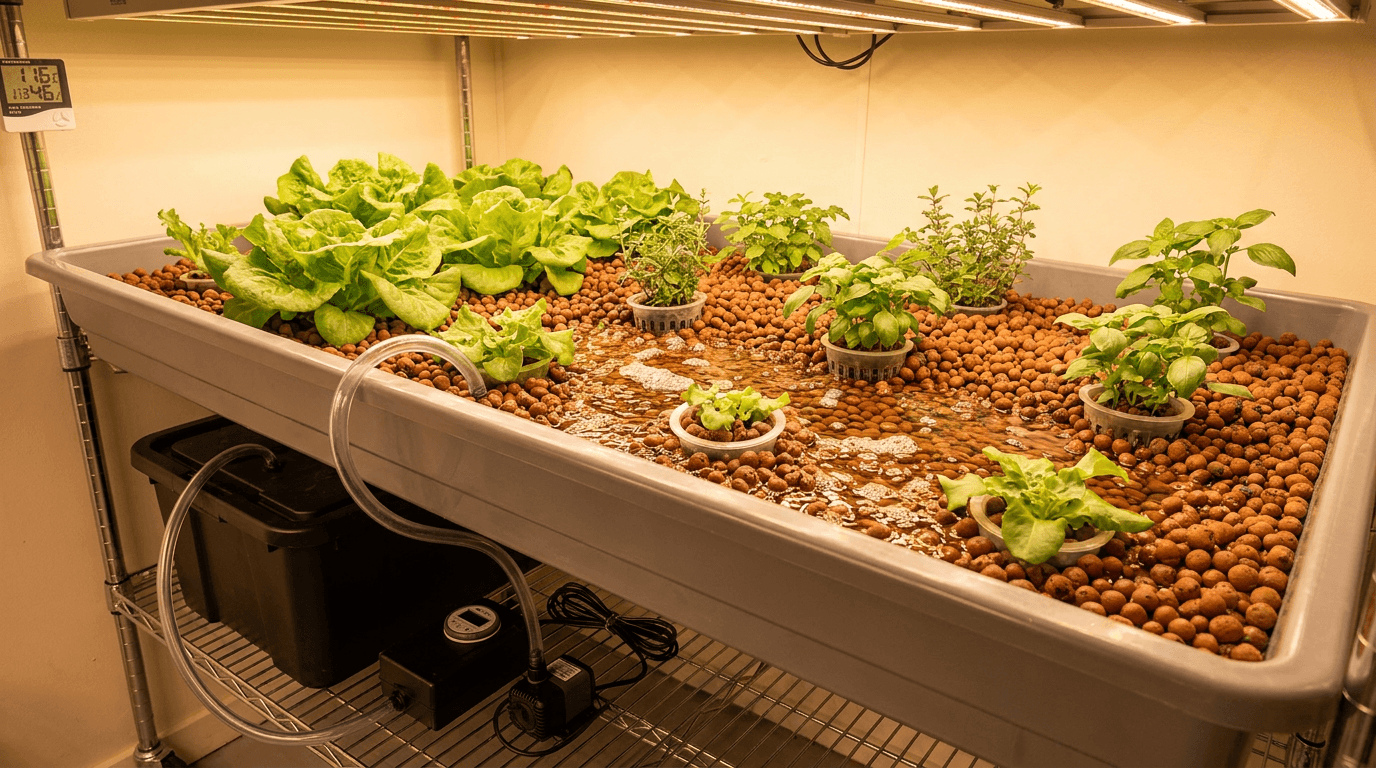
Ebb and Flow Systems: Pros, Cons, and How They Work
Everything you need to know about ebb and flow hydroponic systems: how flood and drain cycles work, the best crops for this versatile method, and a detailed pros and cons analysis backed by real-world testing data from The Hydro Lab.
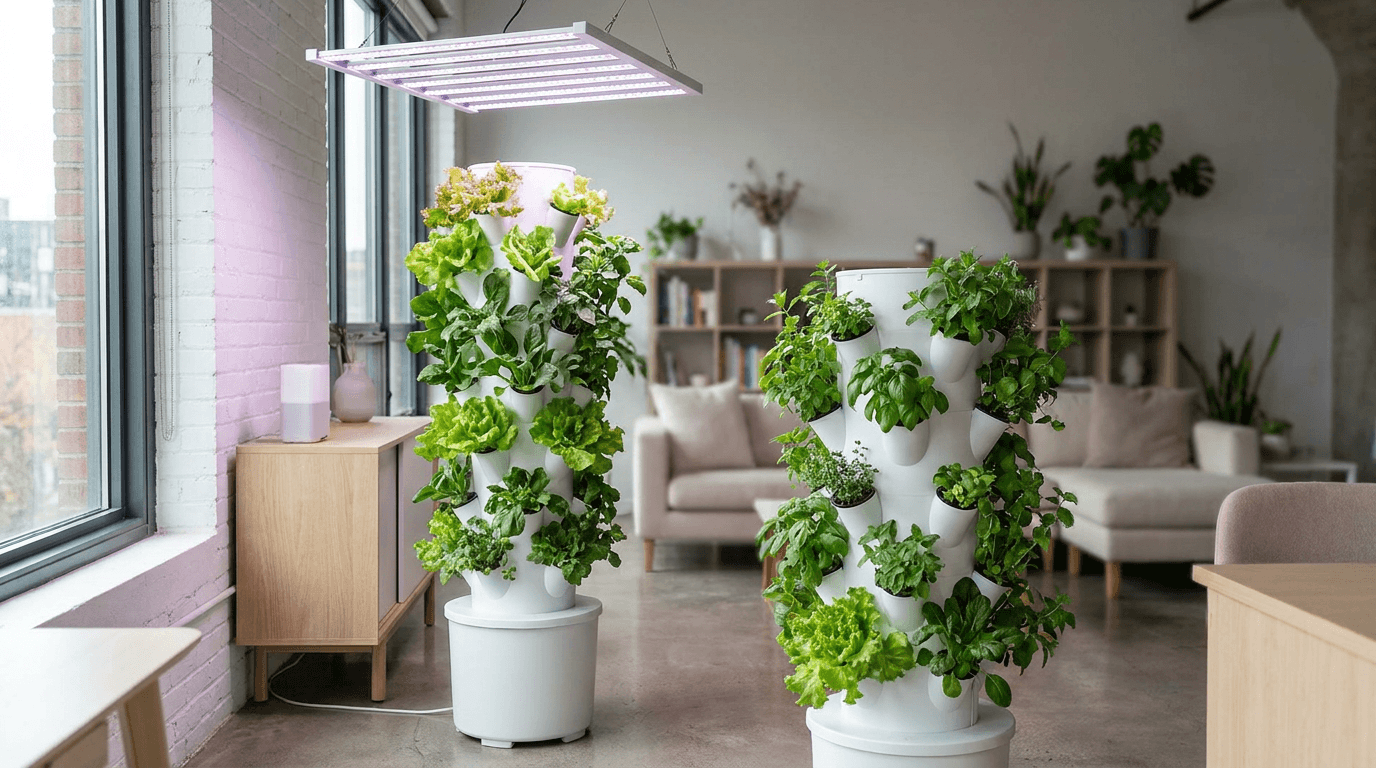
How to Build a Vertical Hydroponic Tower for Small Spaces
Build a space-saving vertical hydroponic tower that grows up to 50 plants in just 2 square feet of floor space. Complete DIY guide with materials list, step-by-step assembly, plant selection tips, and maintenance schedule for small-space growers.
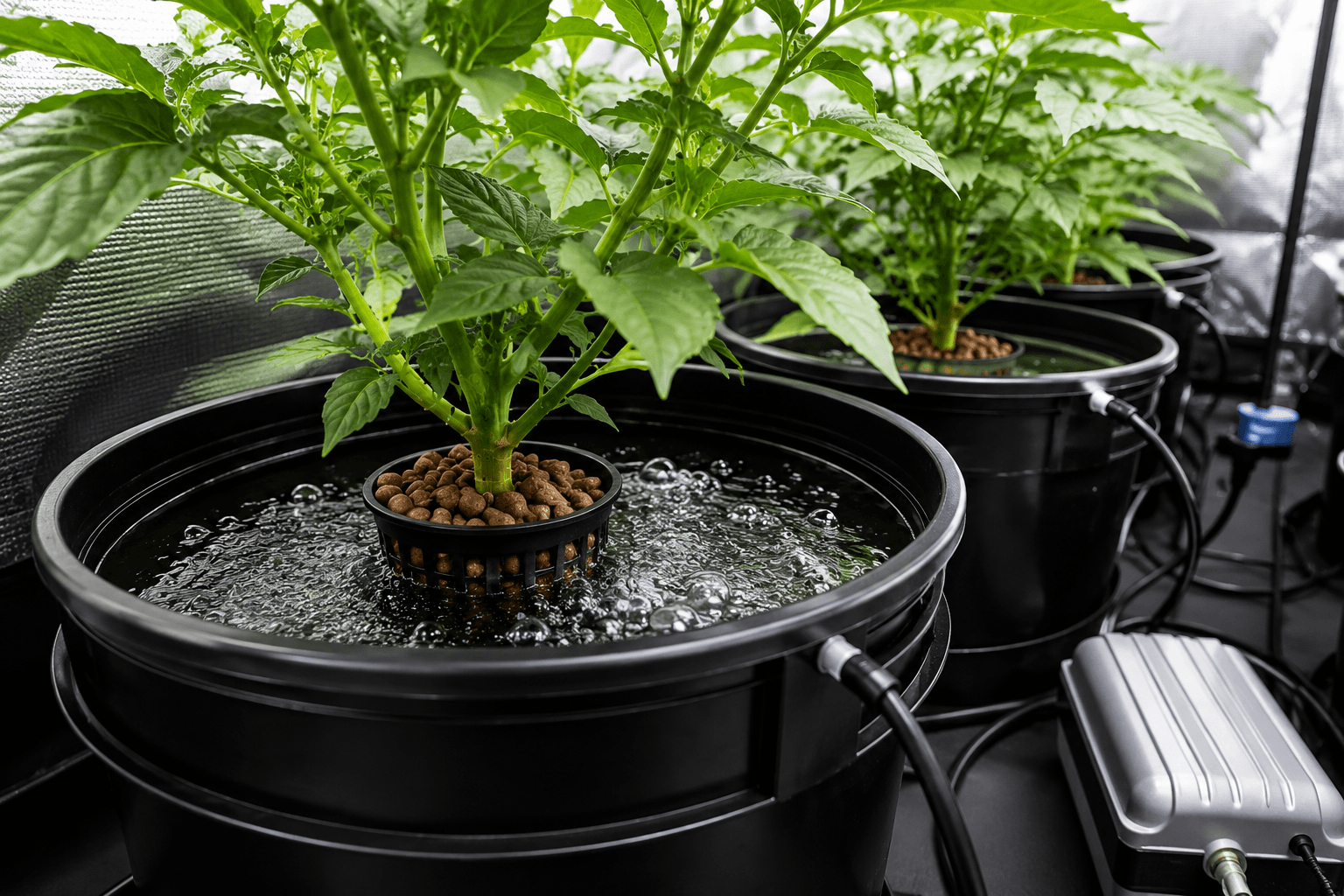
Deep Water Culture (DWC) for Beginners: The Ultimate Guide
The complete beginner's guide to Deep Water Culture hydroponics. Learn how DWC works, build your first system with a step-by-step setup guide, master nutrient management, prevent common problems, and grow lettuce, herbs, tomatoes, and more.