
Common DWC Mistakes and How to Avoid Them
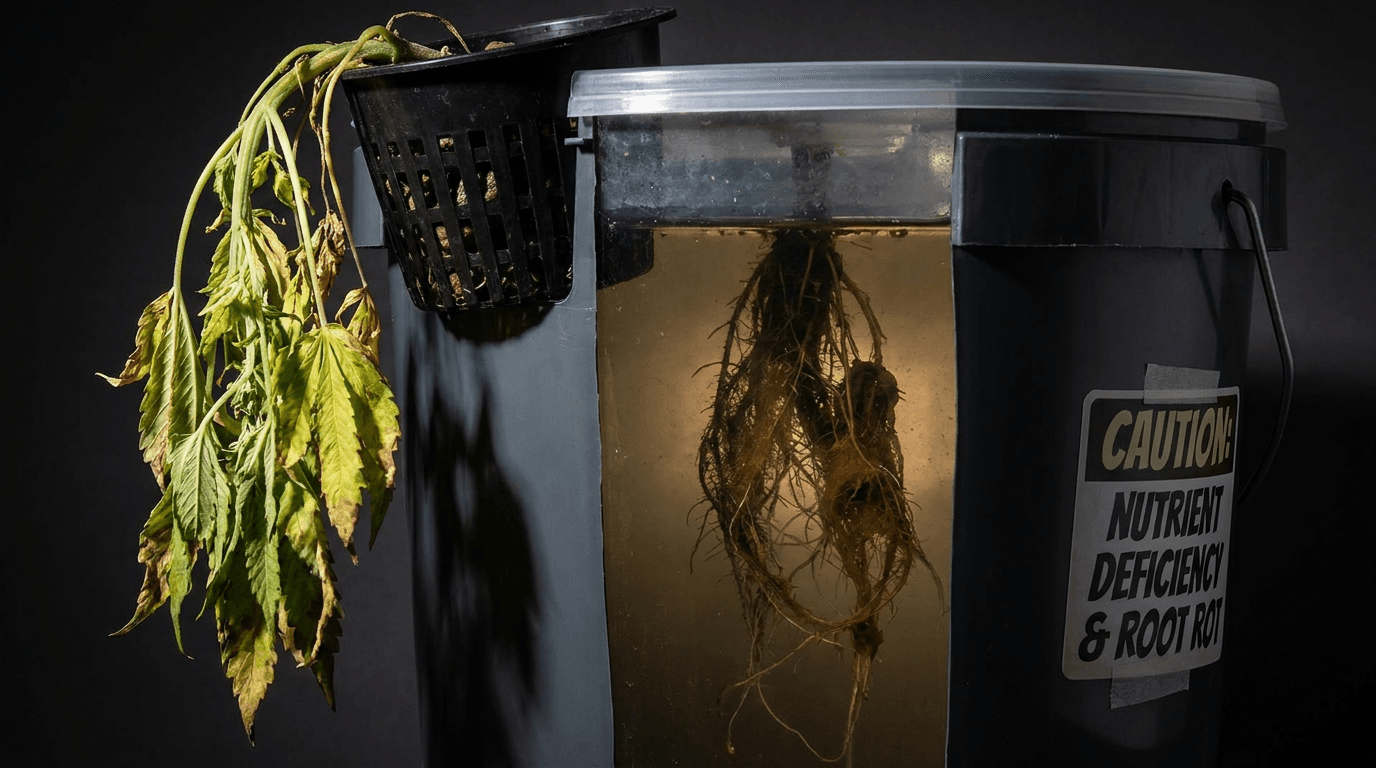
Deep Water Culture is the most popular entry point into hydroponics for good reason: it is simple to build, forgiving of beginner errors, and capable of producing astonishing yields. A single five-gallon DWC bucket can support a tomato plant that produces three kilograms of fruit over a season. But DWC has specific failure modes that catch even experienced growers off guard. The system's greatest strength, its large water volume acting as a thermal and chemical buffer, becomes its greatest vulnerability when mistakes compound.
Over five years of operating DWC systems at The Hydro Lab, we have documented every failure, every root rot outbreak, every pH crash, and every nutrient lockout. The patterns are remarkably consistent. Whether you are a first-time grower or a seasoned hydroponic gardener, the same ten mistakes account for over ninety percent of DWC failures. The good news is that each mistake has a simple, proven prevention strategy. This guide presents the top ten DWC mistakes in order of frequency and severity, with specific diagnostic guidance and corrective actions for each.
If you are currently fighting a DWC problem, start at Mistake Number One (light leaks) and work your way down the list. If you are building a new system, read this guide before you fill your reservoir. Prevention is exponentially easier than remediation in hydroponics, and most DWC disasters are completely avoidable with proper setup and routine monitoring.
The Lab's Prevention Verdict
Every DWC failure we have investigated traces back to one of three root causes: light reaching the root zone, temperature stress, or pH/EC mismanagement. Eliminate these three and you eliminate ninety percent of problems. The remaining ten percent are mechanical failures that proper system design can mitigate. DWC is not fragile. It is forgiving, but it is not magic. The system will punish neglect and reward consistency.
Light Leaks in the Root Zone
Light leaks are the single most common cause of DWC failure, and the most frequently overlooked. Plant roots evolved in complete darkness. When light penetrates the reservoir, it triggers a cascade of problems. Algae spores that are always present in the grow environment germinate and bloom in the nutrient solution, competing with plant roots for oxygen and nutrients. The algae die-off releases organic compounds that feed pathogenic bacteria, particularly Pythium and Fusarium species. Within days, the grower notices slimy brown roots, foul-smelling water, and plants that have stopped growing despite perfect pH and EC.
The most common light leak sources are transparent or translucent reservoir lids, gaps around net pot lids, clear air tubing that acts as a fiber optic conduit, and the water surface itself if the net pot does not provide complete coverage. Even a pinprick of light entering through an air line grommet can sustain an algae population in a five-gallon bucket. The human eye is a poor judge of light tightness. A more reliable test is to place a smartphone camera inside the reservoir, close the lid, and check the live view for any bright spots.
Prevention Checklist
- 1. Use opaque buckets: black, dark blue, or dark green. White or translucent buckets must be painted or wrapped.
- 2. Seal net pot lids with grommets or light-proof foam collars around each plant stem.
- 3. Use black or opaque air tubing. Clear tubing acts as a light pipe.
- 4. Cover the reservoir surface with reflective foam or hydroton pebbles to block light at the water line.
- 5. Test with a smartphone camera inside the sealed reservoir before adding plants.
Temperature Swings and High Reservoir Heat
DWC systems are vulnerable to temperature stress because the roots are fully submerged. When water temperature exceeds twenty-four degrees Celsius, dissolved oxygen drops below critical levels, root respiration slows, and Pythium root rot becomes almost inevitable. The problem is compounded by the fact that the heat generated by air pumps, water pumps, and grow lights all transfers into the reservoir. A DWC system running under one thousand watts of LED lighting in a room at twenty-six degrees Celsius will see reservoir temperatures climb to twenty-eight or twenty-nine degrees within hours if no active cooling is in place.
The temperature swing problem is equally destructive. A reservoir that fluctuates between eighteen and twenty-eight degrees Celsius over a twenty-four-hour period stresses plant roots repeatedly. Each swing triggers a metabolic adjustment that consumes energy the plant should be spending on growth. The ideal DWC reservoir maintains a temperature within a two-degree window, ideally between eighteen and twenty-two degrees Celsius. Achieving this stability requires either a water chiller or a combination of reservoir insulation, cool air intake, and frozen bottle rotation.
Many growers make the mistake of measuring only the grow room air temperature and assuming the reservoir is at the same temperature. In practice, the reservoir is often two to four degrees warmer than the ambient air due to pump and light heat loading. Place a dedicated thermometer probe in the reservoir, logged continuously, to understand your actual temperature profile before diagnosing other problems.
pH Neglect and Drift
pH drift in DWC is slower than in NFT or Aeroponics because of the large water volume, but it is still a serious problem when left unchecked. The ideal pH range for most hydroponic crops is 5.5 to 6.5. Within this range, all essential nutrients are available for plant uptake. Below 5.5, calcium, magnesium, and phosphorus availability drops sharply. Above 6.5, iron, manganese, zinc, and copper become unavailable. A DWC system that drifts to pH 7.5 will show iron deficiency symptoms even if the nutrient solution contains adequate iron, because the iron is chemically locked in an unavailable form.
The most common cause of pH drift is the natural uptake of nutrients by the plant. As plants absorb ammonium nitrogen, they release hydrogen ions, acidifying the solution. As they absorb nitrate nitrogen, they release hydroxide ions, making the solution more alkaline. The net pH drift direction depends on the ratio of ammonium to nitrate in your nutrient formula. Additionally, hard water with high carbonate alkalinity will resist pH changes initially but can cause sudden pH crashes when the carbonate buffer is exhausted.
The solution is daily pH measurement and adjustment using food-grade phosphoric acid to lower pH or potassium hydroxide to raise pH. Do not use vinegar or citric acid as they are unstable and promote microbial growth. Invest in a quality pH meter with automatic temperature compensation and calibrate it weekly using pH 4.0 and 7.0 buffer solutions. A pH meter that reads 0.3 units off will cause weeks of frustration.
Overfeeding and Salt Buildup
The belief that more nutrients equal more growth is one of the most persistent and damaging myths in hydroponics. DWC plants can only absorb nutrients at a rate limited by their metabolic activity, light availability, and temperature. Adding nutrients beyond this metabolic ceiling does not increase growth. It increases electrical conductivity, creates osmotic stress, and can cause nutrient burn that permanently damages root tips. The classic symptom of overfeeding is leaf tip burn, dark green leaves with curled edges, and a white crust of precipitated salts on the reservoir lid and net pots.
The accurate way to manage nutrient concentration is through electrical conductivity measurement. For most crops in DWC, the target EC range is 1.2 to 2.0 millisiemens per centimeter for vegetative growth and 1.8 to 2.6 for flowering or fruiting. Lettuce and leafy greens do well at 1.0 to 1.4 mS/cm. Tomatoes and peppers need 2.0 to 2.6 mS/cm during fruiting. Seedlings and clones need 0.4 to 0.8 mS/cm. Exceeding these ranges by even 0.5 mS/cm can cause osmotic root damage.
The EC drift pattern is a critical diagnostic tool. If EC rises between top-ups, the plants are drinking more water than they are consuming nutrients, meaning the solution is becoming too concentrated. Add fresh water without nutrients to dilute. If EC falls, the plants are consuming nutrients faster than water, meaning the solution is becoming too dilute. Add nutrients at half strength. A stable EC that stays within 0.1 mS/cm between top-ups indicates a perfectly balanced feeding schedule.
Inadequate Aeration and Poor Air Stone Placement
DWC depends entirely on forced aeration to supply oxygen to the root zone. Unlike NFT or Aeroponics, where roots are exposed to ambient air, DWC roots have no oxygen source except the bubbles rising from the air stone. If the aeration system fails or is undersized, oxygen depletion occurs within hours. Unfortunately, many commercial air stones marketed for hydroponics are inadequate for even a single five-gallon bucket.
The rule for DWC aeration is simple: the water surface should appear to be boiling. A gentle stream of fine bubbles is not sufficient. You need enough air volume to turn the entire reservoir volume over through the air stone every three to five minutes. For a five-gallon bucket, this requires a minimum of twenty liters per minute of airflow from the pump, distributed through a large-diameter air stone, ideally a cylindrical stone eight to twelve inches long or a round disc stone four to six inches in diameter.
Air stone placement matters enormously. The stone should sit at the very bottom center of the bucket to create a full vertical column of rising bubbles. A stone placed near the edge of the bucket creates a dead zone on the opposite side where water circulation is minimal. Roots growing in the dead zone will experience localized hypoxia even if the DO reading at the center of the bucket is adequate. Use a weighted air stone or secure it with a suction cup to keep it in position.
Aeration Sizing Guide
| Reservoir Size | Min Airflow (L/min) | Air Stone Type |
|---|---|---|
| 5 gallons | 20 L/min | Cylindrical 10" |
| 10 gallons | 35 L/min | Disc 6" or dual stones |
| 20 gallons | 60 L/min | Dual disc 6" stones |
| 55 gallons | 120 L/min | Four disc stones, spaced |
Critical Warning
A single aquarium air stone and a whisper pump designed for a ten-gallon fish tank will not support a DWC bucket. This is the most common aeration mistake. Hydroponic aeration requires industrial-grade pumps and large-format air stones. Spend the money upfront on a diaphragm air pump rated for continuous duty.
Mistakes 6 Through 10: Silent System Killers
6 Infrequent Water Changes
DWC water changes every seven to fourteen days are non-negotiable. As plants consume nutrients and water, the remaining solution becomes concentrated in waste products, salt residues, and root exudates that inhibit growth. The common mistake is topping off without ever doing a full change. This leads to a phenomenon called salt creep or ionic imbalance, where some nutrients accumulate while others are depleted. The solution: drain, scrub the bucket with a mild hydrogen peroxide solution, and refill with fresh nutrients on a strict schedule. Set a calendar reminder. Mark it on a whiteboard. Do not skip it.
7 Ignoring Beneficial Bacteria
Many DWC growers operate sterile systems, relying on chemical sterilants like hydrogen peroxide or hypochlorous acid to keep pathogens at bay. While this approach works, it is fragile. A single contamination event can overwhelm the sterile environment. The alternative is the introduction of beneficial bacteria and fungi such as Bacillus subtilis, Bacillus amyloliquefaciens, and Trichoderma harzianum. These microorganisms colonize the root zone and outcompete pathogens by occupying the ecological niche. They also break down organic waste and improve nutrient cycling. The mistake is running a sterile system without the discipline to maintain it, or introducing beneficial bacteria and then using sterilizing agents that kill them. Choose one approach and commit fully.
8 Using Tap Water Without Testing
Tap water is a variable that can destroy a DWC system. Chlorine and chloramine, added by municipal water authorities as disinfectants, kill beneficial bacteria and can damage root tissues. The solution is simple: aerate tap water for twenty-four hours before using it, which drives off chlorine, and use a carbon filter to remove chloramine. Hard water with high calcium carbonate content will push your pH up and require more pH-down solution. Soft water with low mineral content may lack the calcium and magnesium that plants need. Always test your source water for pH, EC, and chlorine content before mixing nutrients. Use reverse osmosis water if your tap water is inconsistent.
9 Incorrect Net Pot Media and Depth
The choice of growing media in the net pot and the depth of the net pot relative to the water level are critical DWC details. The water surface should be approximately one inch below the bottom of the net pot when the plant is first transplanted. The air gap between the net pot bottom and the water surface allows the initial root to grow in high-humidity air before reaching the nutrient solution. If the water is too high, the root crown sits in water and rots. If too low, the roots dry out before reaching water. Use hydroton clay pebbles as the primary media. They are pH-inert, provide structural support, and wick moisture upward to the root crown. Rinse hydroton thoroughly before use to remove dust that can clog air stones.
10 Neglecting Air Pump Maintenance
Air pumps are the most critical mechanical component in a DWC system, and they are the most neglected. Diaphragm air pumps use rubber diaphragms that degrade over time, reducing airflow output. An air pump that ran fine for the first grow cycle may be delivering half its rated airflow by the second cycle without making any audible change in noise level. Replace the diaphragm annually or when the pump feels hotter than normal to the touch. Air stones also clog with mineral deposits and biofilm over four to eight weeks, increasing back pressure on the pump and reducing bubble size. Soak air stones in a three percent hydrogen peroxide solution for twenty-four hours every month to clean them, and replace them every three months.
DWC Troubleshooting Guide: Symptoms and Solutions
| Symptom | Most Likely Cause | Diagnostic Check | Solution |
|---|---|---|---|
| Brown, slimy roots | Pythium root rot | Water temp > 24C? Light leak present? | Fix light leaks, add chiller, treat with beneficial bacteria or hydrogen peroxide |
| Leaves yellowing between veins | Iron deficiency (high pH) | pH > 6.8? | Lower pH to 5.8-6.2 with phosphoric acid |
| Leaf tips brown and curled | Nutrient burn / overfeeding | EC > 2.8 mS/cm? | Dilute with pH-adjusted water to target EC |
| Wilting despite wet roots | Root rot or oxygen starvation | DO < 4 mg/L? Roots brown? | Increase aeration, check water temp, treat roots |
| Green slime on reservoir walls | Algae from light leaks | Light visible inside bucket? | Seal all light leaks, scrub and sterilize reservoir |
| Stunted growth, dark purple stems | Phosphorus deficiency (cold water) | Water temp < 15C? | Add aquarium heater to raise to 20C |
| Rapid pH drop (below 5.0) | Excess ammonium or root rot byproducts | Root health? NH4 ratio in nutrients? | Switch to nitrate-dominant nutrients, treat root rot |
| Salty white crust on bucket lid | Salt buildup from evaporation | EC rising between top-ups? | Wipe down, check water level, reduce nutrient concentration |
DWC Daily and Weekly Prevention Checklist
Daily Tasks (5-10 minutes)
- Measure and log water temperature
- Measure pH and adjust to 5.8-6.2
- Measure EC and compare to target range
- Check water level and top off with pH-adjusted water
- Verify air pump is running and bubbles are vigorous
- Inspect roots for color and smell (white roots, no odor)
Weekly Tasks (20-30 minutes)
- Calibrate pH meter with 4.0 and 7.0 buffers
- Clean air stone in hydrogen peroxide soak
- Wipe bucket exterior and lid with clean cloth
- Check air pump filter for dust buildup
- Inspect and clean net pot hydroton surface
- Check air tubing for kinks or algae buildup
Biweekly Tasks (45-60 minutes)
- Full reservoir drain and nutrient change
- Scrub bucket interior with mild hydrogen peroxide solution
- Inspect and replace air stone if clogged
- Test source water pH, EC, and chlorine levels
Frequently Asked Questions About DWC Mistakes
How often should I change the water in my DWC bucket?
Every seven to fourteen days, depending on plant size and growth stage. Small plants in early vegetative growth can go fourteen days. Large fruiting plants may need a change every seven days. The sign that a water change is overdue is a rising EC trend despite stable water level.
Can I use tap water in DWC?
Yes, but only after testing and treatment. Aerate for twenty-four hours to remove chlorine. Use a carbon filter to remove chloramine. Test pH and EC of the source water and adjust your nutrient mixing accordingly. If your tap water has EC above 0.5 mS/cm, consider using reverse osmosis water to have full control over your nutrient profile.
How do I know if my air pump is strong enough?
The water surface should look like it is boiling vigorously. If you only see a gentle stream of bubbles, the air pump is undersized. A simple test: turn off the air pump and measure the DO with a meter. Wait thirty minutes and measure again. If DO drops more than 2 mg/L in thirty minutes, your aeration is inadequate for the plant load.
What temperature should my DWC reservoir be?
Eighteen to twenty-two degrees Celsius is the optimal range. Below fifteen degrees, metabolism slows and phosphorus uptake is impaired. Above twenty-four degrees, dissolved oxygen drops and Pythium risk increases exponentially. Use a water chiller in warm environments and an aquarium heater in cold environments.
Should I run beneficial bacteria or a sterile system?
Both approaches work, but you must choose one and commit. A sterile system requires meticulous cleanliness and regular dosing of hydrogen peroxide or hypochlorous acid. A beneficial bacteria system requires stable conditions and no sterilizing agents. We recommend beneficial bacteria for most home growers as it provides a more resilient root zone.
My DWC roots are brown but not slimy. Is that root rot?
Not necessarily. Nutrient staining can turn roots brown without indicating disease. The test is the smell test. Healthy roots smell earthy, like wet soil. Root rot roots smell like rotten eggs or sewage. Also check the texture: healthy roots are firm and springy. Rotten roots are mushy and disintegrate when rubbed between your fingers.
Master Your DWC System Today
The difference between a struggling DWC system and a thriving one is consistent application of the fundamentals. These ten mistakes are the difference between success and frustration.
The Beginner
Setting up your first DWC bucket. Focus on light-proofing and temperature control before adding plants.
The Troubleshooter
Fighting root rot, pH swings, or nutrient issues. Work through our checklist from top to bottom. The solution is almost always at Mistake 1, 2, or 3.
The Advanced Grower
Running multiple DWC buckets. Implement a monitoring and logging system to catch problems before they become visible.
The Lab's Final Analysis
After five years and over one hundred DWC grow cycles at The Hydro Lab, our message is consistent: DWC is not hard, but it demands respect for the fundamentals. The ten mistakes documented here represent virtually every failure mode we have observed. They are not design flaws in DWC itself, they are failures of execution that are entirely preventable with proper setup and consistent maintenance.
The most important thing we have learned is that DWC growers who succeed are not the ones with the most expensive equipment. They are the ones who check their pH daily, who wrap their buckets in reflective insulation, who clean their air stones on schedule, and who change their water before the EC drifts out of range. Success in DWC is a product of consistency, not complexity. A simple system that is well-maintained will always outperform a complex system that is neglected.
If you are currently struggling with a DWC problem, take heart. Every experienced grower has lost plants to root rot, has battled pH drift, and has overfed a crop into nutrient burn. These are not signs of failure. They are tuition payments for an education that will make you a better grower for the rest of your life. Each mistake you make and correct is one you will never make again.
Pick the most relevant mistake from the list above. Fix it today. Check the results tomorrow. DWC rewards decisiveness and punishes procrastination. The moment you notice a problem is the moment to act, not the moment to order more products online.
More from Systems & DIY
Keep reading
Ebb and Flow Systems: Pros, Cons, and How They Work
Everything you need to know about ebb and flow hydroponic systems: how flood and drain cycles work, the best crops for this versatile method, and a detailed pros and cons analysis backed by real-world testing data from The Hydro Lab.
How to Build a Vertical Hydroponic Tower for Small Spaces
Build a space-saving vertical hydroponic tower that grows up to 50 plants in just 2 square feet of floor space. Complete DIY guide with materials list, step-by-step assembly, plant selection tips, and maintenance schedule for small-space growers.
Deep Water Culture (DWC) for Beginners: The Ultimate Guide
The complete beginner's guide to Deep Water Culture hydroponics. Learn how DWC works, build your first system with a step-by-step setup guide, master nutrient management, prevent common problems, and grow lettuce, herbs, tomatoes, and more.