
Best Substrates for Hydroponics: Rockwool, Perlite, or Clay Pebbles?
The substrate you choose for your hydroponic system is not a trivial decision. It is the physical interface between your nutrient solution and your plant's root system. It determines how much oxygen reaches the root zone, how quickly nutrients are delivered, how often your system needs to cycle, and how easily problems like root rot, algae, and pH drift can take hold. Getting the substrate wrong can sabotage an otherwise perfectly designed system. Getting it right unlocks the full potential of your crop.
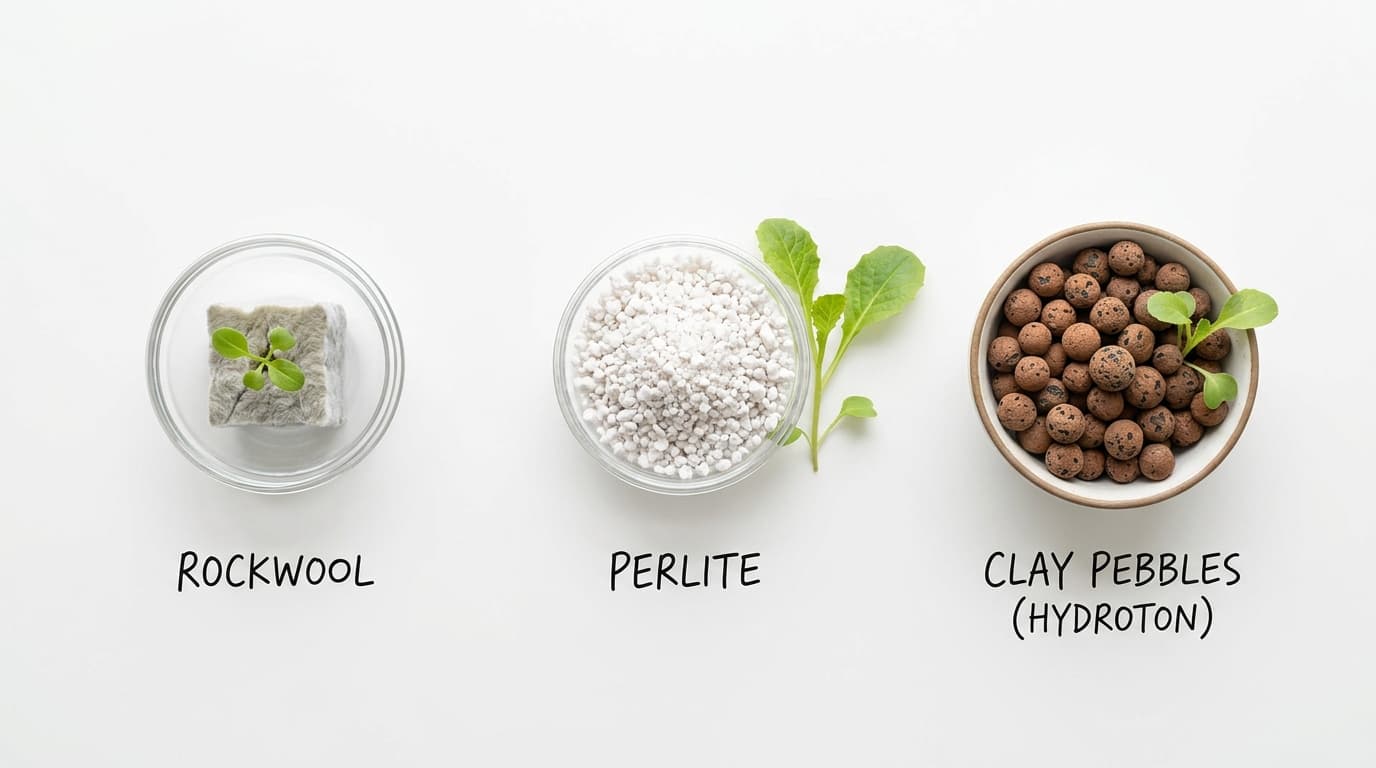
Three materials dominate the home and commercial hydroponic substrate market: rockwool, perlite, and clay pebbles (also called hydroton or LECA). Each has a distinct set of physical and chemical properties that make it suited to specific crops, system types, and grower preferences. There is no single best substrate for every situation. The best substrate depends on your system design, your crop, your climate, and your maintenance tolerance.
This guide provides a head-to-head comparison of rockwool, perlite, and clay pebbles across twelve criteria including water retention, aeration, pH stability, reusability, cost, and environmental impact. We also cover coconut coir, vermiculite, and hybrid mixes so you can make an informed decision based on published research and real-world grow data rather than forum hearsay.
The Lab's Verdict
For most home hydroponic growers running DWC or ebb-and-flow with leafy greens and herbs, clay pebbles offer the best balance of aeration, reusability, and pH neutrality. For seed starting and cloning, rockwool cubes are unmatched. For NFT channel systems with limited root space, perlite mixed with vermiculite provides superior capillary action. No single substrate wins every category, but clay pebbles are the most forgiving option for growers who want consistent results without frequent intervention.
Substrate Comparison Matrix
| Metric | Rockwool | Perlite | Clay Pebbles |
|---|---|---|---|
| Water retention | High — holds 80% of volume | Low — drains quickly | Moderate — 30% by volume |
| Aeration (porosity) | Good at 85% porosity | Excellent at 70% air space | Excellent at 50% air space |
| pH neutrality | Slightly alkaline (7.5–8.0 raw) | Near neutral (6.5–7.0) | Neutral (6.5–7.0) |
| Pre-soak required | Yes — 24 hours at pH 5.5 | No — use dry | Yes — 12 hours to saturate |
| Reusability | Single use — degrades | Single use — crumbles | Multiple cycles — washable |
| Dust / respiratory hazard | Significant — use mask + gloves | Moderate — fine dust when dry | Minimal — rinse before use |
| Cost per liter | Moderate — $0.80–$1.50 / L | Low — $0.30–$0.60 / L | Moderate — $1.00–$2.00 / L |
| Environmental impact | High — energy-intensive, non-biodegradable | Moderate — mined mineral, finite | Moderate to low — fired clay, reusable |
| Best system type | DWC, drip, flood-and-drain | NFT, drip, wick | Flood-and-drain, DWC, drip |
| Ideal crop types | Seedlings, tomatoes, peppers | Lettuce, basil, leafy greens | Tomatoes, peppers, cannabis, herbs |
Rockwool: The Industry Standard
Rockwool, also known as mineral wool or stone wool, is manufactured by melting basalt rock and chalk at temperatures exceeding 1600 degrees Celsius, then spinning the molten material into fibers that are compressed into blocks, slabs, or cubes. The result is a highly porous, consistently structured medium that holds significant amounts of water while retaining excellent aeration. Commercial greenhouse operations across Europe and North America have used rockwool for decades because its manufacturing consistency allows for precise, repeatable crop results at scale.
The most common form for home growers is the rockwool cube, typically measuring one to two inches square, designed for seed starting and clone propagation. The fibers create capillary channels that wick water upward from a tray while the open pore structure allows oxygen to penetrate the root zone. When properly pre-soaked at a pH of 5.5 for 24 hours, rockwool provides an ideal germination environment with a perfect balance of moisture and oxygen.
The primary disadvantage of rockwool is its environmental footprint and disposal challenge. The manufacturing process is extremely energy-intensive. Used rockwool does not biodegrade, and the fibers can break down into dust that irritates skin, eyes, and lungs. Every grower who works with rockwool should wear a respirator mask and gloves when handling dry material. Wetting the rockwool before handling significantly reduces airborne fibers.
Raw rockwool has an alkaline pH of approximately 7.5 to 8.0, which can raise the pH of your nutrient solution during the first days of use. Pre-soaking in pH-adjusted water for 24 hours is not optional — it is essential. Some growers also buffer their rockwool with a mild acid solution before use. After the initial buffering period, rockwool remains pH-neutral for the duration of a single grow cycle.
Rockwool is best suited for start-to-finish growing of long-cycle crops like tomatoes, peppers, and cannabis in drip-irrigated or flood-and-drain systems. It is also the most reliable medium for seed germination and clone propagation. For short-cycle leafy greens or NFT systems, rockwool's high water retention can lead to over-saturation and root rot if the irrigation schedule is not carefully calibrated.
Perlite: The Lightweight Champion
Perlite is a naturally occurring volcanic glass that expands to up to twenty times its original volume when heated to approximately 900 degrees Celsius. The expansion process creates a lightweight, white granule with a porous surface and a structure of sealed air pockets. This gives perlite its defining characteristic: excellent drainage and aeration combined with the ability to wick moisture upward through capillary action.
The horticultural grade of perlite used in hydroponics has a particle size of three to six millimeters. Larger particles provide better drainage and are preferred for deep-rooted crops, while finer grades offer more water retention and are better suited for shallow-rooted plants such as lettuce and basil. In NFT channels, perlite is often the substrate of choice because its low weight and capillary properties allow nutrient film to travel efficiently along the channel while roots remain well-aerated.
Perlite is nearly pH-neutral at 6.5 to 7.0 and does not require pre-soaking or buffering. It is sterile when purchased and does not decompose over time, though it can break down into finer particles under mechanical pressure or repeated handling. The dust generated by dry perlite is a respiratory irritant, and growers should wet the material before handling or wear a dust mask.
The main limitation of perlite is its low water retention. In systems where the irrigation cycle is interrupted — whether by pump failure, power outage, or human error — perlite dries out rapidly, and plants can suffer irreversible wilting within hours. Perlite is also single-use in practice because the granules trap organic debris and root matter that cannot be effectively cleaned between cycles. Used perlite is typically discarded into the garden soil as a soil amendment.
For home growers running NFT or drip systems with leafy greens, herbs, and strawberries, perlite is an excellent choice. It pairs particularly well with vermiculite in a 50:50 or 60:40 mix, where the vermiculite adds water retention without significantly reducing aeration. Pure perlite is not recommended for DWC or flood-and-drain systems because floating and displacement can occur during flood cycles.
Clay Pebbles: The Reusable Workhorse
Clay pebbles, also known as hydroton, LECA (lightweight expanded clay aggregate), or grow rocks, are manufactured by heating clay to approximately 1200 degrees Celsius in a rotary kiln. The process causes the clay to expand into round, porous pebbles with a hard outer shell and a honeycomb-like internal structure. Each pebble is approximately eight to sixteen millimeters in diameter, providing large air gaps between particles and excellent drainage.
The defining advantage of clay pebbles over rockwool and perlite is reusability. After a grow cycle, clay pebbles can be collected, washed, sterilized in a mild bleach solution or boiling water, rinsed thoroughly, and used again for multiple cycles. Well-maintained clay pebbles can last for three to five years before physical breakdown becomes noticeable. For environmentally conscious growers, this reusability dramatically reduces waste compared to the single-use nature of rockwool and perlite.
Clay pebbles are pH-neutral after an initial rinse and do not require buffering. They provide excellent aeration to the root zone, making them ideal for flood-and-drain and drip systems where the nutrient solution is delivered in pulses and allowed to drain fully between cycles. The large particle size means the root zone dries quickly between irrigations, which naturally discourages anaerobic pathogens such as Pythium and Fusarium.
The disadvantages of clay pebbles include their weight, cost, and poor capillary action. Because the pebbles do not wick water upward effectively, they are not suitable for wick systems or NFT channels where capillary movement of the nutrient film is required. In ebb-and-flow and drip systems, the nutrient solution must be delivered from above and allowed to drain. The initial cost per liter is higher than perlite, though the reusability offsets this over multiple cycles.
Clay pebbles should be rinsed thoroughly before first use to remove dust and fine particles generated during manufacturing. Some growers recommend soaking in pH-adjusted water for twelve hours before the first cycle. Between cycles, used pebbles should be rinsed free of root matter and sterilized. Boiling for ten minutes or soaking in a three percent hydrogen peroxide solution for twenty-four hours are effective sterilization methods.
Clay pebbles are the most versatile substrate for home hydroponic growers. They work well with flood-and-drain, drip, and DWC systems for nearly every crop type. They are particularly well-suited for large, long-cycle plants like tomatoes, peppers, and cannabis, where their root-supporting structure and aeration properties prevent the root-bound conditions that can occur in finer media. For growers who want a single substrate that works across multiple system types, clay pebbles are the most practical choice.
Other Substrates Worth Considering
While rockwool, perlite, and clay pebbles are the three most common hydroponic substrates, several other materials deserve consideration depending on your specific crop, system, and sustainability priorities.
Coconut coir is the fibrous material extracted from the outer husk of coconuts. It has become increasingly popular in both commercial and home hydroponics due to its excellent water retention, natural resistance to fungal pathogens, and renewable sourcing. Coir holds up to nine times its weight in water while maintaining approximately thirty percent air porosity, making it one of the most forgiving substrates for new growers. It is slightly acidic at pH 5.5 to 6.0 and requires buffering with calcium and magnesium before use because raw coir contains high levels of potassium and sodium that can interfere with nutrient uptake. Coir is typically sold compressed in bricks and expands significantly when hydrated. It is best used in drip and flood-and-drain systems but can also be incorporated into DWC net pots as a support medium. Coir is biodegradable and can be composted after use.
Vermiculite is a mica mineral that expands when heated, creating accordion-like particles with extremely high capillary action and water retention. Unlike perlite, vermiculite absorbs water into its internal structure rather than holding it only on the surface. This makes it excellent for seed starting and for mixing with perlite to create a balanced medium. On its own, vermiculite retains too much water and provides insufficient aeration for most hydroponic systems. The standard recommendation is to use vermiculite as a twenty to forty percent amendment in a perlite mix rather than as a standalone substrate.
Hydroton or LECA are brand-specific terms for the same fired clay pebbles described in the previous section. Some brands manufacture uniform, perfectly round pebbles, while others produce irregular shapes with sharper edges. The quality variation between brands affects both handling comfort and root-zone performance. Higher-quality LECA brands like Hydroton Original and Hydrocorn undergo additional screening to remove dust and fines, reducing the need for pre-rinsing.
Pumice is a natural volcanic rock with a porous structure similar to perlite but denser and more durable. It does not break down as easily as perlite and can be reused for multiple cycles. Pumice is more expensive and harder to find in horticultural grades than perlite, but it offers a longer lifespan and lower dust production. Some commercial growers in Europe have adopted pumice as a perlite replacement for sustainability reasons.
How to Choose the Right Substrate for Your System
The correct substrate choice depends on three factors: your system type, your crop, and your maintenance schedule. Matching these three variables to the substrate properties ensures optimal root-zone conditions and minimizes problems.
For DWC systems, the substrate serves primarily as a physical support for the plant while the roots hang into the nutrient reservoir. Clay pebbles are the standard choice because they provide stable support, allow roots to pass through easily, and do not break down in constant contact with water. Rockwool cubes can also be used for the initial germination phase, with the cube placed in a net pot surrounded by clay pebbles for support. Perlite and coir are not recommended for DWC because they can wash into the reservoir and create cleaning problems.
For NFT systems, where a thin film of nutrient solution flows through a channel, the substrate must wick the solution around the root zone without impeding flow. Perlite or a perlite-vermiculite mix is the best choice here. The lightweight, capillary properties of perlite ensure even distribution of the nutrient film. Rockwool is too dense and water-retentive for NFT, and clay pebbles do not wick effectively.
For flood-and-drain (ebb-and-flow) systems, any of the three main substrates can work, but clay pebbles are the most popular choice because they drain quickly, resist compaction over multiple cycles, and can be reused. Rockwool slabs are used in commercial flood-and-drain setups for vine crops like tomatoes and cucumbers. Perlite works but may float or shift during flood cycles.
For drip systems, all three substrates are viable. Rockwool blocks and slabs are used extensively in commercial drip irrigation. Clay pebbles in net pots or grow bags work well for larger plants. Coir grow bags have gained popularity in drip systems because they hold sufficient moisture to buffer irrigation timing errors.
For wick systems, capillary action is essential because the nutrient solution moves upward through the substrate by wicking. Perlite-vermiculite mixes and coir are the best choices. Clay pebbles and pure perlite do not wick effectively and will leave the upper root zone dry.
Substrate Maintenance Checklist
- Before each cycle: Rinse clay pebbles through a colander to remove dust. Pre-soak rockwool in pH 5.5 water for 24 hours.
- Weekly: Check for salt buildup on substrate surface. White crusting indicates nutrient precipitation — flush with plain pH-adjusted water.
- Between cycles: Dispose of rockwool and perlite. Boil or hydrogen-peroxide soak clay pebbles for reuse.
- Every 3 months: Replace coir if used. Inspect clay pebbles for physical breakdown and discard any that crumble under finger pressure.
- Annually: Replace LECA clay pebbles after 3-5 years or when surface becomes rough and porous from repeated sterilization.
Frequently Asked Questions
Can I mix different substrates in the same system?
Yes. A common hybrid approach uses rockwool cubes for starting seeds, then transfers the cube into a net pot filled with clay pebbles for the grow-out phase. Perlite-vermiculite mixes are standard in NFT. Avoid mixing substrates with incompatible drainage rates in the same container, as this can create uneven moisture zones.
Which substrate is best for beginners?
Coconut coir is the most forgiving for new growers because it buffers watering mistakes with its high water retention while still providing adequate aeration. Clay pebbles are also beginner-friendly for flood-and-drain systems. Rockwool requires more precise pH management and careful handling.
How do I sterilize clay pebbles between grows?
Rinse off all loose root material, then boil the pebbles for ten minutes, or soak in a three percent hydrogen peroxide solution for 24 hours, or soak in a ten percent bleach solution for one hour followed by thorough rinsing with clean water until no bleach smell remains.
Is rockwool safe for organic hydroponics?
Rockwool itself is an inert mineral fiber and does not contain synthetic chemicals. However, most rockwool products include a wetting agent to improve water absorption. If you require certified organic inputs, look for rockwool brands that specify OMRI-listed wetting agents, or switch to coir or clay pebbles.
Why does my substrate pH keep rising?
Unbuffered rockwool is the most common cause — it naturally raises pH. Pre-soak for 24 hours in pH 5.0-5.5 water. Alkaline tap water can also cause pH drift regardless of substrate. Check your source water pH and consider using pH-down between reservoir changes.
Can I use garden soil or potting mix in hydroponics?
No. Garden soil and potting mixes contain organic matter that decomposes in the oxygen-rich, constantly wet environment of a hydroponic system. Decomposition consumes oxygen, releases ammonia, breeds fungi and bacteria, and clogs pumps and tubing. Always use inert, soilless substrates designed for hydroponic applications.
How much substrate do I need per plant?
For clay pebbles in flood-and-drain, use approximately one to two liters per plant for leafy greens and two to four liters per plant for large fruiting crops. For rockwool, a single four-inch cube is sufficient for one plant through the entire cycle. For perlite in NFT channels, fill the channel to a depth of two to three centimeters.
Which Substrate Fits Your Grow Style?
Three common grower profiles and the substrate that matches each one.
The Budget Beginner
Starting with a small DWC or Kratky setup for lettuce and herbs. Needs a forgiving, low-cost substrate that works without complex irrigation scheduling.
The NFT Leafy Green Grower
Running NFT channels with lettuce, basil, and strawberries. Needs a lightweight substrate that wicks evenly and does not block flow.
The Long-Cycle Fruiting Grower
Growing tomatoes, peppers, or cannabis through multi-month cycles in flood-and-drain or drip. Needs structural support and reusability.
The Lab's Final Analysis
There is no universal best substrate for hydroponics. Rockwool offers consistency and precision for commercial-scale propagation and long-cycle crops at the cost of environmental impact and single-use disposability. Perlite provides unmatched aeration and capillary action for NFT and drip systems but demands careful irrigation scheduling and cannot be reused. Clay pebbles deliver the best balance of aeration, reusability, and system compatibility for the widest range of home growers, making them the default recommendation for most non-commercial applications.
Our recommendation is to match your substrate to your system first and your crop second. A DWC grower should reach for clay pebbles regardless of whether they are growing lettuce or tomatoes. An NFT grower should reach for perlite regardless of crop choice. The substrate influences root-zone oxygen availability, pH stability, and irrigation frequency far more than it influences species-specific nutrient preferences. Choose the substrate that fits your hardware, then adjust your nutrient and irrigation schedule to match the substrate properties.
The growing body of research on substrate science is shifting toward sustainability. Coir and pumice are gaining traction as renewable alternatives to rockwool and perlite. Expect the next five years to bring more refined coir products with standardized buffering protocols and expanded use of recycled and locally sourced mineral aggregates. The home grower who learns to work with at least two substrate types will have the flexibility to adapt as both technology and availability evolve.
Choose your substrate based on your system, not on what someone else is using. Test one substrate per system type for at least two full grow cycles before switching. Keep detailed notes on root health, irrigation frequency, and pH stability. Your plants will tell you if you made the right choice.
More from Systems & DIY
Keep reading
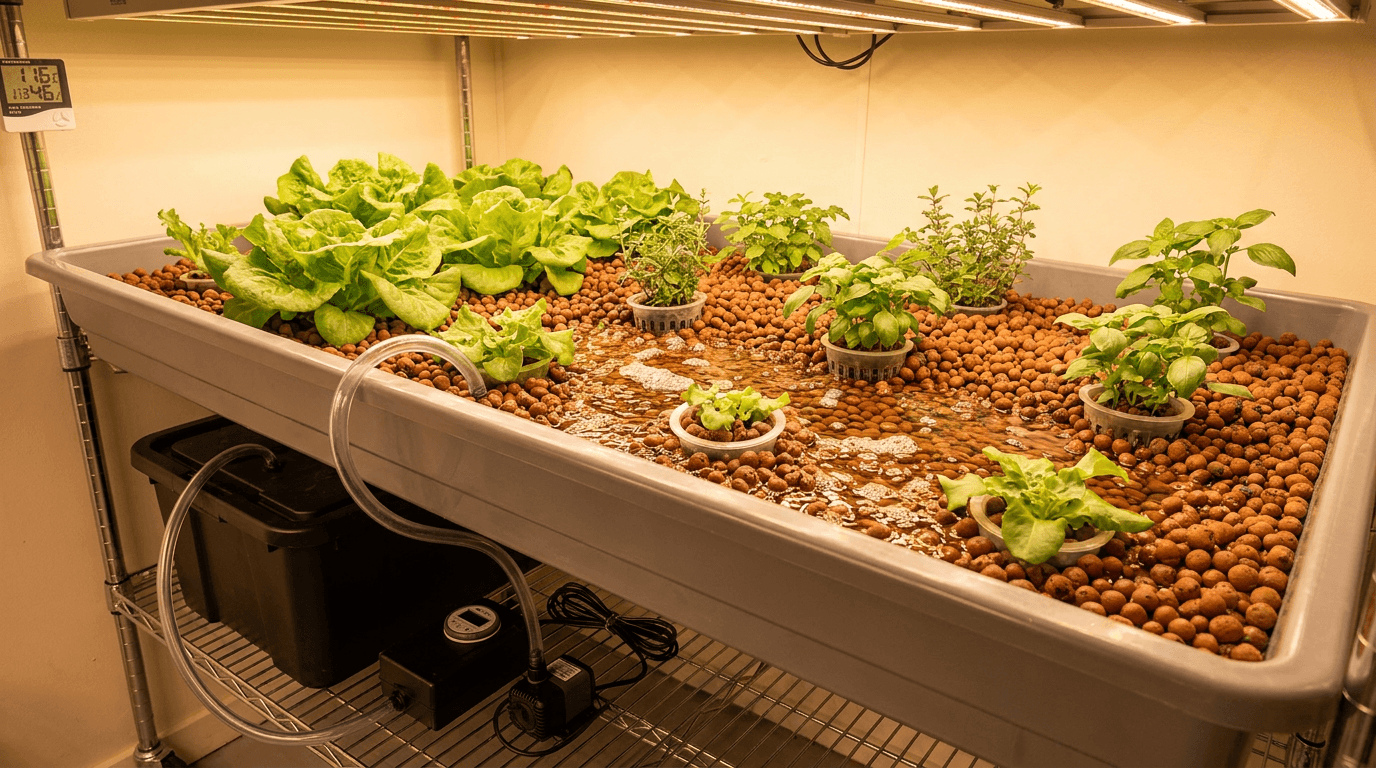
Ebb and Flow Systems: Pros, Cons, and How They Work
Everything you need to know about ebb and flow hydroponic systems: how flood and drain cycles work, the best crops for this versatile method, and a detailed pros and cons analysis backed by real-world testing data from The Hydro Lab.
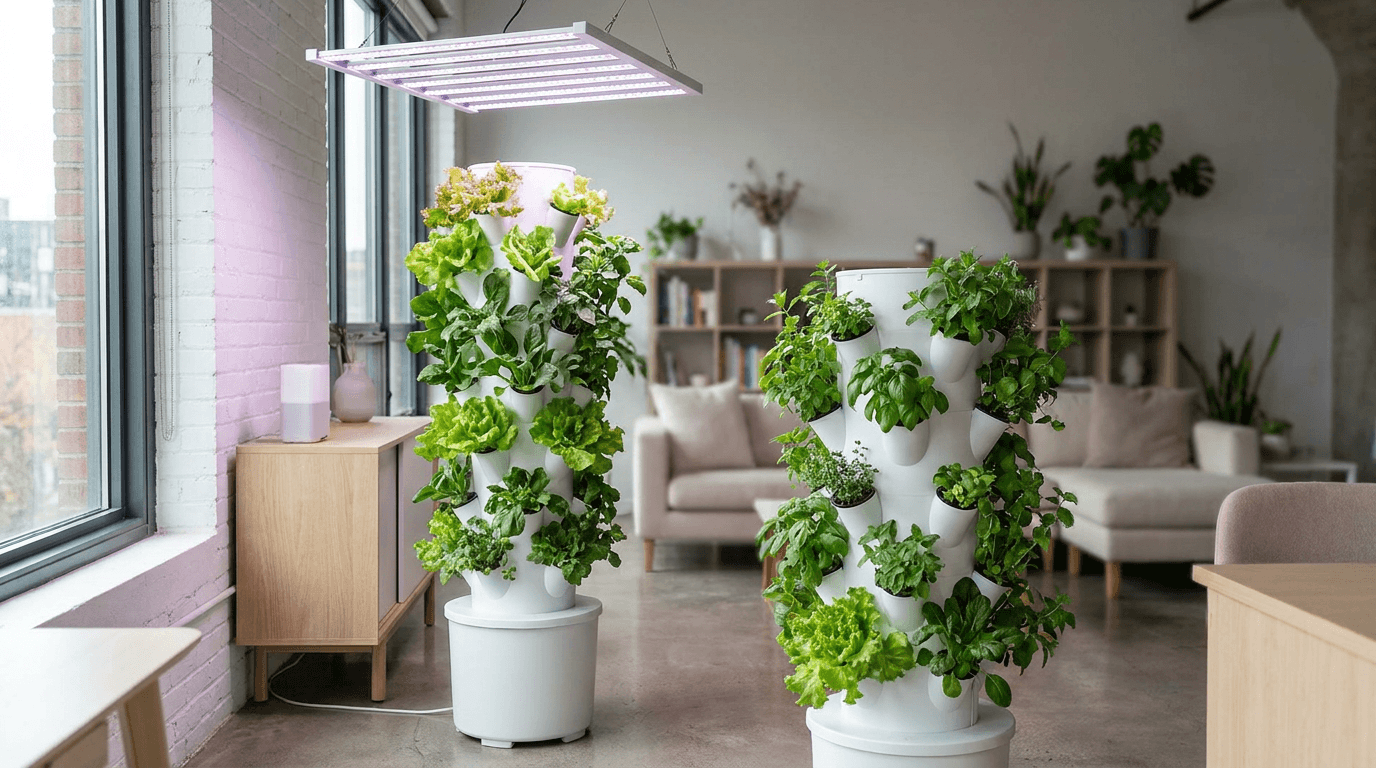
How to Build a Vertical Hydroponic Tower for Small Spaces
Build a space-saving vertical hydroponic tower that grows up to 50 plants in just 2 square feet of floor space. Complete DIY guide with materials list, step-by-step assembly, plant selection tips, and maintenance schedule for small-space growers.
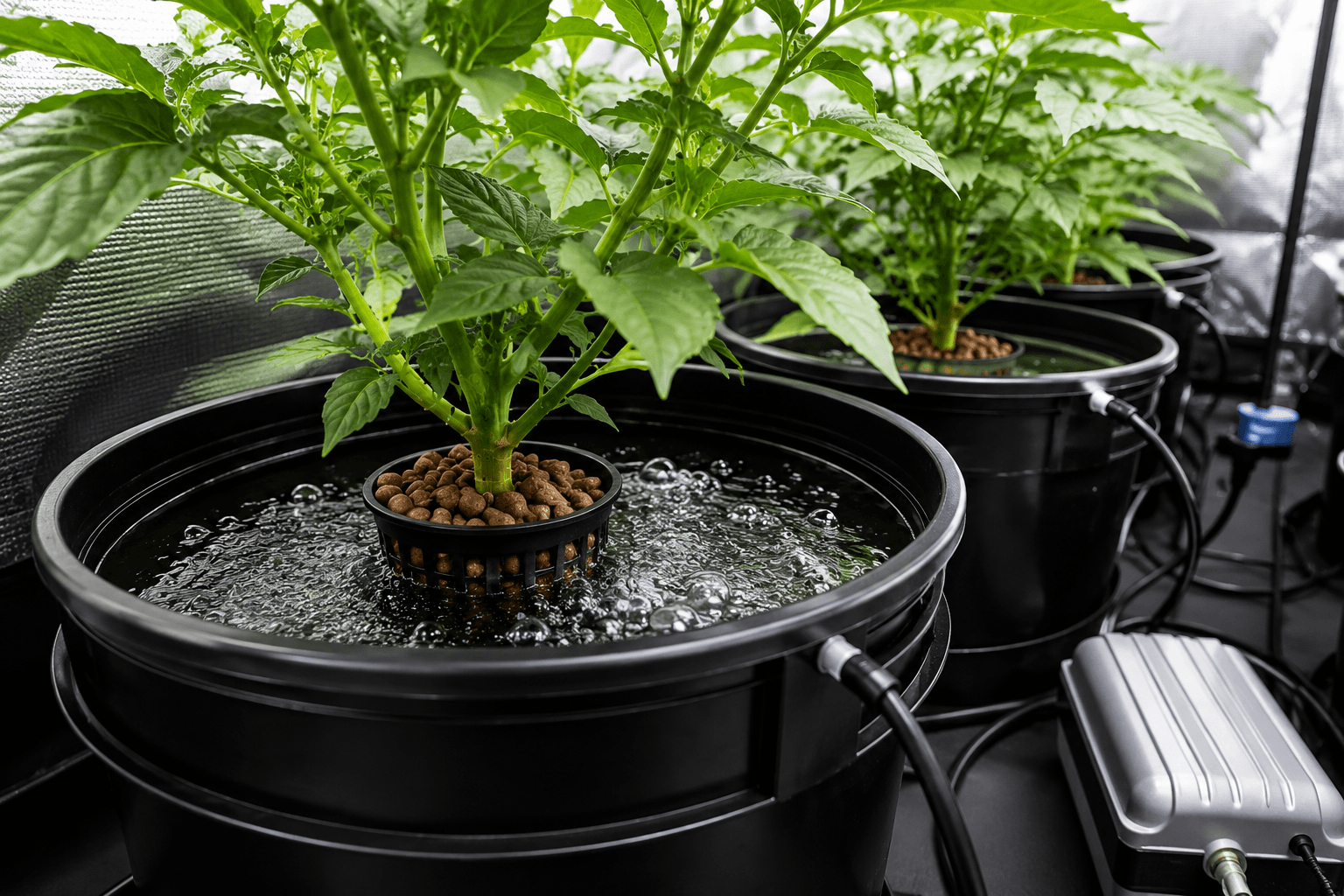
Deep Water Culture (DWC) for Beginners: The Ultimate Guide
The complete beginner's guide to Deep Water Culture hydroponics. Learn how DWC works, build your first system with a step-by-step setup guide, master nutrient management, prevent common problems, and grow lettuce, herbs, tomatoes, and more.