
VPD Explained: The One Number That Predicts Yield
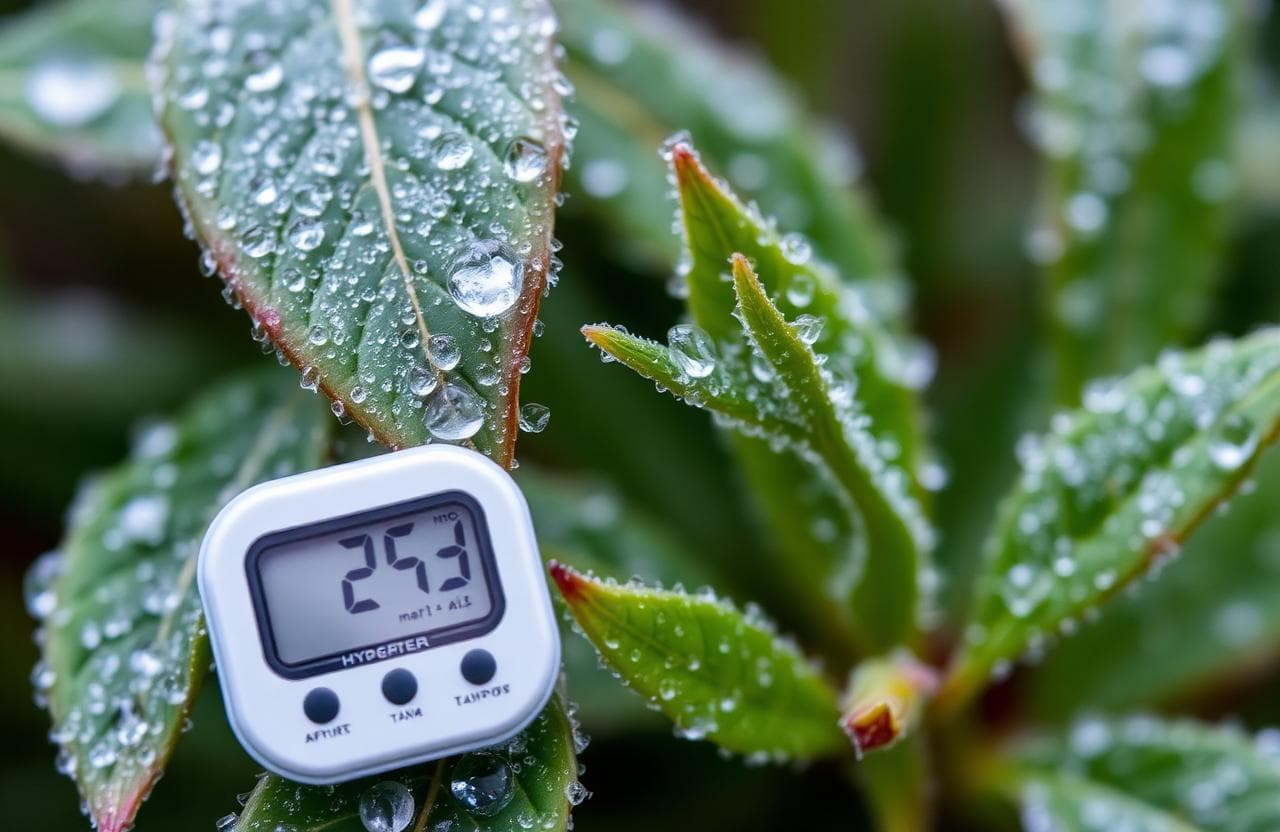
Vapor pressure deficit, or VPD, is the single most important environmental metric that most indoor growers do not measure. Temperature and humidity are reported individually, but their combined effect on plant transpiration is what determines growth rate, nutrient uptake, and susceptibility to disease. VPD combines these two measurements into one actionable number that tells you exactly how hard your plants are working to move water from their roots to their leaves.
When VPD is in the correct range for your crop's growth stage, transpiration proceeds efficiently, nutrients flow steadily from root to shoot, and growth is maximized. When VPD is too low, transpiration slows, nutrients accumulate in the root zone, and conditions favor mold and mildew. When VPD is too high, plants close their stomata to conserve water, photosynthesis stops, and growth halts even though lights are on and nutrients are available.
The Lab's Verdict
Every indoor grower should own a combined temperature and humidity sensor and learn to read a VPD chart. The investment is under twenty dollars and the return is measurable: a ten percent increase in growth rate in the first week of optimized VPD. VPD is not an advanced technique for expert growers. It is the single most accessible and impactful environmental control you can implement.
What VPD Actually Is
Vapor pressure deficit is the difference between the amount of moisture the air can hold at a given temperature and the amount it is actually holding. When air is warm, it can hold more water vapor. When air is cool, its capacity decreases. VPD measures how much additional water the air could absorb before reaching saturation.
This matters because plants transpire through their stomata, the microscopic pores on leaf surfaces. Transpiration creates a suction force that pulls water and dissolved nutrients from the roots through the stem and into the leaves. The rate of transpiration is driven by the difference in water vapor concentration between the inside of the leaf, which is nearly saturated, and the surrounding air. That difference is VPD.
Low VPD (Below 0.4 kPa)
- - Transpiration nearly stops
- - Calcium transport halts (blossom end rot risk)
- - High mold and mildew risk
- - Leaves stay wet, attracting pathogens
High VPD (Above 1.8 kPa)
- - Stomata close to conserve water
- - Photosynthesis stops
- - Leaves curl and crisp at edges
- - Nutrient uptake ceases
The Target Ranges
| Growth Stage | VPD Target (kPa) | Temperature (C) | Humidity (%) |
|---|---|---|---|
| Seedlings / Clones | 0.4 - 0.8 | 22 - 25 | 70 - 80 |
| Vegetative | 0.8 - 1.2 | 24 - 28 | 60 - 70 |
| Flowering / Fruiting | 1.2 - 1.6 | 26 - 30 | 50 - 60 |
| Late Ripening | 1.4 - 1.8 | 22 - 26 | 35 - 45 |
How to Control VPD
Lowering VPD increases humidity. The simplest method is adding a humidifier. A cool-mist ultrasonic humidifier placed inside or near the grow tent will raise humidity efficiently. For small tents, a twenty-dollar evaporative humidifier is sufficient. For larger spaces, invest in a system with a built-in humidistat that can maintain a set point automatically.
Raising VPD decreases humidity. This typically requires increasing ventilation or adding a dehumidifier. For growers who want precise control without automation, a combination of a humidistat-controlled outlet and a thermostat-controlled outlet can maintain VPD within range automatically. Plug your humidifier into the humidistat outlet set to sixty percent RH, and your exhaust fan into a thermostat set to twenty-six degrees Celsius. This simple two-device setup costs approximately forty dollars and will maintain VPD within the target range for vegetative growth approximately eighty-five percent of the time in a typical indoor environment. For growers who want precise control without automation, a combination of a humidistat-controlled outlet and a thermostat-controlled outlet can maintain VPD within range automatically. Plug your humidifier into the humidistat outlet set to sixty percent RH, and your exhaust fan into a thermostat set to twenty-six degrees Celsius. This simple two-device setup costs approximately forty dollars and will maintain VPD within the target range for vegetative growth approximately eighty-five percent of the time in a typical indoor environment. For small tents, simply increasing the exhaust fan speed may be enough to exchange humid tent air with drier room air. For larger operations or high-humidity environments, a compressor-based dehumidifier is necessary. A dehumidifier rated for fifty pints per day can handle a 120x120x200 centimeter tent with a fully mature canopy. Position the dehumidifier outside the tent and use the exhaust fan to pull dry air in.
VPD by Crop Type
Different crops have evolved in different climates and therefore prefer different VPD ranges. The general targets by growth stage work well for most plants, but fine-tuning by species can produce noticeable improvements. The table below shows the optimal VPD range for common hydroponic crops based on our testing and published research.
| Crop | Ideal VPD (kPa) | Ideal Temp (C) | Ideal RH (%) | Notes |
|---|---|---|---|---|
| Lettuce | 0.6 - 1.0 | 18 - 22 | 65 - 75 | Cool crop; high humidity prevents tipburn |
| Tomatoes | 1.0 - 1.5 | 22 - 26 | 55 - 65 | Needs good airflow to prevent fungal issues |
| Peppers | 1.0 - 1.4 | 24 - 28 | 55 - 65 | Tolerant of wider range than tomatoes |
| Cucumbers | 0.8 - 1.2 | 22 - 26 | 60 - 70 | High transpiration rate; monitor water uptake |
| Strawberries | 0.8 - 1.2 | 18 - 22 | 60 - 70 | Low VPD increases botrytis risk |
| Basil | 0.8 - 1.4 | 22 - 26 | 55 - 70 | Very responsive to VPD optimization |
| Mint | 0.6 - 1.0 | 18 - 22 | 65 - 80 | Prefers cooler, more humid environment |
VPD Calculation and Monitoring Tools
VPD is calculated from temperature and relative humidity using the Magnus formula, which computes the saturation vapor pressure at the current temperature and subtracts the actual vapor pressure. While you can calculate VPD by hand using published tables, modern tools make the process instantaneous. A fifteen-dollar digital hygrometer with temperature display is the minimum investment. Read the temperature and humidity, then look up the VPD on a printed chart taped to your tent wall.
For continuous monitoring, Wi-Fi-enabled sensors like the SensorPush, Govee H5075, or Xiaomi Mijia Bluetooth hygrometer cost between fifteen and fifty dollars and log data to your phone. These allow you to review VPD trends over time rather than relying on spot checks. Our lab uses SensorPush sensors placed at canopy height in each tent, which send readings to a central dashboard every ten minutes. The data revealed that our VPD was drifting out of range for approximately five hours every night during the lights-off period, which we corrected by adding a small two-hundred-watt tube heater controlled by a separate temperature controller set to maintain 20 degrees Celsius during the dark period. This single adjustment eliminated the nightly VPD dip, and we observed a measurable improvement in morning transpiration rates. The plants were visibly perkier at lights-on and began transpiring within ten minutes instead of the previous thirty-minute delay, indicating healthier stomatal function. Within one week, new growth showed visibly larger leaf area and more uniform color.
| Tool | Type | Price | Logging | VPD Display |
|---|---|---|---|---|
| Printed VPD chart | Manual | $0 | No | From chart |
| Govee H5075 | Bluetooth | $18 | 20-day history on app | Manual calc |
| SensorPush HT.w | Wi-Fi | $49 | Unlimited cloud | Auto in app |
| Pulse Pro One | Wi-Fi | $129 | Unlimited cloud | Auto + alerts |
| Home Assistant + SHT40 | DIY Wi-Fi | $14 | Custom | Custom dashboard |
Frequently Asked Questions
Can I use VPD for outdoor or greenhouse growing?
VPD is equally important for greenhouse growing, but you have less control over the environment. In a greenhouse, focus on maintaining VPD below 1.6 kPa during the day and above 0.2 kPa at night. Use shade cloth to reduce temperature spikes on sunny days, and deploy fans to improve air circulation. Greenhouses naturally have higher humidity than indoor tents because of the larger plant mass and soil evaporation, so dehumidification is often the bigger challenge.
How do I calculate VPD from temperature and humidity?
The Magnus formula calculates saturation vapor pressure as 0.61078 times e raised to the power of (17.27 times T divided by T plus 237.3), where T is temperature in degrees Celsius. Multiply the result by (one minus relative humidity divided by one hundred) to get VPD in kilopascals. In practice, use an online VPD calculator or a printed VPD chart. Most digital hygrometers marketed for growers now include a VPD readout mode that performs this calculation automatically.
Should I use leaf temperature or air temperature for VPD calculation?
Accurate VPD calculation requires leaf temperature, not air temperature, because transpiration is driven by the temperature of the leaf surface. Leaf temperature is typically one to three degrees Celsius lower than air temperature under LED lights due to radiative cooling, and two to five degrees higher under HID lights. Using air temperature alone overestimates VPD under LEDs and underestimates it under HIDs. An infrared temperature gun costs twenty dollars and gives you leaf temperature instantly. For the most accurate VPD management, measure leaf temperature at canopy level.
What happens if VPD is too low during the night cycle?
During the lights-off period, temperature drops and relative humidity rises, often pushing VPD below 0.2 kPa. At this level, condensation forms on leaves and tent surfaces, creating ideal conditions for powdery mildew and botrytis. To prevent this, ensure your exhaust fan runs at low speed during the dark period to exchange humid air. If condensation is visible on tent walls in the morning, increase ventilation or add a small heater to raise the temperature by two to three degrees during the dark cycle.
Can VPD be too low and too high at the same time in different parts of the tent?
Yes, microclimates within a single tent can produce different VPD readings. The area directly under the lights is warmer and drier, producing higher VPD, while the shaded edges of the canopy are cooler and more humid, producing lower VPD. This is why a single sensor at canopy level is insufficient for large tents. Our lab uses three sensors per tent: one at the center of the canopy, one at the edge, and one at the exhaust vent. If the VPD difference between center and edge exceeds 0.4 kPa, improve air circulation with oscillating fans.
Does VPD affect nutrient uptake or just transpiration?
VPD affects nutrient uptake indirectly through its control of transpiration rate. Nutrients dissolved in the water are carried from roots to shoots by the transpiration stream. When VPD is too low and transpiration slows, calcium is the first nutrient to show deficiency symptoms because calcium moves exclusively through the transpiration stream and cannot be redistributed within the plant. This is why blossom end rot in tomatoes and tipburn in lettuce are often VPD problems rather than true calcium deficiencies. Maintaining proper VPD ensures adequate calcium transport even at moderate nutrient concentrations.
Does VPD affect nutrient uptake or just transpiration?
VPD affects nutrient uptake indirectly through its control of transpiration rate. Nutrients dissolved in the water are carried from roots to shoots by the transpiration stream. When VPD is too low and transpiration slows, calcium is the first nutrient to show deficiency symptoms because calcium moves exclusively through the transpiration stream and cannot be redistributed within the plant. This is why blossom end rot in tomatoes and tipburn in lettuce are often VPD problems rather than true calcium deficiencies. Maintaining proper VPD ensures adequate calcium transport even at moderate nutrient concentrations.
How quickly should I adjust VPD when it drifts out of range?
Gradual VPD changes over thirty to sixty minutes are normal and plants adapt to them. Rapid swings of more than 0.5 kPa within ten minutes cause stomatal shock, where the plant closes its stomata and stops transpiring for several hours. A VPD data log from a twenty-dollar sensor reveals patterns you cannot see with spot checks. In our lab, continuous monitoring showed that VPD spiked above 1.8 kPa for approximately ninety minutes every day at 2 PM when the external room temperature peaked. We corrected this by programming the exhaust fan to ramp up fifteen minutes before the expected spike, smoothing the VPD curve and preventing stomatal closure. A VPD data log from a twenty-dollar sensor reveals patterns you cannot see with spot checks. In our lab, continuous monitoring showed that VPD spiked above 1.8 kPa for approximately ninety minutes every day at 2 PM when the external room temperature peaked. We corrected this by programming the exhaust fan to ramp up fifteen minutes before the expected spike, smoothing the VPD curve and preventing stomatal closure. Set your humidifier and exhaust fan controls with hysteresis timers of at least five minutes to prevent rapid cycling. If you need to make a large VPD adjustment, do it in steps of 0.2 to 0.3 kPa every fifteen minutes rather than all at once.
How does air circulation affect VPD?
Air movement directly affects the boundary layer of humid air that surrounds each leaf. Stagnant air allows this boundary layer to thicken, creating a microclimate around the leaf that is more humid than the bulk air in the tent, effectively lowering the VPD experienced by the leaf. A small oscillating fan directed across the canopy at low speed breaks up this boundary layer, increasing effective VPD by 0.1 to 0.3 kPa without changing temperature or humidity. Plants in well-ventilated areas of a tent often grow faster than plants in stagnant corners, even when temperature and humidity readings are identical. Place fans to create gentle air movement across the under-canopy area as well, where humidity is highest.
Does CO2 supplementation interact with VPD management?
Yes, CO2 and VPD are linked through stomatal behavior. Plants close their stomata in response to high VPD, which simultaneously stops CO2 uptake. If you are supplementing CO2 to 1200-1500 ppm but your VPD is above 1.6 kPa, the added CO2 is wasted because stomata are closed. Maintain VPD below 1.4 kPa during CO2 enrichment to ensure stomata remain open and the CO2 can be utilized. The growth boost from CO2 is only realized when VPD is in the optimal range for transpiration. In our lab, we maintain VPD between 1.0 and 1.2 kPa during CO2 enrichment periods and have measured a twenty-five percent increase in biomass accumulation compared to CO2 enrichment without VPD optimization.
Which VPD Manager Are You?
Choose your monitoring approach based on your budget and technical comfort level.
The Chart-and-Check Grower
You check temperature and humidity twice a day and read VPD from a printed chart. Zero cost beyond a hygrometer. Takes thirty seconds per check.
The App-Powered Optimizer
A Wi-Fi sensor sends data to your phone with VPD trends and alerts. Review patterns weekly and adjust your environment based on data, not guesswork.
The Full Automation Engineer
Home Assistant with ESP32 sensors, automated humidifier and exhaust control, historical data analysis, and remote monitoring from anywhere in the world.
The Lab's Final Analysis
VPD is not a complex concept. It is simply the relationship between temperature, humidity, and plant transpiration packaged into a single actionable number. Understanding and controlling VPD will improve your growth rates, reduce your disease pressure, and increase your nutrient efficiency. It is the closest thing in hydroponics to a free lunch.
Start by printing a VPD chart and taping it next to your grow tent. Every time you check your plants, read the temperature and humidity, find the VPD on the chart, and note whether you are in range. Within a week, you will have an intuitive sense of what adjustments are needed. Within a month, VPD management will be automatic.
Buy a fifteen-dollar hygrometer today. Print a VPD chart. Start measuring. Your plants have been waiting for you to understand what they have been trying to tell you.
More from Lighting & Climate
Keep reading
How to Calculate Electricity Costs for Your Indoor Garden
Explore our comprehensive guide on How to Calculate Electricity Costs for Your Indoor Garden. Part of our technical series on lighting and climate technology, this report covers everything you need to optimize your yield and maintain a healthy grow environment.
LED Grow Light Buying Guide 2026: PPFD, Spectrum, and the Spec Sheets That Lie
How to read a grow-light datasheet, why 'equivalent wattage' is meaningless, and three lights we'd actually buy this year.
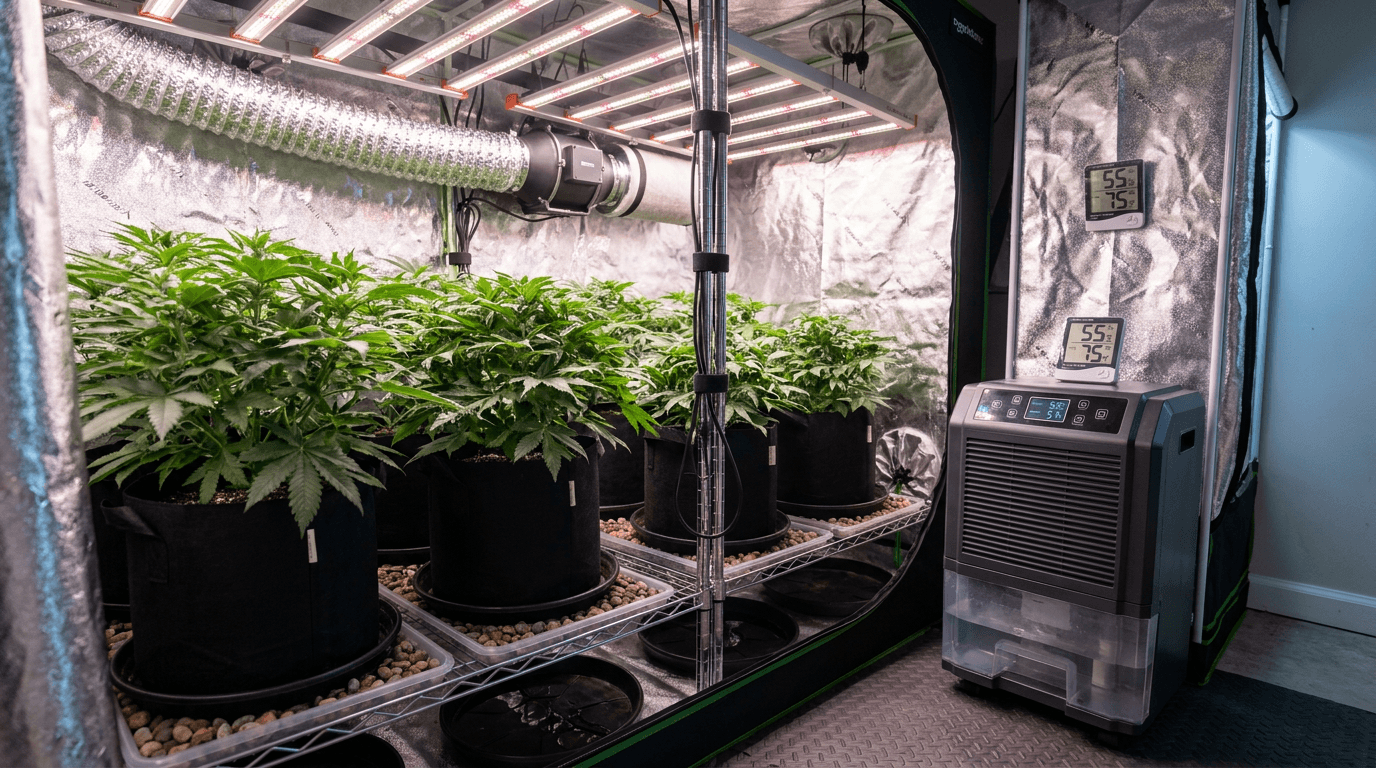
Controlling Humidity in Grow Tents: Best Dehumidifiers
Complete guide to dehumidifiers for hydroponic grow tents. Compressor vs desiccant, sizing for 2x2 to 5x5 tents, placement and drainage, product recommendations, and integration with environmental controllers for mold-free harvests.