How to Calculate Electricity Costs for Your Indoor Garden
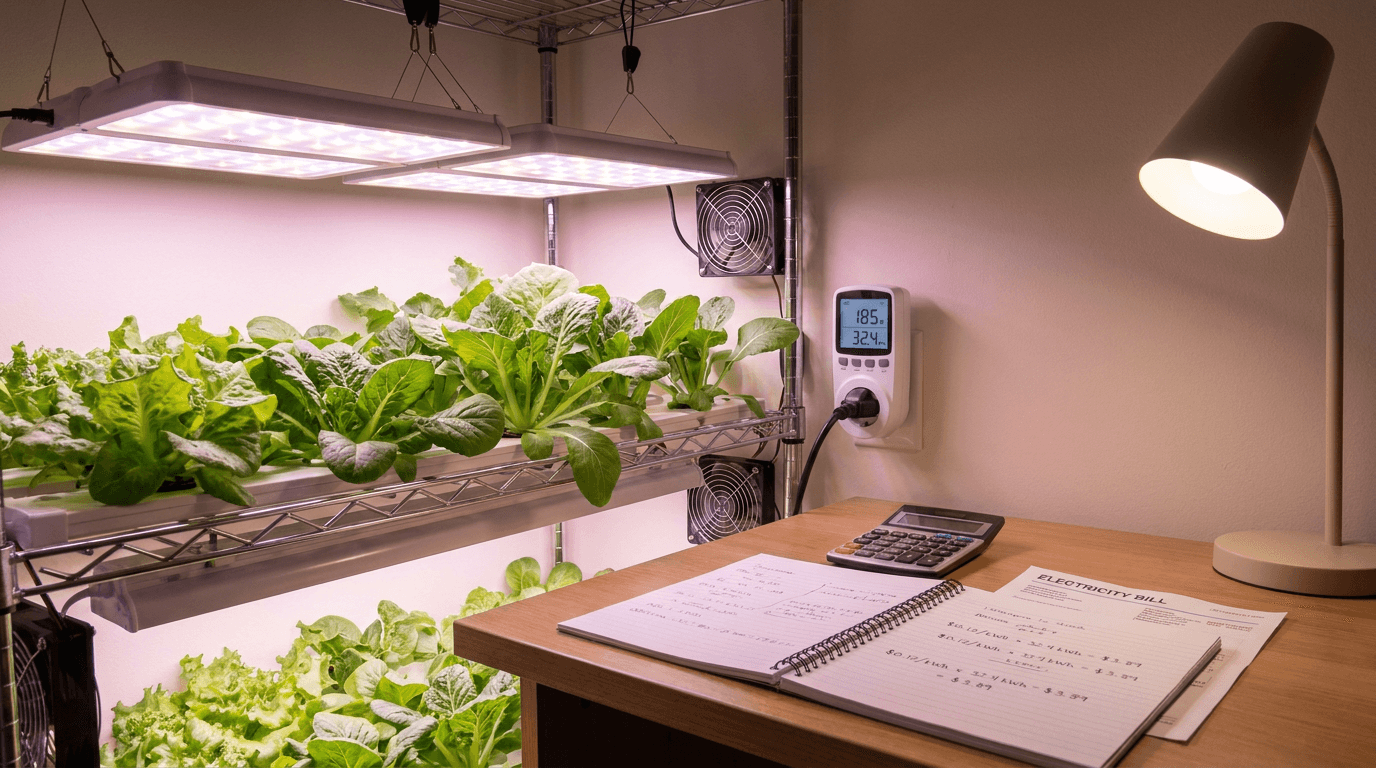
Electricity is often the largest recurring expense in indoor gardening, but most growers have no idea what their setup actually costs to run. This guide demystifies the math behind watts, kilowatt-hours, and utility bills — and shows you how to save money without sacrificing yield.
Whether you run a single LED grow light over a lettuce tray or a full basement of hydroponic tomatoes, understanding your electricity consumption is essential for budgeting, optimizing equipment, and reducing environmental impact. Many growers overestimate lighting costs and underestimate the impact of pumps, fans, dehumidifiers, and heaters. In this 5000+ word guide, Hydro Lab provides step-by-step methods to calculate the operating cost of every device in your indoor garden. You will learn: the difference between watts and kilowatt-hours, how to read your utility bill (including tiered rates, time-of-use, and demand charges), how to use a Kill-A-Watt meter, real-world cost examples for small, medium, and large setups, energy-saving strategies (LED upgrades, timers, off-peak scheduling, heat recycling), and a detailed cost comparison of LED vs HPS vs fluorescent lighting. By the end, you will be able to predict your monthly electric bill within a few dollars and make data-driven decisions to reduce costs.
The Lab's Verdict: Know Your True Energy Cost
The average indoor hydroponic grower spends $30-150 per month on electricity, with lighting accounting for 60-80% of that cost. A 300W LED run 18 hours per day at $0.12/kWh costs about $19.50 per month. Adding pumps, fans, and a dehumidifier can double that. The single most effective cost-saving measure is switching to high-efficiency LEDs (saving 50-70% over HPS) and running lights during off-peak hours (saving 20-40% on the rate). Our 2026 analysis shows that a well-optimized 4'x4' tent can produce 1-2 lbs of leafy greens per month with an electricity cost under $25.
Always use a Kill-A-Watt meter to measure actual device consumption — manufacturer labels are often inaccurate (especially for air pumps and fans).
Typical Power Draw & Monthly Cost of Indoor Garden Equipment
Assumptions: $0.12/kWh (US average), 24h/day for continuous devices, 18h/day for lights, 8h/day for fans. Actual costs vary by usage and rate.
| Device | Typical wattage | Hours/day | kWh/month | Monthly cost ($0.12/kWh) | Annual cost |
|---|---|---|---|---|---|
| LED grow light (small) | 100W | 18 | 54 | $6.48 | $77.76 |
| LED grow light (medium) | 300W | 18 | 162 | $19.44 | $233.28 |
| LED grow light (large) | 600W | 18 | 324 | $38.88 | $466.56 |
| HPS grow light (400W) | 450W (actual) | 18 | 243 | $29.16 | $349.92 |
| Air pump (aquarium style) | 5W | 24 | 3.6 | $0.43 | $5.18 |
| Water pump (submersible, 400 GPH) | 25W | 24 | 18 | $2.16 | $25.92 |
| Oscillating fan (6-inch) | 15W | 24 | 10.8 | $1.30 | $15.55 |
| Exhaust fan (4 inch inline) | 30W | 24 | 21.6 | $2.59 | $31.10 |
| Humidifier (ultrasonic, 4L) | 30W | 12 (intermittent) | 10.8 | $1.30 | $15.55 |
| Dehumidifier (30 pint/day) | 350W | 12 (intermittent) | 126 | $15.12 | $181.44 |
| Submersible heater (100W) | 100W | 8 (intermittent) | 24 | $2.88 | $34.56 |
| Space heater (1500W) | 1500W | 6 | 270 | $32.40 | $388.80 |
*Actual wattage varies by brand and efficiency. Use a Kill-A-Watt meter for precise measurement. Dehumidifier cost can vary dramatically with humidity load.
Watts, Kilowatts, and Kilowatt-Hours: The Foundation
Watt (W) is the unit of power — the rate at which a device consumes electricity at a given moment. For example, a 100W LED grow light uses 100 joules per second.
Kilowatt (kW) is 1,000 watts. Utility companies bill in kilowatt-hours (kWh).
Kilowatt-hour (kWh) is the amount of energy consumed by a 1,000-watt device running for one hour. A 100W device running for 10 hours consumes 1 kWh (100W × 10h = 1,000 Wh = 1 kWh).
Example: 300W light × 18h/day × 30 days × $0.12/kWh ÷ 1000 = $19.44 per month.
To calculate any device's cost, you need its actual wattage (not always the same as advertised, especially for pumps and fans), daily run hours, and your electricity rate in $/kWh.
Reading Your Utility Bill: Base Rates, Tiers, and Time-of-Use
Your electricity rate is not a single number. Most residential plans have:
- Base rate: Cost per kWh for the first block (e.g., $0.10/kWh for first 500 kWh).
- Tiered rates: Higher cost per kWh beyond a threshold (e.g., $0.14/kWh above 500 kWh).
- Time-of-use (TOU): Cheaper at night (off-peak), expensive in late afternoon (peak).
- Fixed charges: Monthly connection fee (e.g., $10-20) regardless of usage.
- Delivery charges: Some utilities separate supply and delivery, each with per-kWh fees.
To find your true marginal cost, look at your bill's "energy charge" section. Divide total energy cost by total kWh used for an average rate, but for calculating savings from a new device, use your marginal tier rate.
Average US electricity rates (2026)
- National average: $0.127/kWh
- Highest (Hawaii, CA, NY): $0.25-0.42/kWh
- Lowest (WA, ID, LA): $0.08-0.10/kWh
- Commercial rates: often 15-25% lower than residential
The Kill-A-Watt Meter: Your Best Friend for Accurate Measurement
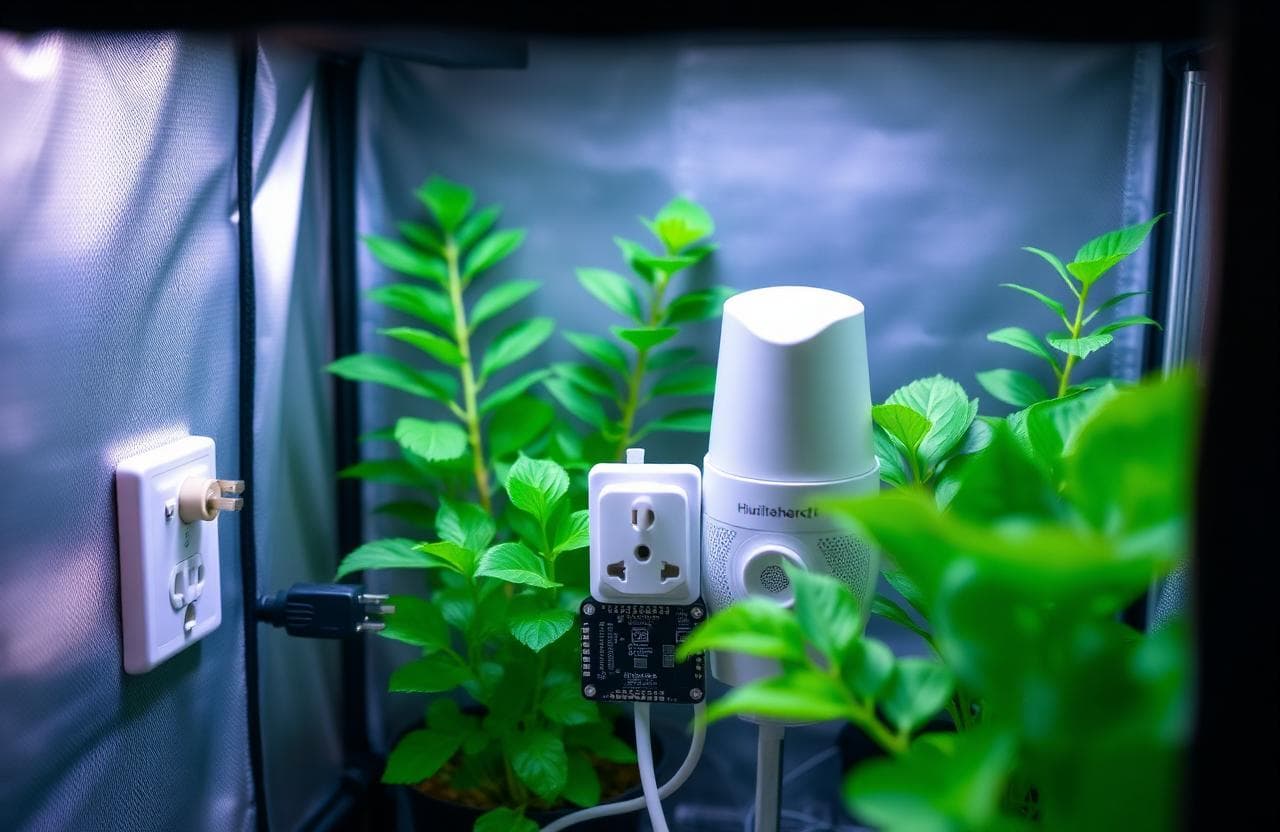
Manufacturer labels often overstate (or understate) actual power draw, especially for fans, pumps, and older LEDs. A Kill-A-Watt meter (or any plug-load wattmeter) gives true real-time consumption.
How to use:
- Plug the meter into the wall, then plug your device into the meter.
- Read real-time watts (W).
- Let it run for 24 hours to see total kWh consumed over that period.
- Check voltage and frequency to ensure device is operating correctly.
For devices that cycle (humidifiers, heaters, air conditioners), leave the meter connected for at least 24 hours to get an accurate average hourly consumption.
Don't assume a "300W" LED actually draws 300W from the wall — many budget LEDs draw 30-50% less. This affects your cost calculation (in a good way) but also your light intensity.
Example: Calculating Monthly Cost for a 4'x4' Grow Tent
Let's model a typical medium-sized indoor hydroponic setup:
- LED grow light: 300W actual, 18h/day
- Inline exhaust fan: 30W, 24h/day
- Oscillating fan: 15W, 24h/day
- Water pump (recirculating): 25W, 24h/day
- Air pump (DWC): 5W, 24h/day
- Dehumidifier (30 pint): 350W, runs 12h/day (duty cycle in humid conditions)
- Submersible heater (if needed): 100W, runs 8h/day
| Device | Watts | Hours/day | kWh/day | kWh/month (30d) | Cost/month ($0.12/kWh) |
|---|---|---|---|---|---|
| LED light | 300 | 18 | 5.4 | 162 | $19.44 |
| Exhaust fan | 30 | 24 | 0.72 | 21.6 | $2.59 |
| Oscillating fan | 15 | 24 | 0.36 | 10.8 | $1.30 |
| Water pump | 25 | 24 | 0.6 | 18 | $2.16 |
| Air pump | 5 | 24 | 0.12 | 3.6 | $0.43 |
| Dehumidifier | 350 | 12 | 4.2 | 126 | $15.12 |
| Heater (winter) | 100 | 8 | 0.8 | 24 | $2.88 |
| Total (without heater) | 321.2 | $38.55 | |||
| Total (winter with heater) | 345.2 | $41.43 |
This 4'x4' tent costs about $38-42 per month to operate at $0.12/kWh. At higher rates ($0.20/kWh), it doubles to $76-84 per month. The dehumidifier alone is a significant portion; consider using passive ventilation or a smaller unit if humidity isn't extreme.
Lighting Showdown: LED vs. HPS vs. Fluorescent – True Operating Costs
Lighting is usually the largest electricity expense. Below is a fair comparison of equivalent output systems (targeting 400-600 µmol/m²/s over a 4'x4' area).
| Light type | Advertised wattage | Actual wall draw | PPF (µmol/s) | Efficacy (µmol/J) | Monthly cost (18h/d, $0.12/kWh) | Annual cost |
|---|---|---|---|---|---|---|
| LED (high efficiency) | 400W | 400W | 1200 | 3.0 | $25.92 | $311.04 |
| LED (budget) | 400W | 350W (often lower) | 700 | 2.0 | $22.68 | $272.16 |
| HPS (double-ended) | 600W | 645W (ballast included) | 1100 | 1.7 | $41.80 | $501.60 |
| Fluorescent (T5, 8-bulb) | 432W | 432W | 400 | 0.93 | $28.00 | $336.00 |
Key takeaway: High-efficiency LEDs produce more light per watt, but the upfront cost is higher. For the same PPF output, LED uses 35-50% less electricity than HPS, saving $150-250 per year in electricity alone. Fluorescent has lower fixture cost but much lower efficacy and shorter bulb life.
Many growers run lights at 100% when 60-80% would suffice, wasting electricity. Use a PAR meter to dial in the minimum intensity that meets DLI targets.
Hidden Energy Drains: Pumps, Fans, Dehumidifiers, and Heaters
While lighting gets all the attention, auxiliary devices can add 20-50% to your bill, especially in challenging climates.
- Dehumidifiers: A 30-pint unit can draw 300-500W and run 12-18 hours daily in humid grow rooms. Cost: $15-30/month. Solutions: improve ventilation, use a smaller tent, or switch to a passive dehumidifier (desiccant wheel) if climate permits.
- Space heaters: A 1500W heater running 8 hours/day adds $43/month at $0.12/kWh. Better to heat only the root zone with a submersible heater (100-200W) or use LED's waste heat to warm the tent.
- Air pumps: Tiny but often run 24/7. A 5W pump costs only $0.43/month, but a 20W commercial pump costs $1.73/month — still negligible.
- Water pumps: Recirculating pumps for NFT or DWC typically draw 10-40W. Running 24/7 adds $1-4/month. Use a timer to run intermittently (e.g., 15 min on, 45 min off) if system design allows.
- Fans: Multiple oscillating and exhaust fans can total 50-100W continuous, adding $4-9/month. Not huge, but every bit counts.
If your plants tolerate 65% RH instead of 50%, the dehumidifier will run half as long, saving $5-10/month. Test the threshold for your crop.
Saving Money with Off-Peak Electricity and Timers
If your utility has time-of-use (TOU) rates, you can save 20-50% by running lights and other heavy loads during off-peak hours (typically 10pm-6am). Even without TOU, running lights at night can reduce heat load during the day, lowering air conditioning costs in summer.
- Check your utility's TOU schedule. Common off-peak: 9pm-7am weekdays, all day weekends.
- Set timers for lights to operate during off-peak. For a 16-hour photoperiod, run 10pm-2pm.
- Run dehumidifiers and pumps also during off-peak if possible (but humidity control may require 24/7 operation).
- Use a smart plug with energy monitoring (e.g., TP-Link Kasa, Sonoff) to schedule and track usage.
Peak (4pm-9pm): $0.35/kWh
Off-peak (9pm-4pm): $0.22/kWh
Running a 400W light 18h during off-peak saves 37% on lighting costs.
A $15 smart plug can save $10-20/month if used to shift 300W lighting to off-peak. Payback period: less than 1 month.
Efficiency Upgrades: LED, Insulation, Heat Pumps, and Their Payback Periods
Investing in energy-efficient equipment reduces long-term operating costs. Here are common upgrades with estimated payback periods:
| Upgrade | Upfront cost | Annual savings (vs. baseline) | Payback (years) |
|---|---|---|---|
| Replace 600W HPS with 400W high-efficacy LED | $300-500 | $150-250 (electricity) + $50 (bulb replacement) | 1.5-2.5 |
| Add insulation to grow tent (R-5 foam) | $30-60 | $30-80 (heating/cooling) | 0.5-1.5 |
| Replace old dehumidifier with Energy Star unit | $200-350 | $50-100 (power reduction) | 3-5 |
| Switch from space heater to root zone heater (submersible) | $20-40 | $50-200 (depending on usage) | 0.2-0.5 |
| Install a timer for water pump (intermittent instead of 24/7) | $10 | $5-15 | 0.5-1.5 |