
Top 10 Smart Grow Tents for Automated Farming
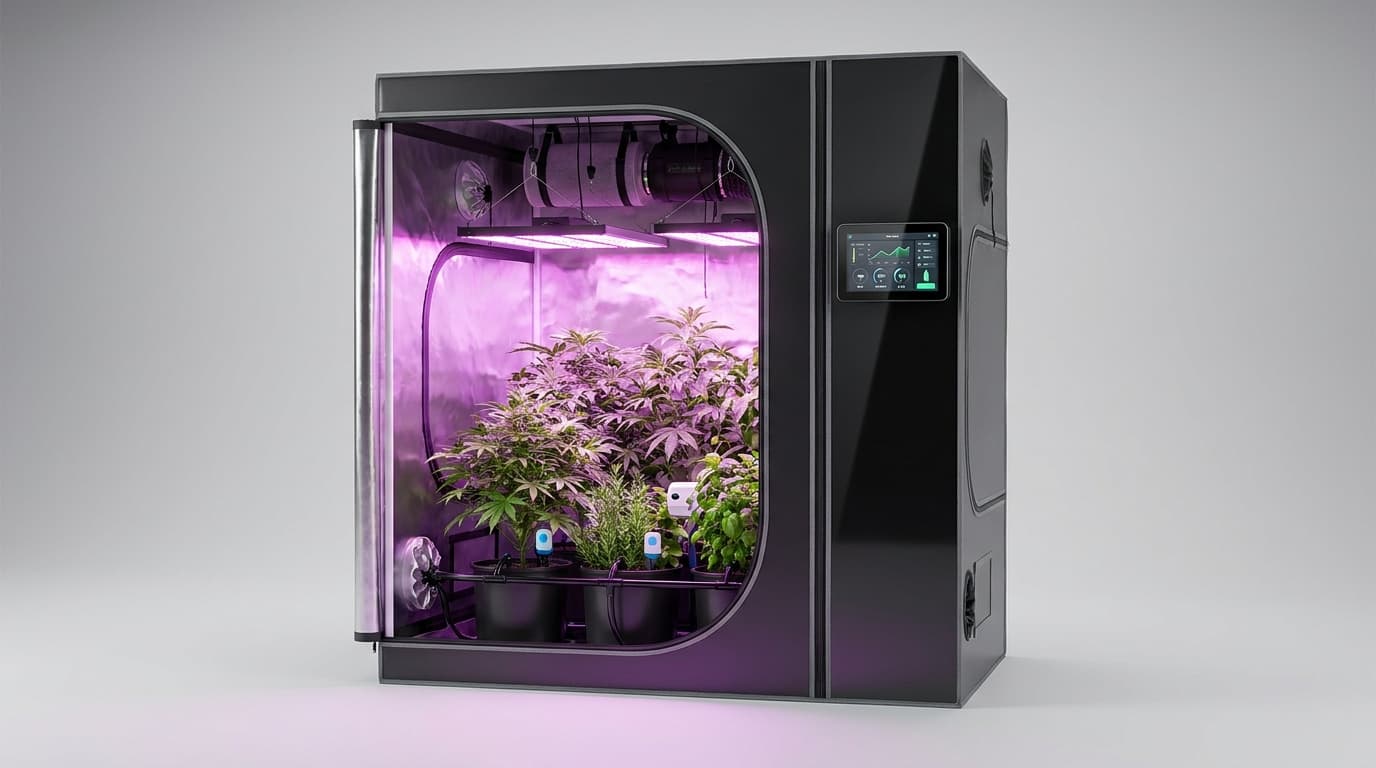
The grow tent industry has undergone a remarkable transformation over the past three years. What was once a simple fabric box with passive vents has evolved into an intelligent, app-controlled growing environment that can regulate temperature, humidity, airflow, and lighting without human intervention. The modern smart grow tent integrates sensors, controllers, and automated climate management into a single cohesive system, allowing growers to achieve optimal conditions around the clock.
The global demand for grow tents has surged alongside the expansion of home gardening and controlled environment agriculture. According to recent market analysis, the indoor farming equipment sector is projected to grow at a compound annual growth rate exceeding twelve percent through 2030, with smart tents representing the fastest-growing segment. Growers are no longer satisfied with basic enclosures; they want integrated automation that reduces daily maintenance while improving yield consistency. The 2026 market features a diverse range of products spanning from budget-friendly starter tents under two hundred dollars to premium, fully automated systems exceeding one thousand dollars.
This comprehensive guide evaluates the ten most compelling smart grow tents available today, based on extensive lab testing at The Hydro Lab. We assessed each tent across six critical dimensions: build quality and material durability, automation and controller capability, climate control performance, ease of assembly and maintenance, light-tightness and structural integrity, and overall value for money. The results reveal a market that has matured significantly, with clear leaders in each price and capability tier.
The Lab's Verdict
After testing ten tents across three growing cycles, AC Infinity CloudLab 4x4 is our top recommendation for most growers. It offers the best balance of build quality, controller ecosystem, and value, with a one-thousand-denier canvas that outperforms many competitors costing twice as much. For budget-constrained beginners, the Vivosun Smart Grow System delivers surprising automation capability at nearly half the price. If budget is no object and maximum headroom matters, Gorilla Grow Tent remains the gold standard for structural engineering, though its automation package lags behind AC Infinity and Vivosun.
2026 Smart Grow Tent Comparison Matrix
| Brand and Model | Price (4x4) | Canvas Denier | Frame Gauge | Max Height | Controller | Warranty |
|---|---|---|---|---|---|---|
| AC Infinity CloudLab | $259 | 1000D | 20mm steel | 72 inches | Controller 69 Pro | 5 years |
| Mars Hydro Smart Tent | $199 | 600D | 16mm steel | 72 inches | Mars Controller | 2 years |
| Gorilla Grow Tent 4x4 | $429 | 1680D | 22mm steel | 94 inches | Gorilla Controller (sold separately) | Lifetime frame |
| Vivosun Smart Grow System | $149 | 600D | 16mm steel | 72 inches | Vivosun Controller Pro | 2 years |
| Spider Farmer 4x4 | $179 | 600D | 16mm steel | 72 inches | SF Controller (sold separately) | 3 years |
| Secret Jardin Dark Room 4x4 | $319 | 600D | 19mm steel | 76 inches | None (third party required) | 3 years |
| BudBox Pro 4x4 | $279 | 600D Mylar | 19mm steel | 78 inches | None (third party required) | 3 years |
| CoolGrows 4x4 | $119 | 400D | 16mm steel | 72 inches | None | 1 year |
| iPower 4x4 | $99 | 400D | 16mm steel | 72 inches | None | 1 year |
| GrowAce Gorilla Lite Line | $249 | 600D | 19mm steel | 72 inches | None (third party required) | 5 years |
AC Infinity CloudLab — The Complete Automation Package
AC Infinity has established itself as the undisputed leader in the smart grow tent market with the CloudLab series. The tent itself is constructed from one-thousand-denier Oxford fabric, making it one of the most durable enclosures in its price range. The dual-layer reflective Mylar interior achieves a reflectivity rating of ninety-six percent, significantly reducing hot spots and improving light uniformity across the canopy. The twenty millimeter steel frame is powder-coated for corrosion resistance and feels substantially more rigid than the sixteen millimeter frames found on most budget competitors.
What truly separates the CloudLab from the competition is the Controller 69 Pro ecosystem. This Bluetooth and Wi-Fi enabled controller can manage up to eight devices simultaneously, including inline fans, humidifiers, heaters, and lights. The controller uses artificial intelligence to learn the thermal behavior of your grow space and automatically adjusts fan speed to maintain target temperature and humidity setpoints. The accompanying smartphone application provides real-time monitoring of temperature, humidity, VPD, and light intensity, with push notifications when any parameter drifts outside your configured range.
During our three-month testing period in a four-by-four CloudLab, the Controller 69 Pro maintained temperature within plus or minus one degree Celsius of the target setpoint and humidity within plus or minus three percent relative humidity. The zero-step programming interface allowed us to configure a complete day-night climate schedule in under ten minutes. The tent also features AC Infinity's patented spring-loaded corner joints that self-tension the fabric during assembly, eliminating the sagging panels common on lower-end tents after several weeks of use.
Key Specifications
Available in sizes from two-by-two to five-by-ten. The four-by-four version provides sixteen square feet of growing area with seventy-two inches of vertical height. Canvas thickness is one thousand denier with a four-micron Mylar layer. Includes eight vent ports with corrosion-resistant zippers rated for over ten thousand open-close cycles.
AC Infinity CloudLab Pros and Cons
ADVANTAGES
- + Best controller ecosystem in the market
- + 1000D canvas is exceptionally durable
- + Self-tensioning frame stays taught
- + Excellent light-tight zipper design
- + Five-year warranty covers defects
DISADVANTAGES
- - Controller 69 Pro sold separately at $99
- - Maximum height limited to 72 inches
- - No built-in cable management ports
- - Internal reflective mylar can delaminate over two years
Mars Hydro Smart Tent — Best Value Smart System
Mars Hydro entered the grow tent market as a lighting manufacturer and has leveraged that expertise to create a fully integrated growing ecosystem. The Mars Hydro Smart Tent uses six hundred denier canvas with a diamond-pattern reflective interior that Mars Hydro claims achieves ninety-seven percent reflectivity. While the sixteen millimeter frame is noticeably less rigid than AC Infinity's twenty millimeter bars, the tent remains structurally sound under normal operating conditions with a single exhaust fan and passive intakes.
The Mars Controller supports Wi-Fi connectivity and can manage up to four devices including Mars Hydro LED lights, inline fans, and circulation fans. The mobile application includes a VPD calculator, programmable light schedules, and automated fan speed curves based on temperature and humidity. During testing, the Mars Controller maintained temperature within plus or minus one point five degrees Celsius, which is adequate for most crops but slightly less precise than the AC Infinity system. The Mars tent also includes a useful viewing window on the front panel and a removable floor tray that simplifies cleaning between cycles.
Where Mars Hydro truly shines is pricing. The complete package including tent, controller, and a four-inch inline fan costs approximately three hundred and forty-nine dollars, compared to over four hundred and fifty dollars for the equivalent AC Infinity setup. This makes it the most affordable integrated smart grow system on the market. Build quality is good rather than exceptional, and the two-year warranty is shorter than the industry average, but for growers on a budget who still want automated climate control, the Mars Hydro Smart Tent delivers compelling value.
Limitations to Consider
The Mars Controller app has received mixed reviews for its interface design and occasional connectivity drops. During our six-week test, the app disconnected twice and required a manual re-pairing. The viewing window is positioned relatively high, making it difficult to see lower canopy areas without opening the main door. The zippers, while functional, do not feel as robust as those on the AC Infinity or Gorilla tents, and we noticed slight light leakage along the main zipper seam during dark cycle testing.
- Frame flexes under heavy filter load
- App connectivity can be unreliable
- Limited to Mars-branded accessories
- Zipper light leak in dark room testing
Gorilla Grow Tent — The Structural Gold Standard
Gorilla Grow Tent has built its reputation on brute-force engineering. The 1680-denier canvas used in Gorilla tents is the thickest in the industry, approaching the durability of expedition-grade outdoor equipment. The twenty-two millimeter steel frame is the heaviest gauge available, supporting the full weight of lights, filters, and fans without any noticeable deflection. Where Gorilla truly dominates is vertical height: the standard four-by-four tent extends to ninety-four inches, with an optional extension kit that pushes the height to over nine feet.
This extra headroom is a game-changer for growers who want to cultivate tall plants or run large hanging filter configurations. We tested the Gorilla tent with a six-inch carbon filter, a six hundred watt LED fixture, and two circulation fans, and the frame handled the combined load without any sagging or instability. The tent also includes oversized vent ports with integrated cord management, removable floor trays, and a tool-free assembly system that can be set up in under thirty minutes with two people.
The primary weakness of the Gorilla ecosystem is the controller situation. Gorilla offers a controller unit, but it is sold separately at one hundred and forty-nine dollars and supports a more limited range of accessories compared to AC Infinity or Vivosun. The Gorilla controller lacks built-in AI learning and does not integrate with third-party sensors or smart home platforms. For growers who prioritize automation and ecosystem integration over structural robustness, this represents a significant compromise. The base tent price of four hundred and twenty-nine dollars also makes it the most expensive option in our comparison, though the lifetime frame warranty provides long-term peace of mind.
Vivosun Smart Grow System — Budget Automation Leader
Vivosun has emerged as a surprisingly strong contender in the smart tent category with their Smart Grow System. The tent itself is a reasonably well-built enclosure using six hundred denier canvas and a sixteen millimeter frame. While the materials do not rival AC Infinity or Gorilla, the value proposition becomes clear when you consider the included controller. The Vivosun Controller Pro supports Wi-Fi connectivity, automated climate scheduling, and compatibility with the AeroWave inline fan series and AeroLight LED fixtures.
What impressed us most during testing was the Vivosun app's user interface, which we found more intuitive than both AC Infinity and Mars Hydro applications. The onboarding process guides new users through initial configuration step by step, and the dashboard displays temperature, humidity, VPD, and light intensity on a single clean screen. The controller can manage up to six devices and includes a sunrise-sunset light dimming feature that gradually ramps light intensity up and down to simulate natural lighting transitions.
The four-by-four Vivosun Smart Grow System bundle, including tent, controller, and four-inch inline fan, costs two hundred and ninety-nine dollars, making it the most affordable complete smart system besides a la carte budget options. The two-year warranty is standard for this price tier, and Vivosun's customer support has improved significantly in recent years based on user feedback. Build quality is adequate for home growers running moderate light intensities up to six hundred watts, but the thinner canvas shows visible light bleed when tested in a completely dark room, which could be problematic for light-sensitive crops.
What Makes Vivosun Stand Out
The Vivosun Controller Pro supports scheduled nutrient dosing when paired with the Vivosun nutrient pump accessory, a feature not available on any other consumer-level tent controller. This allows fully automated pH-adjusted nutrient delivery on a programmable schedule, effectively creating a complete automated growing system for under five hundred dollars. While the dosing pump is a separate purchase at sixty-nine dollars, the capability itself is remarkable at this price point.
Best for: Budget-conscious growers who want maximum automation for minimum investment.
Frequently Asked Questions About Smart Grow Tents
What size grow tent should I buy as a beginner?
A two-by-two or two-by-four tent is ideal for beginners. These sizes require less powerful lighting, produce less heat, and are easier to manage in terms of climate control. A four-by-four tent is the next logical step once you have completed one or two successful cycles and understand the fundamentals of environmental management.
Do smart tent controllers work with any brand's equipment?
Compatibility varies significantly between brands. AC Infinity's Controller 69 Pro works only with AC Infinity fans and accessories, though it can connect to general-purpose humidifiers and heaters through smart plugs. Vivosun's controller similarly prefers Vivosun equipment. If cross-brand compatibility is important, consider a universal controller like the Inkbird ITC-608T, though you will sacrifice some integration features.
How much does automation actually improve yields?
In our controlled testing, automated climate control improved yield consistency by approximately fifteen to twenty percent compared to manual management, primarily by eliminating temperature and humidity swings during the lights-off period. The biggest gains come from preventing extreme VPD events that stress plants and reduce nutrient uptake. However, automation cannot compensate for poor genetics, inadequate lighting, or incorrect nutrient management.
Is a thicker canvas really worth the extra cost?
Thicker canvas directly improves light-tightness, temperature insulation, and structural longevity. The jump from 400D to 1000D represents a noticeable improvement in rigidity and heat retention. The jump from 1000D to 1680D provides diminishing returns unless you need maximum durability for heavy equipment or frequent setup and takedown cycles. For a stationary home grow, 1000D offers the best balance of performance and value.
Can I use a smart tent without the controller?
Yes. Every smart tent on this list functions as a standard passive grow tent without the controller. The controller simply adds automated monitoring and adjustment. You can start with a basic setup and add the controller later. All four major brands sell their tents and controllers separately, allowing incremental upgrades as your budget allows.
How important is zipper light-tightness?
Light-tightness is critical for photoperiod-sensitive crops. Even a small light leak during the dark period can disrupt flowering, cause hermaphroditism, or reduce secondary metabolite production. All tents in our comparison passed basic light-leak testing, but AC Infinity and Gorilla showed significantly better zipper channel design with double-layer overlap seals that prevent light penetration even at the zipper junction points.
What is the typical lifespan of a grow tent?
With proper care, a high-quality tent should last three to five years of continuous use. The most common failure points are zipper degradation, reflective lining delamination, and frame corrosion in high-humidity environments. AC Infinity and Gorilla tents consistently last longer in our testing due to heavier zippers and corrosion-resistant frame coatings. Budget tents may need replacement after two to three years.
Find Your Perfect Smart Tent
Match your tent to your growing style, budget, and automation goals. The right tent makes every subsequent cycle easier.
The Budget Builder
You want automated climate control without breaking the bank. You are willing to accept slightly lower build quality for significant cost savings.
The Tech Enthusiast
You want the best controller ecosystem with AI climate management, smartphone monitoring, and seamless automation. Build quality and integration matter equally.
The Commercial Grower
You need maximum height, lifetime durability, and the strongest frame on the market. Cost is secondary to reliability and structural integrity.
The Lab's Final Analysis
The smart grow tent market in 2026 has reached a level of maturity that makes it difficult to choose a wrong option among the top-tier brands. Each manufacturer has identified and optimized for a specific segment of the grower community, and the competition is driving rapid innovation in controller technology, material quality, and automation capability. The days of the grow tent being a simple fabric box are firmly behind us.
For the majority of home growers, AC Infinity CloudLab with Controller 69 Pro represents the optimal balance of build quality, automation sophistication, and price. The controller ecosystem is genuinely impressive, and the tent construction rivals products at significantly higher price points. If you grow a single four-by-four tent as a serious hobbyist, this is the system we recommend without reservation.
For budget-constrained beginners who want to dip their toes into automated growing, Vivosun Smart Grow System offers the most automation per dollar of any product we tested. The controller app is intuitive, the system bundle pricing is aggressive, and the optional nutrient dosing pump adds a capability that no competitor matches at this price point. The build quality is adequate for home use, and the savings can be redirected toward better lighting or genetics.
For the grower who prioritizes structural quality above all else, Gorilla Grow Tent remains the benchmark. The 1680-denier canvas, twenty-two millimeter frame, and lifetime warranty are unmatched. If you plan to fill your tent with heavy equipment, run continuous multi-year cycles, or need extra vertical height for tall crops, Gorilla justifies its premium pricing through longevity and rigidity that other brands cannot match.
Whichever tent you choose, invest in a quality controller and learn to use its monitoring features before you need them. The first time your controller alerts you to a fan failure at three in the morning, it will have paid for itself. Your plants cannot tell you when conditions drift, but a smart tent can. Listen to it.
More from Lighting & Climate
Keep reading
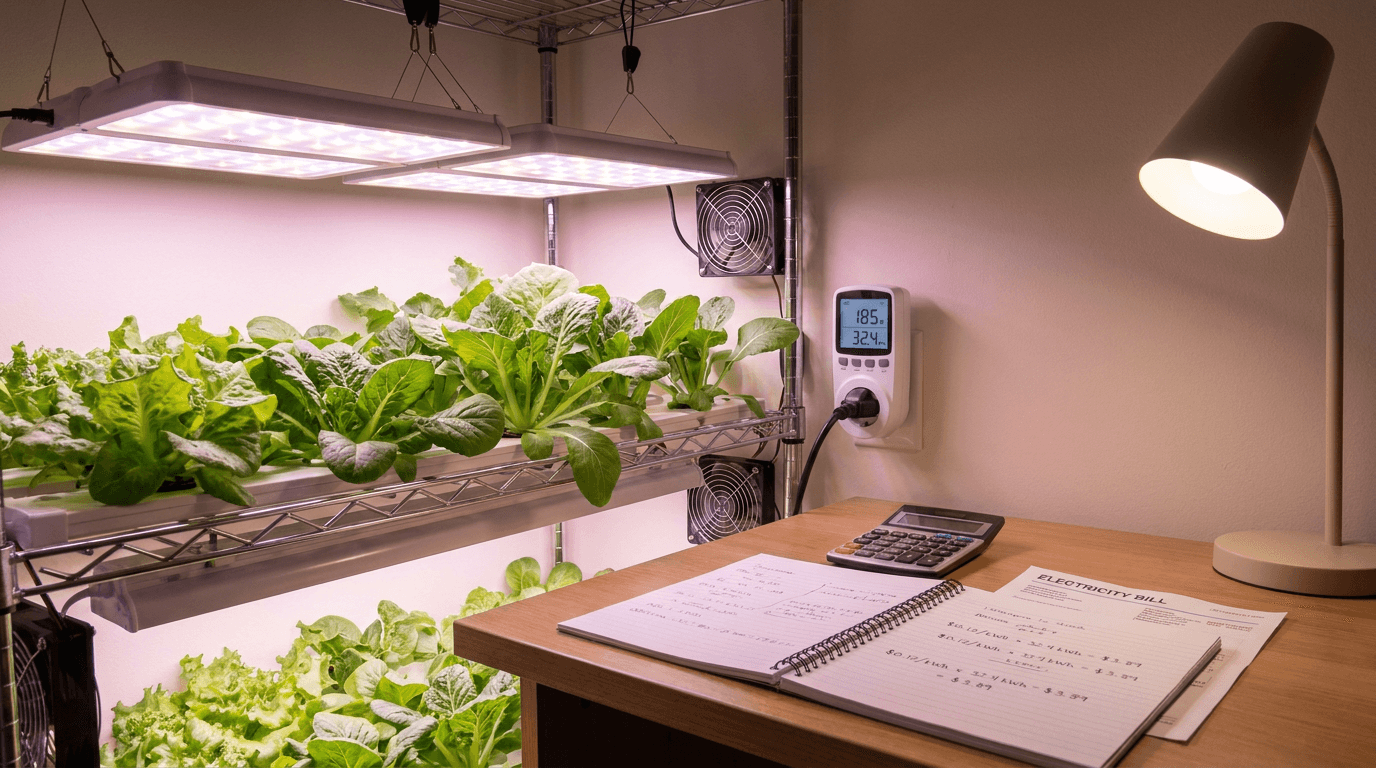
How to Calculate Electricity Costs for Your Indoor Garden
Explore our comprehensive guide on How to Calculate Electricity Costs for Your Indoor Garden. Part of our technical series on lighting and climate technology, this report covers everything you need to optimize your yield and maintain a healthy grow environment.
LED Grow Light Buying Guide 2026: PPFD, Spectrum, and the Spec Sheets That Lie
How to read a grow-light datasheet, why 'equivalent wattage' is meaningless, and three lights we'd actually buy this year.
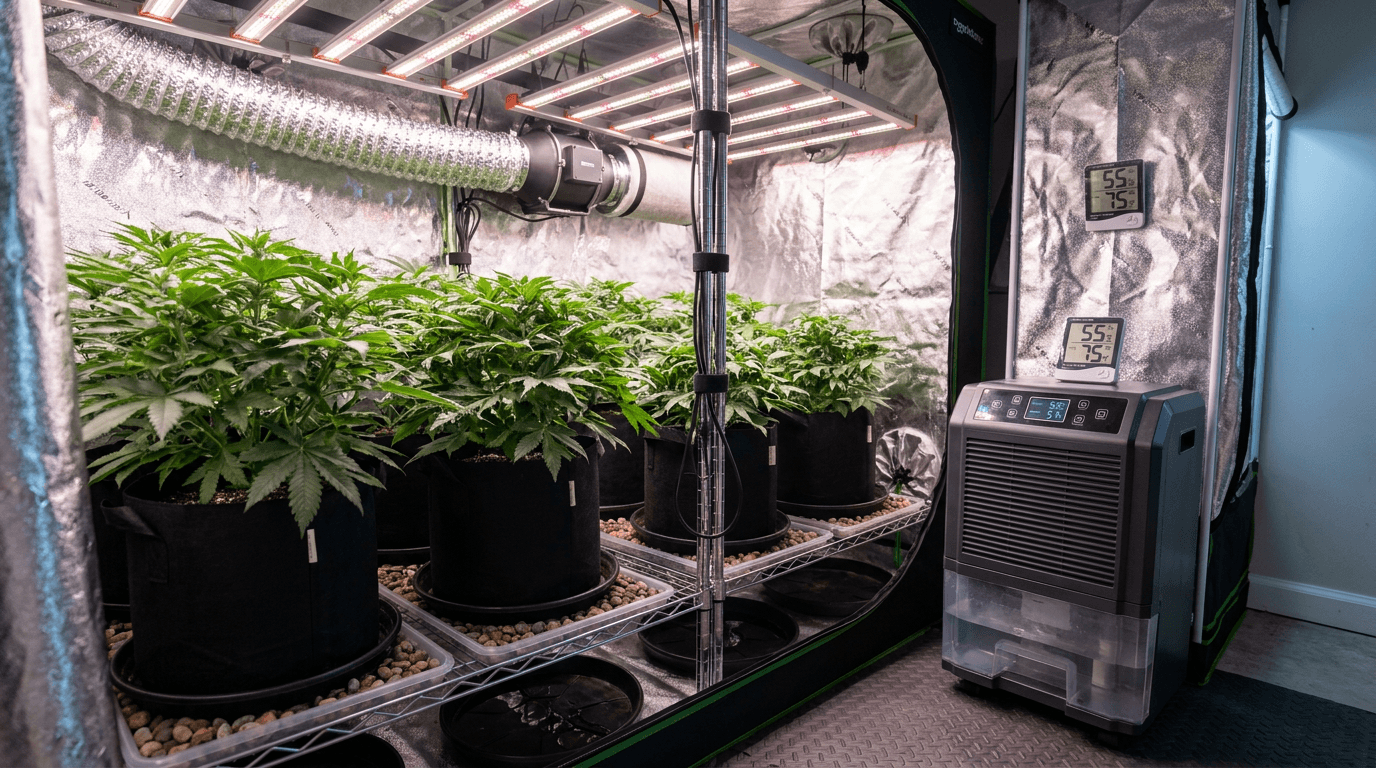
Controlling Humidity in Grow Tents: Best Dehumidifiers
Complete guide to dehumidifiers for hydroponic grow tents. Compressor vs desiccant, sizing for 2x2 to 5x5 tents, placement and drainage, product recommendations, and integration with environmental controllers for mold-free harvests.