
How to Prevent Heat Stress in Indoor Gardening
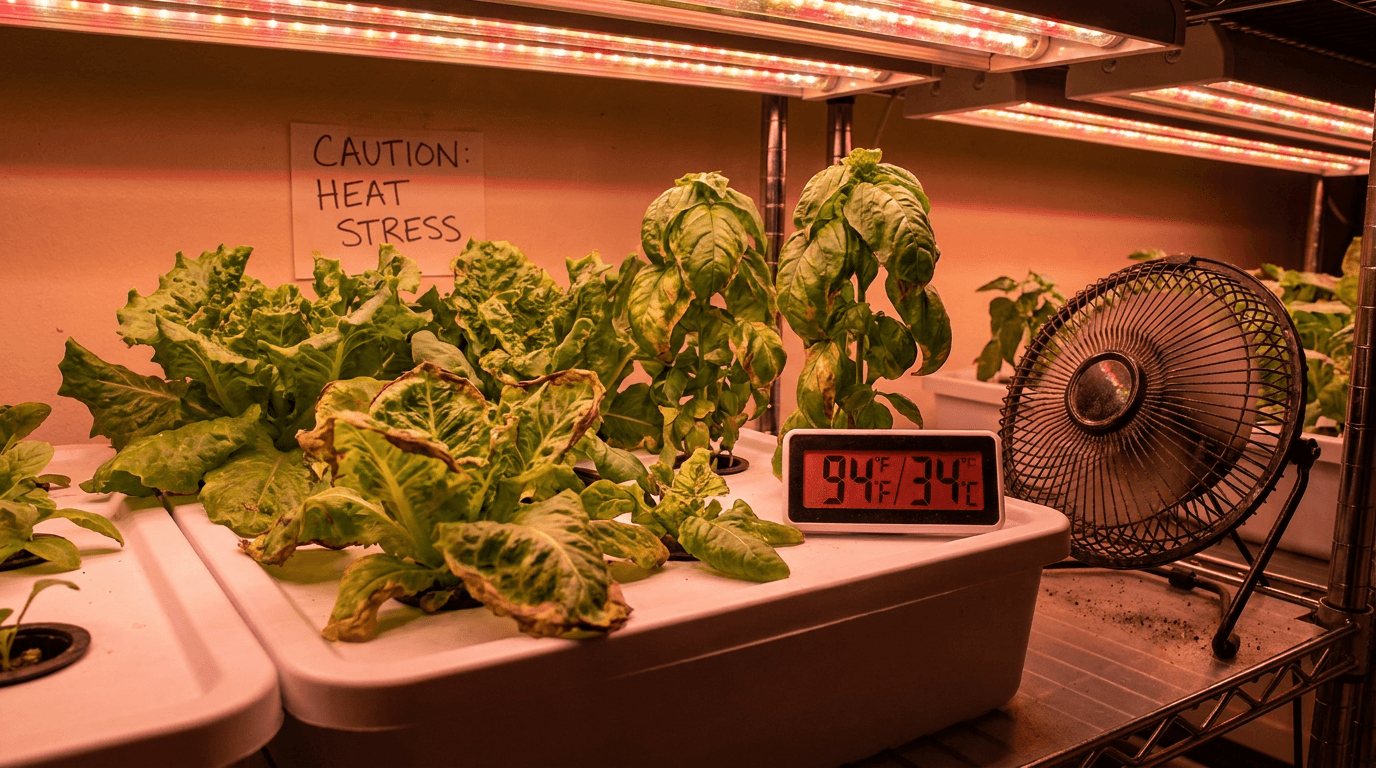
Heat stress is the most common environmental problem in indoor gardening, affecting more growers than pests, nutrient deficiencies, and root diseases combined. The fundamental challenge is that indoor gardens are closed thermodynamic systems. Every watt of electrical energy consumed by your grow lights eventually becomes heat, and that heat has nowhere to go unless you actively remove it. In a sealed grow room with high-intensity lighting, temperatures can rise by one to two degrees Celsius per hour, reaching levels that cause irreversible damage to plant tissue within minutes.
The physiological mechanism of heat stress is well understood at the plant science level. When leaf temperatures exceed the optimal range for photosynthesis, the enzyme Ribulose-1,5-bisphosphate carboxylase-oxygenase, more commonly known as Rubisco, begins to denature and lose its catalytic efficiency. At the same time, the plant's stomata close to conserve water, which reduces carbon dioxide intake and further suppresses photosynthesis. Below the canopy, root zone temperatures above twenty-six degrees Celsius promote the rapid proliferation of Pythium and Fusarium pathogens while simultaneously reducing dissolved oxygen availability in hydroponic systems, creating a perfect storm of above-ground and below-ground stress.
The consequences of unmanaged heat stress extend beyond the obvious symptoms of leaf curl and wilting. Chronic exposure to elevated temperatures reduces flower and fruit set, decreases essential oil and terpene production in aromatic plants, and increases the plant's susceptibility to pest infestations. In extreme cases, heat stress can trigger the plant's reproductive survival response, causing premature flowering or seed production in photoperiod-sensitive crops. Understanding the causes, symptoms, and solutions for heat stress is not optional for indoor growers who want consistent, high-quality harvests throughout the year.
The Lab's Verdict on Heat Stress Prevention
Heat stress is almost always a ventilation and airflow problem, not a lighting problem. Before spending money on air conditioning units or water chillers, optimize your exhaust system to achieve at least one complete air exchange per minute of your total grow space volume. If you can maintain canopy temperature within two degrees Celsius of ambient room temperature with adequate airflow, you have solved eighty percent of heat stress issues. The remaining twenty percent require active cooling solutions, but they are wasted investments if your passive air movement fundamentals are not already correct.
Recognizing Heat Stress: Symptoms and Early Warning Signs
Heat stress manifests differently depending on the severity, duration, and the specific crop you are growing. However, there is a consistent progression of symptoms that observant growers can recognize and act upon before permanent damage occurs. The earliest sign is usually leaf margin curling, technically called epinasty, where the leaf edges curl upward in a taco-shell or canoe shape. This is the plant's attempt to reduce its surface area exposure to direct light and heat, minimizing water loss through transpiration. Tacoing leaves that appear at the top of the canopy closest to the lights are your first warning that temperatures are approaching the danger zone.
The next stage of heat stress involves leaf bleaching and chlorosis. When leaf surface temperatures exceed the thermal tolerance of the photosynthetic apparatus, the chloroplasts begin to break down. The chlorophyll pigments that give leaves their green color are destroyed, leaving behind pale yellow or white patches on the leaf surface. This bleaching is most pronounced on leaves closest to the light source and on the upper surfaces of leaves that receive direct radiant exposure. Unlike nutrient deficiencies, which typically follow leaf vein patterns or affect older leaves first, heat-induced chlorosis appears in a patchy, irregular pattern concentrated in the areas of highest heat exposure.
In advanced heat stress, plants exhibit wilting even when the growing medium is adequately moist. This paradoxical wilting occurs because the plant's transpiration rate cannot keep up with the evaporative demand of the hot air surrounding the leaves. The stomata close to conserve water, but this also traps heat inside the leaf tissue, accelerating cellular damage. If the condition persists, leaves become brittle and crispy at the edges, eventually dying from the tips inward. Flower and fruit development halts, and existing flowers may drop prematurely. At this stage, yield losses can exceed fifty percent even if the environmental conditions are corrected.
Mild Heat Stress
- - Leaf edges curling upward
- - Slight leaf droop during peak light hours
- - Reduced internode stretching
- - Slower growth rate
Moderate Heat Stress
- - Leaf bleaching and yellowing
- - Wilting with moist medium
- - Flowers and buds stall
- - Lower leaves yellow and drop
Severe Heat Stress
- - Crispy, brittle leaf edges
- - Flower and fruit drop
- - Stem tissue softening
- - Complete growth cessation
Root Causes: Why Indoor Gardens Overheat
The single largest source of heat in any indoor garden is the lighting system. Every watt of electricity that flows into your grow light is converted into either light or heat. Even the most efficient light-emitting diode fixtures convert only about sixty-five to seventy-five percent of their input power into photosynthetically active radiation. The remaining twenty-five to thirty-five percent is dissipated as waste heat directly into the grow space. A high-pressure sodium fixture is even less efficient, converting only thirty to forty percent of input power into usable light and the rest into infrared radiation and convective heat.
The second major contributor to heat buildup is inadequate ventilation. In a sealed grow room with no fresh air exchange, every piece of equipment that consumes electricity contributes to the heat load: circulation fans, air pumps, water pumps, dehumidifiers, and even the controllers and sensors. The total heat load of a typical home grow room with one thousand watts of lighting can easily reach three thousand to four thousand British thermal units per hour. Without sufficient exhaust capacity to remove this heat, the room temperature will rise continuously until it reaches equilibrium at a temperature determined by the insulation properties of the room and the outside ambient temperature.
A frequently overlooked cause of heat stress is the distance between the lights and the canopy. Grow lights, particularly LED fixtures, produce intense radiant heat that does not warm the air significantly but directly heats any surface the light strikes. A leaf surface under an LED fixture at fifteen centimeters distance can be ten to fifteen degrees Celsius warmer than the ambient air temperature measured at the same location. This radiant heating effect is invisible to standard room thermometers and hygrometers, which measure air temperature but not surface temperature, leading growers to believe their environment is fine when their plants are actually experiencing significant heat stress at the leaf surface.
Heat Stress Risk Factors
- 1. Lights mounted closer than manufacturer recommended minimum distance
- 2. Exhaust fan undersized for room volume (less than 1 air exchange per minute)
- 3. Intake vents blocked or undersized relative to exhaust capacity
- 4. Ambient room temperature above 27 degrees Celsius before lighting is on
- 5. Multiple high-wattage fixtures in a small enclosed space
- 6. No circulation fans to disrupt the boundary layer around leaves
- 7. Dehumidifier or air conditioner dumping hot exhaust into grow room
- 8. Summer growing season with high outdoor ambient temperatures
"The most dangerous heat stress scenario is the one you cannot feel. If your room thermometer reads 26 degrees Celsius but your leaf surface temperature is 36 degrees, you have a problem that your thermostat cannot detect."
Optimal Temperature Ranges by Crop Type
| Crop | Day Temp (C) | Night Temp (C) | Root Zone (C) | Heat Stress Threshold |
|---|---|---|---|---|
| Tomatoes | 22-26 | 16-20 | 18-22 | 32°C leaf surface |
| Lettuce | 18-22 | 14-18 | 16-20 | 28°C ambient |
| Peppers | 24-28 | 18-22 | 20-24 | 34°C leaf surface |
| Cucumbers | 22-26 | 17-21 | 18-22 | 30°C ambient |
| Strawberries | 18-24 | 12-18 | 14-18 | 28°C ambient |
| Basil | 22-28 | 18-22 | 18-22 | 34°C ambient |
| Cannabis (veg) | 22-28 | 18-22 | 18-22 | 32°C leaf surface |
| Cannabis (flower) | 20-26 | 16-20 | 18-22 | 30°C leaf surface |
| Microgreens | 18-22 | 16-18 | 16-20 | 26°C ambient |
| Kale | 18-22 | 14-18 | 16-20 | 28°C ambient |
Cooling Solutions: From Passive Airflow to Active Chillers
The hierarchy of cooling solutions for indoor gardens follows a simple principle: maximize passive and low-energy solutions before investing in active, energy-intensive systems. The most cost-effective cooling investment you can make is an oversized exhaust fan. For a standard ten-square-foot grow tent, a six-inch inline fan with a four-hundred CFM rating provides approximately sixty air exchanges per hour, which is sufficient to keep temperatures within three to five degrees Celsius of ambient room temperature under moderate lighting loads. For larger rooms, calculate your required exhaust capacity based on your total lighting wattage, not your room volume, because the heat load from lights dominates the thermal balance in indoor gardens.
The next tier of cooling involves air conditioning and evaporative cooling. Portable air conditioning units are the most accessible solution for home growers, but they have significant drawbacks. Portable AC units must vent their hot exhaust air somewhere, and if that exhaust dumps into the same room where your grow tent is located, the AC is fighting against its own waste heat. Ducted mini-split air conditioners are far more efficient because the compressor unit sits outside the grow space and only the evaporator unit is inside. For sealed grow rooms with carbon dioxide supplementation, a mini-split is essentially mandatory because you cannot run exhaust ventilation without losing your carefully maintained carbon dioxide levels.
For hydroponic growers, water chillers offer a targeted solution to the root zone temperature problem. A water chiller circulates chilled water through a heat exchanger or directly through the nutrient reservoir, maintaining root zone temperatures in the optimal eighteen to twenty-two degree Celsius range. This is critically important because root zone temperatures above twenty-four degrees Celsius trigger a cascade of problems: dissolved oxygen levels drop, Pythium root rot pathogens multiply exponentially, and the plant's nutrient uptake mechanisms become less efficient. A water chiller is expensive, typically costing three hundred to one thousand dollars, but it is often more energy efficient than cooling the entire room air volume, especially in small grow spaces.
Radiant barriers and light movers provide additional defensive layers. A radiant barrier, such as white reflective sheeting or specialized mylar film installed between the light and the canopy, reflects infrared radiation away from the plants and reduces leaf surface temperature by three to five degrees Celsius without changing the ambient air temperature. Light movers, including light rails and rotating mounts, ensure that no single leaf area receives continuous direct radiant exposure, distributing the heat load across a larger surface area. These solutions are most effective when combined with adequate air circulation, which disrupts the boundary layer of hot, humid air that forms around leaves and traps heat.
Infrared Radiation: Why LEDs and HPS Heat Plants Differently
The type of grow light you use fundamentally changes how heat transfers to your plants. High-pressure sodium and metal halide fixtures emit significant amounts of infrared radiation in the seven hundred to one thousand nanometer range. This infrared radiation is invisible to the human eye but is readily absorbed by plant tissue as heat. When you stand under an HPS fixture, you can feel the warmth on your skin from several feet away. This is radiant heating, and it means that HPS lights can cause leaf surface temperatures ten to fifteen degrees above ambient air temperature even when the grow room itself feels cool.
Light-emitting diode fixtures, in contrast, emit very little infrared radiation. The spectral output of white LEDs and red-blue grow LEDs is concentrated in the photosynthetically active range between four hundred and seven hundred nanometers, with minimal energy in the infrared bands. This is often cited as an advantage of LED technology, and it is true that LEDs reduce the radiant heat load on leaves. However, this creates a different set of challenges. LED fixtures produce their heat at the diode junction itself, and that heat must be dissipated through heat sinks and cooling fans. The air temperature inside an LED-lit grow room can actually be higher than an HPS-lit room with the same photosynthetic photon flux density, because the heat that HPS radiates away from the fixture is instead convected into the air by the LED heat sinks.
The practical consequence for growers is that temperature management strategies must be tailored to your lighting type. In HPS-lit rooms, the priority is managing radiant heat load through light distance, reflective barriers, and air movement across leaf surfaces. In LED-lit rooms, the priority is managing ambient air temperature because the air itself is the primary heat transfer medium. LED growers often report that their rooms feel hotter than expected for the wattage, and they need more total air exchange to maintain the same canopy temperature as an equivalent HPS setup. An infrared thermometer is an essential diagnostic tool for both types of lighting, because it gives you the true leaf surface temperature that your plants are actually experiencing.
HPS vs LED Heat Characteristics
Thermal Management Tip
Regardless of your lighting type, measure leaf surface temperature with an infrared thermometer at multiple points across your canopy. If any leaf surface exceeds thirty-two degrees Celsius, adjust your lighting distance or increase airflow before considering active cooling. Leaf surface temperature is the single most reliable indicator of heat stress risk.
Heat Management by Design: Building a Cool Grow Room
The most effective approach to heat stress prevention is designing your grow space with thermal management as a primary consideration from the start. Retrofitting cooling solutions into an existing grow room is always more expensive and less effective than incorporating them into the original design. The first design decision is the location of your grow space. Basements are naturally cooler than upper floors because they benefit from ground coupling and the natural thermal mass of the earth around them. A basement grow room can be five to ten degrees Celsius cooler than an equivalent room on the second floor of the same building during summer months, with correspondingly lower cooling costs.
The second critical design element is the air path. Your intake should draw air from the coolest available source, ideally from an adjacent room that is air-conditioned or from outside during cooler parts of the day. The exhaust must discharge the hot air to a location where it will not be recirculated back into the intake. A common design mistake is exhausting hot air into the same room that supplies the intake air, creating a closed loop of progressively hotter air. The intake and exhaust should be on opposite sides of the grow space, with the air path passing over the hottest equipment first, typically the lights, before moving across the canopy and out through the exhaust.
Light-proofing your ventilation is essential for photoperiod-sensitive crops, but light traps and baffles restrict airflow and increase static pressure on your exhaust fan. Size your fan and ductwork to compensate for this restriction. A general rule is to oversize your exhaust fan by twenty-five to thirty percent beyond the calculated requirement to account for the pressure drop caused by carbon filters, light traps, and duct bends. Use smooth-walled ducting rather than flexible accordion-style ducting wherever possible, because flexible ducting creates turbulence that reduces effective airflow by thirty percent or more compared to smooth ducting of the same diameter.
For advanced growers with dedicated grow rooms, consider a split-system approach where the lighting power supply and ballasts are mounted outside the grow room entirely. Remote-mounting your LED drivers or HPS ballasts removes their waste heat from the grow space before it becomes a problem. This technique can reduce the cooling load by fifteen to twenty-five percent, and it is one of the simplest modifications for existing grow rooms. The drivers are connected to the light fixtures using extension cables rated for the appropriate current, and the drivers are mounted on a wall in an adjacent room or in a ventilated enclosure.
Heat Management Design Checklist
- + Locate grow space in coolest area available
- + Oversize exhaust fan by 25-30%
- + Use smooth-walled ducting
- + Remote-mount drivers and ballasts
- + Separate intake and exhaust paths
- + Install circulation fans at canopy level
- + Use infrared thermometer for leaf temp
- + Maintain minimum light distance
- + Consider water chiller for hydro
- + Install mini-split for sealed rooms
Frequently Asked Questions About Heat Stress Prevention
What is the ideal temperature for an indoor grow room?
The ideal temperature depends on your crop, but a general target is twenty-two to twenty-six degrees Celsius during the day with lights on, and a drop of five to eight degrees during the night cycle. Leaf surface temperature should never exceed thirty-two degrees Celsius for most crops. Root zone temperature should be maintained between eighteen and twenty-two degrees Celsius for hydroponic systems.
Can I use a regular household fan to cool my grow tent?
A household fan can improve air circulation within the tent, but it cannot remove heat from the grow space. You need an inline exhaust fan connected to ducting that vents the hot air outside the tent or room. The circulation fan keeps air moving over the leaves, but the exhaust fan is what actually removes the heat. Both are necessary and serve different functions.
How close can I put my LED lights to the plants without causing heat stress?
This depends on the specific LED fixture and its power output, but a general guideline is thirty to forty-five centimeters for most full-spectrum LED grow lights. Always check the manufacturer recommended hanging distance. More importantly, use an infrared thermometer to measure leaf surface temperature at the canopy level and adjust the light height until the leaf temperature stays below thirty-two degrees Celsius.
Is it better to cool the air or the water in a hydroponic system?
Both are important, but if you have to choose one, cool the water. Water chillers are more energy efficient than air conditioners for maintaining root zone temperature, and healthy roots can tolerate higher ambient air temperatures. A root zone temperature above twenty-six degrees Celsius promotes root rot and reduces nutrient uptake, regardless of how cool the air temperature is. Cool the root zone first, then address air temperature.
Can heat stress cause my plants to turn purple?
Yes, but not directly. Heat stress can trigger anthocyanin production in some plant species, causing purple or red pigmentation in leaves and stems. However, purple coloration is more commonly associated with cold stress or phosphorus deficiency. If you see purple leaves along with leaf curling and wilting, heat stress is likely the primary cause and the purple color is a secondary response.
How do I measure leaf surface temperature accurately?
Use an infrared thermometer with a laser pointer for precise targeting. Measure the underside of leaves near the top of the canopy, because the underside is where the stomata are located and it is the temperature that matters for transpiration. Take readings at multiple points across the canopy, including directly under the lights and at the edges, to identify hotspots. Leaf surface temperature should not exceed air temperature by more than three to five degrees Celsius.
Will adding carbon dioxide help my plants tolerate higher temperatures?
Elevated carbon dioxide levels between one thousand and fifteen hundred parts per million can increase the temperature optimum for photosynthesis by two to three degrees Celsius. Carbon dioxide enrichment allows plants to maintain photosynthetic efficiency at slightly higher temperatures, but it is not a substitute for proper temperature control. The heat stress tolerance gained from carbon dioxide is marginal and does not protect against extreme temperatures above thirty-five degrees Celsius.
Which Cooling Strategy Fits Your Setup?
Your cooling approach should match your grow space, your budget, and your crop requirements. Here is our recommendation for three common grower profiles.
The Tent Grower
You have a two-by-four-foot or four-by-four-foot grow tent in a spare room or closet. Your best investment is a high-quality six-inch inline exhaust fan with a variable speed controller, plus a clip-on circulation fan for canopy-level airflow. If summer temperatures push your tent above thirty degrees Celsius, add a portable AC unit in the room outside the tent.
The Room Grower
You have a dedicated grow room with one thousand to two thousand watts of lighting. Your cooling stack should include an oversized exhaust fan, a mini-split air conditioner for the room, circulation fans at multiple levels, and a water chiller if you run hydroponics. Remote-mount your drivers and ballasts outside the grow room. The investment is significant, but the yield improvement and crop consistency justify the cost.
The Commercial Operator
You manage multiple rooms or a warehouse-scale facility. Your cooling infrastructure should be designed by an HVAC professional who specializes in controlled environment agriculture. You need a centralized HVAC system with redundancy, automated environmental monitoring with failover alerts, and separate temperature control zones for different crop stages. Energy efficiency is critical at scale, so invest in high-SEER-rated equipment and heat recovery systems.
The Lab's Final Analysis
At The Hydro Lab, we have managed indoor gardens in every configuration imaginable, from closet-scale tents to multi-room commercial facilities. The single most important lesson we have learned about heat stress is that prevention is exponentially more effective than remediation. A heat-stressed plant that has lost its apical meristem, developed brittle leaf tissue, or dropped its flowers will never fully recover its productive potential. The window for effective intervention is measured in hours, not days.
The fundamentals of heat management are simple and well established. Provide at least one complete air exchange per minute of your total grow space volume. Maintain a minimum distance between your lights and your canopy based on the manufacturer recommendations and verified by infrared thermometer measurements. Keep your root zone temperature below twenty-two degrees Celsius in hydroponic systems. Ensure that no leaf surface exceeds thirty-two degrees Celsius at any point during the light cycle. If you can consistently meet these four conditions, you will virtually eliminate heat stress as a limiting factor in your indoor garden.
The most common mistake we see is growers attempting to fix heat stress by buying more equipment rather than optimizing what they already have. A grower with a four-hundred-CFM exhaust fan in a three-hundred-cubic-foot room does not need an air conditioner. They need to check whether their intake vent is blocked, whether their carbon filter is clogged, whether their ducting has sharp bends that restrict airflow, and whether their fan speed controller is set to maximum. Ninety percent of heat stress problems are airflow problems, and ninety percent of airflow problems are caused by restrictions in the intake or exhaust path.
Before you spend money on cooling equipment, optimize your ventilation. Clean your filters, straighten your ducting, open your intake, and verify your fan's actual airflow with an anemometer. Only after you have maximized your passive and active ventilation capacity should you consider adding air conditioning, water chillers, or other active cooling systems. The most expensive cooling system in the world will underperform if the fundamentals of air movement are not correct.
Measure your leaf temperature, not your room temperature. Fix your airflow before you buy an air conditioner. And remember that a plant that is not heat stressed is a plant that is photosynthesizing at its full genetic potential. Every degree you keep your canopy below the stress threshold is a degree of growth that goes into yield instead of survival.
More from Lighting & Climate
Keep reading
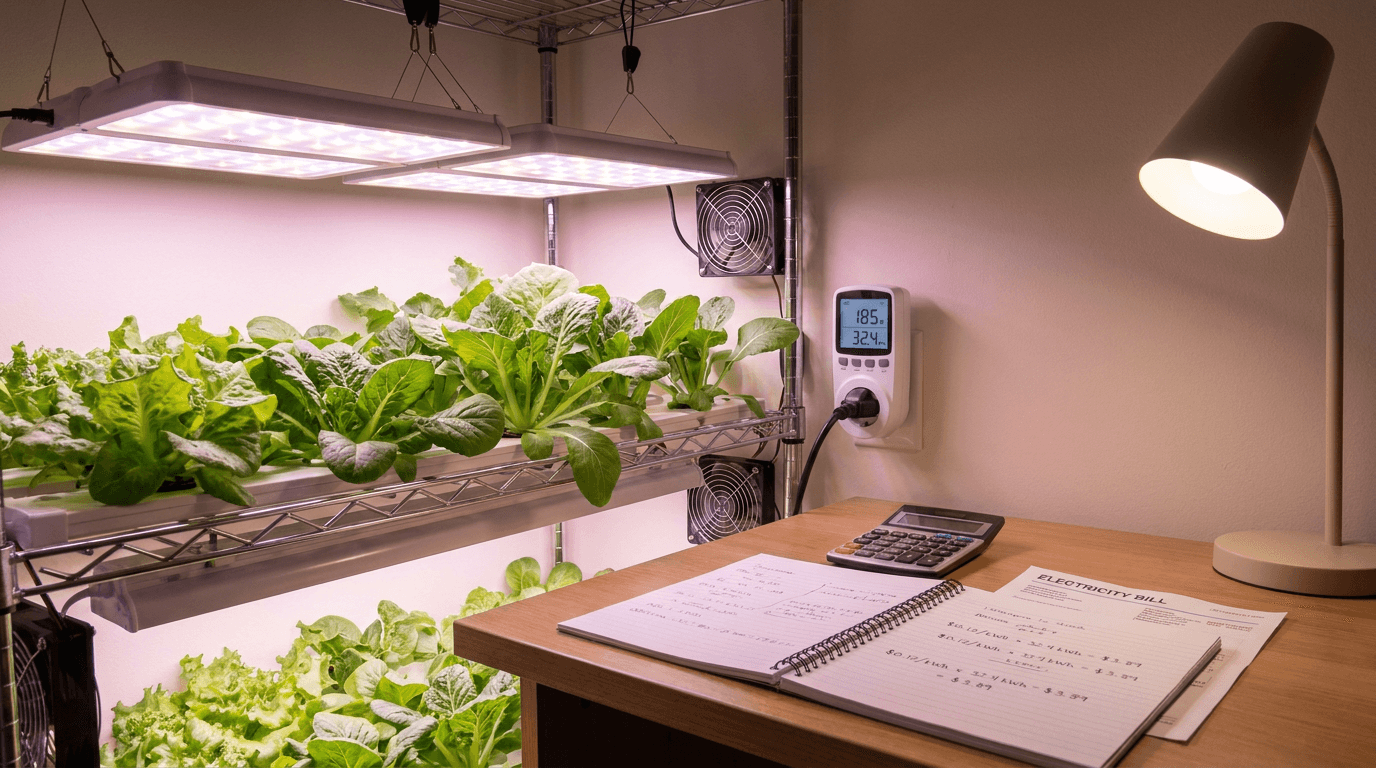
How to Calculate Electricity Costs for Your Indoor Garden
Explore our comprehensive guide on How to Calculate Electricity Costs for Your Indoor Garden. Part of our technical series on lighting and climate technology, this report covers everything you need to optimize your yield and maintain a healthy grow environment.
LED Grow Light Buying Guide 2026: PPFD, Spectrum, and the Spec Sheets That Lie
How to read a grow-light datasheet, why 'equivalent wattage' is meaningless, and three lights we'd actually buy this year.
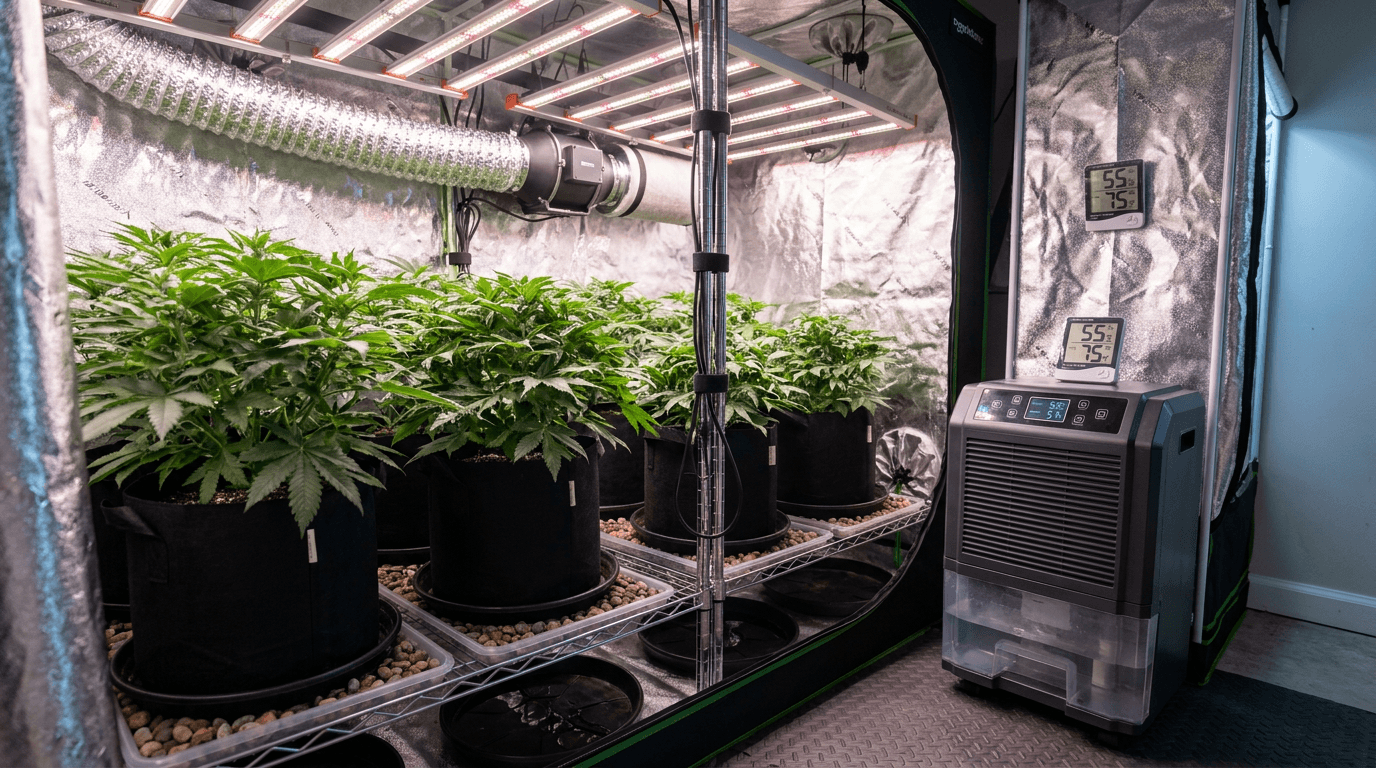
Controlling Humidity in Grow Tents: Best Dehumidifiers
Complete guide to dehumidifiers for hydroponic grow tents. Compressor vs desiccant, sizing for 2x2 to 5x5 tents, placement and drainage, product recommendations, and integration with environmental controllers for mold-free harvests.