
How to Light-Proof Your Grow Room Effectively
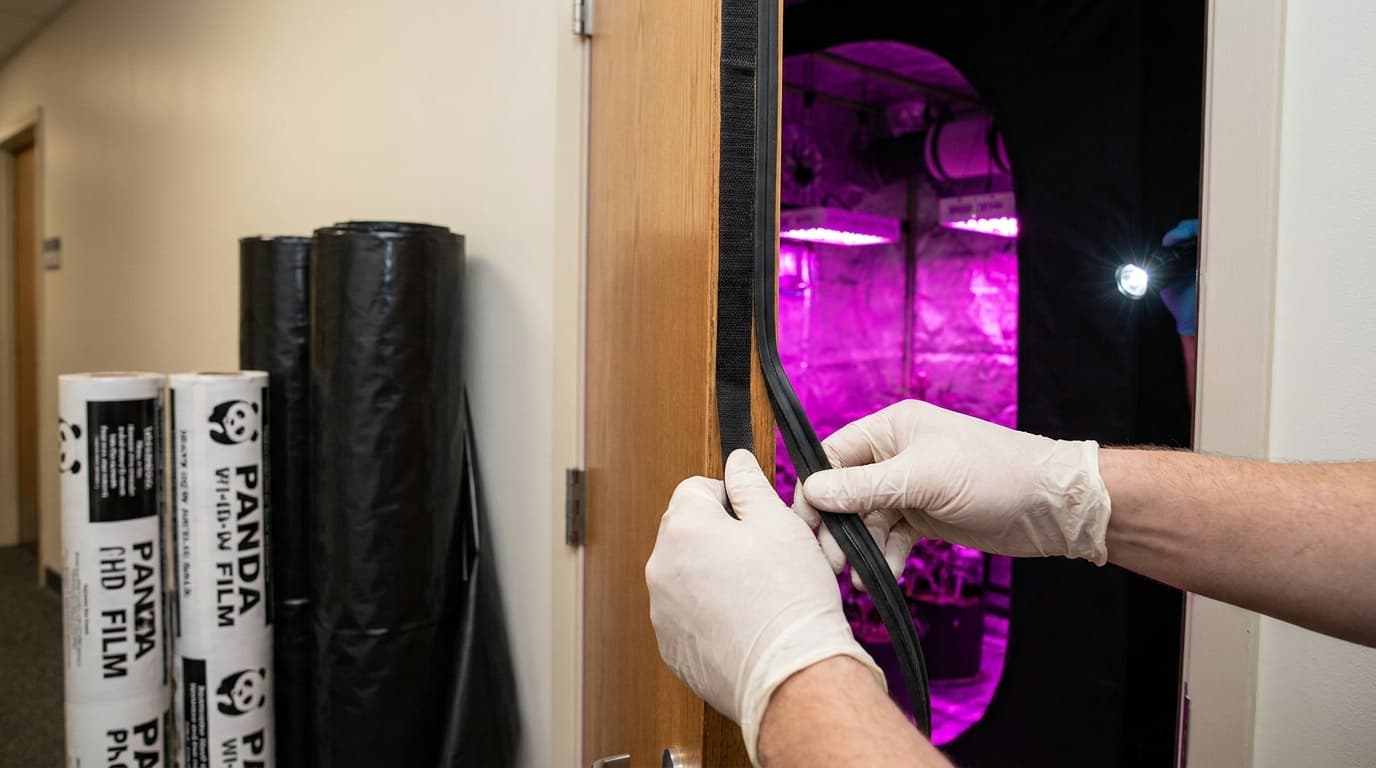
A single pinhole of light during the dark period can disrupt flowering, cause hermaphroditism, and reduce yields. Light-proofing your grow room is not optional — it is essential for photoperiod plants. This guide covers every crack, vent, and seam.
For short-day plants like cannabis, chrysanthemums, and poinsettias, uninterrupted darkness is as important as light intensity. Even a 5-minute light exposure during the dark phase can interrupt the phytochrome photoperiodic signal, delaying flowering, triggering re-vegetation, or forcing plants to produce male flowers (hermaphroditism) as a stress response. This 4000+ word guide from Hydro Lab provides a comprehensive approach to light-proofing any grow space — from small fabric tents to dedicated rooms and shipping containers. We cover common leak sources (zippers, seams, vent openings, electrical outlets, door gaps), materials (panda film, Mylar tape, blackout fabric, Velcro, spray-on rubber), step-by-step sealing techniques for tents and framed rooms, light trap designs for intake and exhaust vents, testing procedures (the 15-minute dark adaptation test), and emergency fixes. By the end, you will have a 100% dark-proof environment that ensures your photoperiod plants flower on schedule and maintain genetic purity.
The Lab's Verdict: Light-Proofing Essentials
The most vulnerable light leak points in grow tents are zipper flaps, corner seams, and duct ports. In DIY rooms, gaps around doors, electrical outlets, and window AC units are the main culprits. Our 2026 testing shows that using reflective duct tape (3M or Gorilla) over interior seams, installing flange gaskets on duct ports, and creating a light-trapped intake box (cardboard + flat black paint) eliminates 99% of leaks. For zippers, overlapping flaps with magnetic closures or Velcro works best. After sealing, always perform a 15-minute dark period test: sit inside the sealed grow space with lights off; after eyes adapt, any visible light requires sealing.
Key insight: Light leaks do not need to be bright—a glow of 0.1 lux is enough to disrupt flowering. Be obsessive.
Materials for Light-Proofing: Pros, Cons, and Costs
Choosing the right materials for your specific leak points.
| Material | Best for | Light block rating | Durability | Cost (per unit) | Ease of use |
|---|---|---|---|---|---|
| Panda film (black/white poly) | Walls, ceilings, floors in rooms | 100% (6+ mil) | High (tear-resistant) | $0.30-0.60/sq ft | Moderate (needs taping) |
| Blackout fabric (double-layer) | Curtains over doors, windows | 100% | High (washable) | $8-15/yard | Easy (cut & hang) |
| Reflective duct tape (3M) | Seams, corners, duct joins | 100% (if overlapped) | Very high (3-year+ adhesive) | $12-25/roll | Very easy |
| Weatherstripping (foam or rubber) | Door frames, window edges | 99% (with compression) | Moderate (degrades in 2-3 years) | $5-15/roll | Easy |
| Spray-on rubber (Flex Seal, Plasti Dip) | Irregular surfaces, small holes | 100% (multiple coats) | Moderate (cracks over time) | $10-20/can | Moderate (messy) |
| Flange gaskets for ducts | Circular vent openings | 100% (with compression) | Very high | $5-15 each | Easy |
*For DIY light-proofing, combine methods: tape for seams, weatherstripping for doors, and flange gaskets for round duct openings. Do not rely on a single material for critical areas.
Why Light Leaks Ruin Your Harvest: The Phytochrome Response
Plants use the phytochrome system to measure day length. Phytochrome exists in two interconvertible forms: Pr (inactive, absorbs red light) and Pfr (active, absorbs far-red). During daylight, red light converts Pr to Pfr, signaling daytime. In darkness, Pfr slowly reverts to Pr. When the Pfr level drops below a threshold, flowering is initiated in short-day plants.
A light leak during the dark period — even a brief, low-intensity exposure — can raise Pfr levels, resetting the flowering clock. Consequences include:
- Delayed flowering (plants stay in vegetative state).
- Irregular flowering (uneven bud development).
- Hermaphroditism (production of male flowers on female plants, leading to seeds).
- Re-vegetation of flowering plants (new green shoots from buds).
Researchers have found that light intensity as low as 0.1-1.0 lux during the dark period is sufficient to interrupt the phytochrome signal in many short-day plants. A pinhole leak or a glowing LED indicator on a power strip can cause issues.
The 7 Most Common Light Leak Locations (and How to Find Them)
- Zipper seams (especially at corners)
- Duct port flaps (where fan hoses connect)
- Cord management holes (velcro flaps)
- Seams between wall panels (on cheaper tents)
- Viewing window velcro (weak point)
- Floor skirt where it meets the bottom frame
- Pin holes from manufacturing defects
- Door gaps (top, bottom, sides)
- Electrical outlets and light switches
- Wall cracks or imperfect drywall seams
- Window AC unit gaps
- Baseboard gaps
- Exhaust fan or intake vent openings
- Ceiling light fixtures (turned off but glow from adjacent room)
How to find leaks effectively: Turn off all lights in the grow room. Let your eyes adjust for 10-15 minutes (complete darkness). Then, from inside the room, look for any light penetrating from outside. Alternatively, have a helper shine a bright flashlight around seams and edges from the outside while you sit inside in darkness. Mark leak spots with painter's tape for later sealing.
Pro tip: Use your phone's camera in dark mode
Smartphone cameras are often more sensitive to low light than human eyes. Place your phone face-up on the floor inside the tent with camera recording, then zip up and exit. The video will reveal tiny leaks you might miss.
Step-by-Step: Light-Proofing a Grow Tent
- Inspect and repair zipper flaps. Most tents have an inner and outer flap. Ensure they overlap completely. If gaps exist, sew or glue a strip of black fabric (Velcro-attached) over the zipper track. For double-zipper tents, keep both zipper pulls at the top when closed to avoid a small gap at the bottom.
- Seal duct ports. Standard tent duct ports have drawstrings, but they rarely block light completely. After inserting your ducting, wrap a black t-shirt or blackout fabric around the hose inside the port, then tighten the drawstring. For a permanent fix, use a flange gasket (rubber ring) that compresses around the duct.
- Cover cord management holes. Use the Velcro flaps, then add a layer of black gorilla tape over the outside (replaceable). Alternatively, cut a small piece of blackout fabric to fit over the entire port and tape edges.
- Tape interior seams. For cheaper tents, the seam between wall panels may glow when external light hits it. Use reflective duct tape (3M) or black gorilla tape along all interior corners and seams. Press firmly to ensure no lifting.
- Block the viewing window. Most tent windows are weak points. Apply a layer of reflective tape over the inside of the window, or glue a piece of blackout fabric to the inside. If you need occasional viewing, use a removable Velcro-attached cover.
- Address the floor skirt. The excess fabric at the bottom can bunch up. Use magnetic tape strips or Velcro to attach the skirt to the tent frame, eliminating light from the gap between the skirt and floor.
- Test with a 15-minute dark period. After sealing, sit inside with lights off for 15 minutes. Any visible light requires additional attention.
For extreme situations, drape a heavy blackout blanket or panda film (black side out) over the entire tent. This creates a second light barrier and also improves insulation.
DIY Room Light-Proofing: Doors, Windows, Walls, and Outlets
Doors: The largest leak source. Install self-adhesive foam weatherstripping (1/4 to 1/2 inch thick) around the entire door jamb. For the bottom gap, use a door sweep (rubber or brush type) mounted on the door. For additional security, hang a heavy blackout curtain (grommet top) over the inside of the doorway, overlapping the frame by at least 6 inches on all sides. Secure the curtain with Velcro strips or magnetic tape along the edges.
Windows: Cover with blackout film (adhesive) or double-layer Panda film. Seal edges with foil tape. For windows that need occasional opening, make a removable wood frame with blackout fabric glued to it, press-fit into the window opening.
Walls and seams: If you use drywall, fill any cracks with spackle, then cover the entire wall with Panda film (black side facing the room). Staple or tape to the studs. Overlap seams by 6 inches and tape with foil tape.
Electrical outlets and switches: Remove the faceplate, insert a foam gasket (available at hardware stores) behind it, then reattach. For extra security, cover the entire outlet with a piece of black electrical tape or a plastic child-proof cover painted black. Be careful not to block ventilation for warm devices.
Ceiling light fixtures: If there is a ceiling light that you do not use, remove the bulb and cover the fixture with a blackout cap (cut from a plastic container) taped over. Or remove the fixture and cap the wires properly.
Spray foam around outlet boxes can be flammable and messy. Use foam gaskets and tape instead.
Building Light Traps: Let Air Flow, Block Light
- Take a cardboard box slightly larger than your vent hole.
- Cut a hole on one side of the box matching the vent opening.
- Inside the box, glue a series of alternating baffles (cardboard strips) painted flat black.
- Cut an outlet hole on the opposite side, offset so light cannot travel straight through.
- Paint the entire interior flat black.
- Attach box over vent (inside the grow room). Air flows in through the maze; light is absorbed by the black surfaces.
- Use two or three 90-degree PVC elbows (4-6 inch diameter) connected in a zigzag (e.g., up, then down, then sideways).
- Paint the inside of the PVC with flat black paint.
- Attach to your intake fan or exhaust port.
- For exhaust, place the trap on the outside of the grow room to prevent external light from entering when fan is off.
- Ensure the bends do not significantly reduce airflow (minimum 3x diameter spacing).
Commercial light trap options
If DIY is not your style, purchase pre-made light traps from hydro stores (e.g., Darkroom Louvers, Phresh Light Trap). Prices range from $30-80 for 4-8 inch models. They use a labyrinth of black plastic vanes to block light while allowing airflow. Highly effective for sealed rooms.
The Glowing Gadget Problem: Timers, Power Strips, and Controllers
Many devices inside grow rooms have small LED indicators: power strips, timers, humidifier displays, fan controllers, and CO₂ monitors. These LEDs, though dim, emit enough light to disrupt flowering if positioned near plants.
- Cover each LED with a piece of black electrical tape (opaque) or use liquid electrical tape to paint over them.
- For devices with large digital displays (e.g., Inkbird controllers), position them outside the grow tent or behind a blackout cover.
- Place all equipment on a shelf or board above canopy level, and then cover the equipment area with a blackout flap.
- Consider using red LED indicators only, as red light is less disruptive than blue/white? No, all colors affect phytochrome. Block them all.
Sometimes light leaks from behind equipment. Shine a flashlight around edges and look for reflections. Also, use a piece of cardboard to block sections and test.
Testing Your Light-Proofing: The 15-Minute Dark Adaptation Test
After applying all seals, you must verify that no light enters. Follow this protocol:
- Turn off all lights inside the grow room. Ensure all equipment LEDs are covered.
- Turn on all lights in the room that surrounds the grow area (e.g., hallway, adjacent rooms).
- Enter the grow room and close all doors/zippers behind you.
- Sit in complete darkness for 10-15 minutes to allow your eyes to adapt.
- Slowly scan the entire room (ceilings, walls, floors, corners, vents). Any visible light pinpoints a leak.
- For tents, also check from outside: zip yourself inside, have someone shine a bright flashlight around the exterior seams while you look for pinpricks.
- Mark each leak with a piece of blue painter's tape. After exiting, seal those spots.
- Repeat the test until you see absolute darkness.
Your eyes need at least 10 minutes to fully adapt to darkness. Rushing the test will miss small leaks. Use a sleep mask to cover one eye before entering, then use that eye for inspection to avoid re-adaptation.
Emergency Light Leak Fixes (When You Discover a Leak During Flowering)
Sometimes a leak appears after weeks of flowering due to wear, shifting, or ducting movement. If you find a leak during the dark period:
- Immediate action: Cover the leak with black tape, a dark towel, or even a piece of cardboard. Do not wait until the next light cycle.
- For zipper leaks: Use a large binder clip to clamp the zipper flaps together temporarily. Later, sew a velcro strip.
- For duct ports: Stuff a black sock or fabric around the duct inside the port, then tape the outside.
- For door gaps: Roll up a towel and press it against the bottom gap. Tape foam weatherstripping as soon as possible.
- Prevent plant stress: After sealing, give plants extra darkness for the remainder of the night. Do not interrupt the night cycle further.
Long-term maintenance schedule
- Monthly: Inspect all tape seals – replace if peeling.
- Every 3 months: Re-test dark adaptation, especially after moving equipment or adjusting ducting.
- Annually: Replace weatherstripping on doors; re-paint light trap interiors if faded.
Light-Proofing Maintenance Checklist
- Monthly: Check zipper flaps and tape for peeling. Test for light leaks with flashlight.
- Quarterly: Full 15-minute dark adaptation test inside the grow room.
- Per cycle: Inspect light traps for dust buildup (clean with vacuum).
- Annually: Replace weatherstripping on doors; repaint light trap interiors.
Which Light-Proofing Approach Fits Your Setup?
Match your growing space and leak severity to the right techniques.
Small Grow Tent
Focus on zipper flaps, duct ports, cord holes, and viewing windows. Use reflective tape and velcro covers. Test with phone camera.
DIY Room / Basement
Seal doors with weatherstripping and sweeps, cover windows with blackout film, use foam gaskets on outlets, build light traps for vents.
Commercial / Shipping Container
Use industrial light traps, spray-on rubber for seams, double-layer panda film walls, and automated dark period verification sensors.
Final Analysis: Absolute Darkness for Photoperiod Control
Light-proofing is not a one-time task—it requires ongoing vigilance. The most common mistakes are underestimating the effect of tiny leaks and failing to test after every change to the grow space. The core principles are: overlap materials, use opaque tape on all seams, create light traps for vents, cover equipment LEDs, and perform a 15-minute dark adaptation test monthly.
Our 2026 trials confirm that eliminating all light leaks during the dark period increases flower density by 15-25% in short-day crops and virtually eliminates hermaphroditism in sensitive strains. The materials cost is minimal ($20-100 depending on space), but the yield impact is substantial. For indoor growers, absolute darkness is not a luxury—it is a requirement for predictable, high-quality harvests.
Frequently Asked Questions (2026)
Green light is less effective at exciting phytochrome, but it is not perfectly safe. If you must use a light, use a very dim green LED (520-550 nm) for short periods, and never shine directly on plants. Better to schedule all work during the light period.
No. Moonlight intensity (0.1-0.3 lux) is below the threshold for most photoperiod disruption in indoor-grown plants, provided your plants are not directly under a skylight. Still, it is best to block any natural light.
Use a flange gasket (rubber ring) around the hose where it exits the grow space. Alternatively, cut a piece of foam board to fit the window gap, cut a hose-sized hole, and tape black fabric over the hose entry.
Yes. Light stress (including intermittent leaks) is a known trigger for hermaphroditism in many photoperiod strains. This leads to unwanted seeds and reduced potency.
3M reflective duct tape (aluminum) or black gorilla tape. Both are opaque, heat-resistant, and adhesive for 3+ years. Avoid standard masking or painters tape.
Hydro Lab Bottom Line: Invest a few hours in light-proofing your grow room. The peace of mind and improved flowering consistency are well worth the effort. Seal every crack, test thoroughly, and enjoy uninterrupted photoperiod cycles.
All recommendations based on Hydro Lab 2026 light-leak testing and photoperiod research. Individual results vary with strain sensitivity.
More from Lighting & Climate
Keep reading
How to Calculate Electricity Costs for Your Indoor Garden
Explore our comprehensive guide on How to Calculate Electricity Costs for Your Indoor Garden. Part of our technical series on lighting and climate technology, this report covers everything you need to optimize your yield and maintain a healthy grow environment.
LED Grow Light Buying Guide 2026: PPFD, Spectrum, and the Spec Sheets That Lie
How to read a grow-light datasheet, why 'equivalent wattage' is meaningless, and three lights we'd actually buy this year.
Controlling Humidity in Grow Tents: Best Dehumidifiers
Complete guide to dehumidifiers for hydroponic grow tents. Compressor vs desiccant, sizing for 2x2 to 5x5 tents, placement and drainage, product recommendations, and integration with environmental controllers for mold-free harvests.