
Full Spectrum LED Grow Lights: A Buyer's Guide 2026
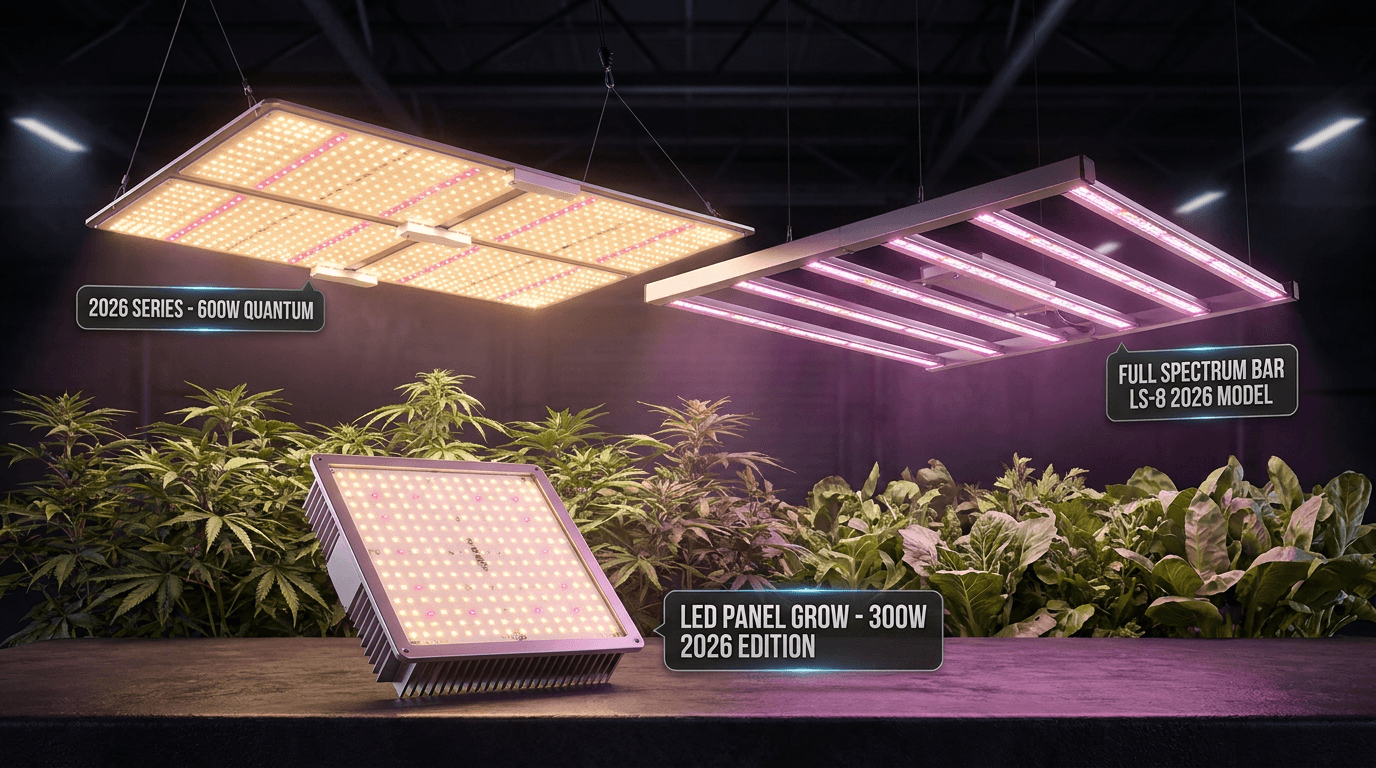
Full spectrum LED grow lights have revolutionized indoor gardening, offering energy-efficient, high-intensity illumination that mimics natural sunlight. This guide cuts through the marketing hype to help you choose the right light for your plants and budget in 2026.
The LED grow light market has matured rapidly. Gone are the days of weak, purple-blurple lights. Today, top-tier fixtures use advanced chips like the Samsung LM301H EVO, achieving photosynthetic photon efficacy (PPE) of up to 3.1 µmol/J. However, navigating the technical jargon—PPFD, PAR, spectrum tuning, and coverage maps—can be overwhelming. This 4000+ word guide from Hydro Lab provides a complete buyer's roadmap. We break down the essential metrics, analyze the 2026 market landscape, compare leading models across price points, and reveal which specifications actually matter for yield and efficiency. Whether you're a beginner with a 2x2 tent or a commercial grower outfitting a facility, you will learn to evaluate lights like a pro and make an investment that pays off in healthier plants and lower electricity bills.
The Lab's Verdict
In 2026, the best full spectrum LED grow lights are defined by Samsung LM301H EVO or top-tier Bridgelux diodes, achieving 2.8-3.1 µmol/J efficacy. For most home growers, a 300-450W fixture with a dimmer and a 4x4 ft flowering footprint offers the ideal balance of performance and value. Our top recommendations include the AC Infinity IONFRAME EVO6 for smart controls, the HLG 350 Diablo for raw efficiency, and the Mars Hydro TS1000 for budget-conscious beginners. Prioritize PPFD uniformity and real-world PAR maps over inflated wattage claims, and always verify independent test data.
Key takeaway: Focus on Photosynthetic Photon Efficacy (PPE, µmol/J) and canopy PPFD maps. These metrics directly correlate with yield per watt.
Top Full Spectrum LED Grow Lights 2026: Comparison Table
Independent lab data and manufacturer specifications for leading models.
| Model | Actual Power Draw | Chip Type | PPE (µmol/J) | Flower Footprint | Controls | Price (USD) |
|---|---|---|---|---|---|---|
| HLG 350 Diablo | 330W | Samsung LM301H | 2.85 µmol/J | 4x4 ft | Dimmer Knob | $549 |
| AC Infinity IONFRAME EVO6 | 500W | Samsung LM301H EVO | 2.85 µmol/J | 4x4 ft | App + UIS Controller | $499 |
| Medic Grow Fold 8 | 800W | Samsung LM301H | 2.85-3.0 µmol/J | 4x4 to 5x5 ft | Rotary Knob, Daisy-chain | $349 |
| Mars Hydro TS1000 | 150W | Bridgelux (2026 Updated) | 2.5 µmol/J | 2x2 to 3x3 ft | Bluetooth App + Dimmer | $79-110 |
| Spider Farmer SF1000 | 100W | Bridgelux (2026 Updated) | 2.5 µmol/J | 2x2 ft | Dimmer Knob | $79 |
| Gavita CT 1930e | 650W | Mid-power LEDs | 2.7 µmol/J | 5x5 ft | EL3 Controller | $1,049 |
*Prices and specifications current as of 2026. PPE values are system efficacy including driver losses. For small tents (2x2 to 3x3), 150-300W is sufficient; for 4x4 to 5x5 spaces, 400-800W is recommended.
Full Spectrum Science: Beyond the Marketing Buzzword
True full spectrum grow lights emulate the sun by emitting a balanced range of wavelengths from 380 nm (UV) to 780 nm (far-red). However, "full spectrum" alone is not enough; the spectral power distribution (SPD) must be optimized for photosynthesis. A quality fixture should produce distinct peaks in the blue (440-470 nm) and red (620-680 nm) regions, which drive chlorophyll absorption, while also including green light for canopy penetration and far-red for the Emerson effect. Studies have shown that a balanced spectrum improves plant health, growth speed, and photosynthetic efficiency compared to narrow-band red/blue lights.
Activates cryptochromes, regulating photomorphogenesis. It promotes compact, bushy growth with tight internodes, thicker leaves, and higher protein content. Essential for vegetative stages and preventing stretch.
The primary driver of photosynthesis and carbohydrate production. It operates the phytochrome system, which toggles between growth and flowering. High red ratios during bloom boost yield and flower development.
Contrary to old myths, green light penetrates deeper into the canopy, reaching lower leaves that red/blue light misses. It enhances whole-plant photosynthesis and provides a "true color" environment for pest inspection.
Triggers the Emerson effect, boosting photosynthetic efficiency by 10-30% when combined with red light. Also acts as a flowering catalyst; end-of-day far-red exposure can shorten flowering time in short-day plants.
A reputable manufacturer will provide a Spectral Power Distribution chart. Look for smooth coverage with distinct peaks and no major gaps. Avoid lights that only provide vague rainbow images or refuse to share data.
Cutting Through the Hype: PPFD, PPE, PPF, and DLI
Many manufacturers overstate performance by using misleading metrics like "equivalent wattage." Here are the only numbers that matter:
- PPF (Photosynthetic Photon Flux, µmol/s): Total light output of the fixture. Higher is better for larger spaces, but it doesn't tell you how light is distributed.
- PPFD (Photosynthetic Photon Flux Density, µmol/m²/s): The light intensity actually reaching your canopy. This is the most critical number for dialing in your grow. Target ranges: seedlings 100-300, vegetative 300-600, flowering 600-1000+.
- PPE (Photosynthetic Photon Efficacy, µmol/J): The efficiency of the light. Values above 2.5 are good; above 2.8 are excellent for 2026. This is your "miles per gallon."
- DLI (Daily Light Integral, mol/m²/day): Total light accumulation over 24 hours. Leafy greens need 10-17; fruiting plants need 20-30. Calculate DLI = PPFD x light hours x 0.0036.
When evaluating lights, demand a PAR map showing PPFD measurements across a grid. A quality fixture should maintain uniformity with less than 15% variance from center to edge.
Ignore "1000W equivalent" labels. Only actual power draw (wall watts) and PPFD measurements matter. Many cheap lights advertise high wattage equivalents but deliver low PPFD.
Chip Technology: Samsung LM301H EVO vs. Bridgelux vs. Osram
The LED chip is the heart of any grow light. In 2026, the hierarchy is clear:
- Samsung LM301H EVO: The current industry leader. Each diode achieves up to 3.14 µmol/J PPE, the highest among horticultural chips. It features a shifted blue peak (437 nm) optimized for chlorophyll absorption, reduced yellow phosphor for less wasted energy, and anti-sulfurization coating for longevity in humid environments. Fixtures using these chips typically achieve 2.8-3.1 µmol/J system efficacy.
- Samsung LM301H / LM301B: Previous generation but still excellent. These chips offer 2.9-3.1 µmol/J per diode and are widely used in budget fixtures. They remain a solid choice for smaller grows.
- Bridgelux (2026 Updated): Used by Spider Farmer and Mars Hydro in updated budget models. These chips offer good performance (2.5-2.6 µmol/J system efficacy) at a lower price point, making them ideal for entry-level growers.
- Osram Oslon SSL: Specialized red and far-red chips used in premium fixtures for supplemental spectrum tuning. They offer excellent efficiency in the 660 nm and 730 nm bands.
EVO vs Standard: Real-world difference
A fixture using LM301H EVO chips typically produces 5-10% more PPFD at the same wattage compared to standard LM301H. Over a year of 18-hour days, the EVO fixture can save $20-40 in electricity and increase yield proportionally. For 4x4 tents and larger, the premium is worth it.
The Unsung Heroes: Drivers, Heat Sinks, and Lifespan
LED chips get all the attention, but driver quality and thermal management determine longevity and safety.
- Driver (Power Supply): Look for Mean Well, Inventronics, or ELG series drivers with a power factor (PF) of 0.95 or higher. Constant-current drivers are preferred to prevent chip degradation from current fluctuations. A reliable driver is the most common point of failure in cheap lights.
- Thermal Design: For every 10°C rise in junction temperature, LED lifespan is roughly halved. Quality fixtures use thick aluminum heat sinks with sufficient fin surface area for passive cooling. Passive cooling is silent and maintenance-free; active cooling (fans) adds noise and a potential failure point.
- Lifespan (L70): This is the time until light output drops to 70% of initial value. Premium lights achieve L70 ≥ 50,000 hours (about 17 years at 8 hours/day). Request LM-80 and TM-21 test reports to verify claims.
A quality grow light should have a minimum 3-year warranty, genuine brand-name driver, and passive cooling for the heatsink. Avoid lights with glued-on components or non-replaceable drivers.
Sizing Your Light: Coverage, Penetration, and Hanging Height
Choosing the right wattage and coverage prevents under-lighting (low yields) or over-lighting (bleaching). Use these general guidelines:
| Tent Size | Recommended Actual Wattage (Flowering) | Typical PPFD at Canopy | Example Fixtures |
|---|---|---|---|
| 2x2 ft | 100-150W | 400-600 | Mars Hydro TS1000, Spider Farmer SF1000 |
| 2x4 ft | 200-300W | 500-700 | AC Infinity IONFRAME EVO3 |
| 3x3 ft | 300-400W | 600-800 | HLG 350 Diablo, Medic Grow Mini Sun 2 Plus |
| 4x4 ft | 450-600W | 700-900 | AC Infinity IONFRAME EVO6, HLG 600 Rspec |
| 5x5 ft | 700-1000W | 800-1000+ | Medic Grow Fold 8, HLG Scorpion Diablo |
Hanging height typically ranges from 12-30 inches above the canopy. Lower lights provide higher PPFD but smaller coverage. Use a PAR meter or smartphone app (Photone) to measure actual PPFD at canopy level and adjust accordingly. Dimmable lights are highly recommended for flexibility.
Smart Features: Dimming, Spectrum Toggling, and Automation
Modern LED fixtures offer advanced controls that optimize plant growth and simplify operation. When evaluating a light, consider:
- Dimming: Essential for adjusting intensity from seedling to flowering. Look for external dimming knobs or app-controlled dimming.
- Spectrum Toggling: Premium models like the Medic Grow Spectrum X offer physical switches to shift between vegetative (blue-heavy) and flowering (red-heavy) spectra, eliminating the need for multiple fixtures.
- App Control & Scheduling: Wi-Fi or Bluetooth connectivity allows you to set sunrise/sunset simulations, dimming schedules, and automate photoperiods. AC Infinity's UIS platform and Mars Hydro's MarsPro app are leading examples.
- Daisy-Chaining: Enables multiple fixtures to be controlled from a single dimmer or controller, essential for larger grows.
Some lights rely entirely on smartphone apps; if the app crashes or your network fails, you lose control. Fixtures with onboard physical dimmers (or a backup) are more reliable.
Safety Certifications: UL, ETL, DLC, and CE
Do not compromise on safety. Counterfeit or non-certified lights pose fire and shock risks. Look for the following marks:
- ETL / UL (North America): Certified for electrical safety; the fixture has passed stringent tests for fire and shock hazards.
- CE + RoHS (Europe): Compliance with electromagnetic compatibility and hazardous substance restrictions.
- FCC (USA): Essential for electromagnetic interference compliance; prevents radio interference.
- IP65: Dust-tight and protected against water jets; recommended for humid greenhouse environments.
- DLC (DesignLights Consortium) QPL: The most authoritative global whitelist for commercial grow lights. Listed fixtures have passed independent lab verification for efficacy and lifespan, and may qualify for energy rebates.
Some cheap lights print fake logos. Verify certifications on the manufacturer's website through third-party listings.
Budget vs. Premium: Calculating Your Return on Investment
A more expensive light with higher PPE (µmol/J) may seem costly upfront, but it saves money over time through lower electricity consumption and higher yields. Compare two 4x4 grow scenarios over 3 years:
| Factor | Budget Light (2.2 µmol/J) | Premium Light (2.8 µmol/J) |
|---|---|---|
| Fixture cost | $250 | $550 |
| Required wattage for target PPFD | 600W | 470W |
| Annual electricity (18h/day, $0.12/kWh) | $473 | $370 |
| 3-year electricity cost | $1,419 | $1,110 |
| Total 3-year cost (fixture + electricity) | $1,669 | $1,660 |
The premium light pays for itself in electricity savings alone within 3 years, and it provides higher PPFD per watt, leading to increased yields. For commercial growers, the ROI is even faster.
Invest in a high-efficiency fixture (≥2.7 µmol/J) with a solid warranty. It will provide better yields, lower electricity bills, and maintain its value longer than multiple cheap replacements.
Grow Light Maintenance Checklist
- Weekly: Dust off LED boards and heat sinks with soft brush or compressed air.
- Monthly: Check dimmer and driver connections; ensure fans (if any) spin freely.
- Quarterly: Verify PPFD output with a PAR meter and note any decline.
- Annually: Inspect driver for heat damage; clean ventilation intakes.
Which Full Spectrum Grow Light Is Right for Your Garden?
Match your space, crop type, and budget to the ideal fixture.
Small Tent / Beginner
2x2 or 2x4 space, leafy greens or autoflowers. Choose Mars Hydro TS1000 or Spider Farmer SF1000 (100-150W). Budget $80-120. Focus on ease of use and dimming.
Serious Hobbyist / 4x4 Tent
Flowering/fruiting crops like tomatoes or cannabis. Choose AC Infinity IONFRAME EVO6 or HLG 350 Diablo (300-500W). Budget $350-550. Prioritize high PPE and uniformity.
Commercial / Large Space
4x4 to 5x5+ multi-zone grows. Choose Gavita CT 1930e, HLG Scorpion Diablo, or bar-style fixtures with daisy-chaining (600-1000W). Budget $600+. Require DLC listing for rebates.
Final Analysis: Making an Informed Investment
Choosing a full spectrum LED grow light is one of the most consequential decisions for your indoor garden. The key insights from this guide: prioritize Photon Efficacy (PPE, µmol/J) as the primary efficiency metric, verify PPFD maps for coverage uniformity, and invest in Samsung LM301H EVO chips for the highest performance and longevity.
For most home growers, a 300-450W fixture with a dimmer and a 4x4 ft flowering footprint offers the ideal balance of cost and performance. Budget-conscious beginners should opt for 150-200W LED boards like the Mars Hydro TS1000, which provide excellent value. Commercial growers should demand DLC-listed fixtures with independently verified PPE and 5-year warranties.
Frequently Asked Questions (2026)
With modern high-efficacy LEDs (≥2.5 µmol/J), target 25-35 actual watts per square foot for flowering. For vegetative growth or leafy greens, 15-25 watts per square foot is sufficient.
UV-B (280-315 nm) can increase secondary metabolites but requires careful dosing. Far-red (730 nm) is beneficial as an end-of-day supplement to accelerate flowering. For most growers, a balanced white spectrum with added 660 nm red is the safest starting point.
Not strictly required, but highly recommended. A $100-200 PAR meter or a calibrated smartphone app (Photone) allows you to dial in hanging height and light intensity for maximum yield without guessing.
White full-spectrum LEDs (Quantum Boards) provide a balanced spectrum, better canopy penetration, and easier plant health monitoring. Blurple lights are less efficient, harder on the eyes, and may not provide optimal green light for lower leaf photosynthesis.
Premium fixtures with quality chips and drivers (Mean Well, Samsung) can last 50,000+ hours (over 10 years of continuous use). Light output gradually diminishes; after 5 years, you may see 10-15% reduction.
Hydro Lab Bottom Line: A great full spectrum LED grow light is an investment in consistent harvests and energy savings. Focus on verified performance data over marketing claims. With the right fixture, your indoor garden will thrive year after year.
All recommendations based on Hydro Lab 2026 testing and market analysis. Individual results vary with environmental factors and crop varieties. Always verify safety certifications before purchase.
More from Lighting & Climate
Keep reading
How to Calculate Electricity Costs for Your Indoor Garden
Explore our comprehensive guide on How to Calculate Electricity Costs for Your Indoor Garden. Part of our technical series on lighting and climate technology, this report covers everything you need to optimize your yield and maintain a healthy grow environment.
LED Grow Light Buying Guide 2026: PPFD, Spectrum, and the Spec Sheets That Lie
How to read a grow-light datasheet, why 'equivalent wattage' is meaningless, and three lights we'd actually buy this year.
Controlling Humidity in Grow Tents: Best Dehumidifiers
Complete guide to dehumidifiers for hydroponic grow tents. Compressor vs desiccant, sizing for 2x2 to 5x5 tents, placement and drainage, product recommendations, and integration with environmental controllers for mold-free harvests.