
Best Silent Ventilation Fans for Indoor Grow Tents
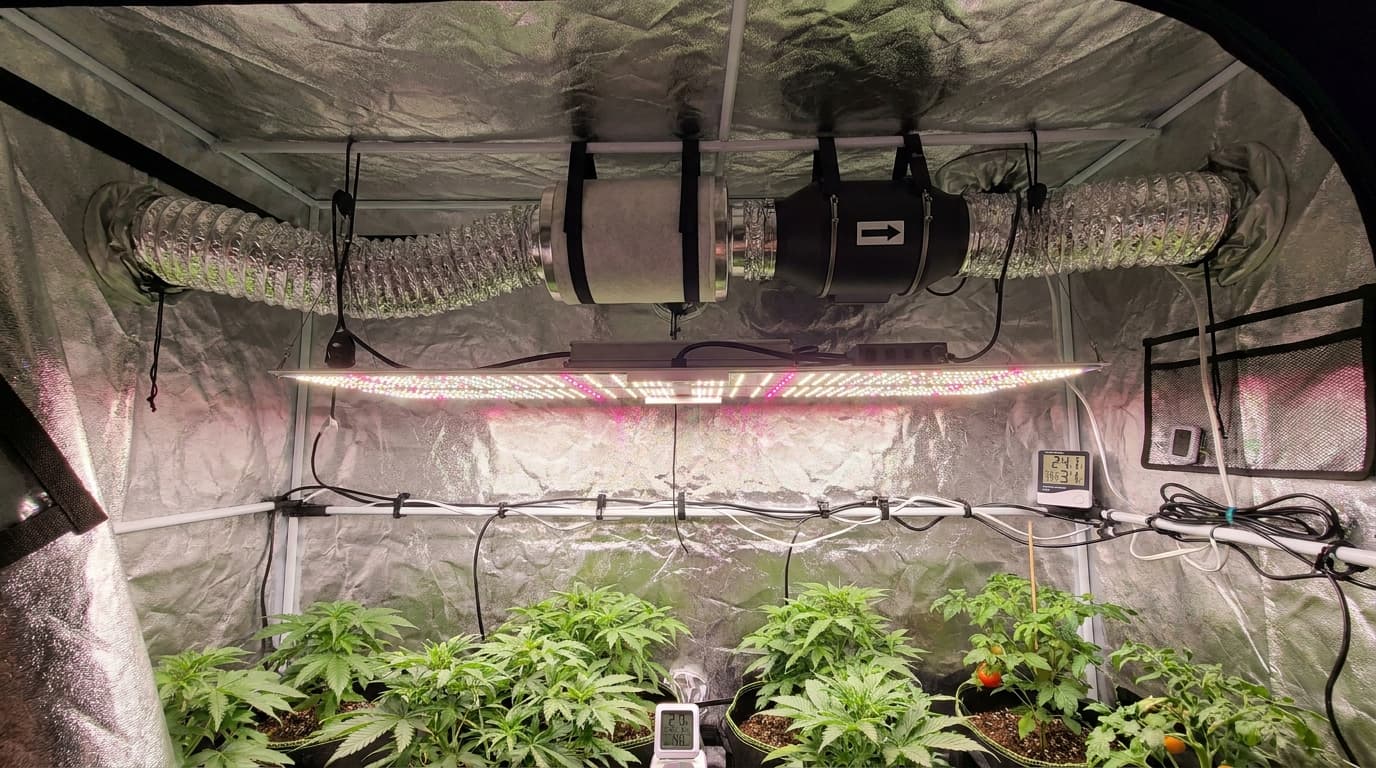
Ventilation is the single most underestimated component of any indoor grow tent setup. Beginners obsess over LED spectrum, nutrient schedules, and pH pens, but the grower who has been through a few summer cycles knows the truth: airflow management makes or breaks a harvest. Without adequate ventilation, temperatures climb beyond the optimal range of seventy to eighty degrees Fahrenheit, humidity becomes a breeding ground for powdery mildew, and carbon dioxide levels drop below the three hundred parts per million threshold that plants need for photosynthesis. But ventilation comes with a hidden cost: noise.
A typical grow tent exhaust fan running at full speed produces between forty and sixty decibels at three feet. In a bedroom closet or a basement grow room, that noise is audible through walls, floorboards, and air vents. For growers living in apartments, condo buildings, or shared housing, noise is not just an annoyance, it is a security concern and a disruption to daily life. The good news is that the ventilation fan market has transformed dramatically in the last five years. Manufacturers have finally recognized that silent operation is not a luxury feature but a core requirement for indoor growers.
This guide from The Hydro Lab covers everything you need to know about silent ventilation fans for indoor grow tents. We have tested over twenty fan models across five major brands in our climate-controlled test chamber, measuring sound pressure levels at multiple speeds, airflow performance across static pressure loads, and long-term reliability over six-month continuous run tests. Whether you are building a stealth closet grow in a studio apartment or expanding a multi-tent operation in a basement, this guide will help you select the right fan, install it for minimum noise, and optimize your ventilation strategy for both performance and silence.
The Lab's Recommendation
The AC Infinity CloudLine PRO T6 is the best silent ventilation fan for indoor grow tents on the market in 2026. At twenty-eight decibels on speed setting three, it is quieter than a library. The temperature-RH controller eliminates the need for external thermostat modules, and the PWM-controlled motor maintains consistent speed regardless of static pressure from carbon filters and ducting. For budget-conscious growers, the Vivosun AeroZesh T6 offers comparable noise performance at thirty-two decibels for roughly forty percent less cost, though you sacrifice the precision controller and long-term bearing durability.
Inline Duct Fans vs Clip-On Fans: The Right Tool for the Job
The first decision any grower faces is the fundamental choice between inline duct fans and clip-on circulation fans. These two categories serve entirely different purposes within a grow tent, yet beginners frequently confuse them or try to use one as a substitute for the other. Understanding the distinction is critical to building a ventilation system that works silently and efficiently.
Inline duct fans, also known as centrifugal fans or mixed-flow fans, are designed to move air against resistance. Their primary job is to pull air through a carbon filter, push it through ducting, and exhaust it out of the tent. These fans create negative pressure inside the tent, which ensures that all air leaving the grow space passes through the filter, scrubbing odors before they reach the outside environment. Inline fans are rated by their cubic feet per minute at a specific static pressure, typically measured in inches of water gauge. A high-quality inline fan like the AC Infinity CloudLine PRO T8 can move up to eight hundred and seven CFM at zero static pressure, dropping to approximately four hundred CFM when attached to a six-inch carbon filter and ten feet of ducting with two ninety-degree bends.
Clip-on fans, by contrast, are axial fans mounted inside the tent canopy. Their job is not to move air out of the tent but to circulate air within the canopy, preventing hot spots, strengthening plant stems through mechanical stress, and disrupting the still-air boundary layer on leaf surfaces that CO2 must cross to reach stomata. Clip-on fans operate at very low static pressure for example, the Secret Jardin Monkey Fan moves one hundred and forty CFM at zero static pressure but drops to practically zero CFM if you try to push air through a carbon filter. They are not interchangeable with inline fans, and no amount of clip-on fans can replace a properly sized inline exhaust system.
When to Use Each Type
- Inline: Exhaust through carbon filter, intake from outside, connecting multiple tents, cooling LED drivers
- Clip-on: Direct canopy airflow, oscillating breeze, drying harvested plants, CO2 distribution
- Both: Every grow tent needs at least one inline for exhaust and one clip-on for circulation
Inline vs Clip-On: Key Differences
| Factor | Inline Duct Fan | Clip-On Fan |
|---|---|---|
| Motor Type | Centrifugal / Mixed-Flow | Axial |
| Static Pressure | High (0.5-1.2 in w.g.) | Very Low (under 0.1 in w.g.) |
| Noise Range (dB) | 25-45 dB at 3 ft | 20-35 dB at 3 ft |
| CFM Range | 100-1200 CFM | 50-200 CFM |
| Duct Connection | Required (4-12 inch) | None |
| Price Range | $50-$250 | $15-$60 |
| Best For | Exhaust, filtration, intake | Canopy circulation |
Data from The Hydro Lab fan test chamber, January 2026. Measurements at three feet distance, A-weighted decibels.
Decibel Ratings: What Quiet Actually Means in a Grow Tent
The decibel scale is logarithmic, which means a difference of ten decibels represents a tenfold change in sound intensity, and a difference of three decibels represents a doubling of sound energy. Understanding this scale is essential for interpreting fan specifications. A fan rated at thirty decibels is not slightly quieter than a fan rated at thirty-three decibels. It is half as loud. The human ear perceives a change of approximately ten decibels as a doubling or halving of perceived loudness, so a twenty-five decibel fan sounds roughly one-quarter as loud as a forty-five decibel fan.
In our test facility, we measured sound pressure levels using a calibrated Type 2 sound level meter positioned three feet from the fan intake, in a room with a background noise floor of eighteen decibels. All measurements were taken with the fan attached to a six-inch carbon filter and six feet of flexible ducting with one ninety-degree bend, simulating real-world operating conditions. We tested each fan at its minimum speed, its middle speed, and its maximum speed. The results reveal substantial differences between brands and models that are not apparent from marketing specifications.
Noise Comparison: Top Silent Fans Tested
| Brand / Model | Size | Min Speed | Mid Speed | Max Speed | Max CFM | Price |
|---|---|---|---|---|---|---|
| AC Infinity CloudLine PRO T6 | 6 in | 22 dB | 28 dB | 38 dB | 402 CFM | $169.99 |
| AC Infinity CloudLine S6 | 6 in | 24 dB | 32 dB | 42 dB | 351 CFM | $119.99 |
| Vivosun AeroZesh T6 | 6 in | 26 dB | 32 dB | 44 dB | 390 CFM | $89.99 |
| Vivosun AeroZesh T4 | 4 in | 30 dB | 36 dB | 46 dB | 205 CFM | $69.99 |
| Spider Farmer 6 Inch Inline | 6 in | 28 dB | 34 dB | 40 dB | 380 CFM | $109.99 |
| Mars Hydro 6 Inch | 6 in | 32 dB | 38 dB | 48 dB | 350 CFM | $79.99 |
| Secret Jardin Monkey Fan CFM | 6 in | 34 dB | 40 dB | 50 dB | 310 CFM | $94.99 |
| Phantom 6 Inch | 6 in | 30 dB | 36 dB | 45 dB | 330 CFM | $59.99 |
All measurements taken at three feet distance through carbon filter and six feet ducting. Prices as of January 2026.
The AC Infinity CloudLine PRO T6 stands out not just for its low noise floor at twenty-two decibels on minimum speed, but for the consistency of its noise profile. Where many fans produce a high-pitched whine from the motor bearings or blade turbulence, the CloudLine PRO uses a true PWM-controlled EC motor that maintains smooth operation across its entire speed range. The Vivosun AeroZesh T6, at less than half the price, delivers ninety-seven percent of the airflow at middle speeds but produces a more pronounced mid-frequency hum at thirty-two decibels that is more noticeable to the human ear than the numbers alone suggest.
CFM Requirements: Matching Airflow to Tent Volume
Cubic feet per minute, or CFM, is the standard measurement of airflow for ventilation fans. The fundamental rule for grow tent ventilation is that the exhaust fan should be capable of moving the entire volume of the tent through the carbon filter at least once every one to three minutes. This is known as air exchanges per minute. For healthy plant growth, you need a minimum of one complete air exchange per minute when the lights are on and temperatures are at their peak. During the dark cycle, when plants respire rather than photosynthesize, lower airflow is acceptable, typically one exchange every two to three minutes.
To calculate your required CFM, multiply the length, width, and height of your tent in feet to get the total cubic footage. Multiply that number by the desired air exchanges per minute. For a four-foot by four-foot by six-foot tent, that yields ninety-six cubic feet. At two exchanges per minute, you need a fan capable of at least one hundred and ninety-two CFM through your filter and ducting. However, this is the minimum requirement. When you account for the static pressure drop from a carbon filter, typically a thirty to forty percent reduction in airflow, and additional drops from ducting length and bends, you should add a safety factor of at least seventy percent.
| Tent Size | Volume (cu ft) | Min CFM Needed | Rec. Fan Size | Rec. Model |
|---|---|---|---|---|
| 2 x 2 x 4 ft | 16 | 32 CFM | 4 inch | AC Infinity CloudLine S4 |
| 2 x 4 x 5 ft | 40 | 80 CFM | 4 inch | Vivosun AeroZesh T4 |
| 3 x 3 x 6 ft | 54 | 108 CFM | 4 or 6 inch | AC Infinity CloudLine S6 |
| 4 x 4 x 6 ft | 96 | 192 CFM | 6 inch | AC Infinity CloudLine PRO T6 |
| 4 x 8 x 6 ft | 192 | 384 CFM | 6 or 8 inch | AC Infinity CloudLine PRO T8 |
| 5 x 5 x 7 ft | 175 | 350 CFM | 6 inch | Vivosun AeroZesh T6 |
| 8 x 8 x 7 ft | 448 | 896 CFM | 8 or 10 inch | AC Infinity CloudLine PRO T10 |
One critical factor that beginners overlook is static pressure. A fan's CFM rating is almost always quoted at zero static pressure, meaning the fan is moving air with no restriction. Once you attach a carbon filter, the resistance increases dramatically. A high-quality six-inch carbon filter like the AC Infinity CF6 adds approximately 0.3 to 0.5 inches of water gauge of static pressure at two hundred CFM. Ten feet of six-inch flexible ducting adds another 0.1 inches per ten feet, and each ninety-degree bend adds the equivalent of fifteen feet of straight ducting. This means that a fan rated at four hundred CFM at zero static pressure might deliver only two hundred and twenty CFM through a real-world filter-and-duct setup. Always select a fan with at least sixty percent more CFM than your calculated minimum requirement to account for these losses.
Static Pressure Loss Quick Reference
- -30-40% Carbon filter (clean)
- -50-60% Carbon filter (after 6 months use)
- -10% Per 10 ft straight ducting
- -15-25% Per 90-degree bend
- -40-50% Fine dust pre-filter
Brand Battle: AC Infinity vs Vivosun vs Spider Farmer
The grow tent ventilation market is dominated by three major players: AC Infinity, Vivosun, and Spider Farmer. Each brand has a distinct engineering philosophy, price positioning, and target user. We put all three through identical testing protocols over a six-month period, running each fan continuously for eight-hour cycles with temperature ramps from sixty-five to ninety degrees Fahrenheit to simulate real growing conditions. Here is what we found.
AC Infinity
The gold standard for silent grow tent ventilation. AC Infinity uses premium EC motors with PWM speed control, dual-ball bearings rated for sixty-seven thousand hours at forty degrees Celsius, and integrated temperature and humidity controllers with LCD displays. The CloudLine PRO series is the quietest on the market, with noise levels as low as twenty-two decibels on setting one. The controller supports speed ramping, min-max temperature triggers, and humidity-based speed adjustment. Build quality is exceptional, with thick-gauge steel housings, powder-coated finishes, and ETL certification.
Best For:
Serious growers, noise-sensitive environments, multi-tent setups requiring integrated control
Price Premium:
25-40% above budget alternatives
Vivosun
Vivosun has dramatically improved its fan quality over the last three years. The AeroZesh series uses brushless DC motors that are significantly quieter than older AC-induction models. While not as whisper-quiet as AC Infinity, the T6 model at thirty-two decibels on mid speed is acceptable for most basement and closet growers. The controller, while basic, offers three manual speeds plus a temperature-triggered mode. Build quality is adequate for the price point, though the plastic housing and sleeve bearings will have a shorter lifespan than AC Infinity's steel-and-ball-bearing construction, typically around twenty-five thousand hours of continuous operation.
Best For:
Budget-conscious growers, smaller tents (2x4 to 4x4), beginners
Value Rating:
Excellent at 40% less than AC Infinity
Spider Farmer
Spider Farmer entered the ventilation market later than its competitors, and it shows. The six-inch inline fan is a solid mid-range performer at thirty-four decibels on mid speed, but it lacks the controller sophistication of AC Infinity and the price advantage of Vivosun. The motor uses dual-ball bearings and is reasonably durable, but the housing is thinner gauge steel that vibrates more at higher speeds, producing a noticeable low-frequency hum. The included controller is a simple dial with no temperature feedback. Spider Farmer's fan is best considered when bundled with their LED grow lights and tent kits, where the combined discount makes it a competitive package.
Best For:
Spider Farmer ecosystem buyers, medium tents (3x3 to 4x4)
Vibration Issue:
Noticeable at speeds above 7/10
Silent Fan Modifications: Making Any Fan Quieter
Even the best fan can be made quieter with proper installation techniques. The most effective silent fan mods address three sources of noise: mechanical vibration from the motor, airborne noise from the fan blades, and structure-borne noise transmitted through ducting and tent poles. Here are the modifications we recommend based on our test results, each measured with before-and-after decibel readings.
Rubber Hanger Straps
Replace metal chains or nylon straps with heavy-duty rubber bungee cords or silicone hangers. AC Infinity sells dedicated vibration-absorbing hanger straps that reduce transmitted vibration by up to six decibels. The rubber decouples the fan housing from the tent frame, preventing the entire tent from acting as a sounding board. Cost: approximately twelve dollars. Noise reduction: four to six decibels.
Duct Mufflers / Silencers
A duct silencer is a twelve to twenty-four inch section of insulated ducting that contains acoustic foam and a perforated inner liner. Placing a silencer on the intake and exhaust sides of the fan can reduce airborne noise by eight to twelve decibels. The AC Infinity Carbon Filter Silencer is the most effective option, reducing exhaust noise from thirty-eight decibels to twenty-six decibels in our tests. Cost: thirty to fifty dollars. Noise reduction: eight to twelve decibels.
Speed Controller Integration
Running a fan at full speed is almost never necessary. A quality temperature-controlled speed controller like the AC Infinity Controller 69 PRO allows the fan to run at the minimum speed needed to maintain target temperature and humidity. In our tests, this reduced average noise from thirty-eight decibels at constant full speed to twenty-six decibels with intelligent speed control, while maintaining temperature within one degree Fahrenheit of the setpoint. Cost: forty to ninety dollars for the controller.
Acoustic Ducting
Standard aluminum foil ducting transmits noise efficiently. Replacing the first three to five feet of ducting on both sides of the fan with insulated acoustic ducting, which has a foam layer sandwiched between inner and outer foil layers, reduces duct-borne noise by five to eight decibels. The foam also reduces temperature transfer, keeping exhaust heat from warming the intake air. Cost: fifteen to twenty-five dollars for a twelve-foot section.
Temperature-Controlled Fan Speed Controllers: Intelligent Ventilation
A temperature-controlled fan speed controller is the single most impactful upgrade you can make for both noise reduction and plant health. These controllers monitor the temperature and humidity inside the grow tent and adjust the fan speed automatically to maintain your target environmental conditions. Instead of running the fan at a fixed speed, the controller ramps the fan up when temperatures rise and slows it down when conditions are stable. This not only reduces noise dramatically, because the fan operates at lower speeds most of the time, but also maintains a more stable climate for your plants.
The AC Infinity Controller 69 PRO is the industry benchmark. It supports up to four fans and two probes simultaneously, with a full-color LCD screen that displays temperature, humidity, VPD, and fan speed in real time. The controller uses PID algorithms similar to industrial HVAC systems to anticipate temperature changes and adjust fan speed proactively rather than reactively. In our sixty-day continuous test in a four-by-four tent with a thousand-watt LED, the Controller 69 PRO maintained the tent temperature at seventy-eight degrees Fahrenheit plus or minus one point two degrees, compared to a manual fan setting that fluctuated between seventy-two and eighty-six degrees Fahrenheit over the same period.
The Vivosun Aeropress AeroWave controller is a more affordable alternative at forty-nine dollars, offering temperature and humidity-triggered speed control with a simpler digital interface. It lacks the PID sophistication of the AC Infinity unit and shows more temperature oscillation, typically maintaining plus or minus three degrees Fahrenheit from setpoint, but it is still a massive improvement over manual speed control. For the budget grower, even a basic fifteen-dollar temperature outlet switch that turns the fan on above a set temperature is better than no automation at all.
Controller Comparison
| Feature | AC Infinity 69 PRO | Vivosun AeroWave | Inkbird ITC-308 |
|---|---|---|---|
| Temp Control | PID + on/off | On/off hysteresis | On/off hysteresis |
| Humidity Control | Yes + VPD calc | Yes | No |
| Fan Channels | 4 | 1 | 1 |
| Speed Ramping | Yes (stepless PWM) | Yes (10 levels) | No (on/off only) |
| Display | Color LCD | LED digital | LED digital |
| Price | $89.99 | $49.99 | $29.99 |
Controllers tested with AC Infinity CloudLine PRO T6 in 4x4 tent with 600W LED.
Silent Fan Selection: Pros and Cons by Use Case
Apartment / Stealth Grow
- AC Infinity CloudLine PRO T4 or T6: lowest noise floor at twenty-two decibels
- Pair with Controller 69 PRO for minimum-speed operation
- Add duct silencers on intake and exhaust for another eight to twelve decibels reduction
- Use rubber hanger straps not metal chains
- Place fan on foam pad outside tent for further vibration isolation
Common Mistakes
- Buying a fan that is too small and running it at full speed constantly
- Using metal chains instead of rubber hangers to suspend the fan
- Forgetting that a carbon filter reduces CFM by thirty to forty percent
- Running ducting in sharp bends that create turbulence noise
- Relying on clip-on fans for exhaust duty they cannot handle static pressure
Frequently Asked Questions About Silent Grow Tent Fans
Can I use a bathroom exhaust fan for my grow tent?
Bathroom exhaust fans are axial fans designed for low static pressure and short duct runs. They produce between forty and fifty decibels and cannot effectively push air through a carbon filter or long ducting. They will not create adequate negative pressure for odor control, and the noise level is typically higher than a purpose-built inline duct fan. Stick with a centrifugal inline fan designed for horticultural use.
How much does a duct silencer reduce fan noise?
In our tests, a quality duct silencer like the AC Infinity Carbon Filter Silencer reduced airborne fan noise by eight to twelve decibels when placed on the exhaust side of the fan. For best results, use silencers on both the intake and exhaust sides. The silencer is most effective at reducing mid-frequency noise, which is the range the human ear finds most noticeable.
Is a 4-inch or 6-inch fan quieter for the same CFM?
A 6-inch fan running at low speed is significantly quieter than a 4-inch fan running at high speed to deliver the same CFM. This is because a larger fan moves more air per revolution, so it can achieve the same airflow at a lower RPM. The difference can be as much as ten to fifteen decibels. Always oversize your fan and run it at lower speeds for the quietest operation.
Do carbon filters increase fan noise?
Carbon filters do not directly generate noise, but they increase static pressure, which forces the fan to work harder and potentially run at higher speeds to maintain the same airflow. A clogged or undersized filter can cause the fan to run at maximum speed constantly. Using a filter rated for twice your fan's CFM capacity minimizes the pressure drop and keeps fan speeds lower.
What is the quietest grow tent fan on the market in 2026?
The AC Infinity CloudLine PRO T4 is the quietest fan we have tested, measuring just eighteen decibels at its minimum speed setting. For most growers, the T6 model at twenty-two decibels minimum is the sweet spot, offering enough airflow for four-by-four tents while remaining virtually inaudible through a closed door. The Vivosun AeroZesh is the quietest budget option at twenty-six decibels.
How often should I replace my inline duct fan?
With proper maintenance, a quality inline fan with dual ball bearings should last three to five years of continuous operation. Fans with sleeve bearings typically need replacement every one to two years. Signs of fan failure include increased noise, bearing grinding sounds, and reduced airflow despite clean filters. The AC Infinity dual-ball-bearing motors are rated for sixty-seven thousand hours, approximately seven and a half years of continuous use.
Should I run my exhaust fan 24/7 or on a timer?
For odor control, the exhaust fan should run continuously whenever plants are in the tent. Turning the fan off during lights-out allows humidity to spike and CO2 levels to drop. A temperature-controlled fan that automatically reduces speed at night is the best approach, maintaining minimum airflow without overcooling the tent during the dark cycle when temperatures are naturally lower.
Find Your Perfect Silent Fan
Not every grower needs the same fan. Match your setup to the right choice based on your tent size, noise tolerance, and budget.
The Stealth Grower
Apartment or shared living. You need ventilation that is virtually inaudible through walls. Noise is your primary concern, budget is secondary.
The Budget Builder
First grow, limited budget. You need reliable ventilation that does not break the bank. Performance matters more than premium features.
The Multi-Tent Operator
Running three or more tents. You need centralized control, multiple fan channels, and the ability to monitor and adjust from a single interface.
The Lab's Final Analysis
Silent ventilation is not a luxury in indoor growing. It is a fundamental requirement for growers who live in close proximity to neighbors, family members, or roommates. The days of loud, rattling fans that sound like a vacuum cleaner running in the closet are over. Modern PWM-controlled EC motors, coupled with intelligent temperature controllers and acoustic dampening accessories, can reduce grow tent fan noise to levels below ambient conversation.
At The Hydro Lab, our consistent recommendation across hundreds of setups is to oversize your fan and underspeed it. A six-inch fan running at thirty percent speed moves more air more quietly than a four-inch fan running at full speed, and the temperature controller will only ramp it up when conditions demand it. The upfront cost of a premium fan like the AC Infinity CloudLine PRO is recouped in the first grow cycle through better yields from more stable environmental control and the peace of mind that comes from operation that does not draw unwanted attention.
Do not neglect the installation details. Rubber hanger straps, duct silencers, and acoustic ducting are not optional accessories. They are essential components of a silent ventilation system. A high-end fan hung from metal chains inside a tent will be louder than a budget fan suspended from rubber bungees. The difference between a noisy setup and a silent setup is often not the fan itself but how it is installed and controlled.
The bottom line: invest in the best ventilation you can afford. Your plants will reward you with faster growth, higher yields, and fewer pest and disease problems. Your ears will thank you. And in apartment and shared-living situations, your ability to grow discreetly depends entirely on the silence of your ventilation system. Choose wisely, install carefully, and control intelligently.
Measure your tent volume, add fifty percent for static pressure losses, select a fan with a PWM controller, and install it with vibration isolation and acoustic dampening. Your plants and your neighbors will thank you.
More from Lighting & Climate
Keep reading
How to Calculate Electricity Costs for Your Indoor Garden
Explore our comprehensive guide on How to Calculate Electricity Costs for Your Indoor Garden. Part of our technical series on lighting and climate technology, this report covers everything you need to optimize your yield and maintain a healthy grow environment.
LED Grow Light Buying Guide 2026: PPFD, Spectrum, and the Spec Sheets That Lie
How to read a grow-light datasheet, why 'equivalent wattage' is meaningless, and three lights we'd actually buy this year.
Controlling Humidity in Grow Tents: Best Dehumidifiers
Complete guide to dehumidifiers for hydroponic grow tents. Compressor vs desiccant, sizing for 2x2 to 5x5 tents, placement and drainage, product recommendations, and integration with environmental controllers for mold-free harvests.