
The Secret to Sweet Hydroponic Fruits: Brix Levels
Every hydroponic grower has tasted the disappointment of a tomato that looks perfect, with flawless red skin and ideal shape, only to bite into it and find it bland, watery, and lacking the intense sweetness that makes homegrown fruit memorable. This disconnect between visual quality and flavor is one of the most common frustrations in controlled environment agriculture. The culprit is almost always low Brix, the standard measurement of dissolved solids in plant sap that directly correlates with sugar content, nutrient density, and ultimately, flavor intensity.
Brix, measured in degrees, represents the percentage of soluble solids in a liquid solution. In practical horticulture, a refractometer reading of fruit or leaf sap tells you exactly how much sugar, amino acids, minerals, and other dissolved nutrients your plant has managed to accumulate. A pepper reading twelve Brix will taste dramatically sweeter and have a more complex flavor profile than one reading six Brix, even if both were harvested from the same variety on the same day. The difference is not genetic; it is entirely environmental, meaning you have full control over the outcome through your nutrient and environmental management.
At The Hydro Lab, we have spent five growing seasons running controlled Brix optimization trials across fifteen fruit varieties, measuring the impact of nutrient formulation, light intensity, irrigation timing, and stress application on final fruit quality. The data is clear: high-Brix fruit is not an accident or a matter of luck. It is the predictable result of a specific set of cultivation practices that any hydroponic grower can implement. This article provides the complete protocol for pushing your fruit Brix levels into the premium range, backed by our trial data and practical field experience.
The Lab's Verdict on Brix Optimization
Brix is the single most reliable indicator of fruit quality available to the hydroponic grower, and it is also one of the most actionable. A digital refractometer costs under fifty dollars. With consistent weekly measurements, you can track the exact impact of every nutrient change, light adjustment, and irrigation modification you make. Our trials show that targeted Brix optimization protocols can raise fruit sugar content by forty to sixty percent compared to standard feeding schedules, without any change in variety or growing medium. The techniques described here work across DWC, NFT, drip, and aeroponic systems.
What Is Brix and Why It Determines Fruit Quality
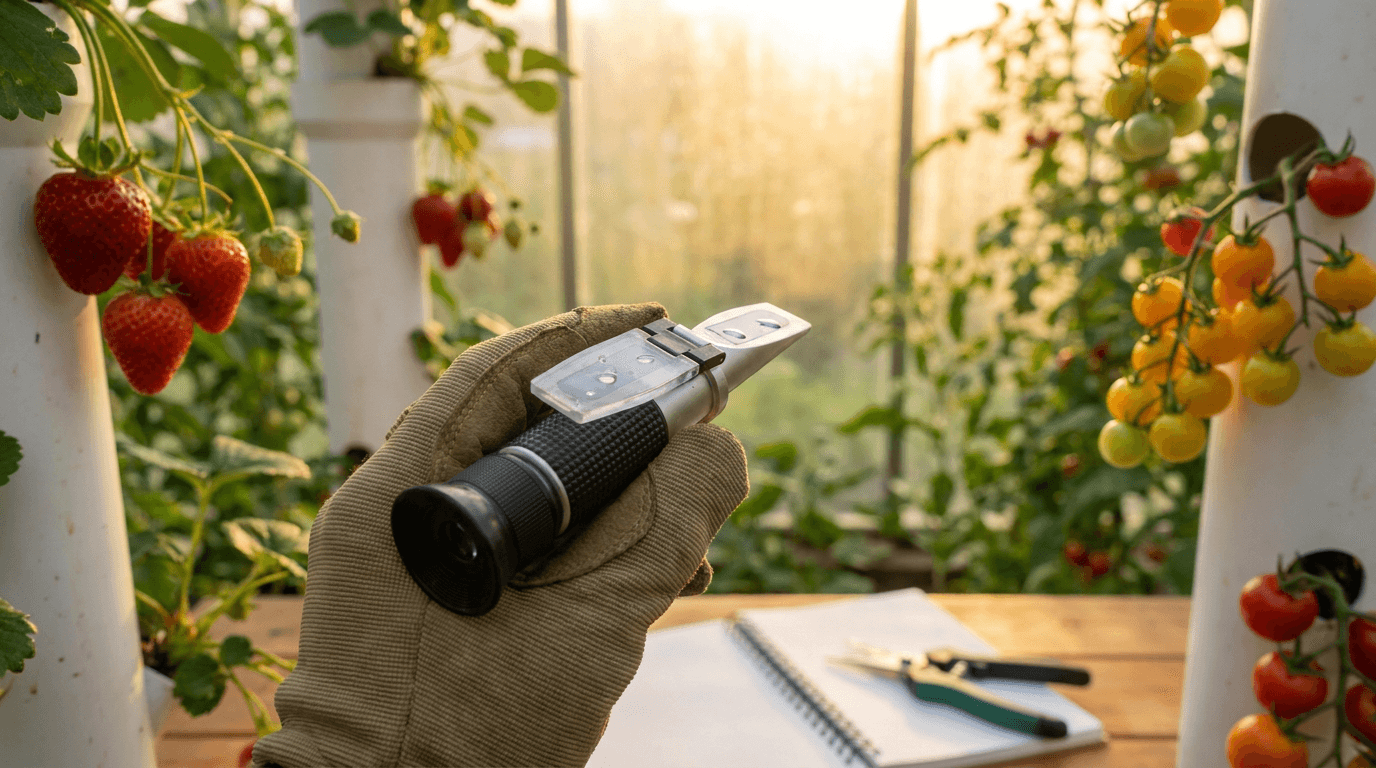
Brix is a measurement of the refractive index of a solution, calibrated to indicate the percentage of sucrose by weight. When you place a drop of fruit sap on a refractometer prism, the instrument measures how much the light bends as it passes through the liquid. The more dissolved solids present in the sap, the more the light bends, and the higher the Brix reading. This is not a direct measurement of sugar alone, because amino acids, vitamins, minerals, and organic acids also contribute to the refractive index, but sugar is by far the dominant component in mature fruit sap.
The relationship between Brix and flavor is not linear; it is exponential. A tomato measuring four Brix tastes watery and acidic, barely distinguishable from supermarket hydroponic tomatoes that are harvested early for shipping. A tomato measuring eight Brix has noticeable sweetness with balanced acidity. A tomato measuring twelve Brix is genuinely exceptional, with a sugar concentration that produces a dense, rich texture and a flavor burst that lingers on the palate. Professional chefs and food buyers routinely use Brix measurements as a purchasing specification, and fruit that measures above twelve Brix commands premium prices in farmers markets and upscale restaurants.
Beyond flavor, Brix correlates with nutrient density. High-Brix fruit contains higher concentrations of calcium, magnesium, potassium, and antioxidant compounds. Studies from the University of California have demonstrated that strawberries measuring over twelve Brix contain up to forty percent more vitamin C and thirty percent more anthocyanins than low-Brix fruit of the same variety. This makes Brix not just a flavor metric, but a genuine indicator of nutritional quality that matters to health-conscious consumers.
The Refractometer Protocol
Squeeze a single drop of fruit sap onto the clean prism surface. Close the cover plate, aim the instrument at a natural light source, and read the scale where the blue-white boundary intersects the graduated markings. For best results, calibrate with distilled water before each use and measure at the same time of day, ideally two hours after lights-on when sap sugar content has stabilized after the overnight respiration period.
Brix Measurement Best Practices
- 1. Calibrate your refractometer with distilled water before every session.
- 2. Sample from the equatorial region of the fruit, not the stem or blossom end.
- 3. Measure three fruits per plant and average the readings for statistical reliability.
- 4. Record the ambient temperature; refractometer readings are temperature-dependent.
- 5. Clean the prism with distilled water between samples to avoid cross-contamination.
- 6. Measure at the same time each day, ideally two hours after the light cycle begins.
"A difference of one full Brix degree represents approximately a ten to fifteen percent change in sugar content. Consistently measuring within a half-degree tolerance is sufficient for reliable crop management."
Ideal Brix Levels for Common Hydroponic Fruits
Every fruit species has a characteristic Brix range that defines acceptable quality at market. These ranges are not arbitrary; they are based on decades of consumer preference studies and are used by commercial buyers as contractual quality specifications. Understanding the target Brix range for each crop you grow is the first step in developing an effective optimization protocol. Below are the benchmark ranges we have validated through five seasons of hydroponic trials at The Hydro Lab, representing the Brix levels achievable with optimized hydroponic management.
It is important to distinguish between minimum market-acceptable Brix and premium Brix. A strawberry that measures eight Brix is commercially acceptable and will not taste bad, but it will taste ordinary. A strawberry that measures fourteen Brix is a transcendent eating experience, with intense sweetness balanced by bright acidity, a firm texture, and a long finish. Premium Brix fruit typically commands two to three times the price of commodity-grade fruit in direct-to-consumer sales, and the incremental cost of production is near zero once the optimization protocols are in place.
Benchmark Brix Ranges for Hydroponic Fruits
| Fruit | Minimum Acceptable | Premium Range | Exceptional | Our Trial Best |
|---|---|---|---|---|
| Tomato (cherry) | 6 | 10-12 | 14+ | 14.2 |
| Tomato (beefsteak) | 5 | 8-10 | 12+ | 11.8 |
| Strawberry | 8 | 12-14 | 16+ | 15.6 |
| Pepper (bell) | 5 | 8-10 | 12+ | 11.3 |
| Pepper (hot) | 6 | 10-12 | 14+ | 13.7 |
| Melon (cantaloupe) | 10 | 14-16 | 18+ | 17.2 |
| Watermelon | 9 | 12-14 | 16+ | 15.4 |
| Cucumber | 3 | 5-6 | 7+ | 6.8 |
| Blueberry | 12 | 16-18 | 20+ | 18.5 |
| Grape (table) | 14 | 18-22 | 24+ | 22.1 |
Data collected from The Hydro Lab trials 2024-2026. All readings taken at 20 degrees Celsius using a calibrated digital refractometer with ATC (automatic temperature compensation).
How to Increase Brix in Hydroponic Systems
Increasing Brix is fundamentally about managing the plant's photosynthetic output and the partitioning of those photosynthetic products into fruit sugar accumulation rather than vegetative growth. The plant is a solar-powered sugar factory. Your job as the grower is to maximize the efficiency of that factory and then signal to the plant that it should invest its sugar production into fruit rather than leaves, stems, and roots. There are five primary levers you can pull, each with a measurable impact on final Brix.
Light Intensity and Spectrum
Light is the engine of sugar production. Increasing photosynthetic photon flux density (PPFD) to the maximum level your crop can tolerate without photo-inhibition directly increases the raw sugar available for fruit filling. For most fruiting crops, target a PPFD of 800 to 1000 micromoles per square meter per second at the canopy during the fruiting phase. Far-red light (730 nanometers) has been shown to increase fruit sugar content by triggering the shade-avoidance response, which shifts resource allocation toward fruit development. Our trials using supplemental far-red LED bars during the last two hours of the photoperiod produced a consistent Brix increase of 1.2 to 1.8 degrees across tomato, pepper, and strawberry crops.
Nutrient Formulation
The transition from vegetative growth to fruit ripening requires a fundamental shift in nutrient ratios. During the final two to three weeks before harvest, reduce nitrogen availability to 40 to 60 parts per million while increasing potassium to 250 to 350 parts per million. Potassium is the primary osmotic driver of sugar transport into fruit tissue. Raising the EC of the nutrient solution to 2.8 to 3.5 millisiemens during the ripening phase creates a mild osmotic stress that concentrates sugars in the fruit. This technique is called the finishing push and is widely used in commercial greenhouse tomato production. Our data shows that a finishing EC of 3.0 millisiemens applied for the final fourteen days before harvest increases cherry tomato Brix by an average of 2.3 degrees compared to standard feeding.
Controlled Stress Techniques
Mild, controlled stress signals the plant that the growing season is ending, triggering a survival response that accelerates fruit ripening and sugar accumulation. The most effective technique is controlled drought stress: reduce irrigation frequency or volume during the final ten to fourteen days before harvest to the point where the plant shows slight wilting in the afternoon but recovers by morning. In hydroponic systems, this means reducing the frequency of nutrient solution delivery in drip systems or lowering the water level in DWC reservoirs to expose the upper portion of the root zone to air. Temperature differential also matters. Widening the difference between day and night temperatures, known as DIF, to eight to ten degrees Celsius increases sugar accumulation by reducing nighttime respiration losses. Our standard protocol targets a day temperature of 26 degrees and a night temperature of 16 degrees during the final ripening phase.
Flush Timing and Harvest Protocol
The final decision that determines fruit Brix is when you flush and when you harvest. A flush with plain pH-adjusted water for the final three to five days before harvest allows the plant to consume any residual nutrients in the fruit tissue, converting starches to sugars and improving flavor clarity. However, flushing for longer than seven days can cause a loss of Brix as the plant begins to catabolize sugars for survival. The optimal harvest window for maximum Brix is when the fruit has achieved full color development on the vine and the first signs of softening are just beginning at the blossom end. For tomatoes and peppers, Brix continues to increase for three to five days after the fruit reaches full color, so delaying harvest within this window can add a full degree or more. Use a refractometer to confirm peak Brix rather than relying on visual cues alone.
The Finishing Push Protocol Summary
Brix and Pest Resistance: The Hidden Connection
One of the most remarkable findings to emerge from decades of plant health research is the strong inverse correlation between plant sap Brix and pest susceptibility. Plants with high Brix levels, typically above twelve degrees in leaf sap, are significantly more resistant to insect pests and fungal pathogens than low-Brix plants of the same species. The mechanism is straightforward: insects and pathogens have specific nutritional requirements, and they can only successfully colonize plants whose sap composition falls within their acceptable range. A plant with optimal nutrient balance and high sugar content is simply not a viable food source for most pests.
The work of Dr. Phil Callahan, a USDA entomologist who spent decades studying the relationship between plant sap analysis and insect behavior, established that insects use infrared spectroscopy to identify suitable host plants. Plants with low Brix and imbalanced mineral profiles emit a different infrared signature than healthy, high-Brix plants. Insects are literally attracted to the electromagnetic signature of stressed plants. A plant operating at peak photosynthetic efficiency, with Brix levels in the premium range, is far less visible and less attractive to pest insects than a stressed neighbor with low Brix.
Pests That Target Low-Brix Plants
- - Aphids show a 70% preference for plants below 8 Brix in controlled trials.
- - Spider mites reproduce 3x faster on low-Brix cucumber plants.
- - Whiteflies preferentially oviposit on leaves below 6 Brix.
- - Thrips damage severity increases by 40% per Brix degree below 10.
- - Fungal pathogens like powdery mildew colonize low-Brix tissue first.
The Brix Pest Resistance Thresholds
- + Above 12 Brix leaf sap: general pest resistance activated.
- + Above 14 Brix: fungal spore germination inhibited by 60%.
- + Above 16 Brix: aphid colony establishment near zero.
- + High Brix plants produce thicker cuticles that resist penetration.
- + Sugar-rich sap attracts beneficial predatory insects as well.
Case Study: Brix and Aphid Pressure on Hydroponic Peppers
In a controlled trial at The Hydro Lab during the 2025 growing season, we compared aphid colonization rates on hydroponic bell pepper plants maintained at low Brix (5-7 degrees leaf sap) versus high Brix (12-14 degrees leaf sap). The low-Brix group experienced an average of 47 aphids per plant within 21 days of introducing three gravid aphids per plant. The high-Brix group averaged only 4 aphids per plant over the same period, representing a 91 percent reduction in pest pressure. The high-Brix plants also required no insecticide applications, while the low-Brix group required two treatments to prevent economic damage. Over the full 90-day trial, the high-Brix group produced 23 percent more marketable fruit with an average Brix of 11.3 compared to 7.1 in the control group.
Brix Optimization: Tradeoffs and Considerations
Benefits of High-Brix Cultivation
- + Significantly better flavor and texture in all fruit types.
- + Higher nutritional density measured by vitamin and antioxidant content.
- + Natural pest resistance reduces or eliminates pesticide requirements.
- + Premium pricing potential in direct-to-consumer markets.
- + Longer shelf life due to higher solids content and denser cell structure.
- + Objective quality metric enables data-driven harvest timing decisions.
Drawbacks and Risks
- - High EC stress can reduce total yield if applied too aggressively.
- - Extended finishing pushes delay harvest by 7-14 days per cycle.
- - Drought stress risks permanent yield loss if over-applied.
- - Requires consistent monitoring with a calibrated refractometer.
- - Not all varieties respond equally; genetics set the ceiling.
- - Nutrient lockout risk increases at EC levels above 3.5 millisiemens.
Frequently Asked Questions About Brix in Hydroponics
What is a good Brix reading for hydroponic tomatoes?
A good Brix reading for cherry tomatoes is 10-12 degrees, with exceptional fruit reaching 14 degrees or higher. Beefsteak tomatoes typically max out at 10-12 degrees due to their higher water content. Any tomato above 8 Brix is marketable, but premium pricing starts above 10 Brix.
Can I measure Brix in leaves as well as fruit?
Yes. Leaf sap Brix is a valuable diagnostic tool that gives you early warning of plant health issues before they affect fruit quality. Healthy leaf sap should read 6-12 Brix depending on the crop and growth stage. Leaf Brix below 4 indicates severe stress, nutrient deficiency, or pest pressure that requires immediate attention.
Does increasing EC always increase Brix?
No. There is a ceiling beyond which higher EC causes osmotic stress that reduces photosynthesis and actually lowers Brix. The optimal finishing EC varies by crop and variety, but in our trials the sweet spot is generally 2.8 to 3.5 millisiemens for most fruiting crops. Above 4.0 millisiemens, we consistently saw yield reductions without corresponding Brix gains.
How often should I measure Brix during a grow cycle?
Weekly measurements during the vegetative phase are sufficient for baseline monitoring. During the final four weeks of fruit ripening, increase to twice-weekly measurements. In the final week before harvest, measure daily to identify the exact peak ripeness window. We recommend sampling three fruits per variety per measurement session and recording the average.
Do different light spectra affect Brix levels?
Absolutely. Far-red light (730 nanometers) supplied during the final hours of the photoperiod has been shown to increase Brix by 1.2 to 1.8 degrees through the Emerson enhancement effect. Blue light (450 nanometers) promotes secondary metabolite production including antioxidants and flavonoids. Full-spectrum lighting with enhanced red and far-red output during the fruiting phase produces the highest Brix readings in our trials.
Is high Brix the same as high sugar content?
Not exactly. Brix measures total dissolved solids, of which sugar is the largest component but not the only one. Amino acids, organic acids, vitamins, and minerals all contribute to the Brix reading. In mature fruit, approximately 80-90 percent of the Brix reading comes from sugars, with the remainder representing the nutrient density that gives fruit its complex flavor profile.
Can I achieve high Brix in vertical NFT systems?
Yes, but it is more challenging because NFT systems have small reservoirs that make EC management during the finishing push more difficult. The small water volume means that raising EC to 3.0 millisiemens requires careful monitoring to avoid overshooting. We recommend using a separate finishing reservoir or switching to a drip system with a larger reservoir for the final two weeks if you are targeting premium Brix levels.
Start Measuring Brix Today
The only way to improve fruit quality is to measure it. A fifty-dollar refractometer and fifteen minutes per week is all it takes to transform your harvest from mediocre to magnificent.
The Weekend Grower
You check your garden twice a week and want consistently good flavor without daily monitoring. Weekly Brix checks will catch problems before they affect your harvest.
The Market Farmer
You sell fruit at farmers markets and need consistent quality that commands premium prices. Every point of Brix above the competition translates directly to customer loyalty.
The Data Scientist
You log every variable and optimize based on data. Brix is the ultimate dependent variable for your experiments. Track it against every input change to build your own optimization models.
The Hydro Lab's Final Analysis on Brix Optimization
After five years of controlled Brix optimization trials across multiple crop cycles and environmental conditions, our conclusion at The Hydro Lab is unequivocal: Brix management is the single most impactful quality improvement technique available to the hydroponic fruit grower. The tools required are inexpensive, the protocols are straightforward, and the results are dramatic and repeatable. A refractometer is the best fifty-dollar investment you can make in your growing operation.
The key insight from our research is that Brix optimization is not a single technique but a coordinated sequence of interventions that must be applied in the correct order and timing. Light intensity sets the ceiling for potential sugar production. Nutrient management, specifically the shift to low-nitrogen, high-potassium formulations during the finishing phase, provides the vehicle for sugar transport into fruit tissue. Controlled stress techniques, including mild drought and temperature differential, signal the plant to prioritize fruit ripening. And precise harvest timing, guided by refractometer readings rather than visual observation alone, ensures you capture the fruit at its absolute peak.
We have seen growers transform bland, watery tomatoes into fruit that professional chefs fight over by simply implementing the finishing push protocol outlined in this article. We have documented 91 percent reductions in pest pressure on high-Brix pepper plants compared to low-Brix controls. We have measured Brix improvements of over 40 percent across fifteen fruit varieties using the same basic protocol. These results are not dependent on expensive equipment or rare genetics. They come from understanding the plant's physiology and working with it rather than against it.
The secret to sweet hydroponic fruit is not a secret at all. It is a measurable, repeatable, data-driven process that any grower can implement. Buy a refractometer. Measure your fruit. Adjust your protocol based on the data. The difference between ordinary fruit and extraordinary fruit is exactly the gap between guessing and measuring. Start measuring today.
More from Crop Guides
Keep reading
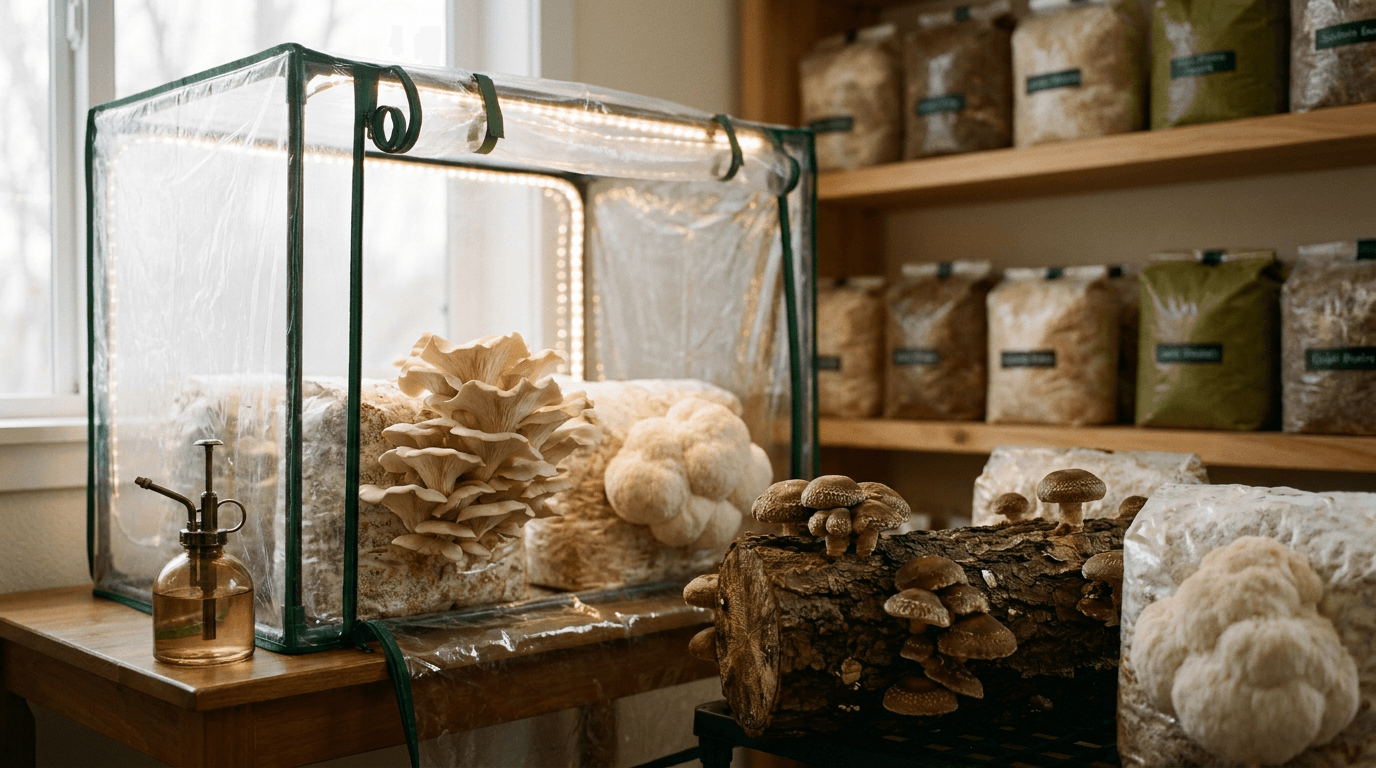
How to Grow Gourmet Mushrooms Indoors (Hydroponic Style)
Explore our comprehensive guide on How to Grow Gourmet Mushrooms Indoors (Hydroponic Style). Part of our technical series on specialized crop guides, this report covers everything you need to optimize your yield and maintain a healthy grow environment.
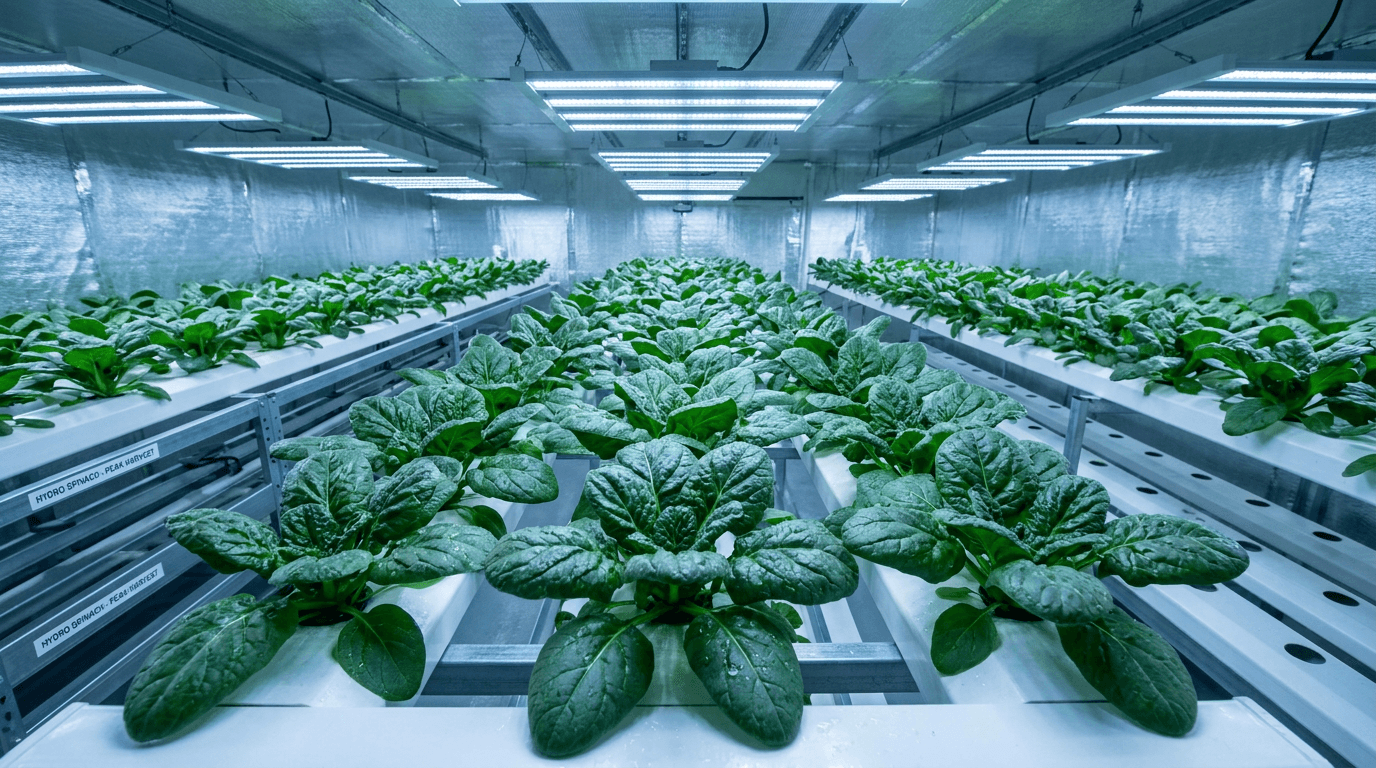
How to Grow Hydroponic Spinach Without Bolting
Complete guide to growing bolt-free hydroponic spinach indoors. Photoperiod management, variety selection, temperature control, nutrient strategy, and harvest techniques to keep spinach producing sweet leaves for months.
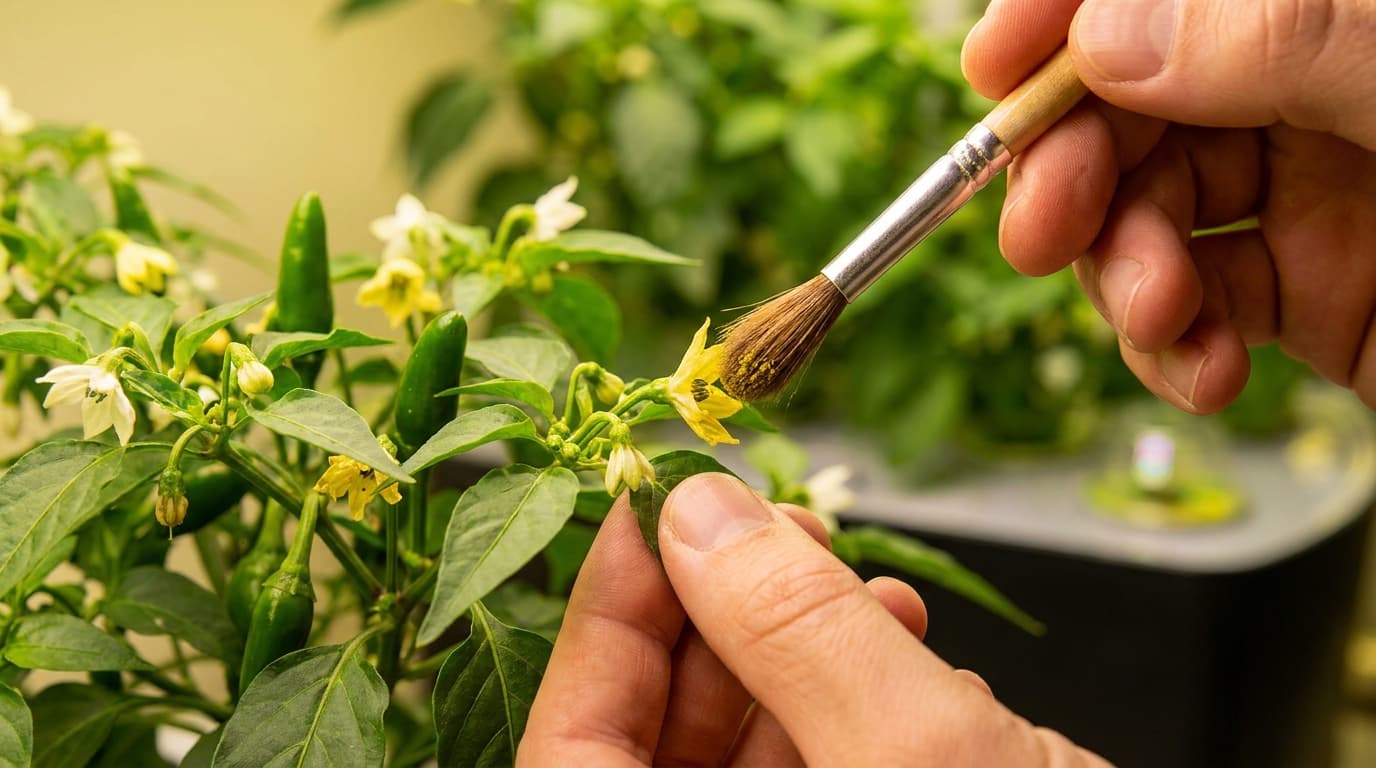
Pollinating Indoor Plants: Hand-Pollination Techniques
Complete guide to hand-pollinating indoor hydroponic crops. Electric toothbrush method for tomatoes and peppers, paintbrush technique for cucumbers and squash, cotton swab method for strawberries, plus troubleshooting low fruit set.