
How to Grow Hydroponic Spinach Without Bolting
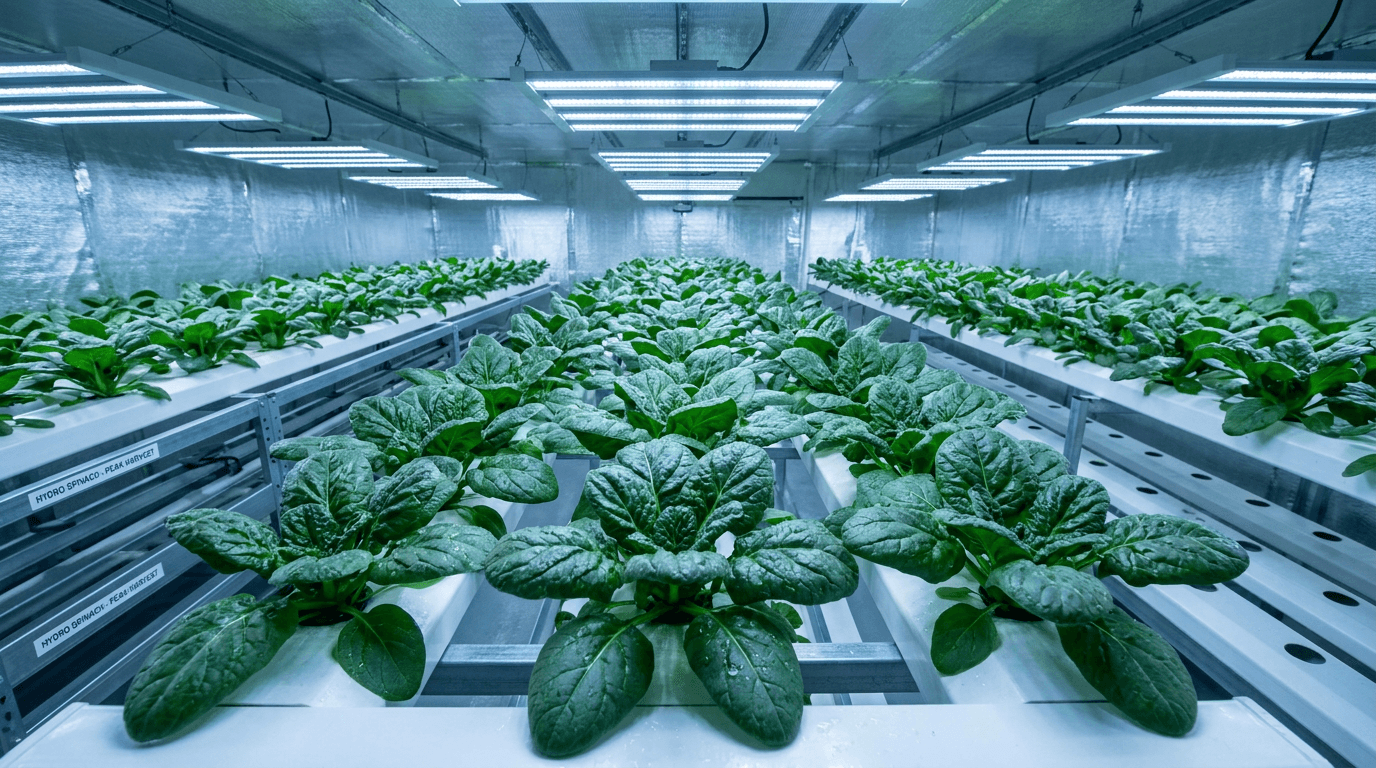
Spinach is one of the most frustrating crops for indoor hydroponic growers. It germinates reliably, grows vigorously through the vegetative stage, and then, without warning, sends up a flower stalk and turns bitter overnight. This process is called bolting, and it is the single most common reason hydroponic spinach fails to produce a usable harvest. The challenge is that spinach is a long-day plant that evolved to flower in response to increasing day length and accumulated heat units. In an indoor environment where lights run sixteen to eighteen hours per day and temperatures are stable, the plant receives the exact signals it needs to bolt before it has produced enough leaf mass to harvest.
Bolting is not a disease or a deficiency. It is a programmed reproductive response that is triggered by photoperiod, temperature, and root-zone stress. Once the bolting cascade begins, it cannot be reversed. The leaves lose palatability as the plant mobilizes sugars and nutrients into flower and seed production. The window for intervention closes before visible symptoms appear, which means successful spinach cultivation depends entirely on prevention rather than treatment.
This guide covers the physiology of bolting, the specific environmental triggers that initiate it, and the proven strategies that allow indoor growers to produce tender, sweet spinach leaves for months without triggering the reproductive phase. We include detailed protocols for photoperiod management, temperature manipulation, variety selection, nutrient formulation, and harvest timing based on published research and our own grow trials at The Hydro Lab.
The Lab's Verdict
The single most effective anti-bolting strategy for indoor hydroponic spinach is photoperiod restriction. Run your lights for ten to twelve hours per day maximum, never exceeding fourteen hours. Combine this with a slow-bolting variety such as Corvair, Space, or Butterflay, keep air temperatures below 72 degrees Fahrenheit, and maintain root-zone temperatures between 62 and 68 degrees Fahrenheit. Under these conditions, growers can harvest baby leaf spinach continuously for eight to twelve weeks before any bolting tendency appears.
The Physiology of Bolting
Bolting is the transition from vegetative growth to reproductive growth in leafy plants. In spinach, this transition is controlled primarily by two environmental signals: day length (photoperiod) and accumulated temperature exposure (vernalization). Spinach is classified as a quantitative long-day plant, meaning it flowers faster under longer photoperiods but can eventually flower under shorter days if enough thermal time has accumulated.
The photoreceptor protein phytochrome detects the ratio of red to far-red light and measures the duration of uninterrupted darkness. When the dark period falls below a critical threshold, phytochrome signals the shoot apical meristem to switch from producing leaf primordia to producing flower primordia. In most spinach varieties, the critical photoperiod is approximately twelve to fourteen hours. Below this threshold, bolting is suppressed. Above it, the plant receives a strong bolting signal with each light cycle.
Temperature acts as a secondary trigger. Spinach is a cool-season crop that evolved in temperate climates with cold winters and moderate summers. Exposure to temperatures below 50 degrees Fahrenheit for a period of one to three weeks satisfies the vernalization requirement, after which the plant becomes highly sensitive to photoperiod. However, high temperatures above 75 degrees Fahrenheit can also trigger bolting through heat stress pathways that bypass photoperiod entirely. This dual triggering mechanism means that even under short photoperiods, excessive heat can push spinach into reproduction.
Root-zone stress is the third and most overlooked bolting trigger. When roots encounter physical obstruction, waterlogging, nutrient imbalance, or temperature shock, the plant produces stress hormones including abscisic acid and ethylene. These hormones can accelerate the transition to flowering as the plant attempts to reproduce before conditions deteriorate further. A restricted root volume in small hydroponic net pots is a common hidden cause of premature bolting in indoor systems.
Once the bolting signal is received, the plant begins elongating the stem internodes and redirecting resources from leaf production to flower stalk elongation. Leaf quality degrades rapidly as sugars are mobilized upward and oxalate concentrations increase. The leaves become tougher, more bitter, and less palatable. Visual indicators include the appearance of a thickening central stem, smaller and more upright new leaves, and eventually the emergence of flower buds at the apex. By the time these symptoms are visible, the harvest is already compromised.
Variety Selection: Your First Line of Defense
Not all spinach varieties bolt at the same rate. Plant breeders have developed slow-bolting and bolt-resistant cultivars specifically for commercial greenhouse production. These varieties carry genetic traits that reduce photoperiod sensitivity and raise the temperature threshold for bolting initiation. Choosing the right variety is the single most cost-effective bolting prevention strategy because it requires no additional equipment, energy, or labor.
Corvair is widely regarded as the best slow-bolting spinach variety for hydroponic production. It produces thick, dark green, savoyed leaves on an upright growth habit that keeps leaves clean and accessible for harvest. Corvair has demonstrated reliable bolt resistance under photoperiods up to fourteen hours and temperatures up to 78 degrees Fahrenheit in our trials. It is the variety we recommend for growers who want maximum margin for error.
Space is a smooth-leaf variety with even faster growth rates than Corvair and comparable bolt resistance. Its leaves are lighter green and more tender, making it ideal for baby-leaf production. Space reaches harvestable size at twenty-one to twenty-eight days from seeding under optimal conditions. The trade-off is slightly lower total yield per plant compared to savoyed varieties.
Butterflay is a hybrid semi-savoy variety bred specifically for controlled-environment agriculture. It has exceptional bolt resistance and produces high yields of uniform, rounded leaves. Butterflay performs well in both NFT and DWC systems and is the best choice for growers who plan to harvest whole heads rather than individual leaves.
Bloomsdale is a classic heirloom savoyed spinach with excellent flavor but poor bolt resistance. It is not recommended for hydroponic production beyond early spring conditions. Growers who prefer Bloomsdale for its texture and taste should limit photoperiod to ten hours and harvest by day thirty to avoid bolting losses.
Tyee is a semi-savoy hybrid with good bolt resistance and strong disease tolerance. It is slower to reach harvest size than Corvair or Space but produces larger leaves and higher total yields over an extended harvest window. Tyee is a strong choice for growers who prioritize total weight over speed.
Variety Comparison Table
| Variety | Leaf Type | Bolt Resistance | Days to Harvest | Best For |
|---|---|---|---|---|
| Corvair | Savoyed, thick | Excellent | 28-35 | General hydroponic production |
| Space | Smooth, tender | Excellent | 21-28 | Baby leaf production |
| Butterflay | Semi-savoy | Excellent | 30-40 | Whole-head harvest |
| Tyee | Semi-savoy | Good | 35-45 | High total yield |
| Bloomsdale | Savoyed | Poor | 25-35 | Flavor preference only |
Photoperiod Management: The Master Control
Photoperiod is the most powerful lever for controlling bolting in indoor spinach. Because spinach is a quantitative long-day plant, reducing the daily light period below the critical threshold effectively removes the primary bolting signal. Our trials have shown that photoperiods of ten to twelve hours produce the best balance of growth rate and bolting suppression. At ten hours, growth slows noticeably, but bolting is virtually eliminated even in moderately sensitive varieties. At twelve hours, growth rate is strong and bolting remains suppressed in slow-bolt varieties.
The mechanism is straightforward. Phytochrome measures the length of the uninterrupted dark period. When the dark period is longer than approximately ten hours, the concentration of the active form of phytochrome decreases to a level that does not trigger the flowering pathway. When the dark period is shorter than ten hours, phytochrome remains active and signals the meristem to switch to reproductive growth. This is why running lights for sixteen to eighteen hours, which is standard for most hydroponic crops, is the most common cause of premature bolting in spinach.
Light intensity also plays a role but is secondary to photoperiod. Spinach is a low-light crop that reaches photosynthetic saturation at approximately 300 to 400 micromoles per square meter per second. Running higher light intensities above 500 micromoles does not increase growth rate but does increase heat load on the leaves, raising leaf temperature and potentially triggering heat-induced bolting. We recommend targeting 250 to 350 micromoles at canopy level for optimal growth without bolting risk.
Light spectrum has been investigated as a bolting control tool, with some studies suggesting that far-red enrichment accelerates bolting and blue enrichment delays it. In practice, spectrum manipulation offers only a marginal effect compared to photoperiod control. Standard full-spectrum white LEDs set to a twelve-hour photoperiod produce reliable results without the complexity of spectrum tuning.
Temperature Management: Air and Root Zone
Temperature affects bolting through two distinct pathways: the vernalization pathway, which requires prolonged cold exposure, and the heat-stress pathway, which accelerates flowering under high temperatures. For indoor growers, the heat-stress pathway is the more relevant concern because indoor environments rarely drop below 60 degrees Fahrenheit for extended periods.
Air temperature should be maintained between 60 and 72 degrees Fahrenheit for spinach. Above 75 degrees, heat stress triggers ethylene production and accelerates bolting regardless of photoperiod. Below 60 degrees, growth slows significantly without proportional bolting benefits. The sweet spot is 65 to 70 degrees Fahrenheit, which produces strong leaf growth with minimal bolting pressure.
Root-zone temperature is arguably as important as air temperature for bolting control. The roots of cool-season crops like spinach function optimally between 62 and 68 degrees Fahrenheit. Above 72 degrees, root respiration increases, oxygen demand rises, and the roots begin to senesce prematurely. Stressed roots send hormonal signals that can trigger bolting even when air temperature and photoperiod are within acceptable ranges.
In DWC and NFT systems, nutrient solution temperature is the root-zone temperature. A reservoir heater or chiller may be necessary to maintain the optimal range, particularly in warm climates or when grow lights add heat to the environment. Floating insulation panels on DWC reservoirs and opaque tubing for NFT systems help stabilize root-zone temperature against ambient fluctuations.
A common mistake is to place the spinach grow area directly under LED fixtures running at full intensity. The radiant heat from the fixtures can raise leaf temperature by three to five degrees Fahrenheit above air temperature, pushing the leaf into the heat-stress bolting zone. We recommend installing a temperature sensor at canopy level and adjusting fixture height to maintain leaf temperature below 75 degrees Fahrenheit.
Nutrient Strategy for Bolt Prevention
Nutrient formulation influences bolting primarily through nitrogen availability and calcium transport. High nitrogen levels, particularly in the ammonium form, promote lush vegetative growth but also increase the plant's sensitivity to bolting triggers. The mechanism is that excess ammonium acidifies the root zone and interferes with calcium uptake, and calcium deficiency is a known accelerator of the flowering transition.
We recommend targeting an electrical conductivity of 1.2 to 1.6 millisiemens per centimeter for spinach, with a nitrogen level of approximately 120 to 150 parts per million. At least eighty percent of the nitrogen should be in the nitrate form rather than the ammonium form. Calcium should be maintained at 100 to 120 parts per million to support cell wall integrity and signal transduction in the meristem.
Potassium levels between 150 and 200 parts per million support osmotic regulation and stress tolerance. Higher potassium levels have been associated with improved bolt resistance in some studies, though the effect is small compared to photoperiod and temperature control. Phosphorus should be kept moderate at 40 to 50 parts per million, as high phosphorus can promote flowering in some plant species.
A critical detail that many growers miss is the silicon supplementation. Silicon is not an essential nutrient for spinach but it strengthens cell walls and reduces abiotic stress responses, including bolting triggered by heat or root stress. Supplementing with potassium silicate at 50 to 100 parts per million silicon has been shown to delay bolting by seven to fourteen days in controlled trials.
Harvest Strategy: Cut-and-Come-Again vs Whole Head
The harvesting method you choose has a significant impact on how long you can keep spinach in production before bolting. There are two primary approaches: cut-and-come-again harvesting, where outer leaves are removed individually as they reach size, and whole-head harvesting, where the entire plant is cut at the base at once.
Cut-and-come-again harvesting is the preferred method for extending production because it maintains root system integrity and reduces stress on the plant. When outer leaves are removed, the plant redirects energy into producing new leaves from the center, delaying the transition to reproductive growth. Under optimal conditions, a single spinach plant can be harvested for eight to twelve weeks using this method.
The key to successful cut-and-come-again harvesting is to never remove more than one-third of the leaves at any single harvest. Removing too many leaves at once is a significant stress event that can trigger bolting through the stress hormone pathway. Use sharp scissors or a clean knife, cut the leaf stem one to two centimeters above the crown, and leave the smallest inner leaves to continue growing.
Whole-head harvesting is appropriate when the plant shows early signs of bolting, such as stem thickening or upright new leaf growth. In this case, the entire plant should be harvested immediately before leaf quality deteriorates. Whole-head harvesting is also the standard approach for commercial growers selling full-size bunches, where individual leaf harvesting is too labor-intensive.
Bolting Prevention Quick Reference
- Photoperiod: 10-12 hours max. Never exceed 14 hours.
- Air temperature: 65-70°F. Below 75°F at all times.
- Root-zone temperature: 62-68°F. Above 72°F triggers bolting.
- Light intensity: 250-350 µmol/m2/s. No more than 400.
- Nutrient EC: 1.2-1.6 mS/cm. Nitrate-dominant N.
- Variety: Choose Corvair, Space, or Butterflay.
- Harvest: Cut-and-come-again, max 1/3 of leaves per session.
Frequently Asked Questions
Can I reverse bolting once it has started?
No. Once the shoot apical meristem has switched to reproductive development, the process cannot be reversed. You can delay progression by reducing temperature and photoperiod, but the plant will not return to vegetative growth. Harvest immediately if you see stem elongation or flower bud formation.
Does spinach need a dark period?
Yes. Unlike some crops that can be grown under 24-hour light, spinach requires an uninterrupted dark period of at least 10-12 hours to prevent phytochrome from triggering the flowering pathway. Complete darkness during the off-cycle is essential — even low-intensity light leaks can disrupt the dark period.
Why does my spinach bolt even with 12-hour photoperiod?
Check root-zone temperature first. If the nutrient solution is above 72°F, root stress can trigger bolting independently of photoperiod. Also verify that your variety is a slow-bolting type — standard grocery-store spinach varieties are not bred for bolt resistance. Finally, check for light leaks during the dark period.
What is the best hydroponic system for spinach?
NFT and DWC both work well. NFT is better for cut-and-come-again production because the shallow channels allow easy access to individual plants. DWC produces larger individual plants but requires more space per plant. Flood-and-drain is not recommended because the wet-dry cycles can stress spinach roots.
Can I grow spinach alongside other crops?
Spinach has specific low-light and short-photoperiod requirements that conflict with most fruiting crops like tomatoes and peppers. It pairs well with other cool-season leafy greens such as lettuce, kale, and Swiss chard. If you must share a system, place spinach in the shaded lower tiers or under a separate timer.
Is bolted spinach safe to eat?
Yes, it is safe but the flavor becomes bitter and the texture tough. The bitterness comes from increased oxalate levels and the mobilization of compounds into the reproductive structures. Lightly bolted spinach can be used in cooked dishes where the bitterness is masked, but it is not pleasant as a raw salad green.
How long can I keep a spinach plant producing?
Under optimal conditions with cut-and-come-again harvesting, a single spinach plant can produce for 8-12 weeks. After this period, the plant naturally senesces even without bolting. Starting new seeds every 3-4 weeks ensures a continuous supply without relying on individual plants for extended production.
Start Growing Bolt-Free Spinach Today
Three approaches depending on your setup and experience level.
The Beginner
Start with Space variety in a small NFT system. Set your timer to 12 hours on, 12 off. Keep lights at 300 µmol. Harvest baby leaves from day 21.
The Intermediate
Run Corvair in DWC with 11-hour photoperiod. Add a reservoir chiller to hold root zone at 65°F. Supplement with potassium silicate for extra bolt resistance.
The Advanced
Run multiple staggered plantings of different varieties. Use a programmable controller to adjust photoperiod based on growth stage. Log temperature, EC, and harvest data to optimize your protocol over successive cycles.
The Lab's Final Analysis
Bolting is not an inevitable outcome of growing spinach indoors. It is a predictable physiological response to specific environmental signals that can be managed with precision. The three variables that matter most, in order of importance, are photoperiod, temperature, and variety. Get these three right and you can harvest high-quality spinach continuously for months rather than weeks.
The most common mistake we see in indoor spinach cultivation is treating it like every other hydroponic crop. Growers run sixteen-hour photoperiods, apply high-nitrogen fertilizers formulated for tomatoes or cannabis, and wonder why their spinach bolts at day thirty. Spinach is a cool-season, short-day plant with specific requirements that are different from the majority of hydroponic crops. Accepting this difference and building your protocol around it is the key to success.
The second most common mistake is ignoring root-zone temperature. Air temperature is visible and measurable with standard sensors, but nutrient solution temperature is often overlooked. A reservoir that has crept up to 76 degrees Fahrenheit is silently triggering bolting through root stress pathways while the air temperature looks acceptable. A simple aquarium thermometer and an insulated reservoir solve this problem for under twenty dollars.
Start with a slow-bolting variety, set your timer to twelve hours, keep your nutrient solution below 68 degrees Fahrenheit, and harvest leaves individually rather than cutting entire plants. Measure the days to first bolting sign and adjust one variable at a time on your next cycle. Within three grow cycles, you will have a personalized protocol that produces bolt-free spinach for your specific environment.
More from Crop Guides
Keep reading
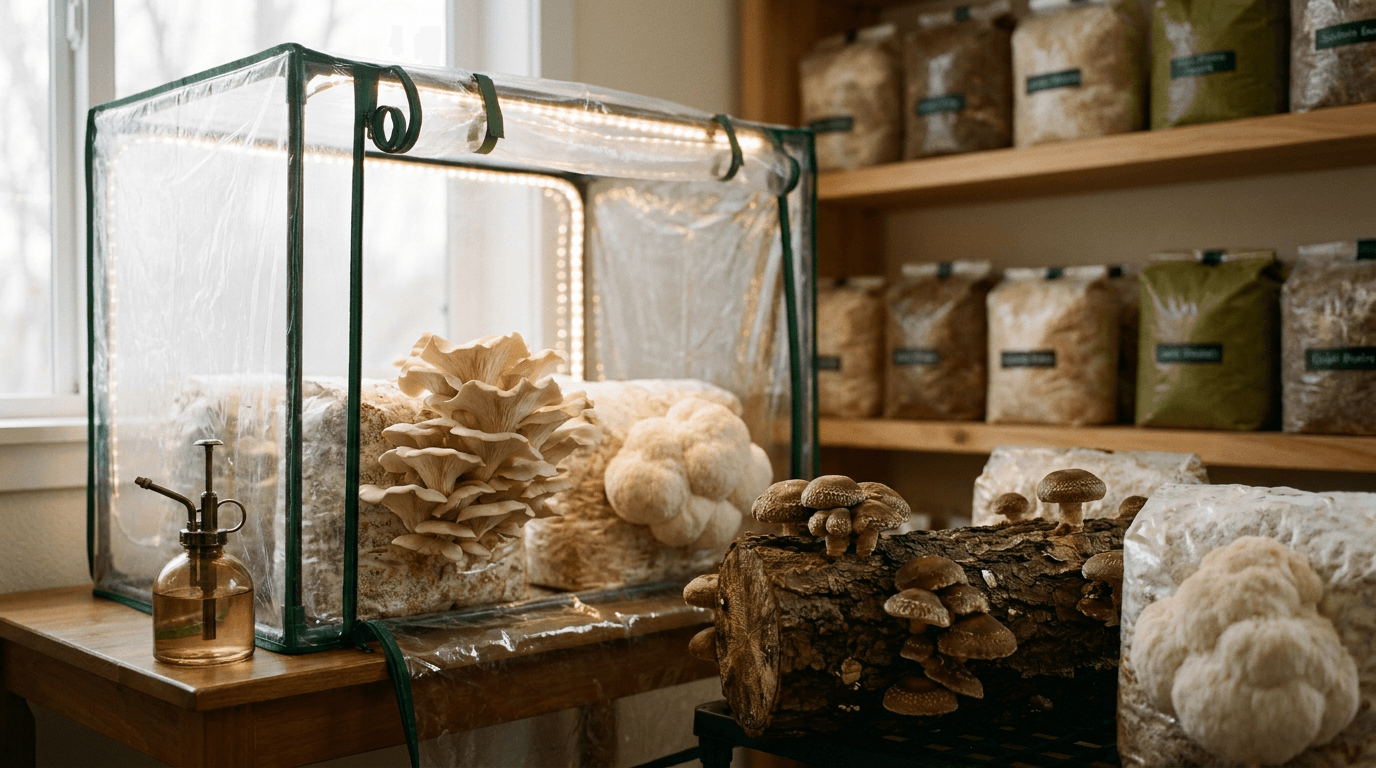
How to Grow Gourmet Mushrooms Indoors (Hydroponic Style)
Explore our comprehensive guide on How to Grow Gourmet Mushrooms Indoors (Hydroponic Style). Part of our technical series on specialized crop guides, this report covers everything you need to optimize your yield and maintain a healthy grow environment.
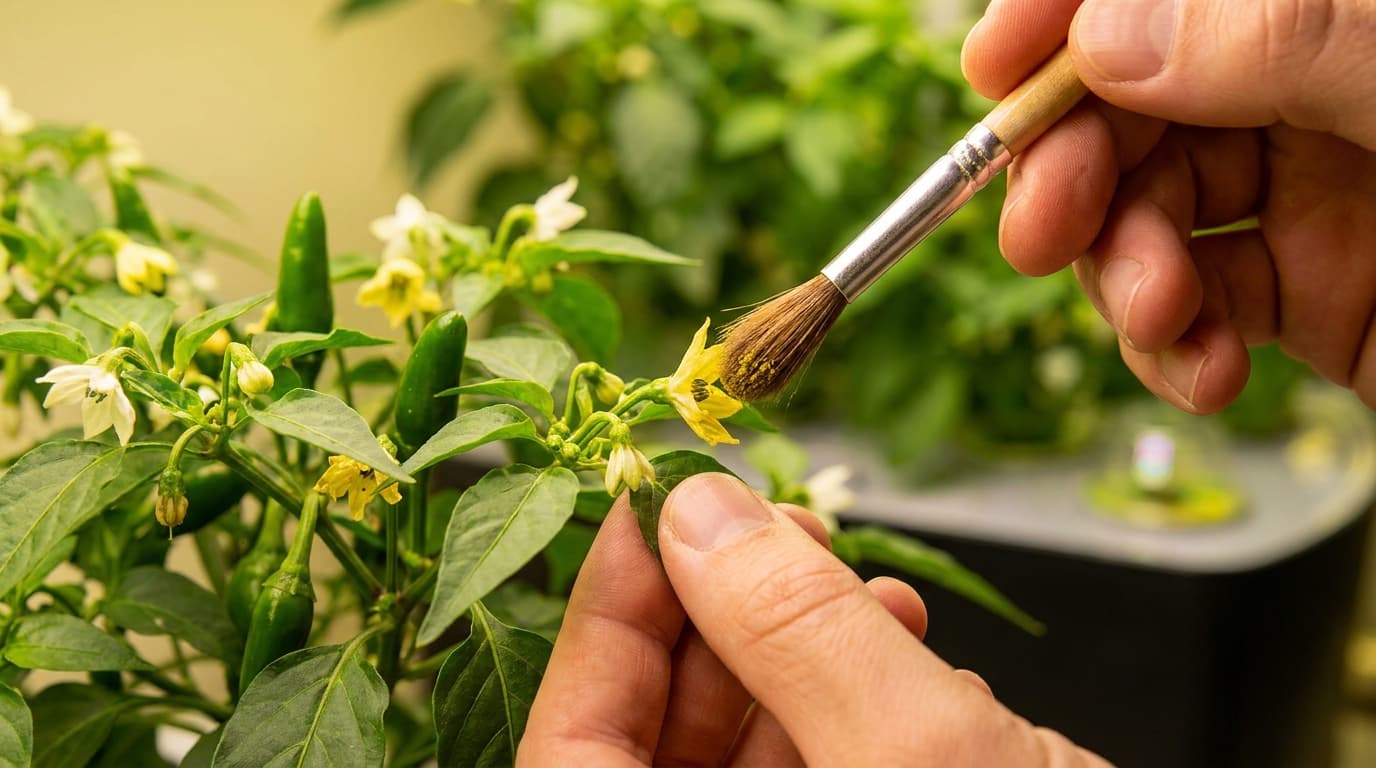
Pollinating Indoor Plants: Hand-Pollination Techniques
Complete guide to hand-pollinating indoor hydroponic crops. Electric toothbrush method for tomatoes and peppers, paintbrush technique for cucumbers and squash, cotton swab method for strawberries, plus troubleshooting low fruit set.
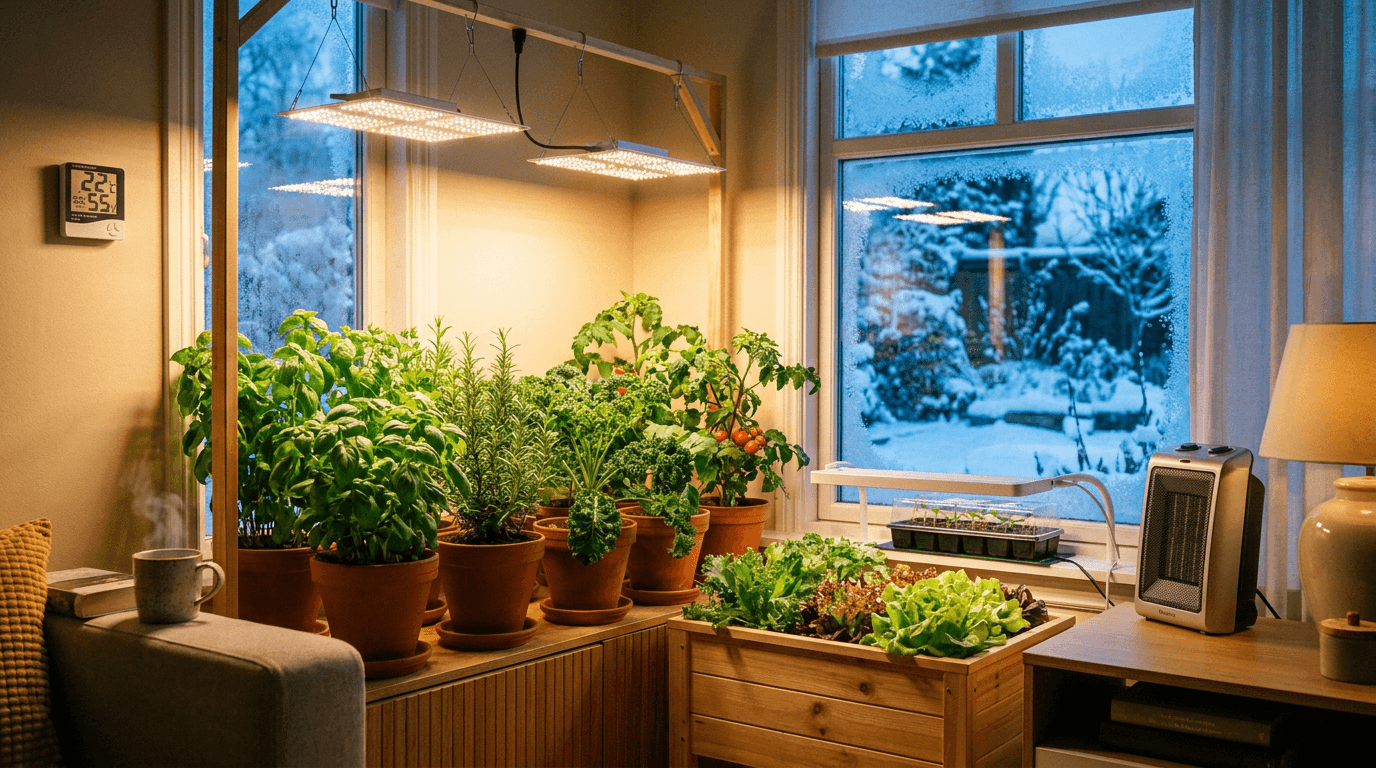
Winter Indoor Gardening: Keeping Your Harvest Alive
Explore our comprehensive guide on Winter Indoor Gardening: Keeping Your Harvest Alive. Part of our technical series on specialized crop guides, this report covers everything you need to optimize your yield and maintain a healthy grow environment.