
Hydroponic Strawberries Step-by-Step: From Crown to First Berry
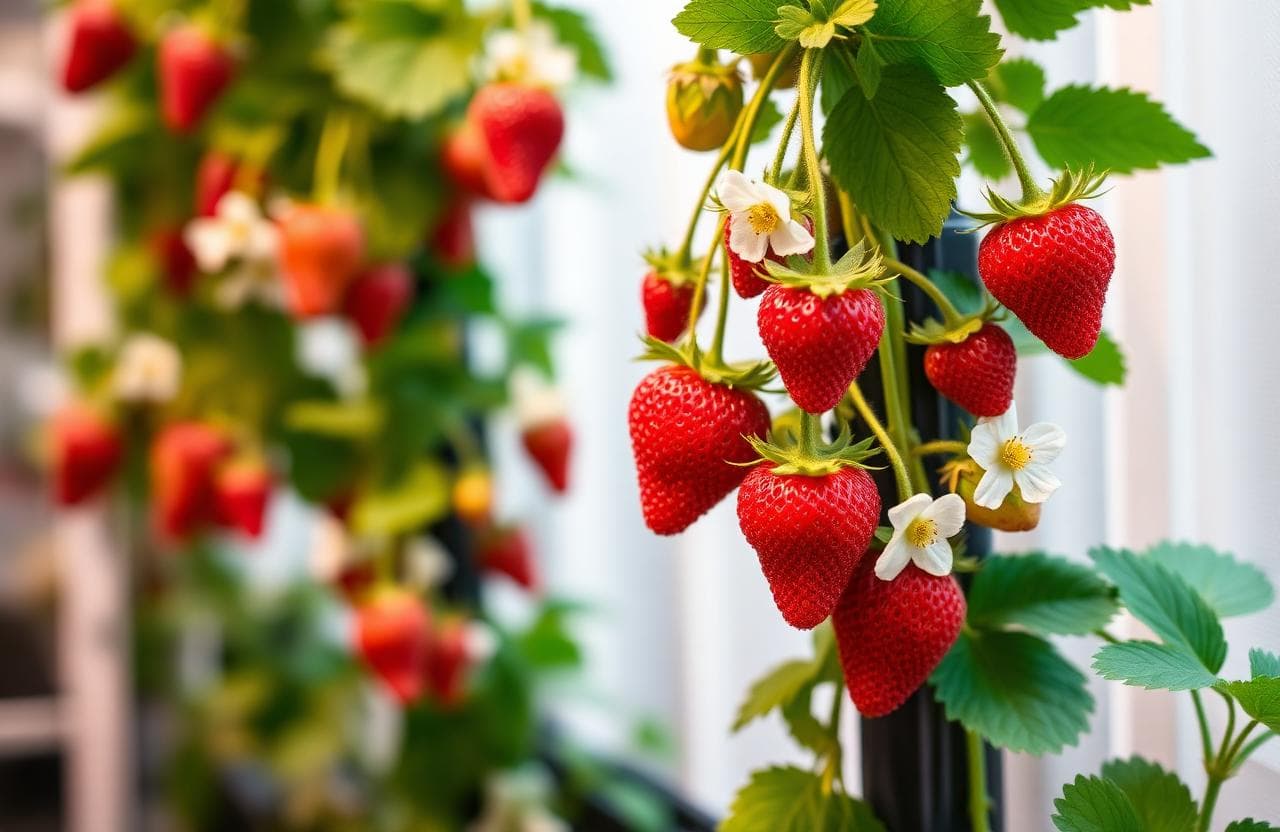
Growing strawberries hydroponically is one of the most rewarding projects an indoor gardener can undertake. There is nothing quite like walking into your grow room on a winter morning and picking a fully ripe, crimson strawberry that was nothing but a bare-root crown fourteen weeks earlier. Strawberries are not the easiest hydroponic crop, but they are arguably the most satisfying, and the quality gap between a store-bought berry and a homegrown hydroponic specimen is enormous.
In the wild, strawberries are perennials that fruit in response to day length and temperature. Indoors, we can manipulate both variables to produce fruit year-round. The key is choosing the right variety, providing adequate light intensity during the flowering phase, and mastering the art of indoor pollination. This guide documents our fourteen-week growing protocol at The Hydro Lab, refined over eight consecutive cycles in vertical NFT towers.
The method outlined here is specifically designed for everbearing day-neutral cultivars grown in nutrient film technique towers. We have tested this protocol with June-bearing varieties, with deep water culture, and with ebb-and-flow systems. While the principles translate, the timing and yields differ significantly. Stick to day-neutral strawberries in NFT for the most predictable and repeatable results.
The Lab's Verdict
Hydroponic strawberries are absolutely worth the effort, but only if you start with day-neutral everbearing varieties. June-bearing strawberries require a winter dormancy period that is difficult to simulate indoors and rarely produces worthwhile yields. Albion, Seascape, and Mara des Bois are our top three recommendations after extensive side-by-side testing. All three produce continuously under a sixteen-hour photoperiod and respond well to NFT cultivation.
Variety Selection: The Most Important Decision
Strawberry varieties fall into three categories: June-bearing, everbearing, and day-neutral. June-bearing varieties produce a single large crop over three to four weeks in late spring or early summer. They are triggered by increasing day length and require a cold dormancy period to initiate flowering. Inside a climate-controlled indoor garden, June bearers will sulk, produce few runners, and deliver disappointing yields.
Everbearing varieties produce two to three crops per year, typically in spring, summer, and autumn. They are more adaptable to indoor conditions but still carry some genetic programming for seasonal responses. Day-neutral varieties are the gold standard for indoor hydroponics. They flower and fruit continuously regardless of day length as long as temperatures remain within their comfort zone. A day-neutral strawberry plant in optimal conditions will produce a steady supply of berries for six to nine months before requiring replacement.
Albion
Large, firm berries with exceptional disease resistance. Our highest yielder at 450g per plant over 14 weeks. Requires higher calcium supplementation.
Seascape
Slightly smaller berries but more tolerant of temperature swings. Produces consistently at 380g per plant. Best choice for beginners.
Mara des Bois
Small, intensely flavored berries with a wild strawberry taste. Lower yield at 280g per plant but unmatched sweetness. Our personal favorite for eating fresh.
The NFT Tower Setup for Strawberries
Strawberries grow exceptionally well in vertical NFT towers because their compact root systems and trailing growth habit are perfectly suited to the format. We use four-tier towers with ten growing sites per tier, giving us forty plants per tower. Each tower connects to a thirty-liter reservoir with a submersible pump rated for 1000 liters per hour.
Tower Specifications
- Height: 180 cm (6 ft)
- Sites per tower: 40 (10 per tier)
- Flow rate: 2 L/min per tower
- Reservoir: 30 liters
- Lighting: 300W LED at 18-inch distance
Recommended Growing Media
- 1. Rockwool starter cubes (1.5 inch) for initial rooting.
- 2. Clay pebbles (8-16 mm) for the net pots.
- 3. A layer of hydroton on top to prevent algae.
- 4. Never use soil or coco coir in NFT towers.
The 14-Week Growing Schedule
| Phase | Weeks | EC | pH | Light Hours | Key Action |
|---|---|---|---|---|---|
| Rooting | 1-3 | 0.8 | 5.8 | 16 | Establish crown in rockwool |
| Vegetative | 4-6 | 1.2-1.4 | 5.8 | 16 | Remove first flowers |
| Flowering | 7-10 | 1.6-1.8 | 6.0 | 16 | Hand-pollinate daily |
| Fruiting | 11-14 | 1.8 | 6.0 | 16 | Harvest every 2-3 days |
During weeks one through three, your bare-root crowns will establish themselves in the rockwool cubes. Keep the EC low at 0.8 mS/cm and maintain a relative humidity of 75 to 85 percent to prevent desiccation. The crown should sit just above the rockwool surface. Burying the crown is the most common cause of death in new strawberry plants. At the end of week three, you should see fresh white roots emerging from the bottom of the cube and a new leaf unfurling from the center.
Weeks four through six are about vegetative growth. Ramp the EC to 1.2 gradually over the first week, then to 1.4 by week six. Remove any flower stalks that appear during this phase. Allowing the plant to fruit before it has sufficient leaf area will result in small, poor-quality berries and a weakened plant. This is the hardest thing for new growers to do, but it is essential.
From week seven onward, your plants will enter their flowering and fruiting cycle. Raise the EC to 1.6 and shift your pH target to 6.0 to improve calcium uptake, which is critical for fruit development. Drop nighttime temperatures to 16 degrees Celsius if possible. The temperature differential between day and night signals the plant to direct energy into fruit production. This single change can improve berry sweetness by up to thirty percent.
The Trick to Indoor Pollination
Pollination is the single most overlooked factor in indoor strawberry cultivation. In outdoor gardens, bees and wind do the work. Indoors, there are no bees and no natural wind currents strong enough to vibrate the flowers. Without adequate pollination, your strawberries will be small, misshapen, and sometimes non-existent. The technical term is cat-facing, and it is the hallmark of poor indoor pollination.
Strawberry flowers are self-fertile but require vibration to release pollen from the anthers onto the stigma. In nature, bees create this vibration through buzz pollination. Indoors, you must simulate this process. The most effective method we have found is a simple electric toothbrush held against the stem of each open flower for two seconds. The vibration mimics a bee's wing frequency and releases a visible cloud of pollen.
Our Daily Pollination Protocol
- 1. Check for newly opened flowers each morning.
- 2. Touch the electric toothbrush to the flower stem for 2 seconds.
- 3. You should see a small puff of yellow pollen released.
- 4. Repeat daily for each flower for 3 consecutive days.
Common Pollination Mistakes
- - Using a fan alone is insufficient. It moves air but does not vibrate flowers.
- - Pollinating once is not enough. Flowers are receptive for 3-5 days.
- - Touching the petals directly can damage the flower. Vibrate the stem.
- - High humidity (>80%) makes pollen sticky and less likely to transfer.
Monthly Maintenance Checklist
Keeping Your Strawberry Tower Productive
- Weekly: Check EC and pH daily. Remove yellowing leaves and runner stems.
- Biweekly: Flush the reservoir with plain pH-adjusted water for 24 hours to prevent salt buildup.
- Monthly: Replace nutrient solution entirely. Clean pump intake filter. Check for pests.
- Every 6 months: Replace strawberry plants. Day-neutral varieties lose vigor after 6-9 months.
Which Strawberry Path Is for You?
Choose the approach that matches your space, budget, and ambition.
The Kitchen Grower
A single tower, six plants, enough berries for breakfast toppings and smoothies.
The Dedicated Hobbyist
Three towers, 120 plants, and a steady supply for family and friends.
The Flavor Chaser
Small batches of premium varieties. Mara des Bois for the true strawberry connoisseur.
The Lab's Final Analysis
Hydroponic strawberries are not a set-and-forget crop. They demand daily attention during flowering, precise nutrient management, and a willingness to hand-pollinate every open bloom. But for the grower who puts in the work, the reward is extraordinary: fresh, sweet, fully ripe strawberries available three hundred and sixty-five days a year, independent of season, climate, or geography.
Our eight-cycle trial has taught us that the difference between a good strawberry harvest and a great one comes down to three things: variety selection, pollination technique, and nighttime temperature management. Get these three right and you will be picking berries within ten weeks of planting your first bare-root crown.
Start with a single tower of Seascape crowns. Follow the fourteen-week schedule. Pollinate every flower every day. And prepare to taste a strawberry that will ruin store-bought berries for you forever.
More from Crop Guides
Keep reading
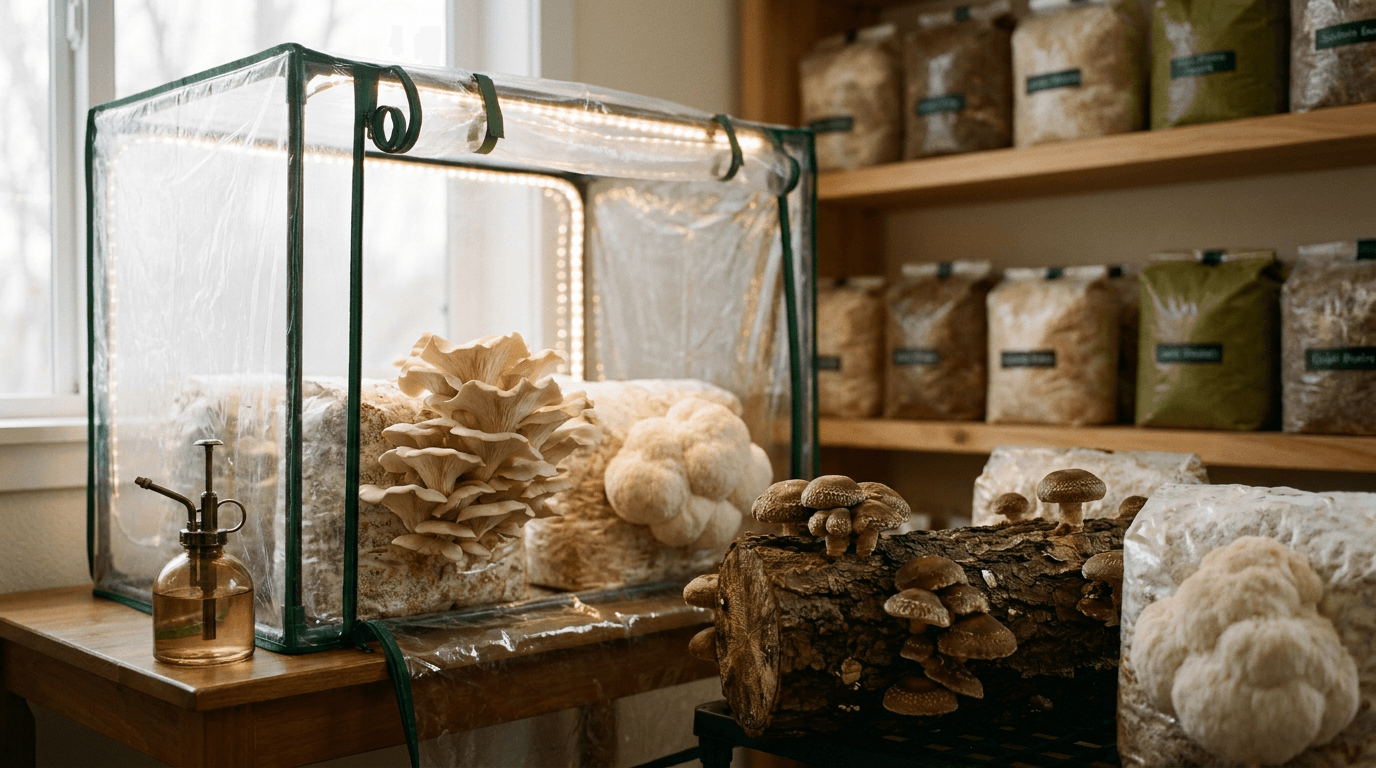
How to Grow Gourmet Mushrooms Indoors (Hydroponic Style)
Explore our comprehensive guide on How to Grow Gourmet Mushrooms Indoors (Hydroponic Style). Part of our technical series on specialized crop guides, this report covers everything you need to optimize your yield and maintain a healthy grow environment.
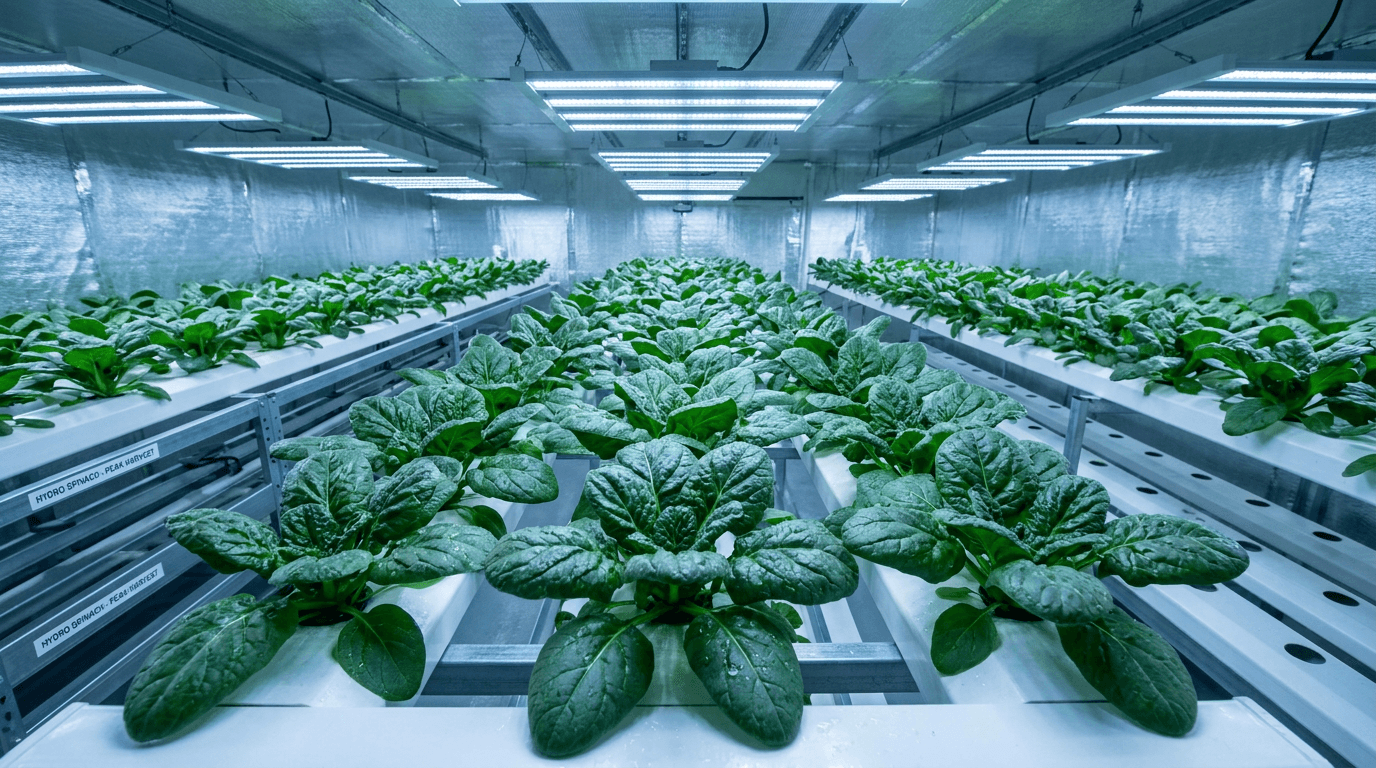
How to Grow Hydroponic Spinach Without Bolting
Complete guide to growing bolt-free hydroponic spinach indoors. Photoperiod management, variety selection, temperature control, nutrient strategy, and harvest techniques to keep spinach producing sweet leaves for months.
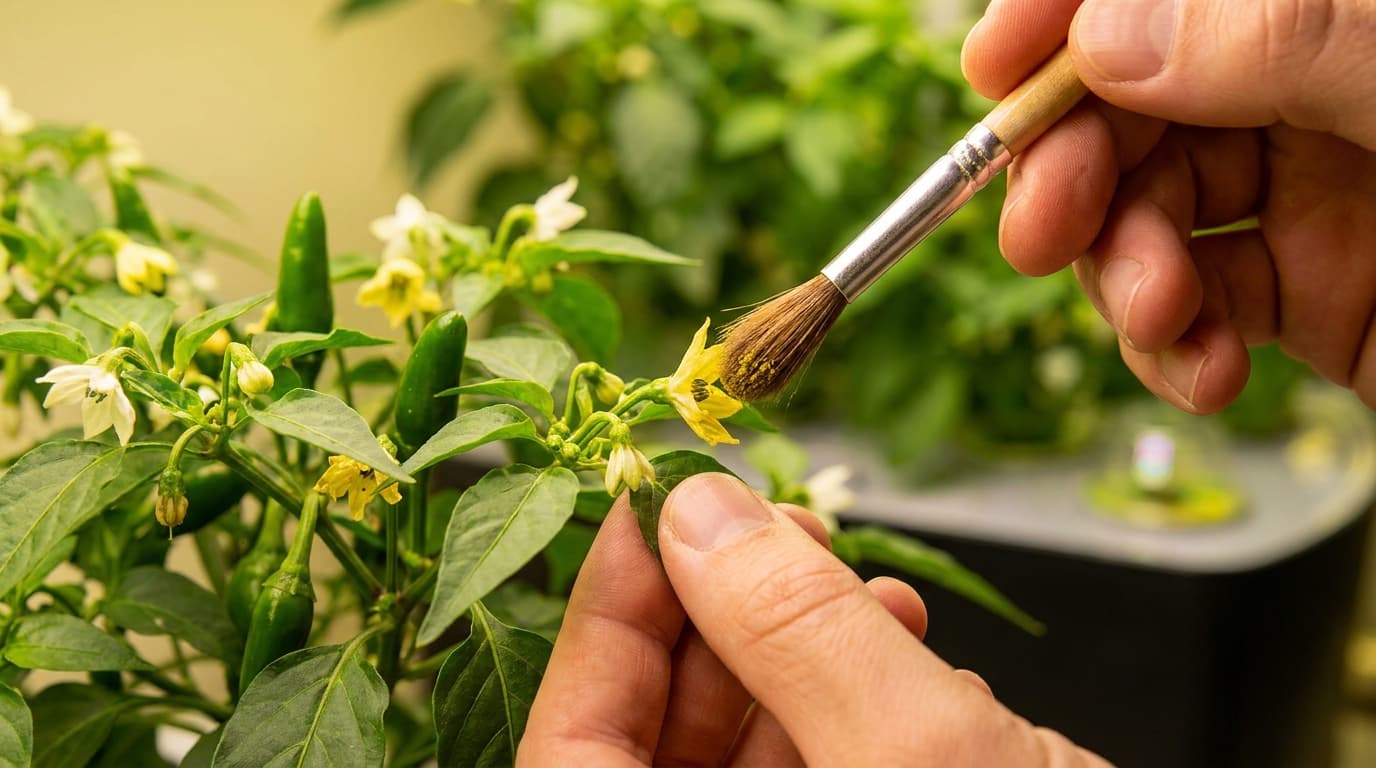
Pollinating Indoor Plants: Hand-Pollination Techniques
Complete guide to hand-pollinating indoor hydroponic crops. Electric toothbrush method for tomatoes and peppers, paintbrush technique for cucumbers and squash, cotton swab method for strawberries, plus troubleshooting low fruit set.