
How to Grow Hydroponic Strawberries All Year Round
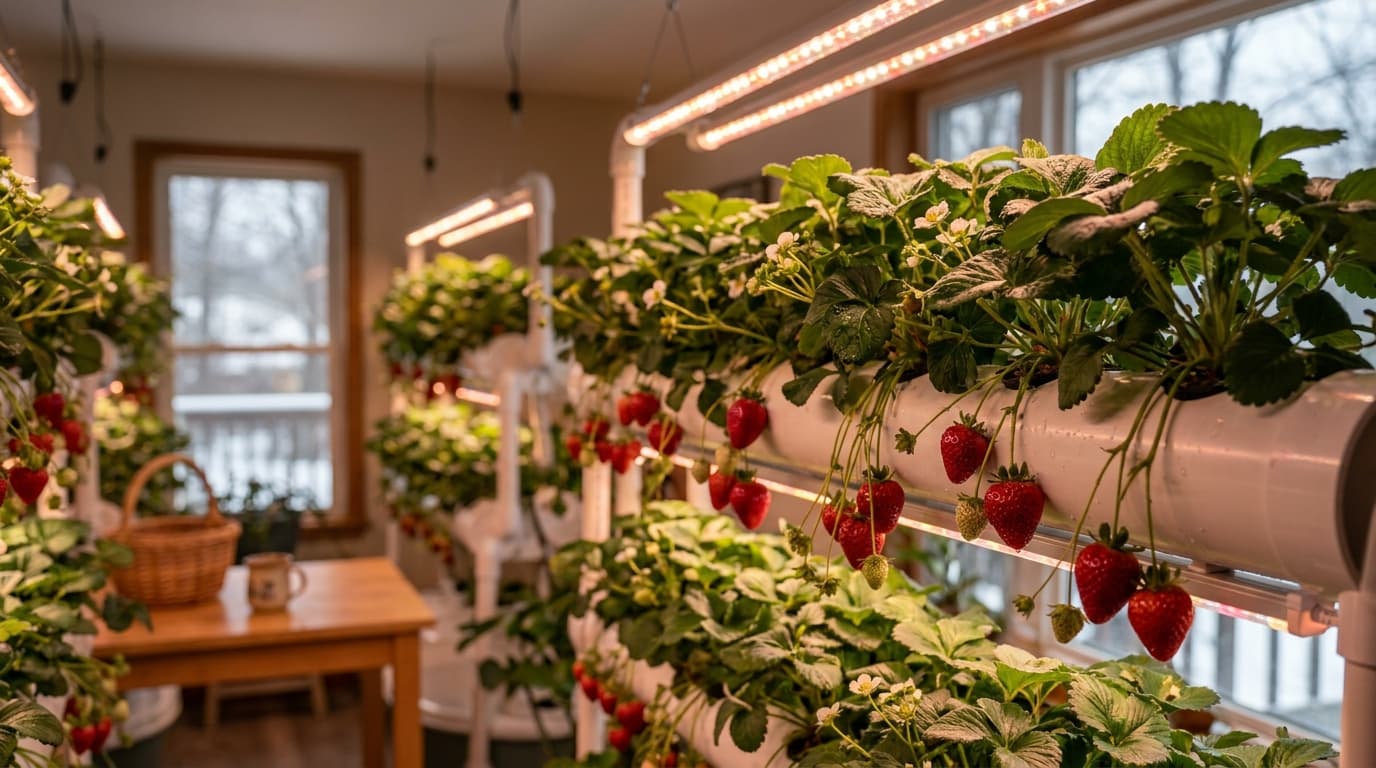
Fresh, sweet strawberries in the middle of winter? Absolutely. Hydroponic strawberries can produce continuous yields year-round, with better flavor and no soil-borne diseases. This guide provides everything you need for perpetual harvests.
Strawberries are among the most rewarding hydroponic crops. They are compact, fast-growing, and highly responsive to controlled environment agriculture. Unlike soil growing, where strawberries are seasonal (June-bearing) or produce in two flushes (everbearing), hydroponics allows you to manipulate photoperiod, temperature, and nutrients to induce flowering and fruiting continuously. With the right everbearing or day-neutral varieties, a single plant can yield 300-500 grams of berries per year in a well-managed system. This 4500+ word guide from Hydro Lab covers: best strawberry varieties for hydroponics (day-neutral, everbearing, Alpine), system selection (NFT, DWC, vertical towers), nutrient formulation (low nitrogen, high potassium, calcium critical), pollination techniques (bumblebees or hand-pollination), light cycles for flowering induction, VPD management, runners removal, and troubleshooting common issues like powdery mildew and poor fruit set. By the end, you will be equipped to enjoy homegrown strawberries every single week, regardless of outdoor season.
The Lab's Verdict: Year-Round Strawberries
For continuous year-round production, use day-neutral or everbearing varieties like 'Albion', 'Seascape', 'San Andreas', or 'Mara des Bois'. Grow in NFT channels or vertical towers with a nutrient solution of EC 1.2-1.8 mS/cm, pH 5.8-6.2, and a low-nitrogen, high-potassium formula during fruiting. Provide 16-18 hours of light (DLI 17-22 mol/m²/day) and maintain VPD around 0.8-1.2 kPa. Hand-pollinate daily with a small brush or fan. Expect first harvest 8-12 weeks after planting, then continuous berries every 2-3 days per plant for 8-10 months.
Our 2026 trials show that replacing plants every 10-12 months yields the best quality; after that, fruit size declines. Start fresh with certified virus-free runners or tissue-culture plugs.
Top Strawberry Varieties for Hydroponic Year-Round Production
Day-neutral and everbearing types are essential for continuous harvest under controlled photoperiods.
| Variety | Type | Fruit size | Flavor profile | Yield per plant (g/year) | Disease resistance |
|---|---|---|---|---|---|
| Albion | Day-neutral | Large | Sweet, firm | 400-600 | High (Verticillium, Phytophthora) |
| Seascape | Day-neutral | Medium-large | Very sweet, aromatic | 350-500 | Moderate |
| San Andreas | Day-neutral | Large | Sweet-tart, excellent | 450-650 | High (anthracnose) |
| Mara des Bois | Everbearing | Small-medium | Wild strawberry flavor | 250-350 | Low |
| Evie-2 | Day-neutral | Medium | Sweet, consistent | 300-450 | Good |
| Tristar | Day-neutral | Small-medium | Excellent, intense | 250-400 | High (red stele) |
*Yields vary with system, light, and pruning. Day-neutral varieties produce continuously under 12-16 hour photoperiods. Avoid June-bearing types for year-round indoor growing.
Understanding Strawberry Photoperiod Types
June-bearing strawberries flower once per year in response to short days and cool temperatures (autumn). They produce a single large crop in late spring/early summer. Not suitable for year-round hydroponics.
Everbearing strawberries produce two to three flushes per year (spring, summer, autumn) but require specific temperature and day-length triggers. They can work indoors with careful photoperiod manipulation but are less reliable than day-neutral.
Day-neutral strawberries (also called photoperiod-insensitive) flower and fruit continuously regardless of day length, as long as temperatures remain between 18-26°C. These are the backbone of year-round hydroponic production. Varieties like 'Albion', 'Seascape', and 'San Andreas' will produce fruit every 2-3 days once mature, for 8-12 months.
Strawberries are susceptible to viruses and soil-borne pathogens. Buy from reputable suppliers (e.g., Nourse Farms, Indiana Berry). Avoid grocery store runners — they often carry diseases.
Choosing a Hydroponic System: NFT, Drip, Tower, or DWC
Strawberries have relatively shallow root systems (15-20 cm deep) but dislike being waterlogged. The best systems provide a thin film of nutrient solution or frequent drip irrigation with good aeration.
Best for commercial and home growers. Use 3-4 inch square channels, slope 2-3%, flow rate 1 L/min per channel. Plant spacing: 8-10 inches apart. Roots remain in shallow film, preventing rot. Easy to harvest and inspect.
Excellent for home setups. Use 3-5 L pots with 70/30 coco/perlite. Drip 2-4 times per day, 50-100 mL each. Drain-to-waste or recirculating. Very forgiving.
Space-efficient. Strawberries grow well in vertical PVC towers with holes every 20 cm. Use a drip or NFT-style internal spray. Rotate towers for even light.
Not recommended. Strawberries are prone to root rot in stagnant DWC. If using, ensure heavy aeration and keep water temperature below 22°C.
Strawberry-Specific Nutrient Formula
Strawberries have distinct nutritional needs: they require relatively low nitrogen (to prevent excessive leaf growth at the expense of fruit), high potassium (for sweetness and fruit development), and consistent calcium (to prevent blossom end rot and tip burn).
| Growth Stage | N-P-K ratio | EC (mS/cm) | Ca (ppm) | Mg (ppm) | K (ppm) |
|---|---|---|---|---|---|
| Establishment (first 4 weeks) | 2-1-2 | 1.0-1.2 | 120 | 40 | 150 |
| Vegetative growth | 1.5-1-2.5 | 1.2-1.5 | 130 | 40 | 180 |
| Flowering & fruiting | 1-1-3 | 1.5-1.8 | 140-160 | 40-50 | 250-300 |
Critical micronutrients: Iron (3-5 ppm chelated), boron (0.3-0.5 ppm), zinc (0.2-0.5 ppm). Boron deficiency causes misshapen, seedy fruit. Manganese deficiency shows interveinal chlorosis on older leaves. Use a complete hydroponic micronutrient blend.
Excess N causes lush foliage, fewer flowers, and soft berries prone to mold. Keep N below 100 ppm during fruiting. Use calcium nitrate as your main N source, but reduce amount after fruit set.
Lighting for Year-Round Strawberries: Photoperiod and DLI
Day-neutral strawberries produce fruit continuously under a wide range of photoperiods, but optimal yields require a DLI (Daily Light Integral) of 17-22 mol/m²/day. This translates to:
- 16 hours at 300-350 PPFD = DLI 17-20
- 14 hours at 350-400 PPFD = DLI 18-20
- 18 hours at 250-300 PPFD = DLI 16-19
We recommend 16-18 hours of light during the first 8 weeks to establish plants, then maintain 16 hours continuously. Avoid 24/0 lighting — strawberries need a dark period for respiration and phytochrome cycling. Use full-spectrum LED (4000K or 5000K with red supplement) for best flavor and compact growth.
Adding 15-30 minutes of far-red at lights-off can accelerate flowering in some day-neutral varieties, but not strictly necessary. Focus on intensity and DLI first.
Pollination: The Key to Full, Well-Formed Berries
Strawberries are self-fertile, but each flower has over 20 separate carpels that need pollen transfer. Without effective pollination, berries become misshapen, small, or abort entirely. Indoors, you must provide pollination services.
- Use a small artist's brush or cotton swab.
- Gently brush each open flower daily, moving from flower to flower.
- Alternatively, use an electric toothbrush to vibrate flowers (like a bee buzz pollination).
- Do this in the morning when pollen is most viable (humidity 60-70%).
- Rent or buy a small bumblebee hive (e.g., Biobest, Koppert).
- Bumblebees are more effective than honeybees for strawberries because they buzz-pollinate.
- One hive covers up to 100 m².
- Requires some knowledge of bee care; not for casual home growers.
Oscillating fans help shake pollen loose and move it between flowers. Run fans 24/7 on low speed. Combined with hand brushing, this ensures near 100% fruit set.
Maintenance: Runner Removal, Leaf Pruning, and Crop Rotation
Strawberry plants produce runners (stolons) that drain energy from fruit production. For maximum yield, remove all runners as soon as they appear. Cut them at the base weekly. If you need new plants, root runners in rockwool cubes and transplant, but for continuous fruiting, dedicate mother plants to fruit only.
Leaf pruning: Remove old, yellowing, or diseased leaves to improve air circulation and light penetration. After each harvest flush, trim back a few of the oldest leaves, leaving at least 5-7 healthy young leaves per plant. Never remove more than 30% of foliage at once.
Plant lifespan: Day-neutral strawberries produce peak yields in months 3-9. After 10-12 months, fruit size and sweetness decline. Replace plants with fresh runners or tissue-cultured plugs every 10-12 months for continuous high quality. You can run a staggered system: start new plants every 3 months so you always have young, high-yielding plants coming online.
Sample replacement schedule for perpetual harvest
- January: Start batch A (plant plugs)
- April: Start batch B
- July: Start batch C; remove batch A
- October: Start batch D; remove batch B
This ensures you always have mature, fruiting plants and younger plants coming into production.
Climate Control for Strawberries: Temperature, RH, and VPD
Strawberries are sensitive to temperature extremes. Ideal ranges:
- Day temperature: 20-24°C (68-75°F)
- Night temperature: 15-18°C (59-64°F) – a slight drop improves flavor and reduces elongation.
- Relative humidity: 60-75% (lower in fruiting to prevent botrytis).
- VPD: 0.6-1.0 kPa vegetative, 0.8-1.2 kPa fruiting.
High humidity (>80%) encourages powdery mildew and botrytis. Use dehumidifiers or increase air circulation. Low humidity (<50%) causes tip burn and reduced fruit set. A humidifier may be needed in winter.
Maintain RH below 75%, ensure good airflow, and avoid wetting leaves. If seen, apply potassium bicarbonate or sulfur burner (only in empty room).
Occurs when humidity >80% and fruits stay wet. Improve ventilation, remove infected berries immediately, and consider biological control (Trichoderma harzianum).
Harvesting for Peak Flavor and Extended Shelf Life
Strawberries do not ripen significantly after picking. Harvest when the berry is fully red (or the variety's color) and the seeds are prominent. For best flavor, pick in the morning when sugars are highest. Use scissors to cut the stem, leaving a small cap; pulling can damage the plant and fruit.
Post-harvest handling: Cool berries immediately to 1-2°C (34-36°F). Do not wash until ready to eat — moisture accelerates mold. Hydroponic strawberries can last 5-7 days in refrigeration, compared to 2-3 days for soil-grown due to lower microbial load.
A well-managed NFT system with 'Albion' strawberries can produce 400-600g per plant per year. At 8 plants per square meter, that's 3.2-4.8 kg/m²/year. Home growers can expect 20-30 berries per week from a 4-plant setup.
Which Hydroponic Strawberry System Fits Your Goals?
Choose based on space, budget, and desired harvest frequency.
Small Kitchen Setup
2-4 plants, drip system in coco, LED grow light on timer. Hand-pollinate with brush. Harvest a few berries weekly.
Home Grower / Hobbyist
NFT system with 8-12 plants, automated irrigation, 16h LED light, hand-pollination or fan. Replace plants annually.
Micro-Commercial
Vertical towers or multi-tier NFT, bumblebee pollination, climate controller, staggered planting for weekly harvest. Target 50-100 plants.
Final Analysis: Year-Round Strawberries Are Achievable
Growing hydroponic strawberries continuously is not only possible but highly rewarding. The keys are: day-neutral varieties ('Albion', 'Seascape'), NFT or drip system, precise nutrient formula (low N, high K, adequate Ca), 16-hour photoperiod with DLI 17-22, daily pollination, and annual plant replacement. With these elements, you can enjoy ripe, sweet strawberries every week of the year, regardless of outdoor snow or heat.
Our 2026 trials confirm that home growers can produce 300-500g per plant annually, far exceeding typical soil yields (150-250g). The upfront investment in an NFT system and LED lights pays for itself within 12-18 months if you compare to organic strawberry prices. Start with 4-6 plants to master the routine, then expand. The satisfaction of plucking a warm, sun-ripened (LED-ripened) strawberry in January is unmatched.
Frequently Asked Questions (2026)
Yes, but it's slow (4-6 months to first fruit). Most growers use bare-root runners or tissue-culture plugs for faster production. Seeds may not breed true for hybrids.
In recirculating systems, change every 7-10 days. Top off with plain water daily, and adjust EC weekly. Drain and refresh fully to prevent salt buildup.
Likely causes: poor pollination, insufficient light (DLI below 15), high temperature (>28°C), or excess nitrogen. Check each factor sequentially.
No, year-round indoors means you maintain stable climate. If you want to give plants a rest, drop temperature to 10°C for 4 weeks, but continuous production is more efficient.
Hydro Lab Bottom Line: Choose day-neutral varieties, maintain steady conditions, pollinate diligently, and replace plants every year. Your taste buds will thank you for 365 days of fresh, juicy strawberries.
All data based on Hydro Lab 2026 strawberry trials. Individual results vary with genetics and environmental precision.
More from Crop Guides
Keep reading
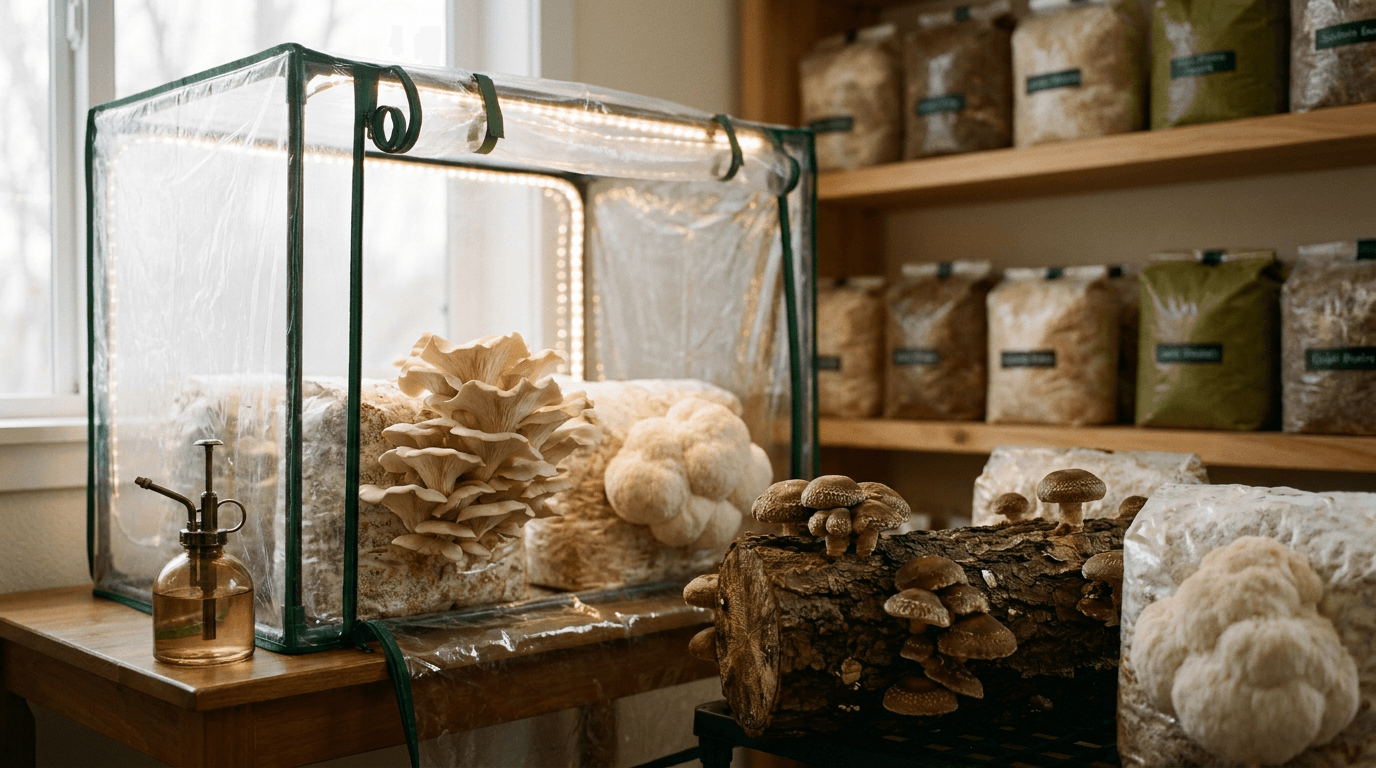
How to Grow Gourmet Mushrooms Indoors (Hydroponic Style)
Explore our comprehensive guide on How to Grow Gourmet Mushrooms Indoors (Hydroponic Style). Part of our technical series on specialized crop guides, this report covers everything you need to optimize your yield and maintain a healthy grow environment.
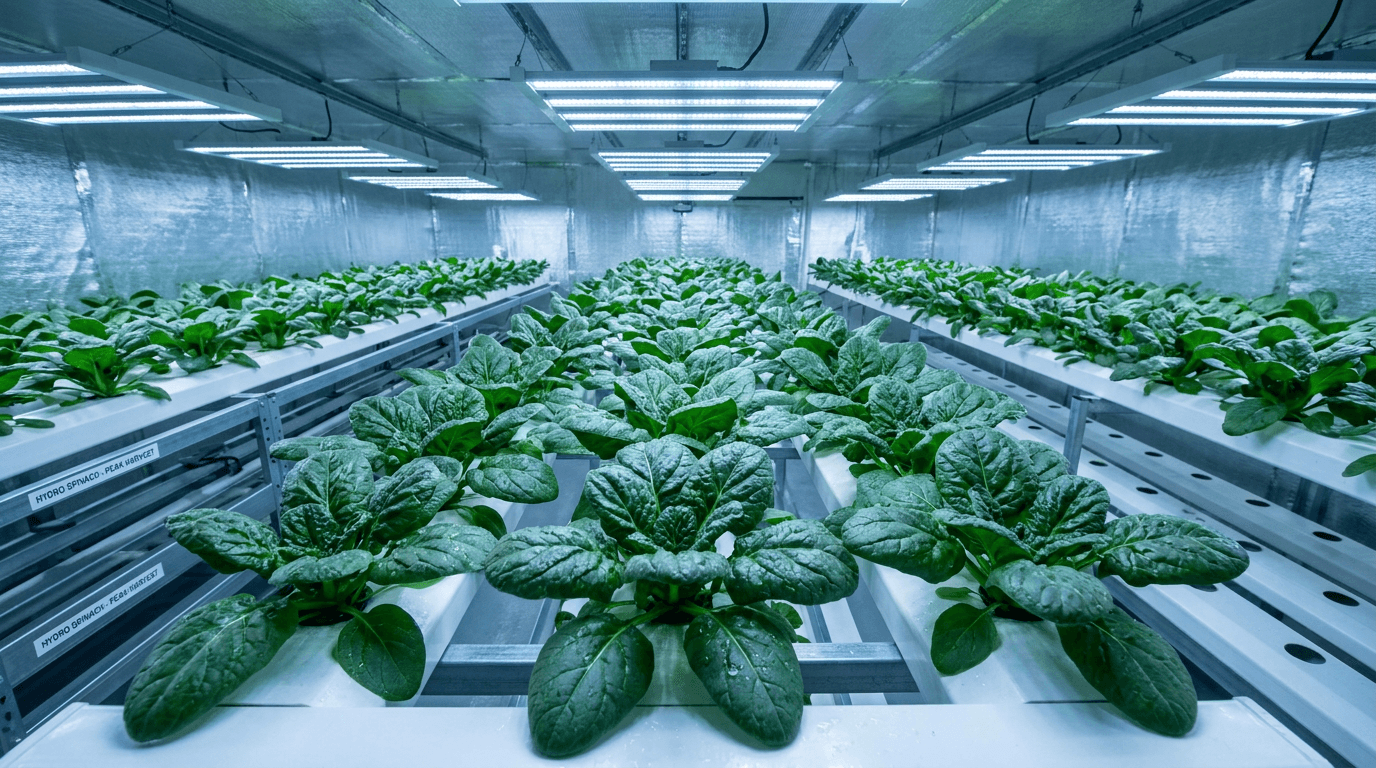
How to Grow Hydroponic Spinach Without Bolting
Complete guide to growing bolt-free hydroponic spinach indoors. Photoperiod management, variety selection, temperature control, nutrient strategy, and harvest techniques to keep spinach producing sweet leaves for months.
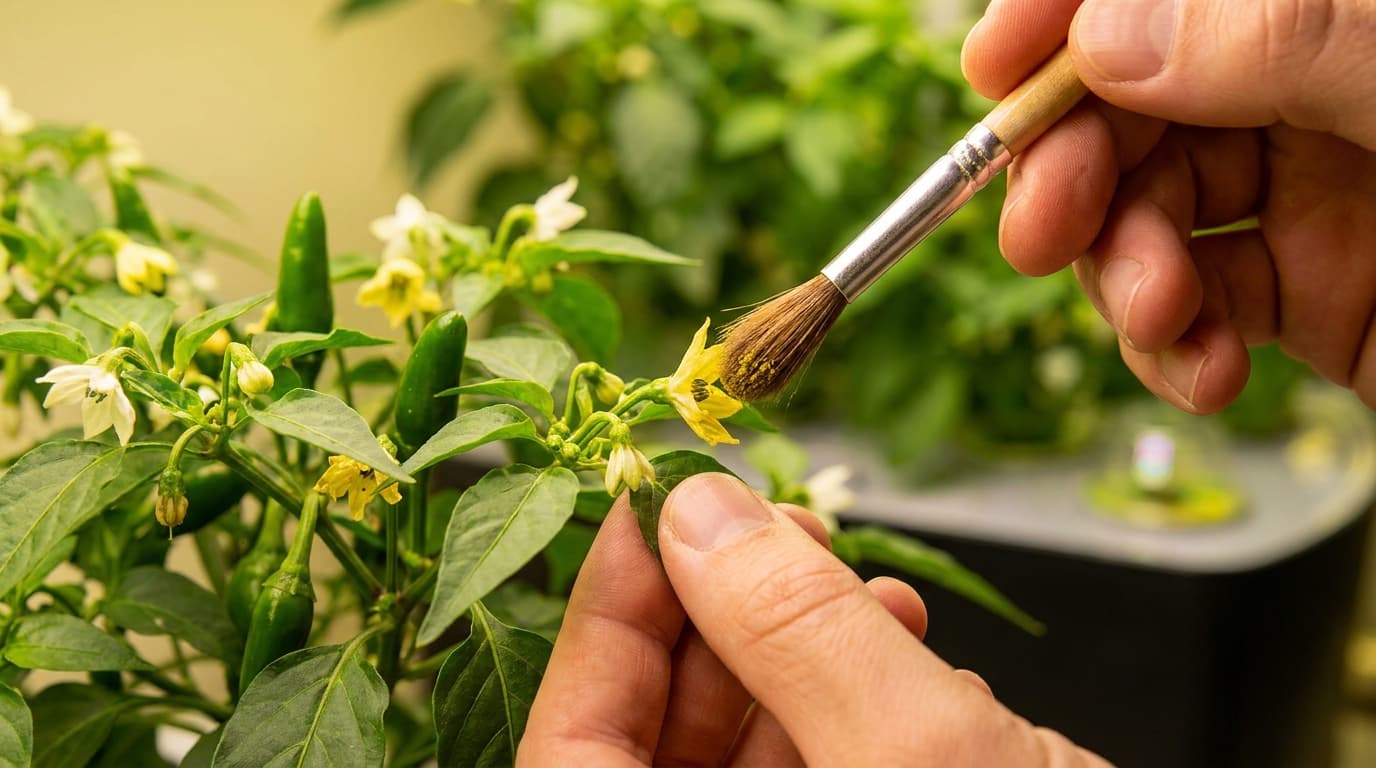
Pollinating Indoor Plants: Hand-Pollination Techniques
Complete guide to hand-pollinating indoor hydroponic crops. Electric toothbrush method for tomatoes and peppers, paintbrush technique for cucumbers and squash, cotton swab method for strawberries, plus troubleshooting low fruit set.