
Growing Saffron Indoors: Is It Worth It?
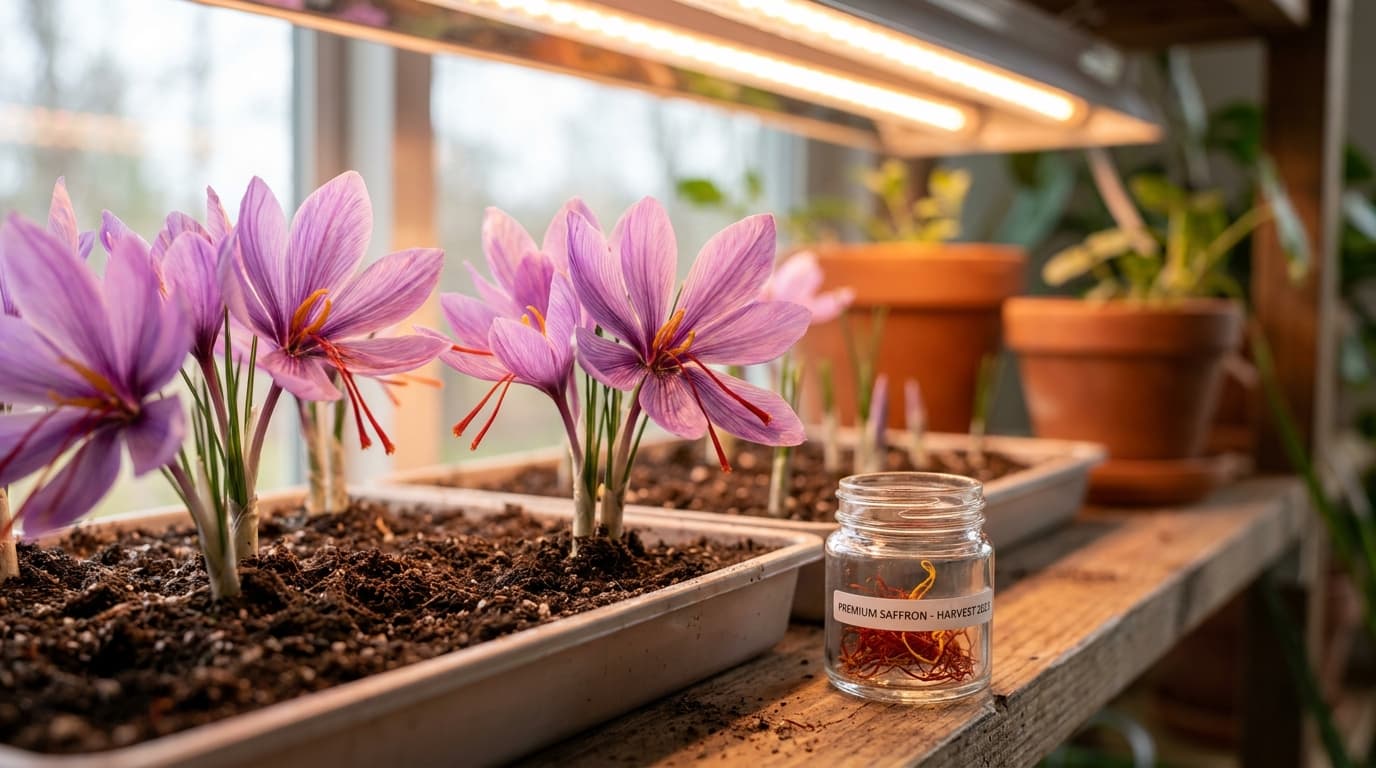
Saffron is the world's most expensive spice, traditionally grown in a narrow geographic band from Spain to Kashmir. But with modern indoor farming, entrepreneurs are producing this crimson gold in spare rooms and rooftop chambers. Is growing saffron indoors actually profitable, or just a high-cost novelty? This guide reveals the hard numbers.
At $1,500-$3,000 per pound wholesale (and up to $10,000 per pound retail), saffron's allure is undeniable. Indoor growers claim yields of 4-5 grams per square meter—5-10 times higher than traditional fields—using aeroponic or hydroponic systems in climate-controlled rooms. However, the infrastructure costs are significant: insulated rooms, precision cooling, humidifiers, grow lights, and high-quality corms. More importantly, the economics hinge on corm multiplication, not just flower harvest. This 4000+ word guide from Hydro Lab provides a complete cost-benefit analysis of indoor saffron cultivation. We examine real-world success stories, break down setup and operating costs, calculate yield per square foot, compare hydroponic vs. aeroponic methods, detail environmental requirements (temperature cycling, photoperiod, humidity), identify the critical bottleneck of corm production, and deliver a straight answer to the question: is it worth it? By the end, you will know exactly what it takes to produce indoor saffron and whether the investment aligns with your goals.
The Lab's Verdict
Indoor saffron cultivation is technically feasible but economically questionable for most home growers. The spice's sky-high price makes even small harvests seem valuable, but achieving consistent production requires significant infrastructure investment ($5,000-15,000 for a 100-200 sq ft room), precise climate control (5-20°C cycling, 60-70% humidity), and a deep understanding of corm dormancy and multiplication. The real profitability comes not from selling saffron threads alone, but from multiplying and selling daughter corms to other growers. Without corm sales, payback periods stretch to 3-5 years. For hobbyists, a small-scale experiment in a modified refrigerator or insulated closet can be a rewarding challenge. For serious commercial production, a 200+ sq ft aeroponic setup with vertical stacking can generate $20,000-40,000 annually in combined saffron and corm revenue—but only after mastering the 3-4 year corm multiplication cycle.
Key insight: The bottleneck is not flowering under lights—it is producing daughter corms efficiently indoors. Most successful indoor farms rely on field-grown corms for each cycle.
Indoor Saffron Cultivation Systems: Methods Compared
Cost, yield, complexity, and scalability across growing techniques.
| Method | Setup Cost (100 sq ft) | Yield per m² (dried saffron) | Corm density | Labor Intensity | Best For |
|---|---|---|---|---|---|
| Aeroponics (rack/tower) | $8,000-15,000+ | 4-5 g/m² | 200-300 corms/m² | Moderate (nozzle cleaning) | Commercial, high-density vertical |
| Hydroponic (tray/substrate) | $5,000-10,000 | 3-4 g/m² | 100-150 corms/m² | Low (media fill/drain) | Enthusiast, moderate scale |
| Modified Refrigerator / Closet | $500-2,000 | 1-2 g/m² | 50-100 corms/m² | High (manual control) | Hobbyist, learning |
*Aeroponic systems dramatically increase corm density because roots are suspended in air, allowing 3-5x more corms per square meter compared to traditional soil farming. Hydroponic yields approach 4-5 grams per square meter versus 0.5-2 grams in open fields.
The Economics: Revenue, Costs, and Break-Even Point
Saffron's market price is extraordinary. In 2026, wholesale rates range from $1,200-1,500 per kilogram (Afghan and Indian sources), while retail prices in Western markets can reach $3,000-10,000 per kilogram depending on grade and organic certification. One gram of premium saffron sells for $3-10, making even tiny harvests valuable. However, yields are correspondingly small: a standard 100 sq ft room with aeroponics produces approximately 40-50 grams of dried saffron per cycle, worth $150-500 at wholesale prices. The real money comes from corm multiplication, not just stigmas.
| Scale | Space | Setup Cost | Monthly Operating | Annual Saffron Revenue | Annual Corm Revenue | Break-Even (years) |
|---|---|---|---|---|---|---|
| Hobbyist trial | 50 sq ft | $1,000-2,500 | $30-60 (electricity) | $150-300 | $100-200 | 3-5 (if selling corms) |
| Small commercial | 200 sq ft, vertical | $15,000-25,000 | $200-400 | $2,000-4,000 | $3,000-6,000 | 2-3 |
| Established farm | 500+ sq ft, 3-tier | $40,000-80,000 | $800-1,500 | $10,000-20,000 | $20,000-40,000 | 1.5-2.5 |
Indian success stories are instructive: Ramesh Gera (Noida) earns ₹3.5 lakh/month ($4,200) from training and corm sales combined, with saffron as a secondary product. Anil Jaiswal (Indore) invested ₹6.5 lakh ($7,800) in a 320 sq ft room and expects 1.5-2 kg of saffron (₹2.5-3 lakh wholesale value). But he also sells starter kits to other growers. The common thread: profitability without corm sales is marginal in the first two years. The lab's recommendation? Treat indoor saffron as a long-term agripreneurial venture, not a get-rich-quick scheme.
Aeroponics vs. Hydroponics: Which System Wins?
- Roots suspended in air, misted with nutrient solution
- Allows 200-300 corms per square meter (5-7x density of soil)
- Superior oxygenation prevents root rot
- Vertical stacking multiplies space efficiency by 3-5x
- Requires high-pressure pumps, mist nozzles (need cleaning)
- Higher upfront cost but best ROI over 3+ years
- Corms in inert media like coco coir, perlite, or peat mix
- Drip or flood irrigation delivers nutrients
- Lower density than aeroponics
- Simpler to build and maintain
- Lower upfront cost but also lower yield per square foot
- Good for trial runs before scaling to aeroponics
One successful method uses a 70/30 coco-peat blend in multi-tier trays with drip irrigation, delivering consistent yields without the complexity of high-pressure misters. Aeroponics, however, is the clear winner for commercial scaling, as demonstrated by startups across India and the Middle East.
Hydroponic substrate recommendation
For DIY hydroponics, a mix of 55% cocopeat, 35% garden soil, 10% sand, and 5% vermicompost provides excellent drainage and modest nutrient retention. Many Indian growers use this blend for the corm multiplication phase after flowering.
Climate Control: Temperature, Humidity, Light, and CO₂
| Phase | Temperature | Relative Humidity | Light Duration | Duration |
|---|---|---|---|---|
| Sprouting (after dormancy break) | 15-20°C | 60-70% | 8-12 hours (low intensity) | 4-6 weeks |
| Flowering induction | 5-7°C | 80-90% | 8 hours (short days) | 3-4 weeks |
| Leaf growth & corm swelling | 10-20°C (gradual warming) | 60-70% | 12-14 hours | 2-3 months |
| Summer dormancy (corm storage) | 20-25°C, dark | dry environment | complete darkness | 2-3 months |
The 5-7°C flowering temperature is particularly challenging to achieve in most climates without dedicated air conditioning or chillers. One effective method: cool the room to 15-20°C for sprouting, then gradually drop to 5-7°C for 3-4 weeks to induce flowering. Failure to provide this cold pulse results in few or no flowers.
Some commercial operations elevate CO₂ to 800-1000 ppm during leaf growth. However, during flowering, excess CO₂ can delay bloom. Keep CO₂ at ambient levels (400-500 ppm) during the flowering phase.
Lighting Strategy: Photoperiod and Intensity
- Short days (8 hours light / 16 hours dark) promote flowering: Studies show that an 8-hour photoperiod significantly increases flowering percentage and advances flowering time compared to longer days.
- Long days (14-16 hours) encourage leaf expansion and corm growth: Extended light periods after flowering help build carbohydrate reserves for larger replacement corms.
- Light intensity: 200-400 PPFD (≈15-30 watts per sq ft of LED) is sufficient. Avoid exceeding 500 µmol/m²/s, as saffron is adapted to low-light autumn environments.
- DLI (Daily Light Integral): Total daily light should be 8-12 mol/m²/day during vegetative phases and 3-5 mol/m²/day during flowering induction.
Week 1-4 (sprouting): 12 hours at 100-150 µmol/m²/s. Weeks 5-8 (flowering induction): 8 hours at 50-80 µmol/m²/s. Weeks 9-16 (leaf and corm growth): 14 hours at 200-300 µmol/m²/s.
The Corm Conundrum: Selection, Dormancy, and Daughter Bulb Production
- Corm size matters: Corms weighing 8-12 grams produce the highest flower yields; larger corms (>25g) may produce multiple flowers per corm. For propagation, use medium corms (8-15g).
- Summer dormancy storage: After leaf senescence, corms must be stored in a warm, dry, dark place at 20-25°C for 2-3 months to break dormancy.
- Daughter corm yield: A healthy mother corm can produce 5-15 daughter corms over one growth cycle. In aeroponic systems, multiple daughter corms can be harvested and replanted, but the cycle cannot be shortened.
The commercial reality: most successful indoor saffron operations treat the flowering room as a separate phase from corm multiplication. They purchase high-quality corms from specialized growers, flower them in controlled conditions, then either discard the exhausted corms or sell them to other farmers for field planting.
High-quality saffron corms are difficult to source outside traditional growing regions. In India, most corms come from Pampore, Kashmir. Demand has increased prices, and some regions restrict corm exports. Plan your corm supply chain well before committing to infrastructure.
Harvesting Saffron: The 3-Stigma Secret
- Timing: Harvest within 2-4 hours of flower opening, ideally before 9 AM.
- Technique: Pluck the flower, then carefully pull the three red stigmas from the bloom using tweezers. Avoid touching the yellow stamen (pollen) which adds bitterness.
- Drying: Spread stigmas in a single layer on a fine mesh screen in a dark, dry room (20-25°C, <60% RH). Drying takes 24-48 hours. Never use direct heat or sunlight.
- Storage: Keep dried stigmas in airtight, light-proof glass containers. Store in a cool, dark cupboard. Properly stored saffron retains peak quality for 2-3 years.
Yield per corm
Each flowering corm typically produces 1-3 flowers in its first year indoors, depending on corm size. Each flower yields 10-15 mg of dried saffron. Therefore, 100 flowering corms produce approximately 1-4 grams of dried spice.
Where Indoor Saffron Fails: Root Rot, Flower Drop, and Corm Decay
Getting Started: A 10-Step Roadmap for New Growers
- Start with 50-100 sq ft of insulated space.
- Invest in precise climate control (1-1.5 ton AC, humidifier, digital thermostat).
- Choose DIY hydroponic trays with coco-peat mix and drip irrigation.
- Source high-quality corms (8-15g each) from a reputable supplier.
- Soak corms in neem oil solution (5 ml/L) for 30 minutes, dry.
- Plant corms 10-15 cm apart, pointed side up, cover with 2-3 cm substrate.
- Maintain 15-20°C, 60-70% RH, 12h light at 150 PPFD for 4 weeks.
- Cold shock: lower to 5-7°C for 3-4 weeks, 8h light at 80 PPFD.
- Harvest flowers promptly, dry stigmas.
- Post-harvest: raise temp to 10-15°C, increase light to 14h at 300 PPFD for 2-3 months, then dry corms for dormancy.
Keep a detailed log of temperature, humidity, light hours, PPFD, and flowering dates. Saffron is highly sensitive; subtle changes dramatically affect yield.
Indoor Saffron Weekly Maintenance Checklist
- Daily: Check temperature and humidity. Inspect for flower buds.
- Weekly: Clean aeroponic nozzles or drip emitters. Check for root discoloration.
- Monthly: Calibrate pH and EC sensors. Inspect corms for soft spots.
- Per cycle: Replace nutrient solution. Sanitize trays and reservoirs.
Which Indoor Saffron Path Fits Your Goals?
Match your ambition, budget, and patience level to the right scale.
Curious Hobbyist
Start with 10-20 corms in a modified refrigerator or insulated closet. Low investment ($200-500), high learning value.
Agripreneur / Part-Time
100-200 sq ft aeroponic room, 200-500 corms per cycle. Sell saffron threads locally and offer starter corms. Break-even in 2-3 years.
Full-Time Commercial
1,000+ sq ft, 3-tier vertical aeroponics, 10,000+ corms annually. Export-quality saffron plus bulk corm sales. Five-figure revenue potential.
Final Analysis: The Honest Verdict
Growing saffron indoors is technically fascinating and can be profitable, but it is not the "spare room goldmine" that social media hype suggests. The critical factors are: precise temperature cycling (5-20°C), high-density aeroponic stacking, consistent corm supply, and at least 18 months of learning curve before achieving consistent harvests. Most successful indoor saffron entrepreneurs earn the bulk of their revenue from training, corm sales, and value-added products, not from selling the spice alone.
Our recommendation for 2026: If you have an engineering mindset, a tolerance for failure, and $3,000-5,000 to invest, a 100 sq ft aeroponic trial could become a rewarding side business. If you expect quick profits, look elsewhere. For the vast majority of home growers, the same investment in microgreens or gourmet mushrooms will produce faster returns with less technical complexity.
Frequently Asked Questions (2026)
With aeroponic vertical stacking, up to 200-300 corms per square meter → approximately 5,000-7,000 corms in 100 sq ft. At 1-2 flowers per corm, each flower yields 10-15 mg dried saffron → total 50-200 grams per cycle.
Only if you live in a cool climate with temperatures consistently 10-20°C. For flowering induction, you still need 5-7°C for 3-4 weeks. Without active cooling, you will get few to no flowers.
All Crocus sativus is genetically identical (sterile triploid). Focus on corm source quality and size, not variety.
One full cycle (corm to flower to new corm) takes 9-12 months. Some advanced growers manipulate dormancy to achieve 2 cycles per year, but yields per cycle drop significantly.
In most jurisdictions, small-scale saffron sales for culinary use fall under general produce regulations. For international export, certification of origin and purity (ISO 3632) is often required.
Hydro Lab Bottom Line: Indoor saffron is possible, profitable with scale and corm sales, but not a quick or easy venture. Approach it as a long-term agricultural technology project, not a passive income stream. Start small, master the climate control, and scale deliberately.
All recommendations based on Hydro Lab 2026 analysis of published research and case studies. Individual results vary with local climate, corm quality, and system design.
More from Crop Guides
Keep reading
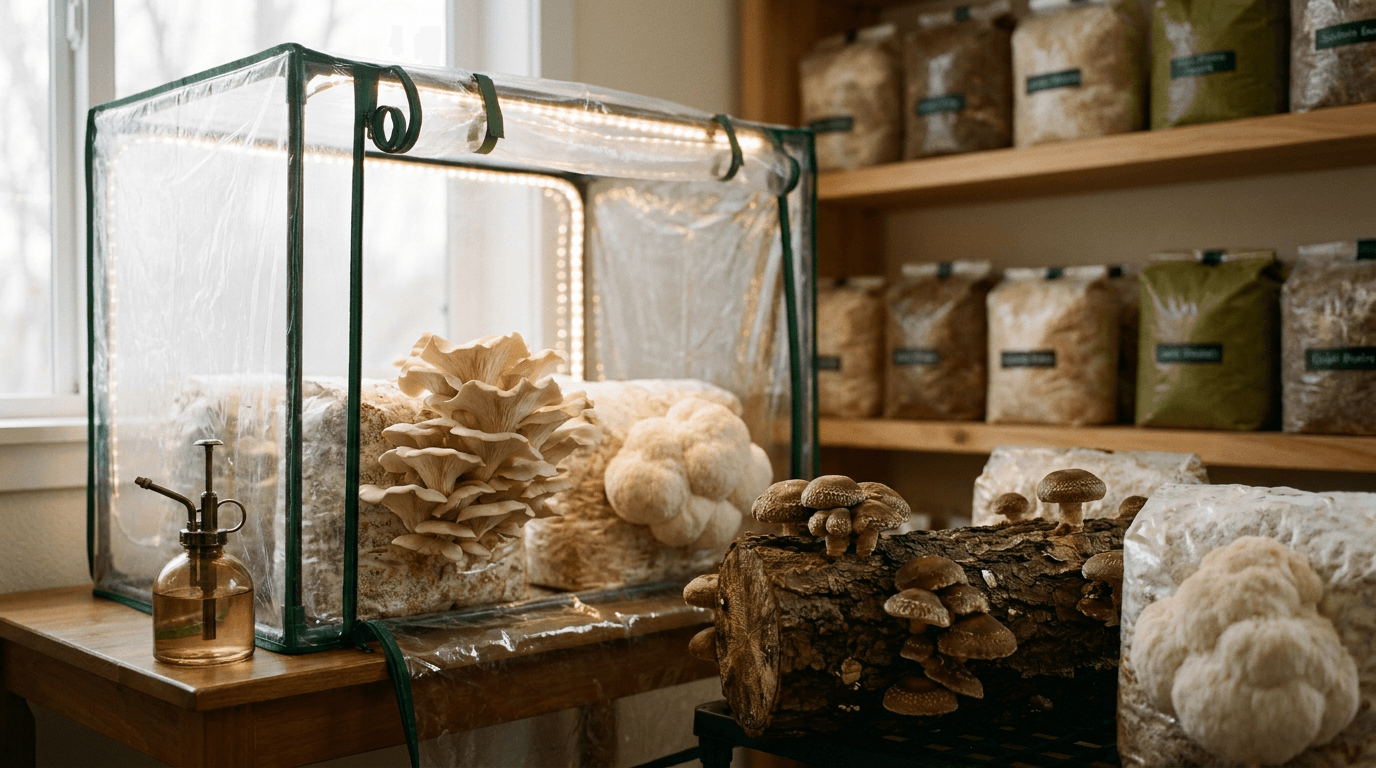
How to Grow Gourmet Mushrooms Indoors (Hydroponic Style)
Explore our comprehensive guide on How to Grow Gourmet Mushrooms Indoors (Hydroponic Style). Part of our technical series on specialized crop guides, this report covers everything you need to optimize your yield and maintain a healthy grow environment.
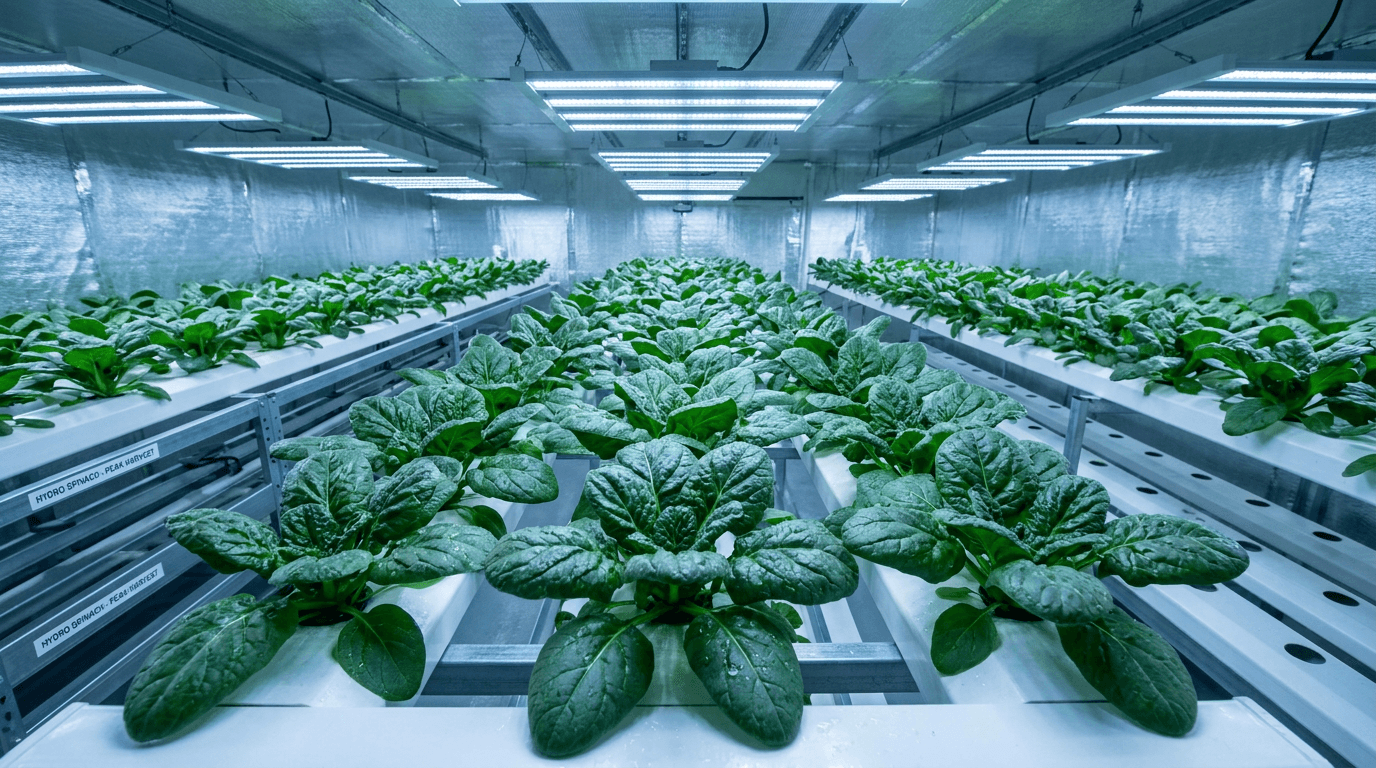
How to Grow Hydroponic Spinach Without Bolting
Complete guide to growing bolt-free hydroponic spinach indoors. Photoperiod management, variety selection, temperature control, nutrient strategy, and harvest techniques to keep spinach producing sweet leaves for months.
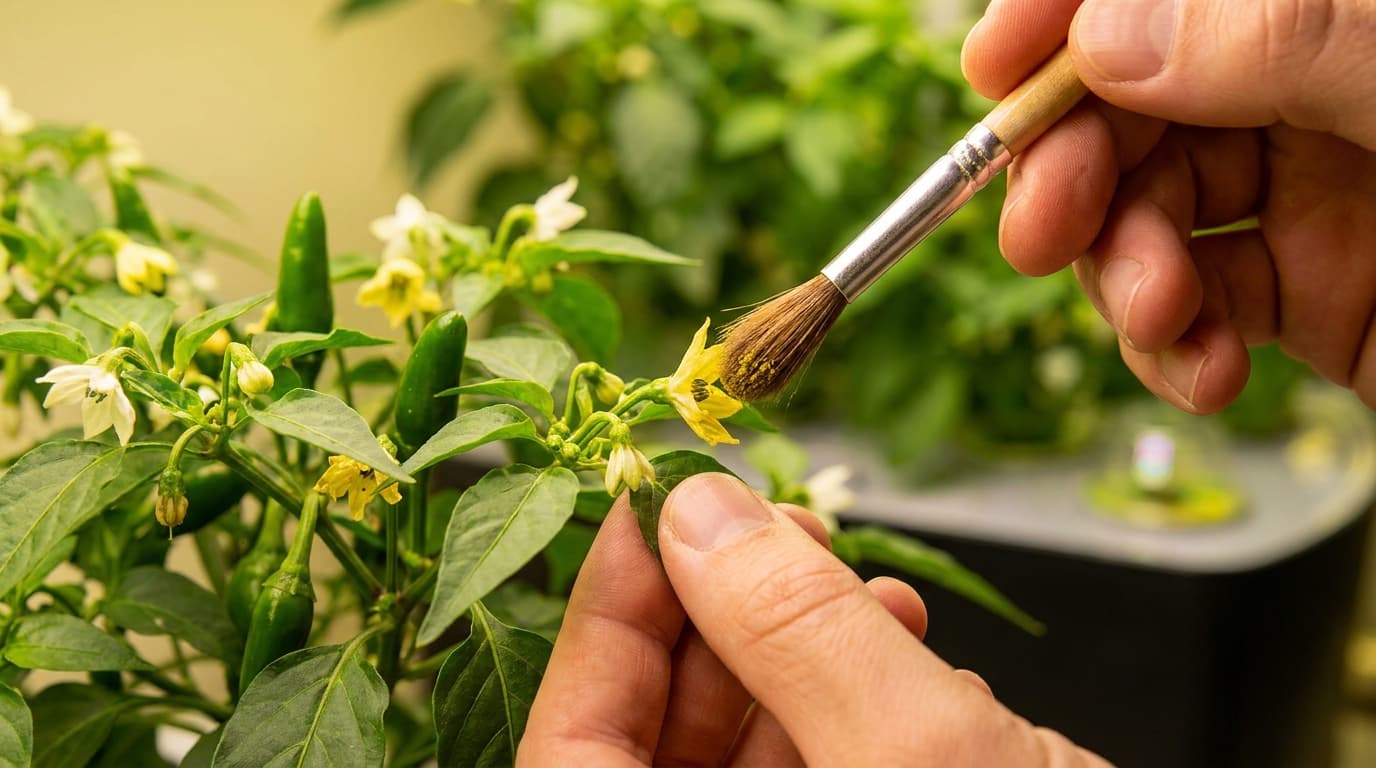
Pollinating Indoor Plants: Hand-Pollination Techniques
Complete guide to hand-pollinating indoor hydroponic crops. Electric toothbrush method for tomatoes and peppers, paintbrush technique for cucumbers and squash, cotton swab method for strawberries, plus troubleshooting low fruit set.