
Best Flowers to Grow in a Vertical Hydroponic Wall
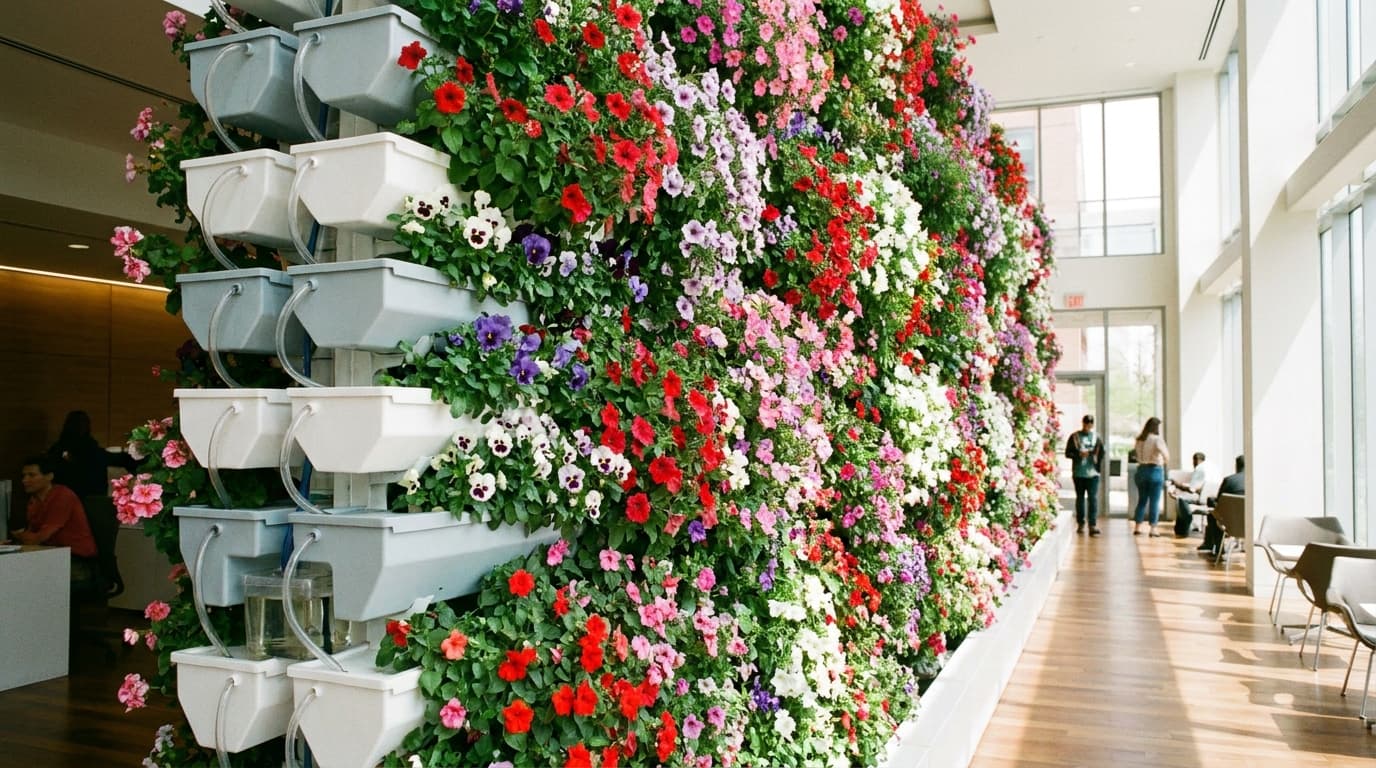
Vertical hydroponic walls are typically associated with leafy greens and culinary herbs, but they can become spectacular living art installations when planted with flowering species. The challenge is that most flowers evolved for soil environments with specific photoperiod triggers, root zone conditions, and pollination vectors. Translating these requirements to a vertical hydroponic wall requires careful species selection and precise nutrient management.
This guide covers five flower species that we have successfully grown in vertical hydroponic walls at The Hydro Lab. They were selected for their compact root systems, tolerance of the high-density planting typical of vertical systems, and dramatic visual impact. We also cover the nutrient adjustments required to shift from vegetative growth to bloom, the pollination strategies that work in indoor environments, and the aesthetic principles that separate a beautiful living wall from a chaotic tangle of vegetation.
Whether you are designing a living wall for a restaurant lobby, a hotel atrium, or your own home, these five species will provide reliable bloom performance while maintaining the structural integrity of the vertical system. The key is understanding each species' specific requirements and building your system to accommodate them rather than trying to force all species into a one-size-fits-all nutrient and light schedule.
The Lab's Verdict on Vertical Flower Walls
Start with petunias and violas if you want fast, reliable blooms with minimal fuss. Add nasturtiums for trailing accent color and marigolds for pest-repellent companion planting. Only attempt orchids if you have experience with hydroponic growing and are willing to invest in a separate irrigation zone with lower EC and more acidic pH. The key to a successful vertical flower wall is managing the transition from vegetative to bloom nutrients across multiple species simultaneously, which requires a modular irrigation system with independent zone control.
Top Five Flower Species
Petunias
Petunias are the workhorses of vertical hydroponic flower walls. They are vigorous growers, self-cleaning in many modern cultivars, and they produce an astonishing number of blooms over a long season. In hydroponic systems, petunias can bloom continuously for 6 to 8 months with proper deadheading and nutrient management. They prefer a pH of 5.8 to 6.2 and an EC of 1.2 to 1.8 mS/cm during bloom. The trailing varieties, such as the Surfinia series, are particularly well-suited to vertical systems because they cascade over the edges of pockets and create a waterfall effect. Petunias are heavy feeders during bloom and require elevated phosphorus and potassium levels. We use a bloom-formula nutrient at 1.6 EC with an additional 50 ppm of potassium silicate to strengthen cell walls and improve flower longevity.
Violas and Pansies
Violas, including their larger-flowered cousins pansies, are cool-season bloomers that thrive in the moderate temperature range of 15 to 22 degrees Celsius typical of indoor growing environments. They are compact growers with small root systems that adapt well to the confined pockets of vertical walls. Violas flower in response to both photoperiod and temperature cues. In an indoor environment with controlled lighting, you can manipulate them to bloom on a 12-hour photoperiod with nighttime temperatures around 15 degrees Celsius. They are less demanding than petunias in terms of nutrient strength, performing well at EC 1.0 to 1.4 mS/cm. Too much nitrogen during the bloom phase causes excessive leaf growth at the expense of flowers, so switch to a bloom formula with a lower nitrogen ratio as soon as the first buds appear.
Marigolds
Marigolds serve a dual purpose in vertical hydroponic walls: they produce vibrant orange and yellow blooms that provide high visual contrast against green foliage, and they release thiophenes from their roots that repel nematodes and certain aphid species. This makes them an excellent companion plant for a mixed-species wall. African marigolds can grow quite tall and may overwhelm a vertical system, so choose French marigold varieties such as the Bonanza or Durango series, which stay compact at 20 to 30 centimeters. Marigolds prefer a slightly lower pH range of 5.5 to 6.0 and moderate nutrient strength at EC 1.2 to 1.6. They are photoperiod-sensitive and will begin flowering when day length exceeds 12 hours.
Nasturtiums
Nasturtiums are the ideal trailing accent plant for vertical walls. Their rounded, lily-pad-like leaves and bright orange, red, and yellow flowers provide textural contrast against the more typical elongated foliage of other species. Both the leaves and flowers are edible, with a peppery flavor similar to watercress, adding a culinary dimension to your living wall. Nasturtiums thrive on neglect. They flower best when grown in lean conditions with low nitrogen. High nitrogen produces enormous leaves and very few flowers. In a vertical hydroponic system, plant nasturtiums in pockets on the periphery where they receive slightly less nutrient flow, or use a dedicated low-EC line at 0.8 to 1.0 mS/cm. They prefer a pH of 6.0 to 6.5 and will bloom consistently under a 14 to 16 hour photoperiod. Deadheading is essential for continuous bloom.
Orchids (Moth Orchids)
Phalaenopsis orchids, commonly known as moth orchids, are the most challenging but most rewarding species for vertical hydroponic walls. They are epiphytic by nature, meaning they grow attached to tree bark in their native habitat, with roots exposed to air. This makes them surprisingly well-suited to the open-pocket design of many vertical systems. The key is that orchid roots require a wet-dry cycle, not constant moisture. In a vertical wall, orchids should be planted in pockets with coarse bark or sphagnum moss substrate that drains quickly, and they should be watered only when the substrate begins to dry. We recommend a separate irrigation zone for orchids with a timer that waters twice daily. Orchids require a specialized nutrient formula with an EC of 0.6 to 1.0 and a pH of 5.5 to 6.0. They need a temperature drop of 5 to 8 degrees Celsius at night for 2 to 3 weeks to initiate flower spikes.
Flower Species Comparison Matrix
| Species | EC Range | pH Range | Photoperiod | Difficulty | Bloom Duration |
|---|---|---|---|---|---|
| Petunia | 1.2 to 1.8 | 5.8 to 6.2 | 14 to 16 hours | Easy | 6 to 8 months |
| Viola / Pansy | 1.0 to 1.4 | 5.5 to 6.0 | 12 to 14 hours | Easy | 4 to 6 months |
| Marigold | 1.2 to 1.6 | 5.5 to 6.0 | 12+ hours | Easy | 3 to 5 months |
| Nasturtium | 0.8 to 1.0 | 6.0 to 6.5 | 14 to 16 hours | Moderate | 3 to 4 months |
| Orchid (Phalaenopsis) | 0.6 to 1.0 | 5.5 to 6.0 | 12 to 14 hours | Advanced | 2 to 4 months per spike |
Nutrient Adjustments for Bloom
The transition from vegetative growth to flowering requires a fundamental shift in nutrient ratios. During vegetative growth, plants require a high nitrogen formula with an NPK ratio around 3-1-2 to support leaf and stem development. When you trigger the bloom phase, either through photoperiod manipulation or simply allowing the plant to mature, you must switch to a bloom formula with a ratio closer to 1-3-4 or 1-4-5. The increased phosphorus supports flower bud formation, while the elevated potassium strengthens petals and improves bloom color intensity.
In a mixed-species vertical wall, you face the challenge that different plants transition to bloom at different times. Petunias and marigolds will begin blooming under a 16-hour photoperiod without any nutrient change, but their bloom quality improves dramatically with higher phosphorus. Nasturtiums, conversely, need low nitrogen to bloom at all. Our solution is a two-part nutrient system: a base vegetative formula delivered to all plants during the first 4 weeks after planting, followed by a bloom-top-up concentrate that is injected into the irrigation line for 30 minutes twice daily during the bloom phase.
Calcium and magnesium become critical during bloom. Calcium is required for pollen tube formation and petal cell wall strength. A deficiency during bloom results in flower bud abortion and weak, short-lived blooms. Maintain calcium at 100 to 150 ppm and magnesium at 40 to 60 ppm in your bloom formula. We also recommend adding 30 to 50 ppm of silicon in the form of potassium silicate. Silicon strengthens flower stems, reduces petal drop, and improves resistance to powdery mildew.
Bloom Nutrient Tips
- Reduce nitrogen by 50 percent once first flower buds appear
- Increase potassium to 200 to 250 ppm for petal strength
- Maintain calcium at 100 to 150 ppm to prevent bud abortion
- Add 30 to 50 ppm silicon for stem strength and disease resistance
- Flush with plain pH-adjusted water every 2 weeks
Common Bloom Problems
- Flower bud drop: calcium deficiency or temperature stress
- Pale flowers: nitrogen deficiency or zinc lockout
- Powdery mildew: improve air circulation, reduce humidity
- Leggy growth with few blooms: too much nitrogen
- Short flower lifespan: high temperature or low potassium
Pollination in Vertical Systems
Pollination is the most overlooked factor in indoor flower production. Without bees, butterflies, or wind, many flowers will fail to set seed and may also fail to produce the hormonal signals that sustain continued blooming. Some flower species, including petunias and violas, are self-pollinating and will produce seed without intervention, but seed set is not actually your goal in a vertical wall. Your goal is continuous bloom. The plant's biological imperative is to produce seed. When a flower is successfully pollinated, the plant redirects energy from producing new flowers to maturing the seed pod. Deadheading, the removal of spent flowers before they set seed, is the single most effective technique for extending bloom duration.
In a vertical hydroponic wall, deadheading must be part of your weekly maintenance routine. Spent petunia flowers become sticky and difficult to remove if left for more than a few days. We recommend using small pruning shears with curved blades that can reach into tight pockets. Violas and pansies are easier to deadhead because the spent flower stem snaps cleanly at the base. Marigold spent flowers should be removed by twisting gently at the base. Nasturtium seed pods develop rapidly after pollination and should be removed as soon as the flower wilts.
For species that benefit from active pollination, such as orchids, you can hand-pollinate using a small brush or cotton swab. In a mixed-species wall, the presence of a small fan is beneficial for two reasons: it strengthens flower stems through mechanical stress, and it provides enough air movement to facilitate self-pollination in petunias and violas while also preventing the humidity buildup that promotes botrytis on flowers.
Aesthetic Design Tips
The most common mistake in vertical flower wall design is planting too densely. Growers want an instant wall of color and cram pockets together at 10 to 15 centimeter spacing. The result is that within 6 weeks, the plants are competing for light, the lower leaves die from shading, and the wall looks ratty at the bottom while being overgrown at the top. We recommend 25 centimeter minimum spacing for most flowering species, with 30 centimeter spacing for vigorous growers like petunias. Use starter plants with 3 to 4 true leaves and give them room to fill in.
Color theory matters in flower wall design. A monochromatic wall using multiple shades of the same color creates a sophisticated, calming effect. A complementary color scheme using purple and yellow flowers creates high contrast and visual excitement. We have found that the most visually successful walls use a 70-20-10 rule: 70 percent of the planting area is a single dominant species, 20 percent is a contrasting secondary species, and 10 percent is an accent species with a dramatically different flower color or texture. For example, 70 percent purple petunias, 20 percent yellow marigolds, and 10 percent orange nasturtiums trailing at the bottom.
Vertical structure within the wall itself is also important. Place cascading species like nasturtiums and trailing petunias at the top and bottom edges of the wall where they can spill over the frame. Place upright, mounding species like marigolds and violas in the middle section. Orchids should be positioned at eye level where their large, long-lasting flowers can be appreciated up close.
Seasonal rotation is another design consideration that separates average walls from exceptional ones. While indoor growing eliminates true seasons, you can create the perception of seasonal change by rotating flower species every 3 to 4 months. For example, violas and pansies provide cool-toned blues and purples that evoke a winter or spring feel, while marigolds and nasturtiums bring warm oranges and yellows that signal summer. By planning your replanting schedule around these color palettes, you create a dynamic installation that feels alive and responsive throughout the year. We recommend keeping a planting calendar that tracks which species are in which pocket, their planting date, and their expected bloom duration. This level of organization is essential for a wall with 30 or more individual planting pockets, where keeping track of each plant's age and performance without a written record becomes impossible.
Lighting integration is the final piece of the design puzzle. A vertical flower wall needs even light distribution from top to bottom, which is challenging because the top pockets are naturally closer to overhead light sources. We recommend mounting linear LED grow lights vertically on either side of the wall, running the full height of the growing area. Supplement with horizontal bars every 4 feet of vertical height if the wall is taller than 6 feet. The target PPFD for flowering plants is 300 to 500 umol/m2/s at the canopy level, measured at the center of each growing pocket. Budget for a PAR meter or quantum sensor when building your wall, as light levels that look adequate to the human eye may be insufficient for flower production in the lower pockets. A 20 to 30 percent drop in PPFD from the top to the bottom of a 6-foot wall is typical, and this must be compensated for by selecting shade-tolerant species like violas for the lower pockets and high-light species like petunias for the upper pockets.
Design Checklist
- Space pockets 25 to 30 cm apart
- Use 70-20-10 color ratio for balanced impact
- Place trailing species at top and bottom edges
- Position orchids at eye level
- Install oscillating fan for stem strength
- Plan 30 cm clearance behind wall for air flow
- Install waterproof backing to protect walls
Vertical Flower Wall Pros and Cons
Advantages
- Converts unused wall space into productive growing area
- Dramatic visual impact for commercial and residential spaces
- Improved air quality through increased leaf surface area
- Natural sound dampening and humidity regulation
- Extended growing season with indoor lighting control
Disadvantages
- Higher initial cost and installation complexity
- Difficulty managing different nutrient needs of mixed species
- Increased disease pressure from dense foliage
- Requires weekly deadheading and maintenance
- Light distribution challenges to lower pockets
Frequently Asked Questions
Can I grow orchids in a hydroponic wall with other flowers?
Yes, but they require a separate irrigation zone with lower EC and a wet-dry cycle. Orchids cannot tolerate constant moisture like petunias or marigolds. Use a dedicated drip line on a timer that waters twice daily, and plant them in coarse bark substrate.
How do I prevent powdery mildew on my flower wall?
Maintain airflow with an oscillating fan, keep humidity below 65 percent, space plants for air circulation, and apply a preventative spray of potassium bicarbonate or sulfur-based fungicide every 10 to 14 days.
Do I need special lighting for a vertical flower wall?
Yes. The top pockets receive significantly more light than the bottom. Use linear LED bars mounted vertically on either side of the wall, or supplement with strip lights between growing rows for even distribution.
How often should I replace the plants in my flower wall?
Most annual flowers perform well for 4 to 6 months before bloom production declines. Violas can last 6 to 8 months in cool conditions. Plan a full replanting twice per year for a fresh display.
Can I grow edible flowers in a vertical hydroponic wall?
Absolutely. Nasturtiums, violas, and marigolds are all edible flowers. Ensure that any nutrients or pest control products you use are labeled safe for edible crops.
What is the best irrigation system for a vertical flower wall?
A drip irrigation system with pressure-compensating emitters is essential. Gravity causes water to accumulate in lower pockets if standard drip emitters are used. Pressure-compensating emitters deliver the same flow rate regardless of height.
How do I manage nutrient transitions when some plants are in bloom and others are not?
Use a modular irrigation system with at least two zones. Zone one delivers a vegetative nutrient formula to plants still in their growth phase. Zone two delivers a bloom formula to flowering plants. If your system cannot support multiple zones, use a compromise formula with a 2-2-3 NPK ratio and supplement with foliar phosphorus-potassium sprays on the blooming plants twice per week.
Can I automate deadheading with robotics or tools?
There are no reliable robotic deadheading solutions for vertical walls as of 2026. The proximity of different species and the delicate nature of flower stems makes mechanical deadheading impractical. The best tool is a pair of sharp, curved pruning shears and a dedicated 20-minute weekly maintenance session.
Which Flower Wall Is Right for You?
Match your design ambition to the right flower selection.
The First-Time Builder
You want a low-maintenance wall that looks good with minimal effort.
The Restaurant Owner
You want a dramatic living wall with edible flowers for garnishes.
The Advanced Grower
You want a show-stopping installation with orchids as the centerpiece.
The Lab's Final Analysis
Vertical hydroponic flower walls represent the intersection of horticulture and interior design. They are not simple systems to build or maintain, but the payoff is extraordinary. A well-designed flower wall transforms a space in a way that no painting or sculpture can match, because it is alive, changing, and responsive to the environment.
Our recommendation at The Hydro Lab is to start small. Build a 2 by 1 meter wall with petunias and violas first. Learn how to manage the irrigation, lighting, and nutrient transitions before attempting the more demanding species. Once you have the fundamentals dialed in, gradually introduce marigolds for pest control, nasturtiums for edible garnish, and finally orchids for the wow factor.
One final piece of advice: keep a detailed growing log for your flower wall. Note which species performed well in which pockets, when each species peaked in bloom production, how often you needed to adjust pH and EC, and what pest or disease issues arose. After one year of operation, this log becomes an invaluable reference that allows you to refine your species selection and care protocols. The most successful flower wall growers we work with treat their wall as a continuous experiment, always testing new varieties and techniques. The wall is never truly finished, it is a living canvas that evolves with each replanting cycle.
A vertical flower wall is not a project you complete in a weekend. It is a living system that rewards patience, observation, and careful maintenance. But the first time a visitor stops and stares at your wall, speechless, you will know it was worth every hour of effort.
More from Crop Guides
Keep reading
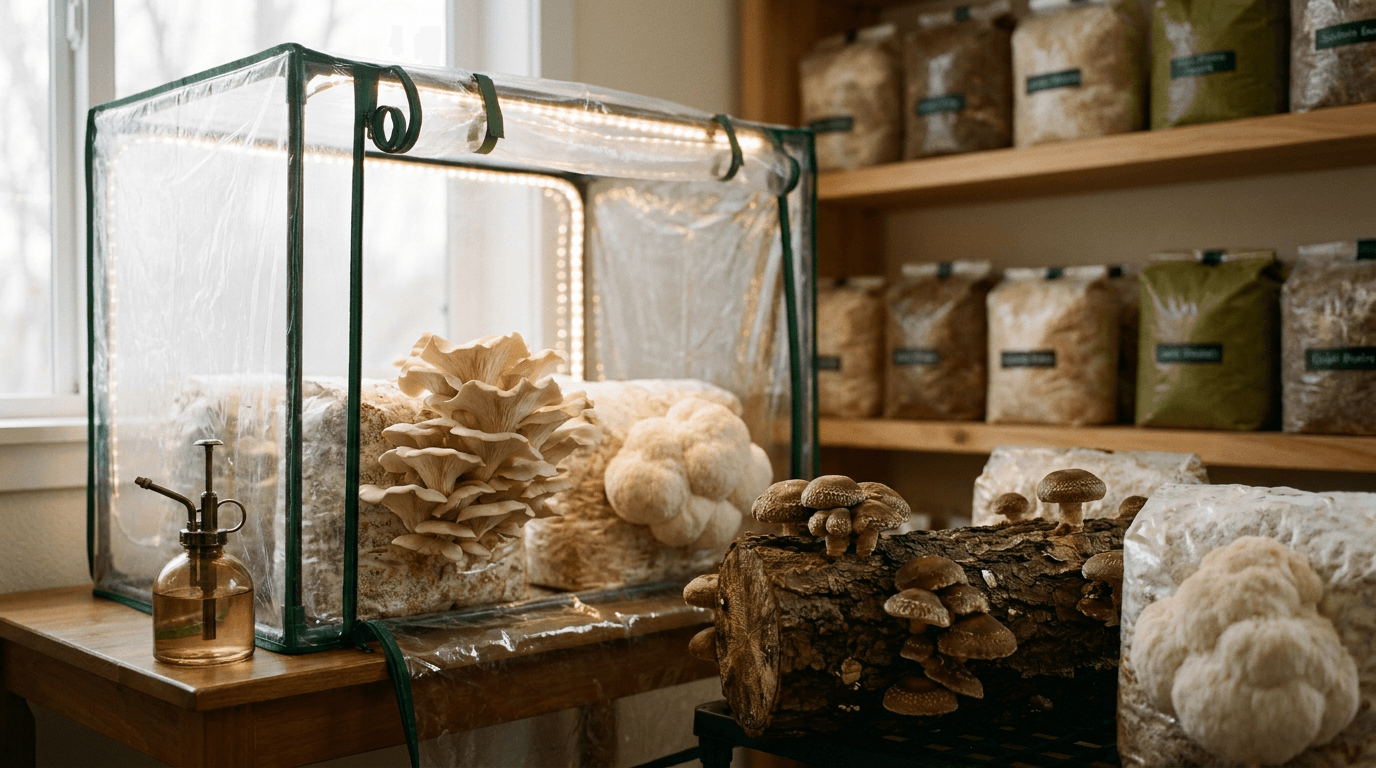
How to Grow Gourmet Mushrooms Indoors (Hydroponic Style)
Explore our comprehensive guide on How to Grow Gourmet Mushrooms Indoors (Hydroponic Style). Part of our technical series on specialized crop guides, this report covers everything you need to optimize your yield and maintain a healthy grow environment.
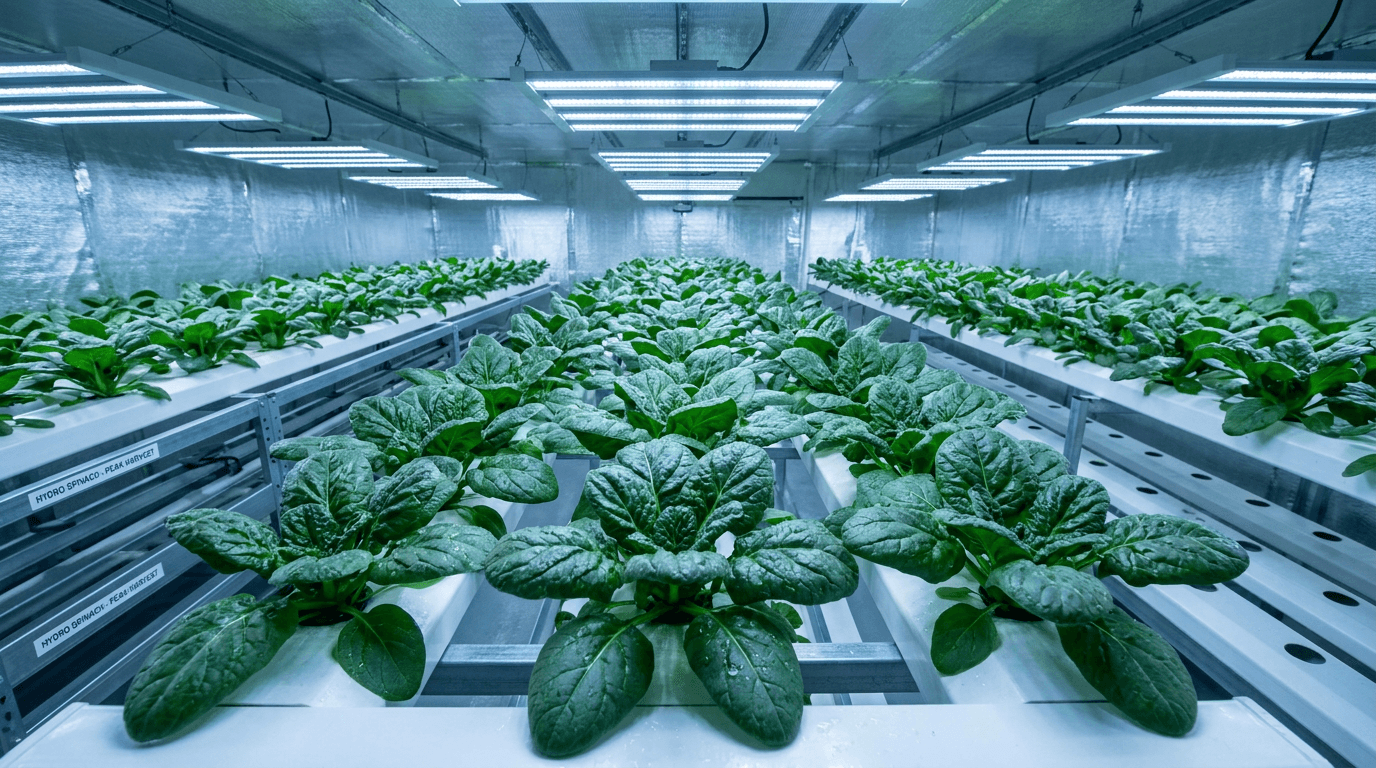
How to Grow Hydroponic Spinach Without Bolting
Complete guide to growing bolt-free hydroponic spinach indoors. Photoperiod management, variety selection, temperature control, nutrient strategy, and harvest techniques to keep spinach producing sweet leaves for months.
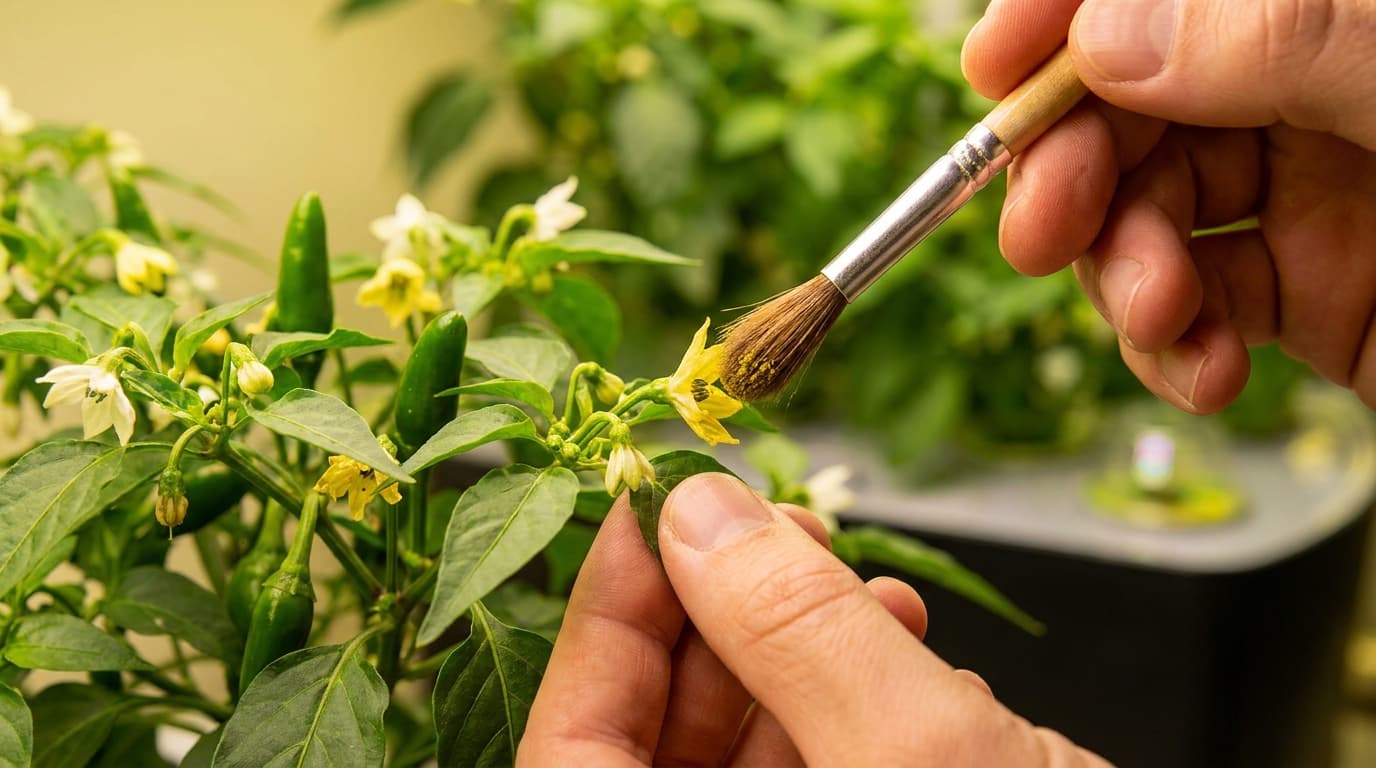
Pollinating Indoor Plants: Hand-Pollination Techniques
Complete guide to hand-pollinating indoor hydroponic crops. Electric toothbrush method for tomatoes and peppers, paintbrush technique for cucumbers and squash, cotton swab method for strawberries, plus troubleshooting low fruit set.